
Discover the honest truth about Lion's Mane Mushroom—the grounding cognitive tonic prized by meditating monks and modern scholars alike. Whether you are looking to support sustained cognitive focus, nourish a healthy nervous system, or optimize your gut-brain connection, the secret lies in the quality of the log-grown, whole organism. This guide strips away the marketing hype to teach you exactly what Lion's Mane is, what it does, and how to properly use it for deep, systemic vitality.

I recorded these audios to directly answer the questions I've received most over the last 26 years. The text below contains the actual transcripts.
Jason J. DukeOwner / Artisan
Reference Directory

Commit to the Practice
Tonic herbalism rewards consistency. The deep, systemic building work happens quietly over a 30 to 90-day cycle of continuous saturation. Supply the raw materials your body needs with our premium 3-pack.
Shop the 3-Pack Formulation1. What is Lion's Mane?
So, what is Lion's Mane, exactly? That's the question worth starting with, because this mushroom breaks the first rule of what a mushroom is supposed to look like, and once you've seen it, you never mistake it for anything else.
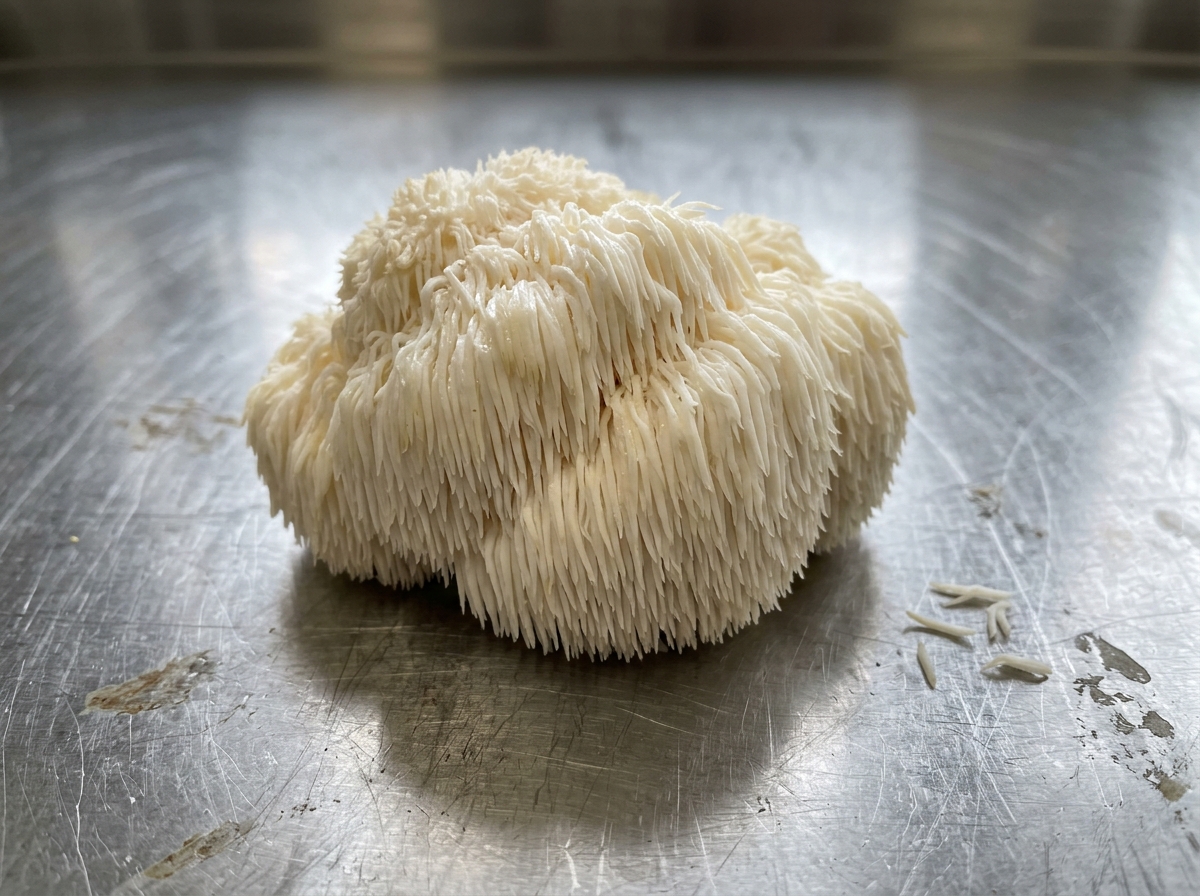
Lion's Mane has no cap and no gills. It grows as a cascade of long, soft, white spines, flowing downward like a mane, or like a frozen waterfall. The old field guides called it the bearded tooth, the hedgehog, the pom-pom mushroom. The name that stuck is the one that fits. It looks like a lion's mane, and that's the whole mushroom.
And here's the part that quietly reframes the whole category. Fungi are closer kin to animals than to plants. They breathe oxygen in and carbon dioxide out, and they build their bodies the way animals build, not the way plants do. When you hold this material, you're holding a distant cousin on the tree of life, and that kinship is part of why it sits closer to dinner than to pharmacy.
And dinner is worth a word, because Lion's Mane is a genuine delicacy. Pan-seared in butter, the texture gets compared to lobster, to crab meat. The crab-meat of the woods. Not every tonic can say that, and it tells you how the tradition has always treated this one, as a food first.
Classification before benefits, always. Lion's Mane is a cognitive tonic, grounding and calming in character. Taken every day, consistently over time, to support, maintain, and promote health. Not a rescue remedy. Not a booster. A daily nourishment for the systems that do the thinking and the digesting.
Now, the constituents, and the teaser here is a naming lesson. The two signature compounds are the hericenones and the erinacines. Hericenone comes from Hericium, the genus. Erinacine comes from erinaceus, the hedgehog, the species. The constituents carry the mushroom's own name, which tells you these are its native compounds, the ones it built for itself. We'll come back to what they do. For now, the word is nourish.
And one thing it is not: a stimulant. No jolt, no spike, no drop two hours later. This mushroom nourishes the system doing the thinking, and the felt result is relaxed alertness, steady and present and calm, focus without the buzz. If you're shopping for wired, that's a different shelf.
The spines made it strange. The kitchen kept it food. The daily practice makes it work.
Taken consistently over time.
2. Where Does It Come From?
So where does Lion's Mane come from, and why has it stood the test of time? The answer starts on a mountain in Japan, with a mushroom named after monks.
The Japanese call it yamabushitake. The yamabushi were the ascetic mountain priests, the ones who climbed into the wild heights to practice stillness and clarity, wearing long flowing robes. And the mushroom earned their name because its cascading white spines look like those robes pouring down. The calm-mind mushroom, named after the calm-mind monks. When a culture names a mushroom after its meditators, that tells you what they noticed it doing, and it's worth knowing that naming happened centuries before anyone isolated a compound.
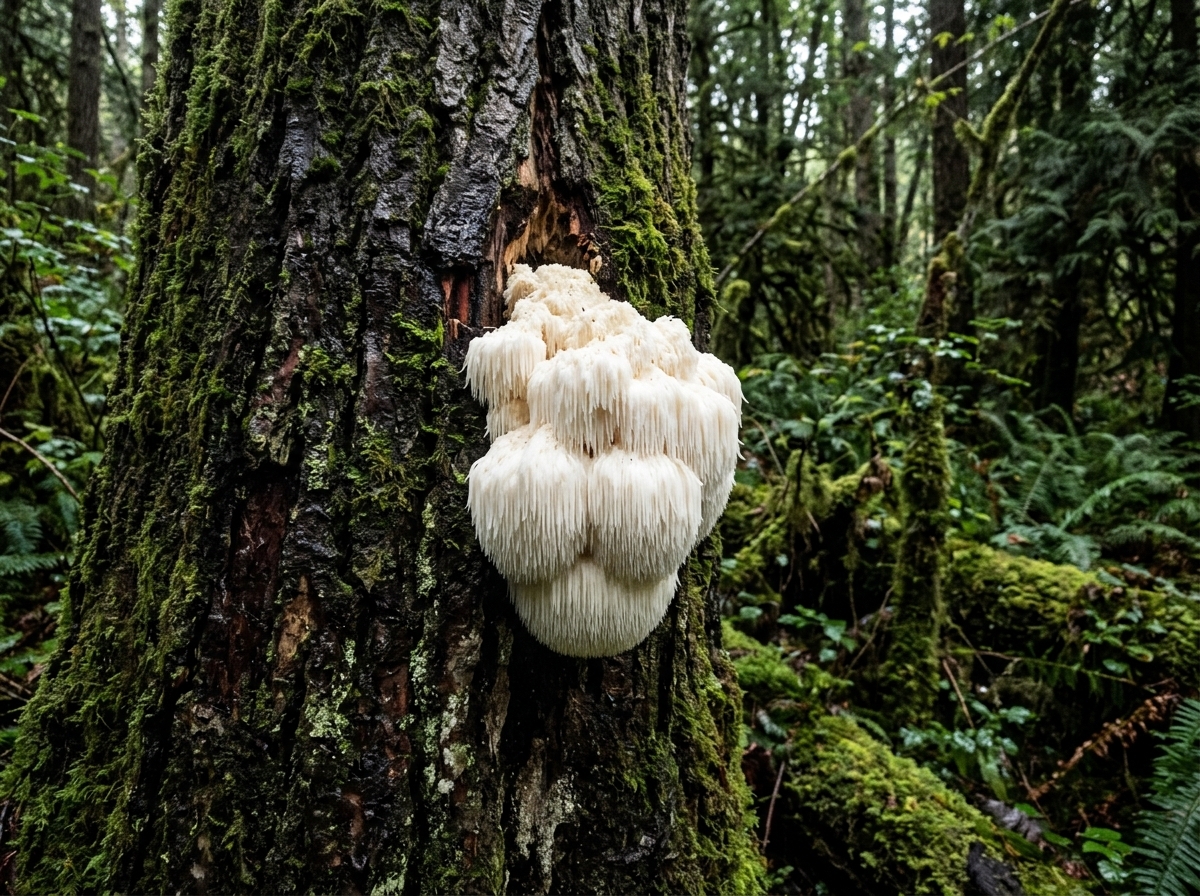
In the wild, this mushroom fruits on mature hardwoods, oak and beech, often growing right in the wounds of old trees. It's a wood-lover by nature, and that shapes the whole sourcing story, because the way to grow it honestly is the way it wants to grow, on real hardwood logs.
Which is exactly where ours comes from. One hundred percent Hericium erinaceus, organic, hardwood log grown in the United States Pacific Northwest. That region is prime temperate mushroom country, rainforest-grade log-growing land, the same territory that supplies the finest cultivated material in the trade. And we use the whole organism, fruiting body, mycelium, and sclerotium, because different parts of the fungus carry different constituents. The whole mushroom is the whole material. We'll come back to that, because it matters more with this species than almost any other.
Then the craft, and I'll keep this simple, the way it should be. Custom crafted, multi-step, micro-batched. Structured distilled water and triple filtered USP grade organic alcohol at thirty-five percent by volume. The water pulls one class of constituents, the alcohol pulls the other, and between them the whole range lands in the bottle. The ratio is stated plainly: two and a half pounds of mushroom to one quart of liquid, about seventy-one thousand two hundred fifty milligrams in every two-ounce bottle. That number is heavy, and we print it.
And you can taste the care. The more you taste the stronger it is. A real extract of this material comes out rich and earthy. If it's see-through, it's thin.
A mushroom named for meditating monks, grown on hardwood the way it wants to grow, extracted honestly. That's where this comes from.
Taken consistently over time.
3. What Does It Actually Do?
What does Lion's Mane actually do in your body? Let me answer it with a picture instead of a list, because the picture is the mechanism, and with this mushroom the picture has two halves that turn out to be one thing.
Think of yourself as having a wiring system and a fueling system, the nerves and the stomach, and the two are in constant conversation. This mushroom feeds both sides of that conversation, and it never changes the division of labor: the mushroom supplies. Your body does the work.
First, the nerves. The hericenones and erinacines assimilate to nourish the nervous system and brain structure and function. Your body uses these raw materials to maintain healthy communication between nerve cells, which is what processing information effectively actually is, the wiring carrying its signals cleanly. Practical translation: steady focus through demanding mental work, mental acuity without the overstimulation, a state the page calls relaxed alertness. Present and calm at the same time. That's the nerve side.
Second, the stomach. The beta-glucan polysaccharides work synergistically to nourish the gut microbiome, maintain healthy bile production and flow, and support the production and activity of your digestive enzymes, so the body actually breaks down the food you give it. That maintains gut motility and regularity, which is the everyday language for digestion that just works, no food coma, no heaviness after the meal.
Third, and here's the piece people don't expect, the immunity rides along through the gut. Those same polysaccharides cultivate a balanced and adaptive immune response, helping the body's own defense mechanisms identify foreign material, facilitate containment and removal, and maintain tissue cleanliness across the internal environment. A large share of the body's defense work happens right at the gut wall, where the food meets the body, so a gut tonic is an immune tonic. Feed the table, and the guards eat too.
And underneath all of it, the antioxidant constituents neutralize free radicals, buffering against everyday wear and tear, maintaining cellular health and integrity so the whole system runs clean.
Now, a quick note here, because this is a food-class material and the doctrine matters. It assimilates best alongside complete balanced meals. The nerves are built from the food you eat, and the mushroom works with the meal, not instead of it.
Feed the stomach, steady the nerves, and the defenses train themselves. Your body does the building.
Benefits accumulate over time.
4. Who Is It For?
Who is Lion's Mane actually for? Let me tell you where the bottles actually end up, because the placements tell the story, and with this mushroom they're all over the house.
The keyboard. That's the office call, the person sitting all day and staring at screens, fighting the afternoon slump. The hericenones and erinacines nourish the nervous system and maintain healthy communication between nerve cells, promoting sustained energy and cognitive focus. The bottle ends up right next to the keyboard, and the slump stops being a scheduled event.
The laptop bag. That's the entrepreneur, the one handling problems through long days until decision fatigue sets in. This formulation provides essential nourishment to support efficient thinking and effective problem-solving, cultivating a balanced state of relaxed alertness for managing the daily stressors. The bottle rides in the laptop bag, and the decisions keep coming without the fog.
The bookshelf, next to the reading lamp. That's two crowds sharing one shelf. The student and the scholar, up late with textbooks and assignments, replenishing energy stores and supporting the higher-level cognitive functions that reasoning and understanding run on. And the sage, aging well and staying sharp, because that takes continuous cellular repair, and the unique constituents assimilate to maintain brain structure and function, neutralizing free radicals for long-term cognitive health. Same shelf, same supply line.
The dining table. That's the eating card, the person who wants the meal to land well, no food coma, regular rhythms. The beta-glucan polysaccharides work synergistically to nourish the gut microbiome, maintain tissue cleanliness, and support the digestive enzymes that break down food. The bottle lives on the dining table, and the meals work better.
And one placement that isn't furniture at all. This is a grounding botanical, and the meditative crowd, the ones sitting still and quieting the mind, have reached for it for centuries. It fortifies the interconnectedness of mental and physical well-being, promoting the easing of tension to support a calm mind. Remember, the Japanese named this mushroom after meditating monks. That placement never left.
Now, who is this not for? I'll tell you plainly. If you're shopping for a stimulant, a jolt, a buzz, this is the wrong shelf. This is nourishment for the system doing the thinking, not a whip for it. Relaxed alertness, not wired.
Long term results bring the most satisfaction.
5. How Do You Take It?
Tonic Synergy & Timing: We remind you that with consistent use, benefits accumulate over time.
For rapid mucosal assimilation, we recommend taking it on an empty stomach (up to 30 mins before eating), or held under the tongue for 60-90 seconds. Because Lion's Mane acts as a foundational stomach and nerve tonic, it must be supported by complete balanced meals (proteins, fats, and carbohydrates) to provide the fuel your body requires to rebuild.
This is Lion's Mane liquid extract, the whole-organism cognitive tonic in a two-ounce bottle with sixty dropper servings.
One dropper is one press of the rubber bulb, which fills the tube to just above halfway. That's thirty drops, which is also one milliliter.
To find a functional dose, start with a minimum dose of ten drops to one dropper and work up. Our suggested range is ten drops to one to three droppers, taken one to three times per day, which is four hundred sixteen to three thousand seven hundred fifty milligrams daily. The more you take, the better it works, and consistency at a functional dose is the key.
Shake gently. Secure the lid and turn the bottle over back-and-forth three to five times to evenly distribute the unique constituents. Vigorous shaking oxidizes the fragile compounds, so don't do that.
By mouth: hold the liquid under the tongue for sixty to ninety seconds before swallowing, or mix the drops into two to four ounces of drinking water. Never hot water. Hot liquids damage the fragile constituents and lessen potency.
Now the timing, and this one has a practical wrinkle worth knowing. This is a stomach tonic, so the best time to take it is around mealtime, working with the food, helping the body break down the meal. But if you've eaten well and your foundation is solid, you can take it on an empty stomach, hold it under the tongue for that full sixty to ninety seconds, and the sublingual route may bring the focus layer right away, the clear-headed steadiness arriving fast. Both doors work. The meal is the foundation, and the hold is the fast lane.
We suggest daytime consumption to promote a calm mind and relaxed alertness for your daily activities. Morning or midday fits this mushroom's character.
Storage is simple. An opened bottle holds about thirty to forty-five days. Unopened, about two years from the batch date. Keep it dark and cool.
Some effects are immediate within the first few days, one to three days. Other effects are building and are noticeable within one to two weeks.
Bingo, that's the whole practice.
Taken consistently over time.
6. How Long Until You Notice Results?
How long until you notice something from Lion's Mane? I'm going to answer with the story I've watched happen a hundred times, because it teaches the timeline better than any chart.
Someone picks up the bottle, takes a real dose daily for a week. First thing they usually report is the focus layer, the clear-headed steadiness in the afternoon, the fog that doesn't roll in after lunch. That's the immediate window, one to three days, the felt layer.
Then around week two, the building layer. The digestion settles into rhythm, the meals land easier, the stressors don't stick the way they used to, the kind of shift you feel in retrospect more than in the moment. That's the one to two week window.
And then, right about there, they stop. Every time. They felt two layers, decided the bottle had shown them everything, and quit at the doorstep of the third window. The deep systemic work, the nourished nerves, the fed microbiome, the steady defenses, comes as you continuously saturate your body over a thirty to ninety day cycle. That's how every tonic works. You're feeding systems that put materials to work at their own pace. The body doesn't take orders. It takes deliveries.
Nothing is a quick fix. Anyone selling a quick fix in a bottle is selling snake oil. Tonics reward time, not dosage.
And you gotta take enough to make it work. The more you take, the better it works. Not enough doesn't work. Someone can only take so much of anything at any time, so enough is the target, and consistency is the vehicle that gets you there.
Keep the meals under all of it. This is a stomach tonic and a nerve tonic, and both of those run on complete balanced meals, the proteins, the fats, the carbohydrates. Skip the meals and you're asking the wiring to carry signals on an empty tank.
Don't stop at the doorstep. The deep work is behind that door.
Benefits accumulate over time.
7. Safety and Quality
Is Lion's Mane safe, and how do you know you're getting a quality bottle? With this material those are the same question, and the answer isn't a promise on a label. It's the species, the sourcing, and the honesty of the craft.
Start with the material. This is a food-class mushroom, a dinner delicacy in the countries that know it best, and the tradition has always treated it as food first. When a material sits closer to dinner than to pharmacy, that tells you its register: gentle, nourishing, built for daily use.
Then the sourcing, stated plainly. One hundred percent Hericium erinaceus, organic, hardwood log grown in the United States Pacific Northwest. Whole organism, fruiting body, mycelium, and sclerotium. Correct species, whole fungus, grown on real wood, no fillers. That's where quality starts.
Then the craft. Custom crafted, multi-step, micro-batched. Structured distilled water and triple filtered USP grade organic alcohol at thirty-five percent by volume, the water pulling one class of constituents and the alcohol pulling the other, so the whole range lands in the bottle. The ratio is honest and heavy: two and a half pounds of mushroom to one quart of liquid, about seventy-one thousand two hundred fifty milligrams in every two-ounce bottle. And the full extraction and lab standards are published on our standards page, because a craftsman hides nothing.
And the taste tells you it's real. The more you taste the stronger it is. A real extract of this material is rich, earthy, and strong, the kind you can taste minutes after taking it. Your own tongue is the lab.
Now, the honest register. This is a grounding botanical, not a stimulant. It supplies raw materials, and your body uses them at its own pace, building steadily over the cycle. Herbs are always more effective and more powerful in the long term for supporting health, whereas drugs are always more effective and more powerful in the short term for treating diseases, conditions, and any emergencies. Use each for its own work. Do not use an herb when one should use a drug, and do not use a drug when one should use an herb.
Generally, this formulation may be taken with other dietary supplements, alongside complete balanced meals.
Honest material, honestly grown, honestly made, honestly priced. Pay for the mushroom and the craft, not for mystique.
Be the Best and Buy the Best.
It is important to do your own research. Health is the most valuable asset of one's life and the most valuable investment.
8. Nerve Health Deep Dive
Why is Lion's Mane known as the nerve tonic? Because the story underneath it is one of the most interesting in the entire materia medica, and it starts with a discovery that won a Nobel Prize.
First, the wiring itself, because you can't hear the story without knowing what it's about. Your nervous system is a network of nerve cells, and thinking is what happens when those cells carry their signals cleanly, membrane to membrane, cell to cell. Healthy communication between nerve cells is the literal machinery of focus, of reasoning, of processing information. When the wiring is well nourished, thinking feels clear and steady. When it runs thin, everything gets foggy. That's the system we're talking about.
Now the history. In the mid twentieth century, a researcher named Rita Levi-Montalcini discovered a compound the body uses to grow and maintain nerve cells, and it was eventually called nerve growth factor, NGF for short. That discovery, along with the work that grew from it, earned the Nobel Prize in nineteen eighty-six. This is not fringe material. This is one of the decorated findings of modern biology.
Here's where the mushroom walks in. In the late eighties and early nineties, Japanese researchers took up Lion's Mane, and they isolated its signature compounds, the hericenones from the fruiting body and the erinacines from the mycelium, and in cell studies they found these compounds stimulated the synthesis of nerve growth factor. The mushroom that the mountain monks named after themselves, it turns out, carries constituents that speak the body's own nerve-nourishment language. Two vocabularies, one observation, centuries apart.
Now, the honest framing, because this is where the internet goes wrong. Stimulation of NGF synthesis in a cell study is a finding, not a promise, and this voice doesn't sell promises. What we can say plainly is the division of labor that never changes: Lion's Mane supplies the structural constituents the body uses to maintain nerve cells and support brain function. The hericenones and erinacines assimilate to nourish the nervous system, and the body does the maintaining, at its own pace, over the cycle. The monk's mushroom, the modern findings, and the old supply-line doctrine all agree on who does the work.
And the felt result people report is not a jolt. It's relaxed alertness, the steady, present focus of a well-fed system, calm and clear at the same time. Remember what the Japanese noticed. They named it after meditators.
Keep complete balanced meals under all of it, because nerve tissue is built from the food you eat. The mushroom supplies. The meals supply. The body builds.
Benefits accumulate over time.
9. Gut and Nerves Deep Dive
How do the stomach and the head actually work together? That's the question underneath this whole mushroom, and the answer is one of the best-kept open secrets in biology: they're not two systems. They're one conversation.
Start with the wiring, because most people have no idea it's there. Your digestive tract is lined with hundreds of millions of nerve cells, its own nervous system, running the whole digestive operation from the inside. Scientists have taken to calling it the second brain, and that's not mysticism, it's anatomy. And that gut wiring connects straight to the head through the vagus nerve, the long direct line that runs between them. The stomach and the brain are in constant communication, back and forth, all day. When one side is off, the other side hears about it.
That's why this mushroom's double identity isn't a coincidence. The hericenones and erinacines nourish the nervous system, the wiring, and the beta-glucan polysaccharides feed the gut, the digestion, and both sides feed the same conversation. The mushroom that carries both classes of constituents is feeding both ends of the line.
Now the digestion side, told plainly. The beta-glucans nourish the gut microbiome, the resident community that lives in the tract and works for you. They maintain healthy bile production and flow, and they support the production and activity of your digestive enzymes, so the body actually breaks down the meal and takes up what's in it. That maintains gut motility and regularity. Practical translation: the meal lands well, no heaviness, no food coma.
And the food coma is worth a word, because everyone knows the feeling and nobody knows the mechanism. After a heavy meal, the body shifts its blood and its nerve traffic toward digestion, and thinking gets foggy, because the gut and the head share one budget. Efficient digestion is part of steady thinking. That's not a metaphor. That's the shared system doing its accounting.
Then the immunity, and this is the piece that ties the whole knot. A large share of the body's defense tissue concentrates at the gut wall, right where the food meets the body. The defenses train at the table. So the beta-glucans cultivating a balanced and adaptive immune response, identifying foreign material, facilitating containment and removal, maintaining tissue cleanliness, that work happens at the same place the digestion happens. A gut tonic is an immune tonic, and both of them are nerve-adjacent, because the whole operation is one territory.
So the thesis, stated once, plainly. Feed the stomach, steady the nerves, and the defenses train themselves. One conversation, one supply line, one mushroom that speaks to both ends of it.
Food heals.
10. Focus and Coffee
Can I take Lion's Mane with my coffee? I get that question constantly, and I understand why, because this is the mushroom people reach for when the thinking has to hold, and coffee is what most people are already holding. So here's the honest answer, and then the interesting one.
The short answer is yes, they coexist fine. The coffee does what coffee does, and the mushroom does what the mushroom does, and neither one cancels the other. But the interesting answer is the difference between them, because most people have never actually felt non-caffeine focus before.
Here's the distinction that matters. Caffeine is a stimulant. It forces output, then drops you, two hours later, lower than where you started. Anyone who's ridden that cycle all day knows the shape of it. Lion's Mane doesn't impersonate focus. It nourishes the system doing the thinking. The hericenones and erinacines assimilate to feed the nerve cells themselves, maintaining healthy communication across the wiring, and the felt result is relaxed alertness, present and calm, without the buzz and without the cliff.
So the coffee gives you the spike, and the mushroom supports the baseline. Two different jobs, and they stack honestly.
And here's a practical wrinkle worth knowing, the same one from the how-to section. This is a stomach tonic, so it works beautifully around meals, with the food, feeding the digestion. But if you've eaten well and your foundation is solid, you can take it on an empty stomach, hold it under the tongue for that full sixty to ninety seconds, and the sublingual route may bring the focus layer right away. Some people keep that move for the morning, coffee in one hand, the hold in the other, and let the two layer on top of a fed system. Never run either of them on a truly empty tank.
What people tell me, over and over, is that over the cycle, the coffee stops being load-bearing. They drink it because they enjoy it, not because they need it to function. Some of them naturally drink less. That's not the mushroom doing anything to the coffee. That's a well-fed nervous system not needing the crutch anymore.
And remember what runs under both of them: the fuel. The nerves are built from complete balanced meals, and the gut side of this mushroom works with the food. Coffee on an empty stomach plus a nerve tonic on an empty stomach is a spike with no floor under it.
Enjoy the cup. Feed the wiring. Let the mushroom hold the baseline.
Taken consistently over time.
11. Log-Grown & Whole Organism
Why does whole-organism, log-grown matter? Because with this species, it's the difference between the whole material and a fraction of it dressed up as the whole thing, and the market is full of the fraction.
Let me start with the shortcut, because you should know it exists. Much of the commercial Lion's Mane out there is mycelium grown on grain, in a bag, and when it's done, the mycelium and the grain are ground up together and sold as mushroom. The label says Lion's Mane. The fine print, if you can even find it, says something like myceliated grain. Tricky tricky. You're paying mushroom prices for mostly grain.
And here's the part that makes it worse with this species specifically. The two signature constituent families live in different parts of the fungus. The hericenones concentrate in the fruiting body, the part that grows out and fruits. The erinacines concentrate in the mycelium, the underground network. A product that only carries one part of the organism only carries one family of the compounds. The whole mushroom is the whole material, and anything less is a fraction.
That's why our bottle states it plainly: one hundred percent Hericium erinaceus, whole organism, fruiting body, mycelium, and sclerotium, together, both constituent families landing in one extraction. And the extraction ratio is printed right there too: two and a half pounds of mushroom to one quart of liquid, about seventy-one thousand two hundred fifty milligrams in every two-ounce bottle. A company grinding mycelium on grain doesn't print numbers like that, because the math would embarrass them.
Then the growing, and this part is about respecting what the fungus is. In the wild, Lion's Mane fruits on mature hardwoods, oak and beech, often right in the wounds of old trees. It's a wood-lover by nature. Ours is organic, hardwood log grown in the United States Pacific Northwest, which is exactly the way this mushroom wants to live, real wood, real seasons, temperate rainforest country. Log-grown isn't a compromise. It's the honest version of the material.
And the taste test you can run yourself, anywhere. The more you taste the stronger it is. A real whole-organism extract is rich, earthy, and strong, the kind you can taste minutes after taking it. Thin and faint is exactly what it tastes like: mostly nothing.
So when you're shopping this category, ask the questions the labels hope you won't. Which parts of the organism are in the bottle? What was it grown on? What's the extraction ratio? If the answers aren't there, that's an answer too.
Be the Best and Buy the Best.
12. Troubleshooting Guidelines
Why didn't Lion's Mane work for you? I can tell you from years of answering this phone: when this material fails, it fails for one of exactly three reasons. Let me count them down, because the order matters, and so does the fix for each.
Reason three: time. Some effects are immediate within the first few days, one to three days, the focus layer, the clear-headed afternoon. Other effects are building and noticeable within one to two weeks. And the deep systemic work, the nourished nerves, the fed microbiome, the steady defenses, comes over a thirty to ninety day cycle. Most people who tell me it didn't work took it for two or three weeks, irregularly, and stopped right at the doorstep. You can feel the first layer in days. The cycle is one to three months. Those are different windows, and judging the second by the first is the classic mistake. The fix is patience, on a schedule.
Reason two: the fuel. This is the one nobody expects, and it's the biggest. This is a stomach tonic and a nerve tonic, and both of those systems run on the food you eat. The nerves are built from complete balanced meals, and the gut side works with the food, nourishing the microbiome, supporting the enzymes, helping the body break down what you give it. If you've been skipping meals, eating incomplete ones, running on coffee and air, you delivered nourishment to a job site with no lumber. The fix is on your plate: complete meals, protein, fat, and carbohydrates together, taken with the dose.
And reason one, the most common of all: not enough. This material is dose-dependent, and the label says it plainly: the more you take, the better it works. If you took ten drops a day for a week, you were running a test, not a tonic. The honest range is ten drops to one to three droppers, one to three times per day, four hundred sixteen to three thousand seven hundred fifty milligrams daily, and most people find their functional dose somewhere in the upper half of that range. Not enough doesn't work. Enough is the target, and someone can only take so much of anything at any time, so your body sets the ceiling, not the ambition.
There's the countdown. Time, fuel, dose, in reverse order of how often they're the culprit. Check the dose, check the plate, check the calendar, in that order, and almost every failed bottle turns out to be a practice problem, not a material problem.
If it didn't sit right, try again at a lower dosage and with a complete meal.
The failure is almost never the material. It's the practice.
Commit to the Practice
Tonic herbalism rewards consistency. The deep, systemic building work happens quietly over a 30 to 90-day cycle of continuous saturation. Supply the raw materials your body needs with our premium 3-pack.
Shop the 3-Pack Formulation