
Discover the honest truth about Pine Pollen—the nutritive adaptogen prized as a complete biological food. Whether you are looking to support hormone harmony, enhance deep digestion, or cultivate relaxed alertness and steady energy, the secret lies in the golden seed dust of the wild Masson pine. This guide strips away the loud internet marketing hype to teach you exactly what pine pollen is, what it does, and how to properly use it for systemic, long-term vitality.

I recorded these audios to directly answer the questions I've received most over the last 26 years. The text below contains the actual transcripts.
Jason J. DukeOwner / Artisan
Reference Directory

Commit to the Practice
Tonic herbalism rewards consistency. The deep, systemic building work happens quietly over a 30 to 90-day cycle of continuous saturation. Supply the raw materials your body needs with our premium 3-pack.
Shop the 3-Pack Formulation1. What Is Pine Pollen?
What is pine pollen, exactly? Let me answer that one honestly, because this material needs honesty more than most. Its online reputation is one of the cringiest in the whole tonic world, and I want to deal with the reputation up front, and then tell you what this material actually is.
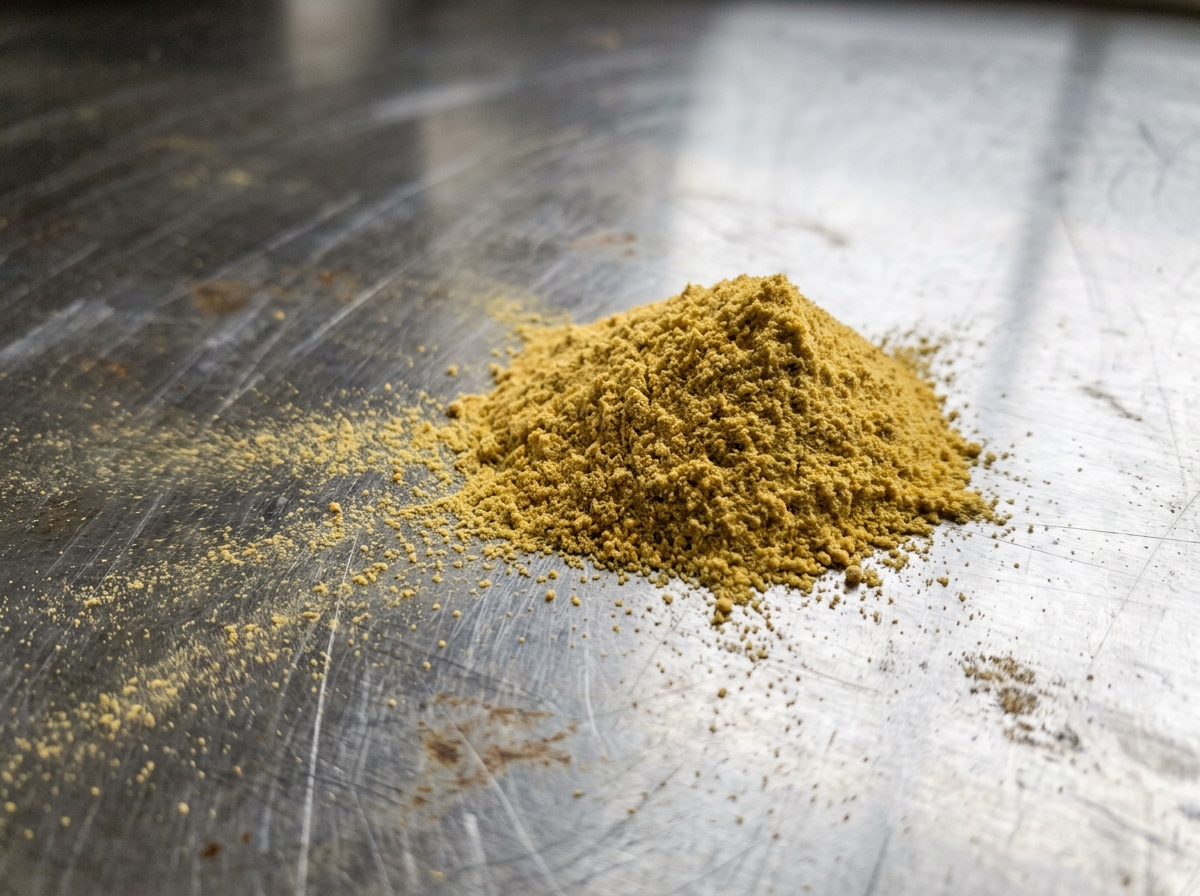
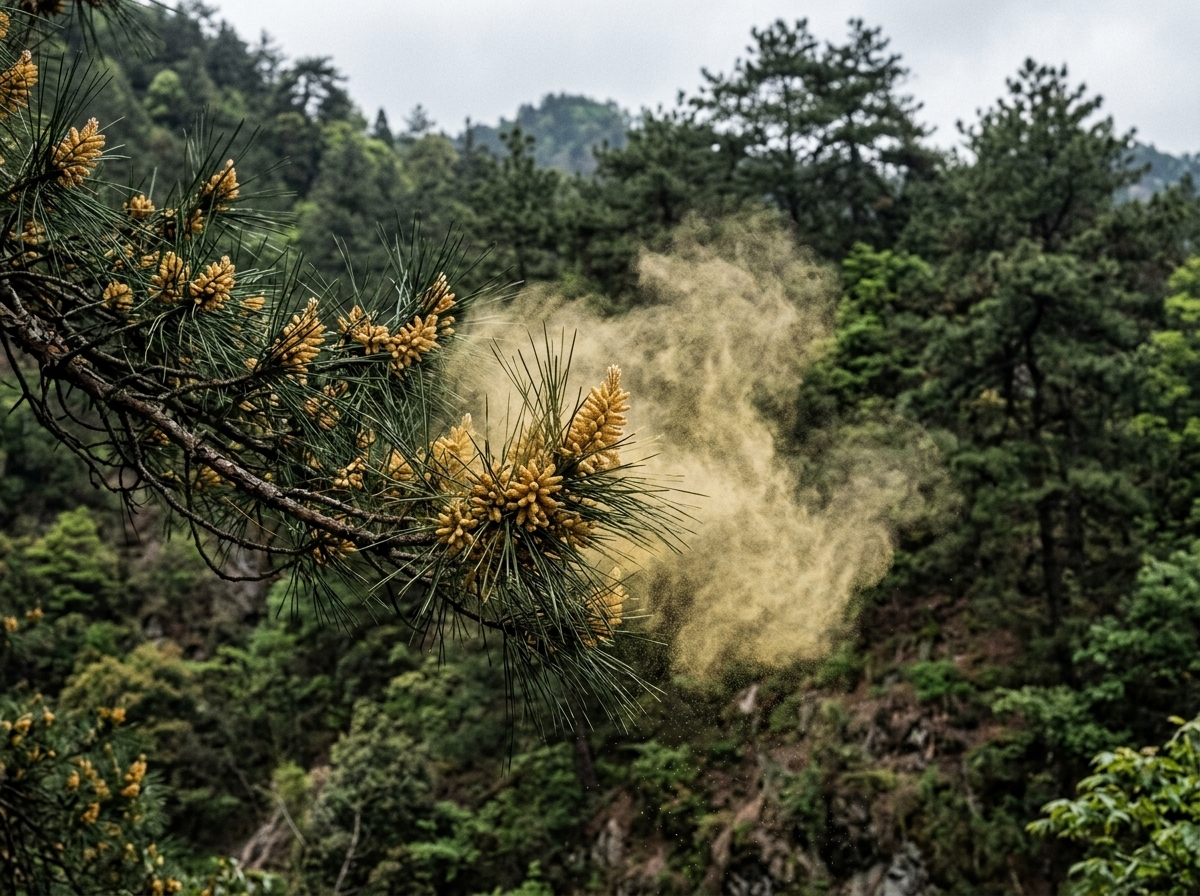
So, definition first. Pine pollen is the seed dust of the pine tree. It's the male half of pine reproduction, released in spring and carried on the wind to the waiting cones. If you've ever stood in a pine forest in the right week of spring, you've seen it. The whole stand sheds golden clouds so heavy the forest looks like it's smoking gold. That's the material. We harvest it wild, from the Masson pine of southern China, in that short spring window, and nothing else goes into the bottle but the extraction.
Now, a quick note here, because you've probably met this material's reputation before you met the material. Books have been written claiming pine pollen is natural testosterone, because trace androgens, meaning tiny amounts of male-type hormones, can be detected in the grain. Tricky tricky. The amounts are so small they're a distraction. You'd have to eat the whole forest to dose yourself meaningfully on pollen's trace hormones, and that's not what this is, and it never was.
I'll tell you something else plainly, too. We didn't want to sell this material for years, honestly, because the marketing around it was so loud and so dumb. Customers kept asking. So we looked past the internet, at the tradition and at the material itself, and here's what we found. The material is better than its reputation.
Classification before benefits, always. Pine pollen is a nutritive tonic and an adaptogenic herb, food-class material. And in China it always was food-class. The golden powder was mixed into cakes and confections, the kitchen shelf long before the apothecary shelf.
But get this. Pollen is the tree's reproductive package, and the tree packs that package like it means it. Protein, amino acids, vitamins, minerals, fats, enzymes, all in one microscopic grain, built to carry everything a new life needs to start. It's one of the most complete biological packages nature produces, and that completeness is the honest story of this material. Not a hormone. A food.
The constituent I'll name here is the plant sterols, the class the whole hormone conversation actually runs on. In the plant, sterols do the structural job that cholesterol does in your own cells. That's the raw-material side, and we'll walk it properly later.
And the honest boundary. Pine pollen is not a stimulant, and it does not overstimulate the nervous system. The character of the energy it supports is relaxed alertness. Steady, not spiky.
Taken consistently over time.
2. Where Does It Come From?
Where does pine pollen come from, and why did the Chinese care about a tree's seed dust? That's a fair question, and the answer starts with a window of days in spring.
The male catkins of the pine ripen in spring, and when they open, the whole stand releases at once. Golden clouds of pollen on the wind, so heavy in the right light that the forest looks like it's smoking gold. The Chinese harvest is timed to those few days, the golden powder caught before the wind takes it all. Wind-pollinated trees live by abundance. The pine makes so much seed dust that some of it lands, and that same abundance is why humans can take some without taking anything the tree needed.
The species is the Masson pine, the pine of southern China's own mountains, and the material in our bottle is one hundred percent Masson pine, wild harvested, and nothing else.
The Chinese have a name for this material, and the name is the lesson. They call it sōng huā fěn, which translates to pine flower powder. They named it exactly what it is, the flower dust of the pine, and they ranked it as food from the beginning. The golden powder was folded into cakes and confections, a kitchen material, slightly sweet, eaten as ordinary food with extraordinary material in it.
And the pine itself carried weight in that tradition. The Chinese prized the pine as the evergreen, one of the Three Friends of Winter, alongside bamboo and plum, the plants that hold their color through the hardest season. To the Daoists, the pine was the longevity tree, the one that stays green on the cliff for centuries. Anything taken from the pine walked in with that association.
The classical record backs it up. Pine products run all through the Chinese herbal tradition, the needles, the resin, and the pollen, and Li Shizhen's great encyclopedia of the fifteen-nineties records pine pollen among the pine's parts, as a food material and as a topical material for the skin. The tradition reached for this golden dust on the skin before almost anything else. That detail matters, and we'll come back to it.
Now, the craft on our end. Structured distilled water and triple filtered USP grade organic alcohol at thirty percent by volume, the water pulling one class of constituents and the alcohol pulling the other, so the whole range of the grain lands in the bottle. The ratio is stated plainly. Two pounds of pollen to one quart of liquid, about fifty-seven thousand milligrams in every two-ounce bottle. You can view our full extraction and lab standards on our standards page, because a craftsman hides nothing.
The spring window, the Chinese kitchen, and honest craft. That's where this comes from.
Taken consistently over time.
3. What Does It Actually Do?
What does pine pollen actually do in your body? Let me walk it properly, system by system, because the honest answer is broader than the internet ever told you. And the frame never changes. The pollen supplies. Your body does the work.
First, the hormonal side, told the sophisticated way. The plant sterols and the brassinosteroids in the grain supply raw materials for hormones, working with the neuroendocrine system to maintain healthy hormonal balance and glandular function. And here's the part most people miss. Hormones are a flowing system, not a level. The body makes them, uses them, and clears them, every single day. The sterols feed the making. And the pollen supports the other end of the river too, the clearing, which is liver work. We'll walk that fully in its own section, because it's the heart of this material's real story.
Second, digestion. Dense concentrations of amino acids, essential vitamins, and essential trace minerals support the production and activity of your digestive enzymes. That means the body takes the meal apart better. The nutrients in your food actually get absorbed, and the energy stores get replenished from complete balanced meals. That's where the sustained vital energy actually comes from. Not stimulation. Assimilation.
Third, the cleanup and the liver. The grain carries antioxidant enzymes, specifically superoxide dismutase, which is one of your body's own premier antioxidant enzymes, occurring naturally in the pollen. Alongside the antioxidant bioflavonoids, these neutralize free radicals and balance oxidative stress. That supports healthy liver function, aiding the natural elimination pathways, the liver and kidneys, in the elimination of environmental toxins and cellular waste. The drainage channels get supported so they keep running clean, day after day. And the same antioxidant action nourishes from within to maintain cellular health and skin vitality, which is the beauty story, and it's real.
Fourth, the brain. The constituent synergy of essential trace minerals and bioflavonoids helps maintain healthy blood flow to the brain, providing the vital nourishment that cultivates efficient thinking, mental sharpness, and cognitive focus.
So there's the whole picture. Raw material for hormones. Enzymes for digestion. Antioxidants for the cleanup crew, liver included. Blood flow for the brain. Four systems, one complete food.
And notice what's missing from that list. Nothing pushes. Nothing forces. The pollen supplies materials, and the body uses them and clears them at its own pace. That's why the character of this material is relaxed alertness, steady energy without overstimulating the nervous system.
Benefits accumulate over time.
4. Who Is It For?
Who is pine pollen actually for? Let me paint the pictures from the real world, and you'll likely recognize yourself in one of them.
First, the person carrying the loud day. Dealing with chaotic schedules and demanding people tests the neuroendocrine system, the network of glands that runs your stress response. The adaptogenic constituents in this material fortify that system, maintaining a balanced stress response and inner harmony. The bottle ends up in the bottom desk drawer, and the day stops owning you.
Then the entrepreneur, the one facing decision fatigue and long days of handling problems. The constituent synergy of trace minerals and bioflavonoids maintains healthy blood flow to the brain, cultivating the efficient thinking required to process information effectively, decision after decision. The bottle sits on the desk, right next to the keyboard.
Then the athlete. Sustaining consistent training without waking up stiff requires raw materials, and the dense concentrations of amino acids and brassinosteroids supply the essential building blocks for muscle protein synthesis, promoting physical resilience and recovery from exertion. The bottle lives in the training bag, taken with the meals the rebuilding actually runs on.
Then the physique person, shrinking the gut and staying lean. The naturally occurring plant sterols supply raw materials for hormones that support structural integrity and lean tissue. The bottle ends up in the bathroom cabinet, next to the scale.
Then the one in transformation, dropping bad habits and watching progress show. This formulation provides vital nourishment and supports energy metabolism to systematically recover and rebuild the internal environment. And the sage, reading and staying sharp and aging well, gets served by the same antioxidant profile, maintaining cellular health and healthy epigenetic processes. That bottle sits on the bookshelf, next to the reading lamp.
Now, the honest redirect, and I want to be plain about it. If you're shopping for pine pollen because the internet told you it's a testosterone booster, you're shopping for the wrong thing, and I'd rather tell you that than sell you the wrong expectation. This is a food-class tonic that harmonizes. It feeds the system. It supports the clearing. The body balances itself, and that's a slower, better story.
The person who wants steady energy, a balanced stress response, a clean-running system, and nourishment that shows on the skin. That's who this is for.
Long term results bring the most satisfaction.
5. How Do You Take It?
Tonic Synergy & Timing: Pine Pollen is a highly active, genuinely detoxifying material.
We suggest starting low (10 drops) to find your body's functional dose, as more is not always better. This formulation works best taken alongside complete balanced meals to aid nutrient absorption and support your natural elimination pathways without overwhelming them.
This is pine pollen liquid extract, one hundred percent wild harvested Masson pine, in a two-ounce bottle with sixty dropper servings.
One dropper is one press of the rubber bulb, which fills the tube to just above half-way. That's thirty drops, which is also one milliliter.
To find a functional dose, start with a minimum dose of ten drops to one dropper and work up. Our suggested range is ten drops to one to three droppers, taken one to three times per day, which is three hundred thirty-three to six thousand milligrams daily.
And here is the note that makes this material different from most of the shelf. Do not chase heroic doses with this one. Pine pollen is genuinely detoxifying, and too much is overly detoxifying. Someone can only take so much of anything at any time, and with this material that line matters more than usual. Find your functional dose, the amount your body agrees with, and stay there. Enough is the target. More is not better here.
Shake gently. Secure the lid and turn the bottle over back-and-forth three to five times to evenly distribute the extract. Vigorous shaking oxidizes the fragile constituents, so gentle is the word.
By mouth, hold the liquid under the tongue for sixty to ninety seconds before swallowing, or mix the drops into two to four ounces of drinking water. Never hot water. Hot liquids damage the fragile constituents and lessen potency.
Concerning timing, this one is flexible. It may be taken anytime during the day or evening, and it works best taken with meals, to aid nutrient absorption and assimilation. The digestion support and the meal work together, so let them meet in the middle.
Storage is simple. An opened bottle holds about thirty to forty-five days. Unopened, about two years from the batch date. Keep it dark and cool.
Some effects are immediate within the first few days, one to three days. Other effects are building and are noticeable within one to two weeks.
Bingo, that's the whole practice.
Taken consistently over time.
6. How Long Until You Notice Results?
How long until you notice something from pine pollen? Let me give you the honest timeline, because tonics keep a different calendar than stimulants, and this one keeps a more patient calendar than most.
Some effects are immediate within the first few days, one to three days. With this material, the felt layer tends to be digestive and steady. The meals sit better. The energy is level rather than loud, relaxed alertness rather than a lift.
Other effects are building and are noticeable within one to two weeks. That's the nature of a nutritive tonic. The reserves refill, the assimilation improves, and the changes show up in retrospect more than in the moment.
And the deep work, the hormone harmony, the clean-running elimination, the skin, comes as you continuously saturate the body over a good tonic cycle. A good tonic cycle is thirty to ninety days. You're feeding systems that put materials to work at their own pace. The body doesn't take orders. It takes deliveries.
Nothing is a quick fix. Anyone selling you a quick fix in a bottle is selling something else. Tonics reward time, not dosage, and with pine pollen especially, dosage is not the lever. Time and consistency are the levers.
Keep complete balanced meals under all of it. This material supports the assimilation of nutrients from your meals, which means the meals have to be there. The body requires macronutrients, protein, complex carbohydrates, and healthy fats, to recover and rebuild. Skip the meals and you're asking the pollen to do the food's job, and nothing does the food's job but food.
And here's the mistake I've watched more than once with this specific material. Someone takes a real dose, feels the detoxifying layer arrive faster than expected, decides the bottle is too strong, and quits at the doorstep of the building layer. The fix is almost always the same. Back the dose down, keep the meals, stay on the calendar. The timeline doesn't change because the dose was loud.
Benefits accumulate over time.
7. Safety and Quality
Is pine pollen safe, and how do you know you're getting a quality bottle? Let me answer both plainly, and with this material the two answers run together, because honest use and honest craft are the same conversation.
Start with honest use. This is a wild, complete, genuinely detoxifying material, and the respect it asks for is dosing discipline. Too much is overly detoxifying, and that's not a flaw, that's information. The constituents support the liver and the natural elimination pathways, and a system that clears well is a system you work with, not against. Start low, find your functional dose, stay there. That's the whole practice, and it's the safest one in the book.
Then the quality markers, stated plainly. Our bottle is one hundred percent pine pollen, the species Pinus massoniana, wild harvested, and nothing else. Correct species, whole grain, no fillers. That's where quality starts.
Then the craft. Structured distilled water and triple filtered USP grade organic alcohol at thirty percent by volume, the dual solvent pulling the full range of constituents into fluid suspension for maximum absorption. The ratio is honest and heavy. Two pounds of pollen to one quart of liquid, about fifty-seven thousand milligrams in every two-ounce bottle. And the full specifications of our extraction and lab methods are published on our standards page, because a craftsman hides nothing.
The taste tells you it's real. The more you taste the stronger it is. A real extract of this material comes out golden and strong, and you can taste it minutes after taking it. Your own tongue is the lab.
Now, the honest register on what this material is and isn't. Herbs are more effective and more powerful in the long term for supporting health, whereas drugs are more effective and more powerful in the short term for treating conditions and emergencies. Do not use an herb when one should use a drug, and do not use a drug when one should use an herb. Each has its own job, and this bottle's job is the long term. It is not a hormone, it is not a medicine, and it does not replace anything your doctor does. It's a food-class tonic that feeds and clears and lets the body balance itself.
Honest material, honestly wild, honestly made. Pay for the pollen and the craft, not for mystique.
Be the Best and Buy the Best. It is important to do your own research, and health is the most valuable asset of one's life and the most valuable investment.
8. Does It Raise Testosterone?
Does pine pollen raise testosterone? Let me fix the question before I answer it, because the question as asked is the trap, and with this material the trap has been baited for over a decade.
Books have been written on this. The claim goes like this. Trace androgens, meaning tiny amounts of male-type hormones, can be detected in the pollen grain, therefore pine pollen is natural testosterone in a bottle. And my answer to that line is the plain math. The amounts are so small they're a distraction. You'd have to eat the whole forest to dose yourself meaningfully on the trace hormones in pollen, and nobody is doing that, and nobody ever was. Tricky tricky. The books sold a hormone story because hormone stories sell books, and the material got dressed in a costume it never chose.
So what's actually happening with this material and your hormones? Here's the sophisticated version, and it's a better story than the costume.
Hormones are a flowing system, not a level. Your body makes them, uses them, and clears them, every single day. Spent hormones and unwanted hormones get processed by the liver and carried out through your natural elimination pathways. That's ordinary, everyday physiology, part of the body's own maintenance, happening right now whether you take anything or not.
The sterols in pine pollen feed one end of that river, supplying plant-based raw material for the body to build hormones from. And did you know that testosterone and estrogen are over ninety-five percent cholesterol by weight? Hormones are built, not summoned, and the sterols are the plant version of that backbone, food-class material the glands can work with.
And the other end of the river, the clearing, is liver work, and the constituents in this material support those natural elimination pathways. The body clears the spent and unwanted hormones, the supply gets fed, and the system harmonizes itself. That's where the whole reputation comes from, and it was never about trace hormones. It's about balance.
Now, one more piece of honesty, because someone will ask. Is this stuff anabolic? And the answer is, sure, in the sense that most tonics are anabolic. No crap. Tonics feed tissue-building, because that's what nourishment does. Food-class materials support muscle protein synthesis and structural repair, and that's true of a good steak and a good tonic alike. That is not a drug effect. Nothing gets forced, no switches get flipped, and it doesn't behave like a steroid because it isn't one.
Same answer for a man and a woman, by the way. The body builds what the body calls for, and the pollen supplies and supports the channels. That's it. That's the whole honest answer, and it's more than the books ever gave this material.
Hormones need a constant supply of raw materials, and a clear way out.
9. Hormone Harmony
How does pine pollen harmonize your hormones? That's the real question underneath this material's whole reputation, and it's worth walking slowly, because the answer is one of the most useful ideas in the whole tonic conversation.
Start with the picture. Your hormones are a river, not a level. The body is constantly making them, using them, and clearing them, and a hormone system in good shape is one where the inflow and the outflow both run well. Most of the market sells you only one side of that river, the inflow, the raw materials. Almost nobody talks about the outflow. But get this. The clearing is where the balance actually lives.
Here's the physiology, told plainly. A hormone gets made by a gland, does its work at a cell, and then it's spent. Spent hormones and unwanted hormones get processed by the liver and carried out through the body's elimination pathways, every single day. That's not a special event. That's Tuesday. When that clearance runs well, the system stays clean and responsive. When it runs sluggish, the used-up hormones linger, and the whole system gets noisy.
So the sophisticated answer to why pine pollen earned a hormone reputation is that it works both ends of the river at once. On the inflow side, the plant sterols and brassinosteroids supply raw materials for hormones, working with the neuroendocrine system to maintain healthy hormonal balance and glandular function. Food-class material, the backbone the glands build from. On the outflow side, the constituents support the liver and the natural elimination pathways, the same channels that carry out spent hormones, environmental toxins, and cellular waste. The making gets fed. The clearing gets supported. The river harmonizes.
And that's also why the beauty story and the connection story come from the same place. The skin is partly a readout of the hormonal supply line, and a system that clears well and supplies well shows it on the outside, skin vitality, a vibrant appearance. The Chinese saw that connection centuries before anyone drew the pathway. And connection, the sex-tonic reputation, rides on the same harmonious system. A body in balance has the materials and the momentum, and that's the whole story. It was never about a hormone in a bottle. It was always about the balance.
Now, the food doctrine rides along, because this is where people sabotage themselves. Hormones are built, not summoned. Did you know that testosterone and estrogen are over ninety-five percent cholesterol by weight? The glands are factories, and the stock comes from the plate. Complete balanced meals, protein, complex carbohydrates, and healthy fats together, or the factories run on an empty dock. The pollen supplies its unique constituents to the same project. The meal supplies the rest. They meet in the middle.
The making fed, the clearing supported, the meals underneath. That's what harmonizing your hormones actually means.
Taken consistently over time.
10. Is It For Women Too?
Is pine pollen for women? Yes, and I want to answer that the way I'd answer it on the phone, because the question is fair, and the modern marketing made it seem like the answer should be no.
Start with the history, because the history is better than the marketing. The modern internet sold this material as a locker-room product, a men's testosterone thing. The Chinese tradition never saw it that way. In China, pine pollen was a whole-household food, folded into cakes and confections, and it was a skin material first, the golden dust used topically on irritated skin and on infants, long before anyone wrote a forum post about it. The women of that tradition kept this material in the kitchen and the vanity, not the locker room. The tradition knew what the marketing forgot.
Now the internal beauty story, and it's real. The antioxidant enzymes and bioflavonoids in this material nourish from within, maintaining cellular health and integrity, promoting skin vitality and a vibrant appearance. That's the page mechanism, and it lines up with the tradition exactly. The complexion is partly a readout of the supply line, what the blood carries to the surface, and a food that feeds cellular structures shows up on the outside over time. That's why the beauty herbs and the nourishing foods were so often the same herbs. The bottle lives on the bathroom vanity, and the mirror catches up over the months.
Then the hormone story, and here's the sophisticated part, because a woman asking about a hormone tonic is asking the right question, just in the wrong frame. Will this do something to my hormones? No, nothing gets forced. This is the harmonize story, and it runs the same in a woman as in a man. Hormones are a flowing system, made, used, and cleared, and the sterols supply plant-based raw material while the constituents support the liver pathways that carry out the spent and unwanted hormones. Estrogen and progesterone balance in females gets the same support the male side gets, the same fed factory, the same clear river, the same body deciding what it calls for. Nothing gets flipped. There's no switch to worry about, which is exactly why the question dissolves.
And the rest of what this material does was never gendered in the first place. The digestion support, the steady energy, the relaxed alertness, the balanced stress response on the loud day, the antioxidant defense for aging well. Those are human systems, and this is a human food.
Same pollen, same biology, same supply line. The tradition never even asked.
Taken consistently over time.
11. Digestion
Is pine pollen really good for digestion? Yes, and honestly, this is one of the most quietly digestive materials in the whole catalog, and it's the side of the material the entire internet conversation skipped.
Here's the mechanism, told plainly. Dense concentrations of amino acids, essential vitamins, and essential trace minerals support the production and activity of your digestive enzymes. The enzymes are the extraction machinery of the gut, the tools that take your meals apart into the pieces the body can actually absorb. When the machinery is well supplied, the machinery works, and the nutrients in your food get assimilated instead of passing through.
That's the whole chain, and it matters more than it sounds. The best diet in the world is only as good as what the body takes from it. I've watched people spend real money on beautiful food that their bodies barely absorbed. Nourishment in, energy out. That's the engine, and assimilation is the front door of every other benefit this material carries, the sustained vital energy, the hormone raw materials, all of it arriving through the digestive tract. Even the energy story is a digestion story. The material promotes sustained vital energy by aiding the assimilation of nutrients from complete balanced meals. Not stimulation. Assimilation.
And the pedigree backs the mechanism up, because the Chinese always used this material as food. The golden powder was folded into cakes and confections, eaten as ordinary food with extraordinary material in it. Food-class from the beginning, and the body treats it that way. The kitchen never separated it from the meal, and neither should you.
So the practice follows the principle. This one works best taken with meals, to aid nutrient absorption and assimilation, and the timing is flexible, any meal of the day. The pollen helps the body take the meal apart, and the meal gives the pollen something to work on, and they meet in the middle. To supplement means to add to a complete meal, and this material is practically a poster child for that doctrine.
Superfoods make your food and diet work better. That's this material's oldest job, and its most underrated one.
Food heals.
12. Detox (The Honest Version)
What does detox actually mean for pine pollen? Everyone in the wellness world sells detox, and most of what they sell is a wave. Flush, cleanse, purge. This material doesn't work like a wave, and that's exactly why the honest version of its detox story is better.
Here's the truth about detoxification first. Your body already runs a waste management system, twenty-four hours a day. The liver takes cellular waste, spent hormones, and environmental toxins, and metabolizes them. The kidneys filter and carry the rest out. That's not a special event you schedule twice a year. That's Tuesday. The question was never whether you detox. It's whether the drainage channels run clean or clogged.
The constituents in pine pollen support those channels. The antioxidant enzymes, specifically superoxide dismutase, which is one of your body's own premier antioxidant enzymes, occurring naturally in the pollen, work alongside the antioxidant bioflavonoids to neutralize free radicals and balance oxidative stress. That supports healthy liver function, aiding the natural elimination pathways, the liver and kidneys, in the elimination of environmental toxins and cellular waste. Not by forcing anything out in a rush. By supporting the organs that do the work every single day, so the work keeps getting done. Constant quiet maintenance instead of an occasional flood. And remember from the hormone section, the spent and unwanted hormones leave through those same channels. The clearing is the balance.
Now, the boundary, and this is the part I need you to hear plainly, because it's the signature of this material. Pine pollen is genuinely detoxifying, and that is exactly why you don't overdo it. Too much is overly detoxifying. A material that supports the drainage running harder than you're used to can be felt, and if you chase heroic doses, you'll feel it. Someone can only take so much of anything at any time, and with this material that line matters more than usual. The discipline is simple. Start low, ten drops to one dropper. Find your functional dose, the amount your body agrees with. Stay there. Enough is the target, and consistency is the vehicle, not volume.
And keep the meals underneath it. The elimination pathways and the digestion run on the same schedule, and complete balanced meals keep both fed. A detox-capable tonic on an empty, underfed system is asking the river to run without rain.
The drainage supported, the dose respected, the meals underneath. That's detox, honestly told.
Clean channels, quiet work.
13. Aging Well
What about pine pollen and aging well? Let me reframe the question first, because the phrase anti-aging is snake-oil register and I won't use it. Nothing stops the calendar, and anyone selling that is selling you nothing. The honest phrase is aging well, and aging well is cellular health and longevity, which is a supply and clearance project, and that's exactly the kind of project this material is built for.
Start with the symbolism, because it's the oldest part of the story. The Chinese prized the pine as the evergreen, one of the Three Friends of Winter, the tree that holds its color through the hardest season, growing green on the cliff for centuries. To the Daoist tradition, the pine was the longevity tree. Now, I don't sell mystique. A symbol is a symbol. But when a tradition associates a tree's material with long life for centuries, and then you look at what the material actually carries, the association starts looking less like poetry and more like observation.
Here's what it carries. A robust profile of antioxidant enzymes, specifically superoxide dismutase, one of your body's own premier antioxidant enzymes, occurring naturally in the grain, alongside antioxidant bioflavonoids. These neutralize free radicals and balance oxidative stress, the everyday wear that accumulates from just being alive, maintaining cellular health and integrity. That's the cleanup crew, fed from a food that carries the enzyme itself in its natural matrix.
And there's a deeper layer the modern world is just learning to talk about. This material nourishes cellular structures and maintains healthy epigenetic processes, and let me gloss that plainly. Epigenetics is the maintenance of healthy gene expression, the cell reading its own instructions correctly as the years stack up. Supporting that maintenance is supporting the long game at its root, and it's one of the reasons the tradition reached for evergreen material and the laboratory reaches for antioxidant enzymes, and they keep arriving at the same table.
So the picture is the sage, reading and staying sharp, aging well. The bottle sits on the bookshelf next to the reading lamp, and the long-term building benefits are exactly what this class of material is for.
And the practice is the long view. A good tonic cycle is thirty to ninety days, and aging well is a practice measured in seasons, not weekends. Complete balanced meals, because the cells are built from the food, the pollen supplying its unique constituents to the same construction.
Long term results bring the most satisfaction.
14. Athlete & Physique
Why do athletes and physique people reach for pine pollen? Let me tell you the honest version, because the honest version is better than the hype version, and the hype version is what most of the internet thinks this story is.
The hype version says it's a testosterone booster, an anabolic in a dropper, the natural steroid. We dismantled that already, and I'll say the short version again. No. Nothing gets forced, and it isn't a drug and doesn't behave like one.
The honest version starts with the plant's own chemistry. The grain carries brassinosteroids, and here's the plain-language gloss. Brassinosteroids are the plant's own growth regulators, the hormone class a plant uses to drive its own cell division and development. The chemistry of a plant growing, packed in the grain as part of the package. You're taking the plant's growth chemistry as nourishment, food-class material, and that's the truthful version of the anabolic story.
And is it anabolic? Sure, in the sense that most tonics are anabolic. No crap. Tonics feed tissue-building, because that's what nourishment does. Dense concentrations of amino acids supply the essential building blocks for muscle protein synthesis, the same lumber your muscles are actually built from, and the sterols supply raw materials for hormones that support structural integrity. That's food work. A good steak does food work too, and nobody calls it a steroid. The difference between food-class anabolic support and a drug is the difference between delivering lumber and hiring a crew that doesn't leave. The pollen delivers lumber. Your body builds at its own pace.
Then recovery, because training is two events, the work and the rebuild. The constituents provide vital nourishment and support energy metabolism to recover and rebuild, so the consistent training schedule holds without waking up stiff, and the physique work keeps its structural integrity while the gut shrinks. That's the athlete card and the physique card, the training bag and the bathroom cabinet next to the scale.
And the practice is the construction-site practice. Complete balanced meals, protein every time, because the body can't bank protein, and the pollen added to the meal, supplying its unique constituents to the same project. The meal builds the frame. The pollen feeds the work. And the energy character matters here, relaxed alertness, steady without overstimulating the nervous system. Not a pre-workout jolt. A fed system that holds.
Train, eat, sleep, repeat. The pollen handles the deliveries.
Benefits accumulate over time.
15. The Hype Wave
Why does pine pollen have such a cringey reputation online? That's a fair question, and I'm going to answer it the way I'd answer it across the counter, because I watched this whole era happen, and I have a confession about it.
The era started with the books. Somewhere along the line, the fact that trace androgens can be detected in pollen got turned into a whole publishing category. Pine pollen, the natural testosterone, the androgenic miracle. Tricky tricky. The amounts are so small they're a distraction, you'd have to eat the whole forest to dose on them, and the books sold a hormone story because hormone stories sell books. Then came the sprays. Little sublingual spray bottles riding the same trace-androgen story, tiny doses of dilute material, sold as hormone delivery. Spritz! Spritz! Then the forums, the hype threads, the rep swings, the whole loud decade. The material got a reputation its contents never earned.
Now, the confession. We didn't want to sell it. For years, honestly, because the marketing around it was so loud and so dumb that the material itself got contaminated by association. And then the customers kept asking. And when customers keep asking for years, a craftsman owes them a real look, not a sneer. So we looked past the internet, at the tradition, the Chinese record going back centuries, the kitchen use, the skin use, the food-class pedigree. And we looked at the material itself, one of the most complete biological packages nature produces, vitamins, minerals, amino acids, enzymes, sterols, all in one grain. And the conclusion was plain. The material is better than its reputation. We carried it on the material's own terms, and not the internet's.
And here's the detail that makes the whole era look sillier. China ran its own version of this wave, inside China, decades back. Pine pollen as a mass-market health food, big promotion, big claims, the costume of the decade. The material survived that wave the same way it's surviving the testosterone wave, because the underlying food was real both times. That's the pattern with traditional materials. The marketing costume changes every decade or two, and the food underneath keeps working, and eventually the costume falls off and the material is still standing. The internet dressed it as a hormone. The costume will fall off. The pollen will still be standing.
So how do you shop a category like this one? Ask the questions the hype era never answered. What species is it, ours is Masson pine, stated plainly. Where did it come from, ours is wild harvested, stated plainly. How was it extracted, ours is two pounds to one quart, structured distilled water and triple filtered USP grade organic alcohol, stated plainly, with the full lab standards published for anyone to read. And use your own tongue. The more you taste the stronger it is. A real extract is golden and strong, and you can taste it minutes later. If it's thin and faint, it is what it tastes like.
A real traditional food, honestly wild, honestly made, honestly priced. That's the antidote to the whole cringey era.
Be the Best and Buy the Best.
16. Troubleshooting Guidelines
Pine pollen didn't work for you? Or you're wondering if it even works at all? Let me answer both, because the two questions are really one question, and the answer is the same one that runs the whole tonic world, with one twist unique to this material.
First, the skeptic's question, does it even work. And I'll answer it the way I'd answer it on the phone, without hype, because the plain case is the strong case. This is one of the most complete biological packages nature produces. Vitamins, minerals, amino acids, antioxidant enzymes, sterols, plant growth compounds, all in one microscopic grain, built by the tree to start a life. That's a food, and food works, and everything probably works in someway somehow. A very little bit of something probably does some degree of a little bit. A whole bunch of one thing is just that, you can't force it to work. And nothing does nothing, guaranteed. The honest case for pine pollen is that it's a dense, complete, traditional food, and traditional foods that survive centuries of kitchens don't survive on marketing.
Now, when this specific material fails, it fails for one of exactly three reasons, and here's the twist. With most tonics, the most common failure is not taking enough. With pine pollen, the most common failure is taking too much, too fast.
Reason one, the dose. This material is genuinely detoxifying, and too much is overly detoxifying. Someone starts at a heroic dose, the drainage runs harder than they're used to, they feel it, they decide the bottle is too strong or it doesn't agree with them, and they quit. The fix is the opposite of what they tried. Start low, ten drops to one dropper, and work up to your functional dose, the amount your body agrees with, and stay there. Enough is the target. With this material, more is not better, it's just louder.
Reason two, the plate. The whole energy story of this material runs through assimilation, aiding the body's use of nutrients from complete balanced meals. Skip the meals, eat incomplete ones, and you're asking the pollen to do the food's job. The body requires macronutrients, protein, complex carbohydrates, and healthy fats, to recover and rebuild. The fix is on your plate.
Reason three, time. Some effects are immediate within the first few days, one to three days. Other effects are building and are noticeable within one to two weeks. The deep work comes over a good tonic cycle, thirty to ninety days. Most people who tell me it didn't work quit inside three weeks, right at the doorstep of the building layer. The fix is the calendar.
So check the dose, check the plate, check the calendar, in that order. And if it didn't sit right, try again at a lower dosage and with a complete meal.
The failure is almost never the material. It's the practice.
Commit to the Practice
Tonic herbalism rewards consistency. The deep, systemic building work happens quietly over a 30 to 90-day cycle of continuous saturation. Supply the raw materials your body needs with our premium 3-pack.
Shop the 3-Pack Formulation