
Discover the honest truth about Turmeric—the golden nutritive tonic prized for thousands of years. Whether you are looking to support joint comfort, defend cellular tissues against oxidative stress, or maintain a balanced inflammatory response, the secret lies in capturing both the fresh and dried root. This guide strips away the marketing hype to teach you exactly what turmeric is, what it does, and how to properly use it for deep, systemic vitality.

I recorded these audios to directly answer the questions I've received most over the last 26 years. The text below contains the actual transcripts.
Jason J. DukeOwner / Artisan
Reference Directory

Commit to the Practice
Tonic herbalism rewards consistency. The deep, systemic building work happens quietly over a 30 to 90-day cycle of continuous saturation. Supply the raw materials your body needs with our premium 3-pack.
Shop the 3-Pack Formulation1. What is Turmeric?
So, what is turmeric, exactly? Most people know it as the gold dust in the spice jar, the yellow in the curry, the reason ballpark mustard is yellow. But there's a whole plant behind that powder, a whole history, and two whole families of chemistry, and all three belong in this bottle's story.
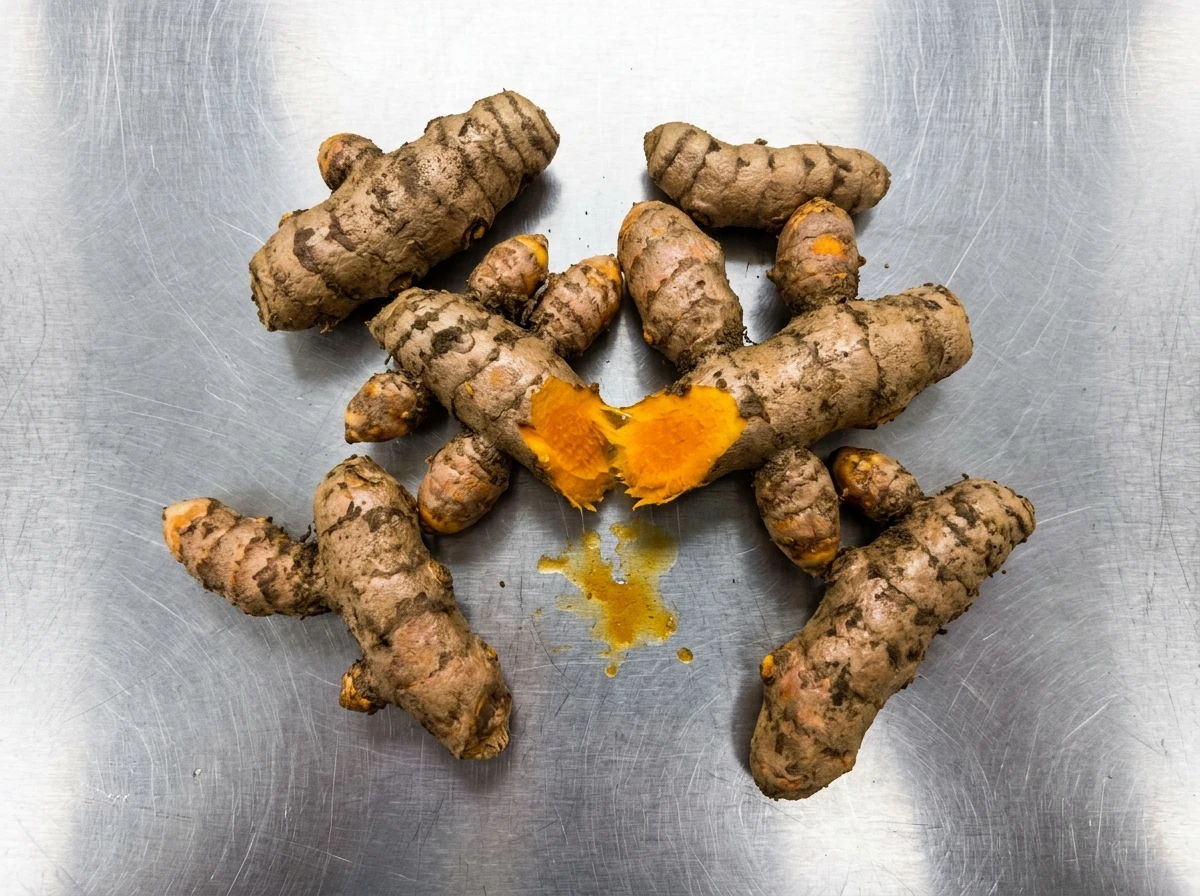
Start with the family, because the family explains the plant. The botanical name is Curcuma longa, and it sits in the family Zingiberaceae — which makes turmeric ginger's first cousin. Same family, same habit, same underground stem. And rhizome is the right word, worth defining: an underground stem, not a root proper, the plant's storage locker and its growth engine both. Turmeric branches in knuckled hands like its cousin, and the produce bin in the parts of the world that sell it fresh sells them as fingers. You've been eating fingers all along and never knew it.
The names carry the gold. Curcuma descends from kurkum, an old Aramaic word for saffron-yellow — the plant was named for its color. Then it returned the favor and named the color: curcumin, the constituent, carries the plant's name in it. And turmeric itself is a disputed word — one thread traces it to the Latin terra merita, deserving earth, though the scholars still argue. That's the honest version: a plant so golden even its etymology gets argued over.
Classification before benefits, always. Turmeric is a nutritive tonic, and grounding is the honest word for its whole character. Where its cousin ginger is the fire-and-circulation bottle, the one that moves warmth out to the edges, turmeric is the other half of the shelf: the gold-and-grounding bottle, the one that maintains, protects, and keeps things steady. Plain English: this is the maintenance-and-protection bottle. The one that stands watch over what you've already built.
Now the signature constituents, and this is where turmeric gets genuinely interesting. The gold is a family of three curcuminoids: curcumin, the majority, roughly three-quarters of the gold fraction; demethoxycurcumin, the middle child; and bisdemethoxycurcumin, the smallest share. They're not three separate accidents. It's one skeleton, three times, with one methoxy arm removed at each step. And underneath the gold sits a second family entirely: the volatile oils, the turmerones, the earthy resinous scent of fresh-cut root. Two chemistries in one plant — one fat-loving, one volatile — and which one you meet depends on how the root was treated before it met you.
That's the formulator's move in this bottle: the label says both fresh and dried turmeric root, so both chemistries arrive in the glass. That story earns its own piece in this series, and it's worth the listen.
And the honest contrast, because classification comes with it. This is not the stimulating shelf. This root will not bolt you awake; it's the quiet half of the tonic shelf, and its most noticeable work arrives over weeks, not minutes. It's also not some rare rainforest botanical with a mystery premium on it. This is the world's working spice, carried and traded for four thousand years, and its reputation arrived centuries before the packaging did.
This is the golden, working root. The practice is what makes it work.
Benefits accumulate over time.
2. Where Does It Come From?
Where does turmeric come from? Short answer: an organic farm, both fresh and dried root. Real answer: the most-carried spice in human history, ferried across the planet by a plant that can't even pack its own suitcase.
The facts first, straight. This is one hundred percent turmeric root, Curcuma longa, organic, farm grown, nothing else in the bottle but the liquid. And notice the phrase on the label: both dried and fresh turmeric root. Most turmeric products take one form or the other and never say which. This one takes both, because the fresh root and the dried root carry different personalities of the same plant, and the formulator wanted the full range in the glass.
Now, the piece of biology that explains turmeric's whole history. Get this: cultivated turmeric is sterile. It's a triploid, carrying an odd set of chromosomes, so it almost never flowers and essentially never sets viable seed. For thousands of years it has traveled by human hands alone, a piece of rhizome planted to grow a new plant, cut and carried, farm to farm, port to port. Every turmeric field on earth is a cutting of a cutting of a cutting. Turmeric never spread on its own, so it spread wherever people valued it enough to carry it. And they carried it nearly everywhere — east across the whole Pacific, in voyaging canoes, to Hawaii, where the healers worked it under the name olena. A root that crossed an ocean it could never swim.
And the heritage, told as settled history. Pot residue from the Indus Valley civilization carries turmeric's signature, four thousand years old, the gold on the stove since before the pyramids' era. The Ayurvedic tradition ran so far in turmeric's corner that one of its names for the root translates as the golden goddess, and another as the enemy of fever. The Chinese materia medica classed it early and kept it permanently. Marco Polo, in 1280, described it in China as a vegetable with the properties of true saffron, the color and the scent, yet it is not really saffron. Medieval Europe knew it as Indian saffron and paid a fraction of saffron's price for an honest understudy. Okinawa drinks it as ukon tea in one of the world's famous longevity cultures, and Indonesia runs it through jamu, the herbal tradition carried on backs through the markets to this day. Four continents, four thousand years, one root, and the reputation was earned before anyone alive was born.
Then the extraction, built to respect the material. Custom crafted, multi-step, and micro-batched, with structured distilled water and triple filtered USP grade organic alcohol at thirty-five percent by volume. The water pulls one class of constituents, the alcohol pulls the other — the water-solubles and the volatile oils each get their pass — and the whole process stays cold, unheated, so the oils and fragile constituents hold their shape in fluid suspension for maximum absorption. And note on that thirty-five percent: a root carrying both gold and volatile oil wants a solvent that can hold both in solution, unheated and intact. The percentage is the craft answering the material.
The ratio is honest and stated: one pound of root to one quart of liquid, about twenty-eight thousand five hundred milligrams extracted into every two-ounce bottle. Nothing hidden, nothing dressed up.
And the color tells on it. This extract comes out deep gold, earthy, resinous, properly bitter, and it stains. The glass, the spoon, the dropper itself. The more it stains the more it carries. A pale tincture that rinses clean is like exactly what it is: mostly nothing.
Good root, honestly grown, carefully pulled. That's where it comes from.
Taken consistently over time.
3. What Does It Actually Do?
What does turmeric actually do in your body? Let me skip the list and give you one picture, because the picture is the mechanism.
A fire watch. Every cell in your body runs a furnace, the mitochondria, converting food into energy. And every furnace leaks sparks — free radicals, the oxidative byproducts of being alive. Ginger's picture was the hearth, lit, warming and moving the house. Turmeric is the cousin's job: the fire watch. It stands over the furnaces and does three things, and the rule underneath never moves: the root supplies the raw materials. Your body does the maintaining and the protecting.
First, the fire watch catches sparks directly. The curcuminoids are phenolics, and phenolic chemistry hands off hydrogen atoms the way a catcher's mitt receives the ball. A free radical arrives hungry for electrons, the curcumin molecule feeds it one from its hydroxyl group, and the spark is out on contact. Direct scavenging, on the spot.
Second, and this is the layer most products never mention: the fire watch staffs the fire brigade. Curcumin is a well-documented activator of a pathway called Nrf2, the master switch for your body's own endogenous antioxidant defenses, the enzymes your cells build themselves, superoxide dismutase, glutathione, heme oxygenase. This is the genuine distinction between a deep root and a surface one. A surface antioxidant catches sparks as they fly past. This root also promotes the internal production of the brigade itself. Not just catching sparks, recruiting firefighters.
Third, the fire watch keeps the smoke alarm from getting stuck ringing. NF-kappa-B is the master regulator of the body's inflammatory signaling cascade, the alarm system that mobilizes the response when tissues need it. Curcumin works with that system to keep the signaling balanced and proportionate, so the alarm still rings when it should, it just doesn't get stuck in the ringing position. And that's the deeper character of this molecule: it's famously pleiotropic, one compound touching many targets, hundreds of documented interactions in the literature. Not one lock and one key. A skeleton key.
Now the kitchen, because this root works the digestion from both directions at once. Turmeric is a classic cholagogue: it supports the healthy secretion and flow of bile. Bile is how your body digests fats, and it's the liver's outbound traffic, how the liver routes what it's finished processing. So the golden root taken with a meal both rides the meal and helps process the meal. And the liver support compounds: the body converts curcumin into tetrahydrocurcumin, itself a studied, active antioxidant. The liver transforms the gold, and the transformation keeps working.
And one quiet frontier, because it's a lovely piece of science. Measurable curcumin crosses the blood-brain barrier, supporting cognitive clarity. And researchers found that curcumin binds to amyloid deposits so well, and glows under ultraviolet light so cleanly, that they built brain-imaging probes on the curcumin scaffold itself. A molecule good enough at its job that scientists use it as a flashlight.
And the honest limit, same as every root on this shelf. It does not build anything out of thin air. It protects and maintains what your meals construct, and the gold is fat-loving, lipophilic, so it rides the fats and the bile of a real meal into the system. The meals aren't optional furniture here. They're the fuel the furnaces burn, and the fire watch guards what's actually in the building.
Supply, and stand the watch.
Benefits accumulate over time.
4. Who Is It For?
Who is turmeric actually for? Let me tell you who buys it, because the golden root has a specific customer, and the maintenance question decides it. This is the gym-bag-and-desk-drawer bottle. The root for people building something they intend to keep.
The athlete, first, because training is where the sparks fly hardest. Hard exercise is furnace work, high energy throughput, high oxidative load, day after day, and the joints take the ledger of that work. The curcuminoids defend cellular tissues against the oxidative stress of physical training, support joint and muscle comfort, and maintain physical mobility. The bottle rides in the gym bag, next to the tape, guarding the comeback so the training compounds instead of eroding.
The eater. Real meals, complete meals, and the question of whether they actually count. Turmeric supports the healthy assimilation of food, promotes the secretion and flow of bile, and maintains the cellular structures of the gastrointestinal tract. The fats get emulsified, the meal gets broken down and absorbed, and the complete nutrition you paid for actually arrives. The bottle sits on the dining table, right where the work happens.
The clear-headed professional. Long days, sustained output, the demand for clarity that holds from the first meeting to the last. Curcumin crosses the blood-brain barrier, and this formulation maintains healthy cognitive function and clarity, working with the body's adaptation to the physiological shifts of a demanding life. The bottle stands at the desk, within reach, through the afternoon that used to win.
And the steward, the quiet maintenance buyer, playing the longest game on the shelf. Cardiovascular function, liver function, the antioxidant reserves, the immune system's steady readiness, the whole household swept and guarded while nobody's watching. By maintaining cellular integrity and supporting the body's own defense systems, this formulation provides the nutritive foundation for sustained core vitality, decade over decade. The bottle lives on the kitchen counter, next to the coffee and the keys, taken with breakfast like brushing teeth.
Notice the common thread, because it's the whole thesis. Every one of these buyers is purchasing protected output: the training that keeps compounding, the meal that assimilates, the mind that holds clear, the body that stays steady. One gold, four positions.
Now the honest redirect, because with a grounding root it matters. If you want a bolt of energy, or warmth reaching cold fingers, that's not this bottle's voice — that's the warming shelf, and conveniently the strongest member of that shelf is this root's own first cousin. Ginger lights the hearth; turmeric stands the fire watch. Plenty of people keep both, and the two travel together in a bundle on the page. Right root, right job. And the patience honesty: maintenance is invisible while it's working. This root's most obvious effects arrive over weeks, not minutes, and that's not a weakness. That's what maintenance is.
Taken consistently over time.
5. How Do You Take It?
Tonic Synergy & Timing: We remind you that with consistent use, benefits accumulate over time.
For rapid mucosal assimilation, we recommend taking it sublingually, or with complete balanced meals (proteins, fats, and carbohydrates). Because the gold is fat-loving and rides the fats and bile of a real meal into the system, mealtime pairing is optimal for providing the fuel your body requires for sustained physical form and long-term building benefits.
This is turmeric liquid extract, the golden nutritive tonic in a two-ounce bottle with sixty dropper servings.
One dropper is one press of the rubber bulb, which fills the dropper tube to just above half-way. That's thirty drops, which is also one milliliter, which is about five hundred milligrams of formula extract. One drop runs about seventeen milligrams.
To find a functional dose, start with a minimum dose of ten drops to one dropper and work up. We suggest ten drops to one to three droppers, taken one to three times per day, which is one hundred sixty-seven to fifteen hundred milligrams daily.
Now, the bottle has two jobs, and it's worth knowing both. For immediate impact, hold one to two droppers under the tongue, sublingually, for fifteen to thirty seconds. Longer isn't necessary. For tonic building, to continually saturate your system and build deep, long-term health, take one to two droppers with meals, or up to two to three droppers with your largest meal.
Shake gently. Secure the lid and turn the bottle over back-and-forth three to five times to evenly distribute the liquid extract. Vigorous shaking oxidizes the volatile constituents, so don't do that.
By mouth: hold the liquid under the tongue for sixty to ninety seconds before swallowing, or mix the drops into two to four ounces of lukewarm water. Never boiling water. Boiling water catabolizes the fragile volatile compounds, and this root carries a full set of them. And keep the bottle out of sunlight: light degrades curcumin itself. The chemistry is honest about its handling, so the handling should be honest too.
Timing, plain and simple, and this is where the two cousins differ. Take it with meals, because the gold is fat-loving, lipophilic, and it rides the fats and the bile of a real meal into the system. Ginger primes before the meal; turmeric rides with it. Same family, opposite timing, and both are correct for their own chemistry. With this root the pairing is the whole trick: the dropper arrives alongside protein and fat, the bile flows, and the meal and the gold travel into the body together.
One practical note, because it catches people off guard. This extract stains. The glass, the spoon, the counter, your fingers if you're careless. Golden-orange, stubborn, everywhere it lands. That's normal, not a defect. The stain is the fingerprint of the curcuminoids in suspension. A pale tincture that rinsed clean would be the defect.
Storage is easy: an opened bottle holds about thirty to forty-five days. Unopened, about two years from the batch date. Keep it dark and cool, and that's not a suggestion — curcumin is photolabile, light-sensitive, so darkness is part of the dose.
If it didn't sit right, try again at a lower dosage and with a complete meal. Golden roots are strong material, and some constitutions start lower. That's not a failure, that's finding your dose.
Some effects are immediate within the first few days. Consistency at a functional dose is what builds the rest.
6. How Long Until You Notice Results?
How long until you notice something from turmeric? Most-asked question about any tonic, so here's the straight answer, in three windows. And the fair warning up front: this is the maintenance root, so its felt effects start slower than its cousin's, and its real signature is the long window.
Some effects are immediate within the first few days, one to three days. That's the felt layer: digestive ease after eating, the meal that sits lighter, the comfort moving in the right direction. The kitchen gives fast feedback, because you run the experiment three times a day.
Other effects and benefits are building, and become noticeable within one to two weeks. The steadier afternoon. The joints that feel like they were oiled. The training recovery that quietly stopped being the bottleneck. The deeper work doesn't announce itself. It stacks up underneath, quietly, while you go about your life, because that's what maintenance looks like from the inside.
Then the long game, and this is where turmeric pays. The systemic shifts arrive as you continuously saturate your body over a thirty to ninety day cycle. That's how every tonic works. You're feeding a system that puts materials to use on its own schedule, and antioxidant reserves, balanced signaling, and tissue integrity are built on the slow calendar. A six-bottle protocol unlocks the deepest systemic shifts, the long-term lasting benefits. The body doesn't take orders. It takes deliveries.
A good tonic cycle is thirty to ninety days. That's not a sales line; that's just how tonics work. A tonic is a practice, not an event.
And you gotta take enough to make it work. This page says it plainly: the more you take, the better it works. Not enough doesn't work. Someone can only take so much of anything at any one time, so enough is the target, and consistency is the vehicle that gets you there. That's the honest reason the cycle is measured in months and bottles: it's the math of saturation, not the theater of urgency.
Nothing is a quick fix. Anyone selling a quick fix in a bottle is selling snake oil. Tonics reward time, not dosage. A maintenance root especially — you don't notice the paint job while it's protecting the house. You notice it years later, when the house still looks like this.
And keep the foundation under all of it: complete balanced meals, every time, with your protein and your fat. The gold is fat-loving and rides the fats of a real meal; skipping meals and eating incomplete meals will lead to ineffective results. The root rides on food; it doesn't replace it.
Benefits accumulate over time.
7. Safety and Quality
Is turmeric safe, and how do you know you're getting a quality bottle? With this root, those are the same question, and the answer isn't a promise printed on a label. It's the honesty of the formulation, the sourcing, and the craft.
Start with the markers that matter, stated straight. Species named: Curcuma longa, one hundred percent turmeric root, organic, nothing else in the bottle but the liquid. Formulation named: both fresh and dried root, which is the rare marker in this category, because most turmeric products are one or the other and the label usually doesn't bother saying which. Craft named: custom crafted, multi-step, and micro-batched, extracted with structured distilled water and triple filtered USP grade organic alcohol at thirty-five percent by volume, cold processed so the curcuminoids and volatile oils hold their integrity in fluid suspension for maximum absorption. The ratio is honest and stated: one pound of root to one quart of liquid, about twenty-eight thousand five hundred milligrams in every two-ounce bottle. Rapid, high bioavailability, and the full extraction and lab methods are published on our standards page, if you want to see exactly how the work gets done.
And your own eyes are the lab. A real turmeric extract comes out deep gold, earthy, resinous, properly bitter, and it stains the glass golden-orange on the way down. The more it stains the more it carries. A clear, mild tincture that rinses clean is mostly what it is: mostly nothing.
Now, the question everyone asks about turmeric, and the answer is the craft centerpiece. The industry lore says plain curcumin is poorly absorbed, and the famous fix on every label is black pepper extract, piperine. This formulation takes the other school: a proper multi-step hydro-alcoholic extraction preserves the curcuminoids and the volatile oils together in fluid suspension, and that whole-spectrum suspension is where the absorption lives. No piperine required, because the solvent was built for the material. We didn't remove the pepper. We built the bottle so the pepper was never necessary. And anyone who prefers pepper can still take their dose alongside it — the door's open, it just isn't load-bearing.
Honest use, plain and simple. These botanicals are food added to the diet, suitable for daily use, and generally this formulation may be taken with other dietary supplements. It works synergistically with other formulations and with your complete balanced meals underneath. And it pairs honestly with its own first cousin: turmeric and ginger travel together in this tradition, and they travel together in a bundle on the page. Ginger lights the hearth; turmeric stands the fire watch. Two cousins, two jobs, one shelf.
One piece of doctrine to keep the whole thing straight. Herbs are always more effective and more powerful in the long-term for supporting health, whereas drugs are always more effective and more powerful in the short-term for treating diseases, conditions, and any emergencies. Do not use an herb when one should use a drug, and do not use a drug when one should use an herb. Each has its own job, and this bottle's job is the long term.
And the price. You shouldn't pay mystique prices for turmeric, because this is one of the world's great commodity spices, a farmed crop with a real market behind it, not some rare treasure. Pay for the root and the craft, not for the story.
Be the Best and Buy the Best.
It is important to do your own research. Health is the most valuable asset of one's life and the most valuable investment.
8. Fresh and Dried Roots
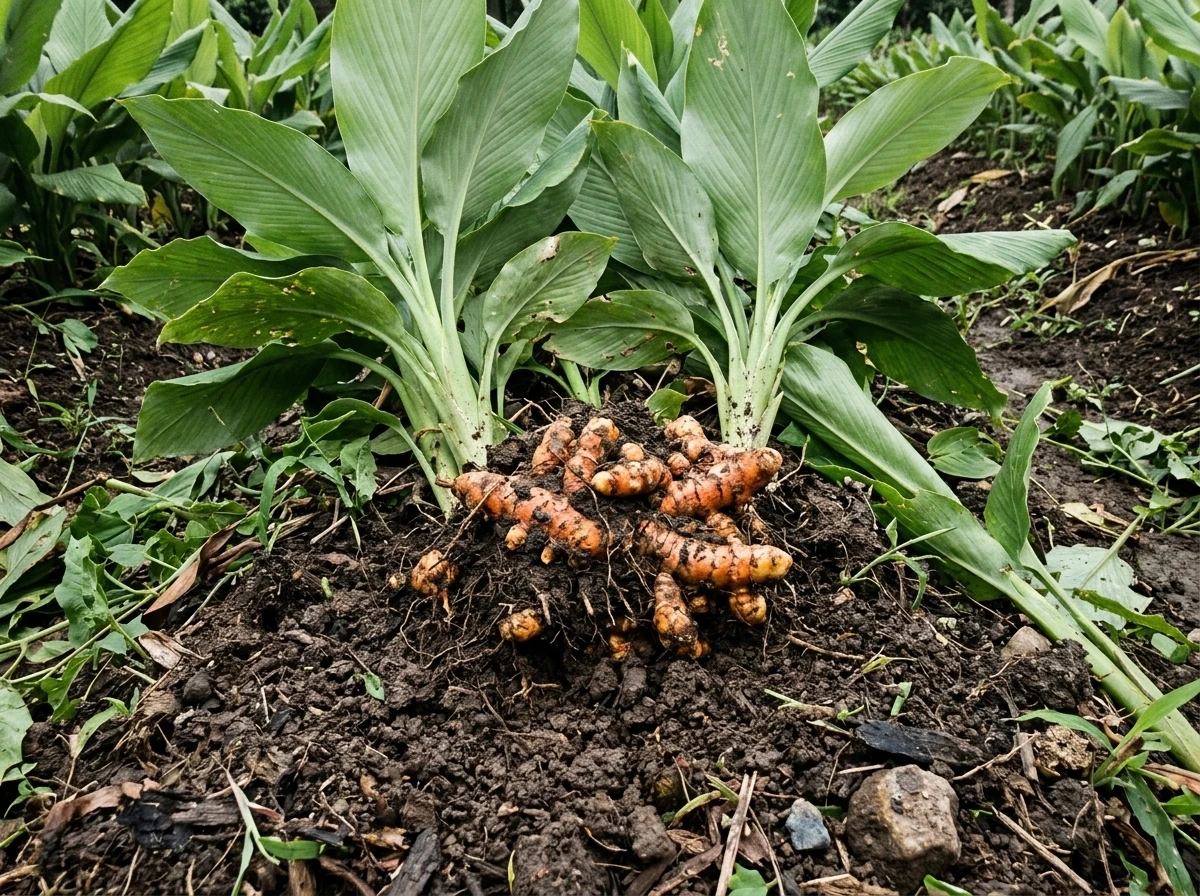
Why does the label say both fresh and dried turmeric root? Because in this plant's long history, fresh and dried turmeric were never just two formats. They're two materials, with two chemistries, and this root splits harder down that line than almost any plant on the shelf. Let me walk it, because it's the formulator's craft move behind this bottle.
Start with the chemistry, and turmeric's split is sharper than its cousin's. Drying concentrates the curcuminoids. The traditional Indian curing process — boil the rhizomes, sun-dry them, polish them, grind them — drives off the water and stacks the deep gold, the systemic, slow-acting fraction, the reason spice-rack turmeric is what it is. But that same heat and time cost you the other half: the volatile oils, the turmerones, evaporate on the drying rack, and the water-soluble constituents die with the water. The dried root is the gold, concentrated, with the living fraction spent. The fresh root is the mirror image: oils alive and resinous, water-solubles intact, and the curcuminoids at their natural dilute strength. One plant, two halves, and drying is a trade, not a free lunch.
Now the tradition, because the Chinese materia medica saw all of this centuries before the chemists wrote it down, and with turmeric the tradition went further than it did with ginger. In that system, the Curcuma genus is entered as three separate herbs. Jiang Huang, the turmeric rhizome itself, yellow ginger: it warms and it moves blood, the deep golden mover. Yu Jin, the tuber, whose name translates roughly as gold's fragrance: the cooler personality, it moves qi and settles the spirit. E Zhu, zedoary, the sharp third cousin: the strongest mover of the three, the one that breaks stagnation. One genus, three entries, three jobs. The tradition read the differences correctly before chemistry could — and it read them at the level of the plant part, which is exactly where the chemistry lives.
And the Ayurvedic tradition, on the other side of the Himalayas, drew the same line: fresh turmeric juice and paste for one set of moments, dried powder for another, different preparations with different characters, all under the name haridra, with side names like kanchani, the golden goddess. Two great traditions, opposite sides of the mountain range, same genus, same split, same conclusion. When two systems that never compared notes arrive at the same map, that's not coincidence. That's the plant insisting on itself.
And that's the formulator's move in this bottle. Most turmeric products pick a lane: fresh juice, dried powder, or isolated curcumin, one fraction, one personality, and usually the label doesn't even tell you which. This extract takes both roots and runs them through the same cold, multi-step process, so the concentrated gold and the living oils both arrive in the glass, held in fluid suspension, nothing traded away. The full range of the plant, in one dropper.
Both hands of the root, in one bottle. That's the formulation.
Taken consistently over time.
Commit to the Practice
Tonic herbalism rewards consistency. The deep, systemic building work happens quietly over a 30 to 90-day cycle of continuous saturation. Supply the raw materials your body needs with our premium 3-pack.
Shop the 3-Pack Formulation