
Welcome to the complete guide to antioxidants. This page gathers everything we know about the body's natural defense system into one place — what free radicals actually are, how plant pigments buffer the sparks of metabolism, and how to use spices and herbal allies to keep your internal engine running clean. Every section includes a short audio explanation from our formulator, so you can listen your way through the whole guide if you prefer. Start at the beginning or jump directly to the section you need.

I recorded these audios to directly answer the questions I've received most over the last 26 years. The text below contains the actual transcripts.
Jason J. DukeOwner / Artisan
Part 1: The Foundation
Before anything else, let's define the terms. The fire of your metabolism keeps you alive, but every fire throws sparks. This section breaks down exactly what antioxidants are, where free radicals come from, and the simple physics behind how they interact.
What is an Antioxidant?
What is an antioxidant, exactly? Well, let's look at the stars for a moment, because that's where this story starts.
The iron in your blood, the calcium in your bones, the carbon in your genes. None of it was made here on Earth. It was forged inside dying stars, scattered across space, and eventually assembled into you. You are made of the same stuff as the universe. And like a star, you burn fuel to shine.
That burning is beautiful. It is life itself. But every fire creates friction.
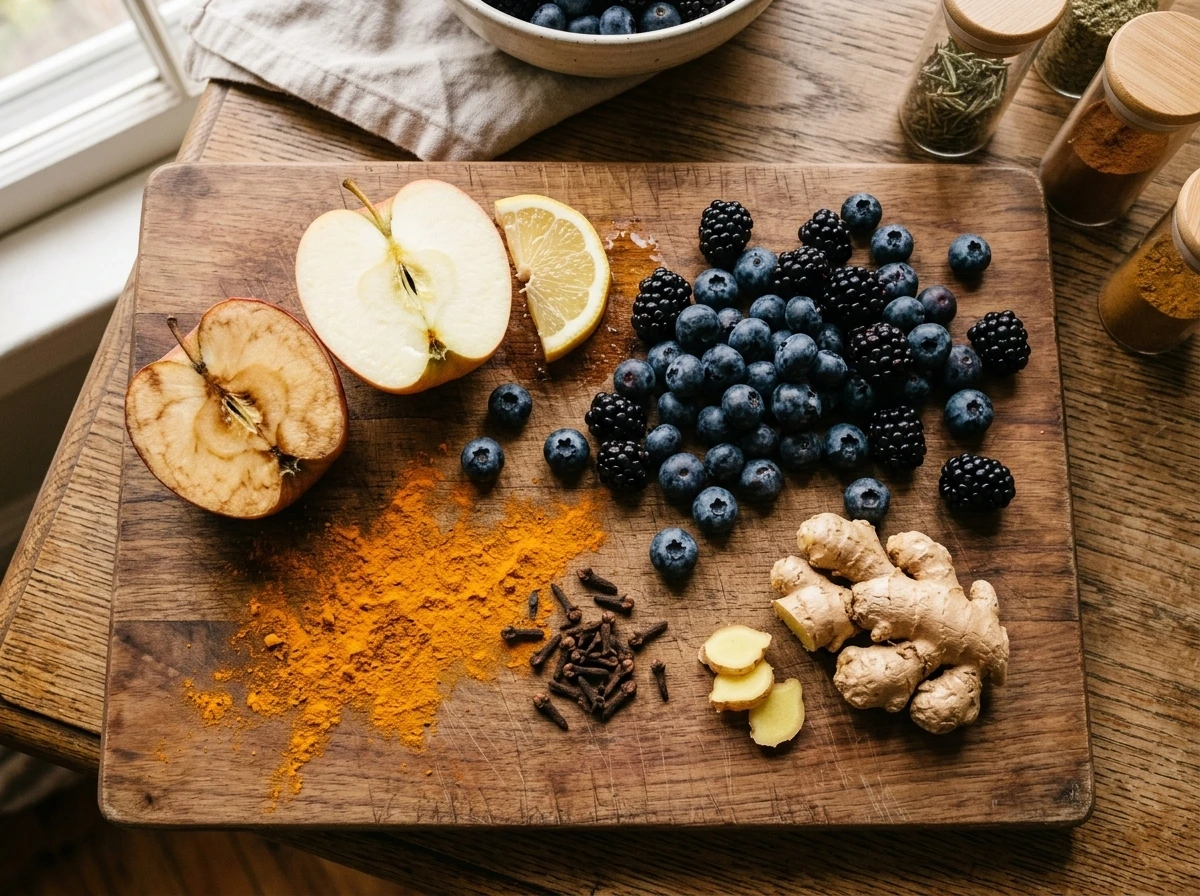
Slice an apple and leave it on the counter, and within a few minutes it browns. That is oxidation, the same chemistry family as fire and rust, just running at a slower speed. And that same chemistry is happening inside you right now, at a warm steady simmer, every day of your life.
So what is an antioxidant? Simply put, it is a molecule that quenches the sparks. It carries a spare electron, and it donates that electron to the hungry, unstable molecules the fire throws off. The fire of your metabolism keeps burning, and the house stays whole.
Now, a quick note on the word itself. Anti means against, and oxidation means burning. And the word did not even start as a nutrition word. It was coined in industrial chemistry, for the substances that kept fats from going rancid and rubber from cracking. Nutrition science borrowed it later, when researchers found the very same chemistry running inside the human body. Your cells were using the technology before the word for it existed.
But get this. You can watch an antioxidant work in your own kitchen. Slice that apple and let one piece sit plain. Squeeze a little lemon juice on the second piece. The plain slice browns, and the lemoned slice holds its color. That is vitamin C donating electrons faster than the air can steal them. The whole class of substances, demonstrated right on your cutting board.
And that is the right way to think about antioxidants. They are nourishment, the particles of color found in food. Food is medicine, the nourishment kind, the first lesson every doctor learns. Not a medication that forces a mechanism. The food supplies the resources, and your body does the work.
The screen stays on the fireplace every day, not once a season. Benefits accumulate over time.
What are Free Radicals?
What are free radicals, exactly? Here is the strangest part of the whole story. The element that feeds every cell you own is also the corrosive one. Oxygen giveth, and oxygen taketh away.
A free radical is an unstable molecule missing an electron. That missing electron makes it hungry, and physics says it must find balance. So it steals. It takes electrons from your cell walls, from your proteins, from your DNA, and every theft leaves a little damage behind.
Where do they come from? Mostly from you. Every time your cells turn food into energy, the fire throws sparks. Free radicals are the exhaust of living, the smoke from the fire of life. The brighter you burn, the more sparks you throw.
They also arrive from outside. Pollution, cigarette smoke, harsh sunlight, toxins in food and water. The world throws sparks at you all day long, and your body has to catch those too.
But get this. Your brain is only about two percent of your body weight, yet it runs on roughly twenty percent of your oxygen. Disproportionate fire, disproportionate sparks. That is why the brain keeps its own antioxidant defenses stocked, right next to the furnace.
And your immune system actually weaponizes the spark. When immune cells swarm an intruder, they deliberately release a burst of free radicals, a chemical flamethrower. Then they need antioxidant resources to shield your own healthy tissue from the same fire. The spark is a tool and an exhaust, and the body uses it both ways.
Now, the balanced view, because this part matters. At low levels, free radicals act as signals. They tell the body to adapt, to build, to come back stronger. A body producing no free radicals at all is not a healthy body. The goal was never zero. The goal is balance.
You do not fear the fire. You manage the sparks.
How Do They Work?
So how does the screen actually catch the sparks? The mechanism is beautifully simple, and once you see it, the whole produce aisle starts making sense.
An antioxidant carries a spare electron, and it gives that electron away. It donates it to the hungry radical, satisfying the thief so completely that the theft never happens. The radical settles down, stable and harmless, and the donor walks away stable too. Scientists call these molecules altruists. Polyphenols and flavonoids, the pigments and resins of plants, are the great donor classes.
Did you know your mitochondria used to be free-living bacteria? Somewhere around two billion years ago, an ancient cell swallowed another one and kept it as an engine, and that partnership never ended. Every cell in your body carries descendants of that bacterium, and you inherited yours from your mother, down an unbroken maternal line. The furnaces that make your energy, and your sparks, have a lineage all their own.
Now, the part that separates nourishment from medication. When tissue needs attention, the body sends a construction crew, and the crew creates heat, activity, and slowed traffic. You feel that as stiffness, or puffiness, or heat in a joint. A medication blocks the crew. It silences the alarm, and the work stops. Nourishment does the opposite. It sends the supply trucks, so the crew finishes the job and the highway opens again.
That is the difference between buffering and blocking. One forces a mechanism to stop. One resources the body so its own work completes on schedule. You are never at war with your own biology. You are keeping the job site supplied.
The screen catches the sparks, so the fire keeps warming the house.
Part 2: Impact & Mechanisms
How does buffering oxidative stress actually feel in the body? This section explores the engine room of metabolism, how burning dense fuel like fat requires a deeper buffer, and the quiet symptoms that signal you might be running low on coolant.
The Benefits
So what does all this buffering actually get you? The clearest picture comes from the engine room. Antioxidants work like coolant in a car engine, counteracting the hot combustion so the engine stays at its operating temperature, runs smooth, drives all day, and lasts a long time.
Start with energy, because that is where the sparks are born. Your mitochondria burn fuel continuously, and antioxidant resources keep that fire clean, so steady energy holds through the afternoon instead of fading out by three o'clock.
Then recovery. Everyday wear and tear, a hard workout, a long week. The body repairs itself constantly, and the repair crews work better when the sparks are being caught. People who eat colorful food consistently often notice they simply bounce back faster.
Your immune system runs on this too. Immune cells fire the chemical flamethrower we talked about, and antioxidant resources are the shield that lets them work without scorching the neighborhood. A balanced and adaptive immune response needs the buffer.
Circulation. The same pigments that color berries nourish the tiny vessels, the capillaries, keeping the plumbing elastic and the flow open. Healthy blood flow is a structure, and it is built from what you eat.
The surface shows it as well. Skin vitality, hydration, elasticity. The skin is the outer wall, and it gets fed last, so when it starts looking good, that is a sign the interior was already well supplied.
There is an energy side to body composition, too. Fat is dense fuel, and burning it asks antioxidant capacity, so a colorful, well-buffered diet supports the body's own use of its fuel stores, right alongside movement and balanced meals.
And aging well. This is cellular health over decades, and nothing here promises anything, because this voice never will. But the steady math is plain. Less accumulated wear, season over season, is the difference between a house maintained and a house merely standing.
The brain deserves its own line. The twenty percent oxygen organ, running hot and throwing sparks, protected by the same screen. Clear thinking is often one of the first places steady buffering shows up.
And research on traditional cuisines found the same thing from the other direction. Spice-centered food cultures, the ones built on turmeric and ginger and garlic, turn out naturally dense in exactly these compounds. The kitchens arrived at the answer before the labs did.
Coolant in the engine. Color on the plate. The benefits are quiet, steady, and they compound. Benefits accumulate over time.
Running Short (Deficiency)
What happens when the screen thins out? Nothing dramatic, and that is exactly the trouble. Shortage is quiet.
You run on two supply channels. The antioxidants your body makes, and the antioxidants you eat. Short either channel, and sparks start accumulating faster than they clear. The engine still runs. It just runs rough, like an engine low on coolant. It works, for a while, and the wear builds quietly underneath.
What it feels like is familiar to everyone. Low energy by mid afternoon. Reduced work tolerance, the tank emptying sooner than it used to. Slower recovery, where the soreness lingers a day longer than it should. A dragging, sluggish feeling that people usually blame on age or a busy season, when the coolant is simply low.
And here is the part nobody tells you. The body keeps a priority list. The survival organs, the heart, brain, and liver, get fed first. The visible places, skin, hair, and nails, are last in line, always. So when the mirror starts reporting, the shortage has already been running underneath for a while. The mirror reports late.
The fastest way to run short is the one people choose on purpose. Skipping meals. Fasting through the morning. Running on coffee until two in the afternoon. Color and nourishment arrive through food, and food is the foundation. Skipping meals and eating incomplete meals will lead to ineffective results.
It is hard to think when hungry. Stay grounded with food. Food heals. Fill the plate first, and the screen fills itself.
Energy & Fat Burning
What does any of this have to do with energy, exercise, and body composition? Everything. This is the engine room.
Run the chain with me, because it is the cleanest picture on the page. Your lungs pull in oxygen. Your cells take that oxygen and burn carbohydrate and fat to release energy. The burning creates the exhaust, the free radicals. And the antioxidants catch the exhaust, so the fire can keep burning. Clean fire, more fire. The more exhaust gets cleared, the more fuel the body can cheerfully keep using.
Now scale it up. The more you move, the more oxygen moves, and the more sparks the fire throws. A hard workout multiplies your oxygen throughput enormously, which is why active people and athletes are among the most antioxidant-hungry people there are. The buffer has to scale with the burn.
And the fuel type changes the math. Fat carries roughly twice the calories per gram that carbohydrate does. Dense fuel, dense smoke. Burning fat for energy asks roughly twice the antioxidant capacity to clear its exhaust. That is not a reason to avoid fat. It is the opposite. It is the reason a body burning its densest fuel wants its deepest buffer. The colorful food and the fat burning belong together.
Now the honest nuance, because this voice does not sell magic. Research on athletes found that some of the oxidative stress from hard training is the training signal itself. The sparks tell the body to adapt, to build, to come back stronger. Which means mega-dosing isolated antioxidants is not automatically better, and can even work against the adaptation. The honest takeaway from the research is food first. Colorful, consistent, on the plate. Not heroic doses from a bottle.
And nature, as usual, got here first. Some of the classic energizing herbs are antioxidant-dense by their very nature. Green tea carries its catechins alongside its gentle lift. Ginger warms the circulation and buffers at the same time. Guarana and kola nut, the classic herbal energizers, bring their antioxidant cargo along with them, energy wrapped in its own buffer. These are stimulating by nature, so they belong with breakfast or lunch, alongside a complete meal, never on an empty stomach.
The same resources run the cleanup crew too. The body's natural elimination pathways, the liver and kidneys, work continuously, and antioxidant resources support that everyday clearing. The body cleans house on the regular, and the broom needs its materials.
So the engine room summary is simple. Fuel, fire, exhaust, and the screen that keeps the fire honest. Top up the coolant with food, meal after meal, and the engine runs hot and clean. Food first. Always.
Part 3: Diet & Synergy
You don't just eat antioxidants; you eat the materials to build your own. This section explains the partnership between your liver and your plate, how traditional spices amplify absorption, and why color is the most important marker of a well-supplied meal.
The Two Supply Channels
Wait, my body makes its own antioxidants? Yes. And the internal system is a lot older than any grocery store.
A healthy body manufactures antioxidants continuously, in the liver and as part of energy metabolism itself. This is the internal channel, running whether or not you ever eat a berry. You have your own screen, built in, on duty around the clock.
The star of the internal channel is glutathione. Your liver makes it constantly, and it is present in virtually every cell you own, which is why it gets called the master antioxidant. In-house, self-made, always on shift.
But get this. Your internal enzymes are literally built from your food. Superoxide dismutase, the most important of the internal antioxidant enzymes, is constructed from the selenium and copper you eat. You are not just eating antioxidants. You are eating the parts to build your own. And superoxide dismutase is among the fastest enzymes known to science, a reaction machine of astonishing speed.
Then there is the external channel. Vitamin C, vitamin E, vitamin A, and the bioflavonoids are the ones the body cannot manufacture for itself. They arrive on the plate, riding in colorful food, and they join the internal system at work. Brazil nuts, seafood, whole grains, and meat carry the selenium. Nuts, seeds, and leafy greens carry the vitamin E. Citrus and berries and peppers carry the C.
This is the partnership. The internal factory and the external supply meet in the middle. Food does its part, the body does its part, and the screen stays full from both sides. Neither channel carries the whole job alone.
And this is why consistency beats any single heroic dose. The internal factory runs on steady materials, and the external supply works best steady too. Benefits accumulate over time.
Eat the Rainbow
Where do you actually find antioxidants? Here is the lowdown, and it starts in a place most people never expect. The spice rack.
Ounce for ounce, spices sit at the very top of the antioxidant density ladder. A pinch of clove or cinnamon out-carries a whole bowl of pale food. The traditional cuisines that built their meals around spices were optimizing for exactly this, centuries before anyone ran a measurement.
The full ladder, top to bottom, runs like this. Spices first, then herbs, then berries, then vegetables, then teas, then coffee, then fruit, then chocolate. And a good multivitamin and mineral rounds it out as the safety net, filling the gaps on the days the plate falls short.
The organizing principle is color, because the particles of color are the antioxidants. Anthocyanins make the blues and purples, the blackberries and blueberries and red cabbage. Carotenoids make the golds and oranges, the carrots and squashes and mangoes. Curcumin is what makes turmeric glow. When you eat the color, you are eating the chemistry.
Did you know autumn leaves run on the same chemistry? The brilliant reds of fall are anthocyanins the tree manufactures on demand. The same pigment family that colors your berries colors the hillsides in October. The tree makes its antioxidants, the berry makes its own, and so does the tea leaf.
And that is the deepest reason the colors exist at all. Pigments are the plant's own armor, its sunscreen and its pest deterrent, the chemistry it built to survive sun and drought and hungry insects. When you eat the color, you are borrowing a survival strategy that already worked. The plant did the research, in the field, for millions of years.
So the practice is simple, and it makes cooking better, not worse. Eat a rainbow. Spice it up. Cinnamon in the coffee, turmeric in the soup, ginger in the stir-fry. The plate gets more interesting as it gets more colorful, which is the whole trick working in your favor.
Food first, always. And extracts and supplements meet the food in the middle, adding density to meals that already carry their color.
Synergy and Absorption
Can you actually absorb more of the antioxidants you are already eating? Yes. And the trick is a lot older than the supplement aisle.
Here is the problem. You can eat color and absorb only a fraction of it. Delivery matters. The constituents have to be liberated from the food, carried across the gut wall, and escorted to where they are going. A plain bowl of good food can leave a lot of its cargo sitting on the dock.
The fix is a family of pungent, warming herbs and spices that act as catalysts. Ginger, garlic, hot peppers, cinnamon, cumin, paprika. Their warmth kindles the digestive fire. They stimulate circulation, and they trigger the release of digestive enzymes before the food even arrives. The kitchen literally preheats itself.
And one of them works as an escort. Black pepper carries piperine, and piperine carries companions along with it, most famously the curcumin from turmeric, moving more of that cargo across the wall than would ever make it alone.
Which brings us to curry, and this is the beautiful part. Traditional curry pairs turmeric with black pepper and fat. The pepper's piperine carries the curcumin, and the fat carries it across the gut wall. The grandmother's recipe beat the peer review by centuries. The cuisines encoded the science before the science existed.
The old herbalists describe the pairing as yin and yang, warming catalysts with cooling, colorful foods, opposite forces working together. Put plainly, the spicy half moves things, and the colorful half carries the payload. One without the other is half a system.
Now, a quick note here that shows how universal this chemistry is. Food manufacturers put rosemary extract in your chips. The same antioxidant chemistry that keeps a bag of snacks from going rancid is the chemistry your cells run on. Industry and biology arrived at the same answer independently.
In practice, it is a dash of hot sauce on the morning eggs. Garlic in the stir-fry. A spiced lentil bowl with black pepper over the top. Cinnamon and berries in the porridge. Small moves, every meal.
The pairing is the difference between eating color and using it.
Part 4: Herbal Allies & Quality
Adding concentrated botanicals to your routine is simple when you treat them like the foods they are. This section explains the basic rules of handling extracts, how to pick the specific plant for the specific job, and how to spot genuine quality on a crowded shelf.
How to Take Them
How do you make antioxidants a daily habit? Simply, because antioxidants are food.
There is no dropper math here and no counting. Antioxidants are part of the diet, consumed alongside complete balanced meals, like a side dish that happens to carry its color.
The practice is color at every meal, spices in the pot, and extracts taken with the food. That is the whole discipline. You are not dosing. You are eating, well and colorfully.
The best time to take supplements is around mealtime, right after eating a complete balanced meal. To supplement means to add to a complete meal. The meal brings the fats and the carriers that move the cargo across, and it buffers everything gently.
And you do not cycle antioxidants, ever. You do not cycle vegetables either. They are food, and food is eaten consistently. Today, tomorrow, next season. That is the entire rhythm.
If something ever did not sit right, it was almost always the context rather than the herb. Try again at a lower amount, and with a complete meal.
Some effects show up within the first few days. Deeper effects build within one to two weeks. But the real gains are the quiet ones. Benefits accumulate over time.
Choose Your Ally
So where would you even start with herbal allies? With one question, the same one this whole guide runs on. Do not ask what an herb does to you. Ask what resource it provides for you.
Feeling stiff, puffy, or physically overheated, that rickety morning feeling? The cooling, circulation-supporting herbs are the classic answer. Turmeric is the archetype, cooling the joints like water on a hot stone. Reishi for the mental static. Red clover to sweep the lymphatic hallways.
Is the world looking dim, the focus scattered, the heart feeling heavy? Then the pigmented allies. Bilberry is the famous one, its anthocyanins feeding the micro-circulation the retina depends on. That is the mechanism worth remembering, pigment into tiny vessels. Goji for the eyes and the liver, hawthorn for the pipes.
Reinforcing the walls before winter comes? The deep guardians. Chaga, the mushroom famous for superoxide dismutase, the diamond shield. Turkey tail, whose polysaccharides tend the garden of the gut. Astragalus for the perimeter.
Running on fumes, needing to recharge the source itself? The deep reservoirs. He shou wu, watering the roots of the dry tree. Black ant, the spark plug. Pine pollen, the golden dust.
Have the structure but need the drive? The potentiators. Guarana, the slow burn, energy wrapped in its own buffers. Kola nut, the cerebral spark. These are stimulating by nature, so they are breakfast and lunch territory, always taken with food.
Everything on that map is food-class nourishment, taken with meals. Nothing on it is a medication, and none of it forces anything. It all supplies, and your body does the work.
Assessing Quality
Once you start looking at antioxidant products, how do you tell the good ones? Start with a cautionary tale, because this industry already ran the experiment on itself.
For years, antioxidant products advertised their ORAC score, Oxygen Radical Absorbance Capacity, a number measured in a test tube. The numbers got bigger and bigger, and the marketing got louder. Then in twenty twelve, the USDA pulled its own ORAC database off the market. Their stated reason, in plain words, was that the numbers were being misused for marketing claims. A dish is not a bloodstream. What happens in a beaker is not what happens in a living body. Tricky tricky.
So what are the honest markers? Real plants, honestly extracted. Whole herbs and whole mushrooms rather than stripped isolates. Labels with the amounts printed in full, every ingredient, every figure on the table. The part used, named plainly. No proprietary blends hiding the ratios. When a maker is proud of what is in the bottle, they print it.
And taste, your built-in assay. Your tongue and your nose are testing equipment you carry everywhere. A real extract of a real plant announces itself, bitter, pungent, alive. The more you taste, the stronger it is. A flat, vague, overly sweet liquid is flat and vague because little is in it. That test worked long before laboratories existed, and it still works now.
A serious maker also refuses things. Powders manufactured somewhere else and dissolved into a bottle, then sold as an extraction. Blends that hide their amounts. Fillers presenting as potency. The refusal list is a quality list.
And here is the frame that keeps all of it honest. Food and supplements are medicine. The nourishment medicine, food is medicine, the first lesson every doctor learns at the beginning of the career. They are not medications, the pharmaceutical drugs that force mechanisms. Nourishment builds, long term, day after day. Medications handle emergencies, short term and fast. Two tools, two timeframes, two lanes. The mistake is always handing one tool the other's job.
It is important to do your own research. Health is the most valuable asset of one's life and the most valuable investment. Be the Best and Buy the Best.
We are all just stardust, trying to burn bright. These are the tools to keep your light steady.
Frequently Asked Questions
A quick reference guide covering everything from free radicals to the best ways to incorporate colorful foods into your diet.
What exactly is an antioxidant?
It is a molecule that carries a spare electron. By donating this electron to unstable molecules (free radicals), it neutralizes them and protects your healthy cells from oxidative wear and tear.
Are free radicals always bad?
No. At low levels, free radicals act as important signals that tell your body to adapt and build back stronger (especially after exercise). Your immune system even uses them defensively. The goal is balance, not absolute zero.
Does my body make its own antioxidants?
Yes. Your liver constantly manufactures glutathione, and your body creates enzymes like superoxide dismutase. However, these internal factories require raw materials (like selenium and copper) from your diet to function properly.
What are the best food sources of antioxidants?
Ounce for ounce, spices (like cinnamon, cloves, and turmeric) are the most dense. This is followed by herbs, berries, vegetables, teas, and fruits. The key is to eat a colorful diet—the colors themselves are the antioxidant chemistry.
How do fat and energy impact my need for antioxidants?
Fat is a dense fuel, and the more fuel your mitochondria burn, the more exhaust (free radicals) they create. Active people and athletes require a deeper antioxidant buffer to clear the exhaust from their heightened metabolic fire.
How should I take antioxidant supplements or extracts?
Antioxidants are food, so they should be taken with food. Consume them alongside complete, balanced meals. The fats in the meal help carry the compounds across your gut wall, and warming spices can further aid in assimilation.