
Discover the honest truth about Deer Antler Velvet—the premier tonic prized for thousands of years in the Asian tradition for its deep restorative properties. Whether you are looking to support robust joint health, sustain physical stamina, or nourish your neuroendocrine foundation for intimacy and energy, the secret lies in the whole-matrix harvest of the soft, growing antler. This guide strips away the sports-supplement marketing hype to teach you exactly what deer antler velvet is, what it does, and how to properly use it for deep, systemic vitality.


I recorded these audios to directly answer the questions I've received most over the last 26 years. The text below contains the actual transcripts.
Jason J. DukeOwner / Artisan
Part I: Deer Antler Velvet (General Extract)
Reference Directory
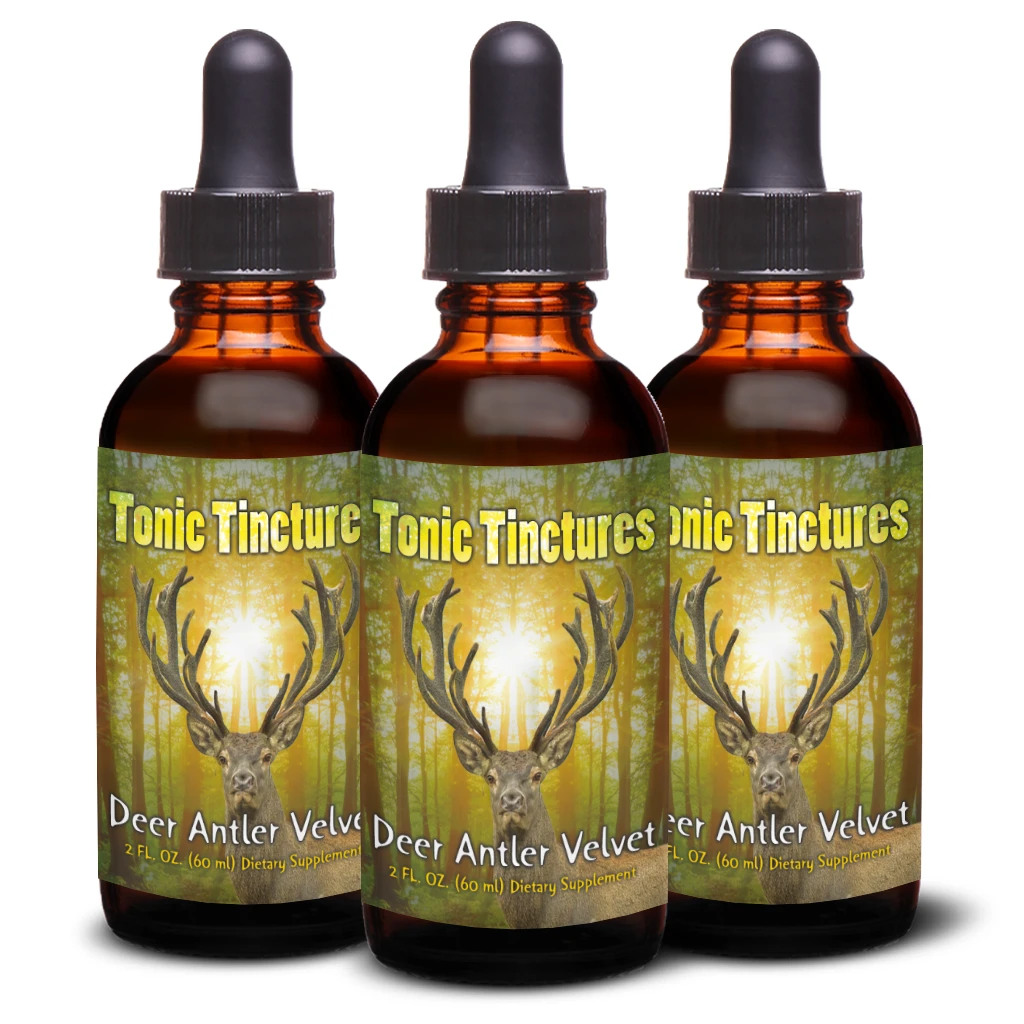
Commit to the Practice
Tonic herbalism rewards consistency. The deep, systemic building work happens quietly over a 30 to 90-day cycle of continuous saturation. Supply the raw materials your body needs with our premium 3-pack.
Shop the 3-Pack Formulation1. What is Deer Antler Velvet?
So, what is deer antler velvet, exactly? Is it really from deer, and what even is velvet? Yes, it really is from deer, and the name needs one careful unpacking, because the velvet and the antler are two different things, and the material we work with is both of them together.
Velvet is the soft, furred skin that wraps a growing antler. It's living tissue, blood vessels, nerves, and all, and it really does feel like velvet cloth, which is where the whole name comes from. But the velvet is the wrapper, not the cargo.
Underneath that skin, the antler itself is growing, soft and blood-fed, nowhere near bone yet.
Did you know that antlers are the only mammalian organs that regenerate completely, year after year? A stag casts his entire rack every winter and rebuilds the whole thing from scratch, every spring and summer, for his entire life.
But get this. At the peak of the season, a big stag can add nearly an inch of new antler in a single day. That is one of the fastest-growing tissues in the animal kingdom.
So here's the careful part, and it matters. The harvested material is not the velvet skin by itself, and it is not the hard, dead, shed bone you find lying in the woods.
It is the whole soft antler, harvested in its growing window, the furred velvet on the outside and the soft, still-growing antler tissue underneath, skin and core together, before it ever hardens. That is the material the tradition calls velvet antler.
The Chinese name gets it exactly right: lu rong. Lu means deer, and rong means the soft new antler, the fuzz and the tissue together. That's what goes in the bottle, the whole soft velvet antler, never the finished bone.
Now, in our world, deer antler velvet is classified as an adaptogenic herb and a superior tonic. A tonic is an herb taken consistently, over time, to support, maintain, and promote health. Tonics build, they don't force.
Inside that soft velvet antler are the constituents people are after, the naturally occurring growth factors, including IGF-1 and IGF-2. Growth factors are the messengers that tell your body's cells to build and repair. Your body makes its own, and deer antler velvet works with the body, supplying raw materials for the building.
The velvet feeds the growing antler, and the growing antler is what we take. Soft antler, in velvet.
A tonic is a practice, not an event, and deer antler velvet rewards the practice.
Benefits accumulate over time.
2. Where Does It Come From?
Where does deer antler velvet come from, and does taking it hurt the deer? Those are the two questions I hear most about this material, and they're both fair, so let's take them in order.
The formulation is seventy percent Red Deer, Cervus elaphus, from New Zealand, and thirty percent Plum Blossom Deer, Cervus nippon, from Asia. Two species, two sources, and the names themselves tell a story.
Cervus elaphus was named by Linnaeus himself, in the seventeen-fifties, in the book that started modern taxonomy. Cervus nippon was described by a Dutch zoologist named Temminck, and nippon is the Japanese word for Japan. The Chinese call that same deer the plum blossom deer, for the white spots scattered across its coat like blossoms.
Why two species? Because they carry two traditions. The Red Deer comes from New Zealand, one of the world's premier velvet-farming industries, and the Plum Blossom Deer comes from the Asian tradition, where this material has been traded and prized for centuries.
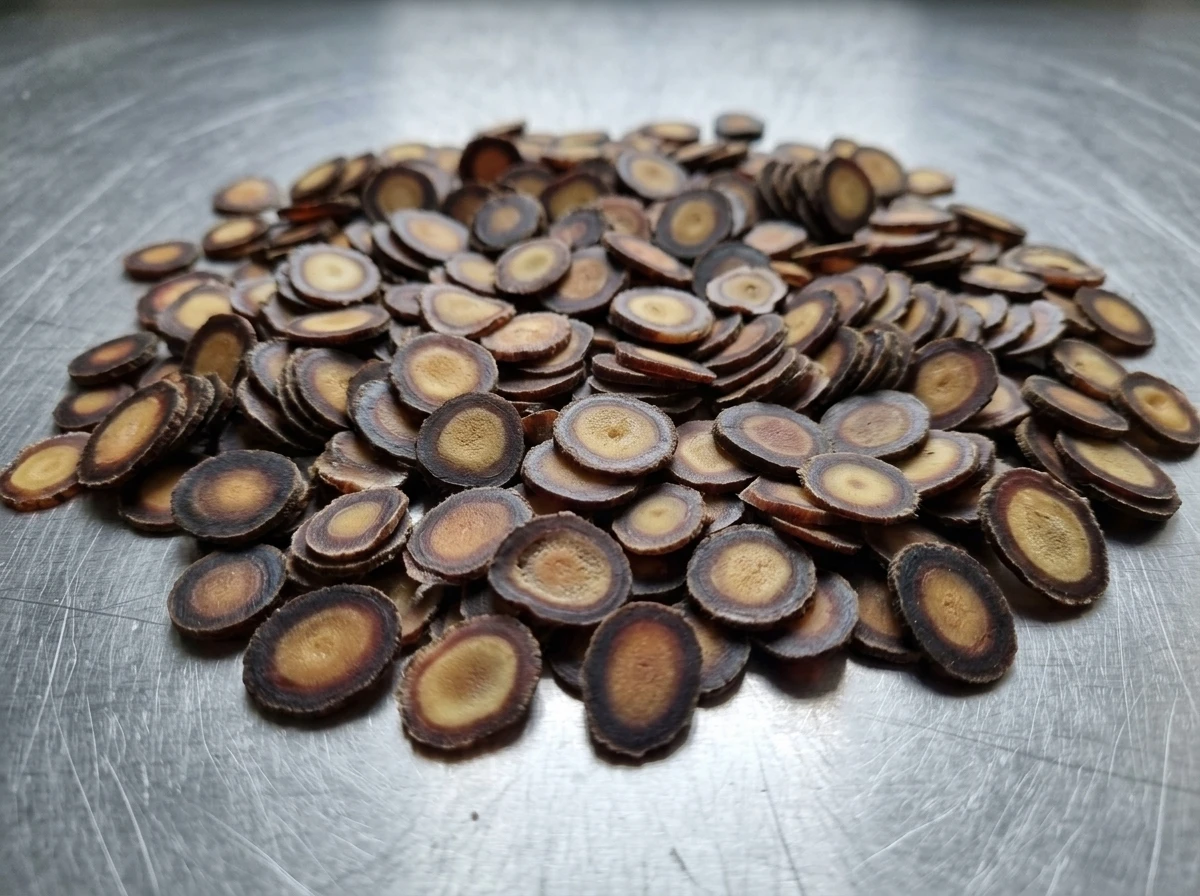
In the Asian trade, antler is sliced and graded by section, and the upper cuts command the highest prices. Here's why, because it goes to the heart of what this material is: the upper cuts are the softest, the most actively growing, the least hardened. The graders are paying for softness, which is to say, they're paying for growth.
Here's the lowdown on the harvest, because it comes down to one simple fact about the animal. A growing antler has two layers. There's the furred velvet skin on the outside, and underneath it, the soft antler tissue itself, still growing, still fed by blood. That soft state only lasts a window.
Through spring and summer, the antler grows underneath that living skin, roughly sixty to seventy days of growth. When the season ends, the velvet dries, the stag rubs it off against the trees, and underneath, the antler has hardened into dead bone.
The harvest works inside that growing window. The whole soft antler is taken, velvet skin and soft core together, before it ever hardens. That is exactly why the deer walks away from it, unharmed, to grow next year's rack.
So let me say it plainly, because people ask: deer are not killed, only velvet antler is taken. The soft antler, in velvet.
Did you know how New Zealand's deer farms got their start? Back in the nineteen-sixties and seventies, crews in helicopters netted wild red deer right off the high country. That wild-caught founding stock became one of the world's premier velvet-farming industries, and it's where our Red Deer comes from today.
As for the bottle, every batch is custom crafted, multi-step, and micro-batched. We extract with structured distilled water and triple filtered USP grade organic alcohol at thirty-five percent by volume, and the ratio is honest and heavy: one pound of velvet to one quart of liquid. That's about twenty-eight thousand five hundred milligrams of velvet extracted into every two-ounce bottle.
Good material, honestly sourced, carefully made. That's where it comes from.
3. What Does It Actually Do?
What does deer antler velvet actually do in your body? Is it real, or is it gym-bro myth? It's real, and the way to see it clearly is to hold one rule in mind the whole way through. The velvet supplies raw materials. Your body does the work. That division of labor never changes.
Start with the building, because that's what this material is famous for. Your body makes most of its own IGF-1 in the liver, released in response to growth hormone, and it works like the foreman's instructions on a construction site. It's the messenger that tells muscle and tissue cells to build and repair. The naturally occurring growth factors in the velvet, alongside amino acids, supply raw materials for that building, muscle protein synthesis and tissue growth, maintenance, and repair, so your body can buffer against everyday wear and tear.
Next, the joints. The glycosaminoglycans, that's chondroitin and glucosamine, alongside hyaluronic acid and collagens, supply the direct building blocks for joint tissue maintenance and repair. These constituents work synergistically to maintain hydration and elasticity within the structural framework. Practical translation: comfortable, flexible joints under load.
Then hormones and energy. Specific peptides, alongside essential trace minerals like zinc and manganese, supply raw materials for hormones. Hormones need a constant supply of raw materials, and a hormonal material supplies them. That nutritive support nourishes the endocrine system, the network of glands, facilitating healthy glandular function and the efficient use of energy.
And the picture keeps widening. The collagens and amino acids support your body's own natural collagen production, and that shows up as lean tissue and skin vitality, a vibrant appearance. The unique constituents also nourish the adaptive immune response, helping your body identify foreign material, facilitate containment and removal, and maintain tissue cleanliness. And because this is an adaptogenic herb, those properties work with the nervous system to ease tension, helping your body adapt to various challenges and maintain a balanced stress response.
Now, a quick note here. If your main interest is basic joint maintenance and everyday immune function, we also craft this material in capsule form, and some people prefer that for maintenance. The liquid extract remains the general-use bottle, the full range at a functional dose.
And here's something the West forgets. In Asia, the pharmacy lists this material for convalescence and deep fatigue, for blood-building, for the lower back and the knees, for warming cold limbs, for women after childbirth, for elders maintaining strength. Under the raw-materials model, those are all building projects: blood, bone, tissue, marrow. The West narrowed this herb to the gym. The tradition never did.
Supply, and utilize. Feed the construction site, and your body recovers and rebuilds. That's the whole mechanism, honestly told.
4. Who Is It For?
Who is deer antler velvet actually for? Is it just for weightlifters and gym people? No. This is the everyone bottle. It's the general-use formulation, and it works across the whole range of benefits when enough is taken, consistently, at a functional dose. You gotta take enough to make it work. That's the honest rule, and it's pretty much the only rule.
Take the worker. Standing on your feet all day, working the physical job that eats stamina and grinds on the joints. Deer antler velvet supplies the raw materials necessary to maintain a steady state of stamina and fortify structural integrity under sustained output. The bottle ends up in the lunch pack, and the afternoon stops being a slump.
Take the lovers. And here's something worth noticing: people reach for this material for intimacy everywhere in the world, in every culture that has it. That's not a gym thing, it's a human thing. Having the energy to connect, and physical intimacy, depend on a healthy neuroendocrine foundation. This is a hormonal material; it supplies raw materials for hormones. And hormones are made from something very specific. Did you know that testosterone and estrogen are over ninety-five percent cholesterol by weight? Hormones need a constant supply of raw materials, and a hormonal material delivers them. That's why this one lives on the nightstand.
Take the sage. Aging well and staying sharp require the maintenance of systemic resources over time. The essential trace minerals nourish the endocrine system, the network of glands, preserving core vitality and structural integrity year over year. Aging well is a supply-line project, and this is a supply.
And take the convalescent. Getting out of bed and trying to get your strength back after a period of depletion, that requires deep nourishment. Deer antler velvet replenishes nutrient reserves and delivers vital nourishment to support cellular repair and regeneration. When youre rebuilding, the deliveries matter most. The bottle sits next to the ice pack, and the comeback has raw materials behind it.
And the same constituents serve women and elders just as well. In Asia this was always a whole-household material, never a men's product, and the tradition has the longer memory.
Now, an honest redirect, because telling you which bottle is part of the job. The routing is simple. For general joint discomfort, the everyday aches, this is the bottle, the general extract at a functional dose. For joint discomfort that comes with exercise and training, and for performance, athletic lifestyles, and intimacy, that's what our Power Velvet is for, the dedicated full-performance version. And for basic joint maintenance and everyday immune function, some people simply prefer capsules, and we craft this material in capsule form for exactly that.
Regular deer antler velvet still works for all of it when enough is taken; the dedicated versions simply serve those orientations better. Right bottle, right person, right job.
Choose a tonic supplement ally to suit your needs and desires.
Taken consistently over time.
5. How Do You Take It?
Tonic Synergy & Timing: We remind you that with consistent use, benefits accumulate over time.
For rapid mucosal assimilation, we recommend taking it on an empty stomach (up to 30 mins before eating), followed by a complete balanced meal to provide the heavy building blocks (proteins/fats) your body requires to sculpt and refine itself.
This is deer antler velvet liquid extract, the general-use tonic in a two-ounce bottle with sixty dropper servings.
One dropper is one press of the rubber bulb, which fills the dropper tube to just above half-way. That's thirty drops, which is also one milliliter.
To find a functional dose, start with a minimum dose of ten drops to one dropper and work up. We suggest ten drops to one to three droppers, taken one to three times per day, which is one hundred seventy to three thousand milligrams daily.
Now, there are two ways to use this bottle, and it's worth knowing both. For immediate impact, hold one to two droppers under the tongue, sublingually, for the felt effect. For tonic building, to continually saturate your system and build deep, long-term health, take one to two droppers with meals, or up to two to three droppers with your largest meal. Dose for the moment, or dose for the building. Consistency at a functional dose unlocks both.
Shake gently. Secure the lid and turn the bottle over back-and-forth three to five times to evenly distribute the unique constituents.
By mouth: hold the liquid under the tongue for fifteen to thirty seconds before swallowing. Longer is not necessary. Or mix the drops into two to four ounces of lukewarm drinking water. Never hot water. Hot liquids damage key constituents and lessen potency.
Timing. For rapid mucosal assimilation, take it on an empty stomach, up to thirty minutes before eating, followed by a complete balanced meal to provide the heavy building blocks, the proteins and fats. On training days, consume fifteen to thirty minutes before physical activity to support stamina.
A quick practical note, because it surprises people. This extract carries concentrated collagens, so in cool storage it can thicken or even set solid. That is normal, not a defect. Warm the bottle gently in your hands, or under a barely warm faucet, then shake gently. Bingo. Back to liquid.
Storage is simple. An opened bottle holds about thirty to forty-five days. Unopened, about two years from the manufacturing batch date. Keep it dark and cool.
If it didn't sit right, try again at a lower dosage and with a complete meal.
Some effects are immediate within the first few days. Consistency at a functional dose is what builds the rest.
6. How Long Until You Notice Results?
How long until you notice something? That is the most-asked question about any tonic, so here is the straight answer, in three windows.
Some effects are immediate within the first few days, one to three days. That's the felt layer, the energy and the steadiness most people pick up first.
Most people notice it within the first three to seven days. That's the honest window for the felt difference at a functional dose. Some people report steadier energy and easier recovery inside that first week, and that's a fair expectation to hold.
Other effects and benefits are building, and are noticeable within one to two weeks. The deeper work doesnt announce itself. It accumulates underneath, quietly, while you go about your life.
Then the long game. The systemic shifts and the deeper hormonal benefits come as you continuously saturate your body over a thirty to ninety day cycle. That's how every tonic works. You're feeding a system that puts materials to work at its own pace. The body doesn't take orders. It takes deliveries.
A good tonic cycle is thirty to ninety days. That's not a sales line; that's how tonics work. A tonic is a practice, not an event.
You gotta take enough to make it work. The more you take, the better it works. Not enough doesn't work. And someone can only take so much of anything at any time. Enough is the target; consistency is the vehicle that gets you there.
Nothing is a quick fix. Anyone selling a quick fix in a bottle is selling snake oil. Tonics reward time, not dosage.
And keep the foundation under all of it: complete balanced meals, every time. Skipping meals and eating incomplete meals will lead to ineffective results. The tonic rides on food; it doesn't replace it.
Benefits accumulate over time.

7. Safety and Quality
Is it safe, and how do you know you're getting a quality bottle? Two questions on the surface, but with this material they're really one question, because the honest answer isn't a promise on a label. It's where the material comes from and how it's made.
First, a safety marker that matters more than any other, and I'll say it plainly. Do not buy supplements with IGF-1 anywhere on the label. A whole-matrix tonic carries naturally occurring constituents, the whole living material. A label printing IGF-1 as a content claim is selling the mystique, not the material. That's the red flag. Walk away from it.
Now, a quick note here, because people ask about the deer. New Zealand's velvet harvest runs under a national code of welfare: trained handlers, pain control, and the deer back on pasture. Deer are not killed, only velvet antler is taken. That's the standard our Red Deer comes from, and it's the part of this craft worth stating plainly.
As for the bottle itself, every batch is custom crafted, multi-step, and micro-batched. We extract with structured distilled water and triple filtered USP grade organic alcohol at thirty-five percent by volume, at one full pound of velvet to one quart of liquid. That's rapid, high bioavailability and absorption, and the full extraction and lab methods are published on our standards page, if you want to see exactly how the work is done.
And quality in this material is a real, graded thing. In the markets that know it best, the Asian markets, antler is sliced and graded by section, and the buyers pay accordingly. Honest quality looks the same everywhere: species named, source named, extraction method stated, ratio stated in pounds to quarts. If a label won't tell you those things, that's an answer too.
Generally, this formulation may be taken with other dietary supplements. As food added to the diet, it works synergistically with other formulations, alongside complete balanced meals.
One piece of doctrine to keep the whole thing honest. Herbs are always more effective and more powerful in the long-term for supporting health, whereas drugs are always more effective and more powerful in the short-term for treating diseases, conditions, and any emergencies. Do not use an herb when one should use a drug, and do not use a drug when one should use an herb. Each has its own job, and this bottle's job is the long term.
And the price. You shouldn't pay a lot for deer antler velvet, because it is not rare and mystical. Honest material, honestly made, honestly priced. That's the whole position.
Be the Best and Buy the Best.
It is important to do your own research. Health is the most valuable asset of one's life and the most valuable investment.
8. Does It Really Work? (Skeptic Answer)
Does deer antler velvet actually work, or is it snake oil? Let me answer that the honest way, because I've been selling this material for twenty-six years, and I know what the people who take it tell me.
First, let's clear the research question, because it's the first thing anyone types into a search bar. You'll read that very little research has been done on deer antler velvet. That's true. And notice what it's a confession of. The West barely studied this material. That's not a verdict on the material; that's the institutions admitting they never looked.
Asia looked. In China and Korea, this material has been researched extensively, for decades, and used for thousands of years before that, for a wide range of health benefits. The knowledge lives there. The people who wrote it off over here mostly never opened those books.
And the few Western trials that exist? Tricky tricky. They tested a tonic like a drug: small doses, short windows, looking for an acute effect in a few weeks. Then clueless journalists, some hokey doctors, and sinister snake oil salesman all repeated the same sentence: the evidence is mixed. A study can't find what it never fed the body.
So here's what I actually know, from twenty-six years of phones and bottles. People who take enough of it, consistently, with food, tell me about steady energy, easier recovery, joints that feel better under load, drive, skin, steadiness under stress. Not overnight. Over a cycle. Some effects in the first few days, the building work over one to two weeks, the deep shifts over thirty to ninety days of saturation.
Now, the honest frame cuts both ways, so let me say it plainly. Everything probably works in someway somehow. A very little bit of something probably does some degree of a little bit. A whole bunch of one thing is just that, you can't force it to work. And nothing does nothing, guaranteed.
The real reason people fail with this material usually isn't the material. It's the dose. Not Enough Doesn't Work. The more you take, the better it works. And someone can only take so much of anything at any time. Enough is the target; consistency is the vehicle.
And the sellers who overclaim? They're the other half of the problem, and they're the reason the skeptics exist. The truth needs neither side: a whole-matrix tonic, honestly extracted, taken consistently, with food. That works. I've watched it work for twenty-six years.
Benefits accumulate over time.
9. Why Is It Banned in Sports?
Why is deer antler velvet banned in sports? It's a fair question, and the answer is a story about a linebacker, a spray bottle, and a list.
January, twenty-thirteen, the lead-up to the Super Bowl. A star linebacker, one of the most famous defensive players in the league, is recovering from a torn triceps, an injury that was supposed to end his season. A sports outlet reports that he sought out deer antler spray, containing IGF-1, to heal it. He denied using it. It didn't matter. The story went everywhere, and suddenly half the country was asking: what is this stuff?
Here's the lowdown on the list itself. IGF-1, insulin-like growth factor one, sits on the World Anti-Doping Agency's prohibited list under peptide hormones. And within weeks of that story, WADA issued an actual public warning, urging athletes to be extremely vigilant about deer antler velvet spray, because it could lead to a positive test.
Now, but get this, because the irony is thick. Why would a deer product trip a hormone test? Because the spray companies themselves printed IGF-1 on their marketing as a selling point. They advertised the banned ingredient. They were proud of it. The leagues didn't ban some folk remedy; they banned a marketing claim. If a company says the bottle contains a prohibited substance, the league believes the company.
And that's the doctrine underneath all of it: the anti-doping bodies err on the side of caution. If a supplement might contain something prohibited, it goes on the caution list, because a positive test is a positive test, whatever the science says.
So where does that leave a tested athlete? With a clean ruling, stated plainly. If you compete under a governing body that tests, follow that body's prohibited list, period. That's not my advice overriding anything; that's just the honest answer. The list is the list. Personal responsibility is part of the job when you're a tested athlete.
And for everyone else, the story teaches something more useful. Notice what the spray companies were selling: the isolated growth factor, the magic ingredient, printed right on the label. Our standing line on this has never moved: do not buy supplements with IGF-1 anywhere on the label. That's the same red flag WADA was reacting to. A whole-matrix tonic carries the naturally occurring constituents of the living velvet. A label bragging about isolated IGF-1 is selling mystique, not material.
The West discovered this material through a controversy, which is a shame, because Asia has prized it for thousands of years without any of the noise. But at least now you know the whole story behind the headline.
It is important to do your own research. Know what you're taking, and know what's on the label.
10. Does It Raise Testosterone?
Does deer antler velvet raise testosterone? That's the question, and I'm going to answer it honestly, which means first I'm going to fix the question.
Here's why it's the wrong question. Asking does it raise testosterone treats this material like hormone replacement, a switch you flip. Deer antler velvet is not a switch. It's a supply line. The velvet supplies raw materials. Your body does the work. That division of labor never changes, and it's the whole answer.
So let's do the teaching properly. Hormones are built, not summoned. Specific peptides, alongside essential trace minerals like zinc and manganese, supply raw materials for hormones. That nutritive support nourishes the endocrine system, the network of glands, facilitating healthy glandular function and the efficient use of energy. Your glands are factories. The velvet delivers materials to the loading dock. The factories decide what to build and when.
And did you know what the factories build with? Testosterone and estrogen are over ninety-five percent cholesterol by weight. Hormones are made from something very specific, and a hormonal material delivers the supply. But the material only becomes hormones if the raw stock is there to build from.
Which brings the food doctrine in, because this is where people sabotage themselves. Taking an adrenal or endocrine hormone tonic without saturated fat and cholesterol will negate the effects. Eggs with soft yolks, so as not to denature the cholesterol. Salt your eggs for stomach acid to absorb the protein, vitamins, fat, and cholesterol. Skipping meals and eating incomplete meals will lead to ineffective results. You can't run a factory on an empty loading dock. Food and supplements work together. They meet in the middle.
Now, what do people actually report, after twenty-six years of me answering this phone? Steady drive, energy that holds through the day, easier recovery, the capacity to connect. Notice those are all things hormones run on, the downstream of a well-fed system. The reports track the supply-line model exactly: feed the glands consistently, over a thirty to ninety day cycle, and the foundation builds underneath you.
That's why this one lives on the nightstand. Intimacy depends on a healthy neuroendocrine foundation, and that foundation is a supply-line project.
So the honest answer, stated plainly: deer antler velvet does not replace hormones, and it doesn't flip switches. It supplies the raw materials your glands use to build them, and your body does the building, at its own pace, from the food you eat alongside it.
Hormones need a constant supply of raw materials.
Benefits accumulate over time.
11. Extracts vs. Sprays vs. Capsules
Spray, capsules, or liquid extract: which form of deer antler velvet actually works? This is one of the most searched questions about this material, and most of the answers online are written by spray companies. So let me give you the formulator's version instead.
Start with the sprays, because they dominate the marketing. Here's the lowdown: a spray delivers a tiny, diluted dose per spritz. You'd have to empty half the bottle into your mouth to approach a functional dose of anything. Tricky tricky. And the labels play the same game with ratio marketing: big impressive numbers, concentrated-from-this-many-pounds claims, which dress up dilution as potency. Spritz! Spritz! Whoa, that can get pretty expensive very quickly, for what is mostly water and a story.
And remember the loudest spray marketing of all: IGF-1 printed right on the label as a selling point. That's the exact claim that got this material tangled up with sports bans, and our standing line never moves: do not buy supplements with IGF-1 anywhere on the label.
Now, capsules. Most of what's on the shelf is dead, dried powder, ground from who knows what grade of antler, sitting in a capsule. The material was alive once, but drying is hard on fragile constituents. That's just the physics of it. Capsules do have a real place: they're the maintenance form. For basic joint maintenance and everyday immune function, a good capsule, honestly made from named species, is a fine way to take this material. We craft one ourselves for exactly that job. It's just not the full-strength delivery.
The liquid extract is where the craft lives. Constituents held in fluid suspension, extracted with structured distilled water and triple filtered USP grade organic alcohol at thirty-five percent by volume, water pulling one class of constituents and alcohol pulling the other, the whole living matrix in the bottle. Our ratio is stated plainly: one pound of velvet to one quart of liquid, about twenty-eight thousand five hundred milligrams extracted into every two-ounce bottle. Nothing hidden, nothing spritzed.
And the taste tells you it's real. The more you taste the stronger it is. A strong extract tastes like what it is: concentrated material. That's not a flaw. That's the proof.
So the honest routing, one more time. Sprays: skip them, whatever the marketing says. Capsules for maintenance, joints and immune basics. Liquid extract for the full range at a functional dose, taken consistently. And for training, performance, and intimacy, the dedicated Power Velvet formulation.
You shouldn't pay a lot for deer antler velvet, because it is not rare and mystical. Honest material, honestly made, honestly priced.
Be the Best and Buy the Best.
12. Deep Dive: Joint Health
Can deer antler velvet help your joints? It's the number-one reason people in the West reach for this material, so let's take it seriously and do the whole mechanism, honestly.
Start with a piece of biology that explains everything else. That growing antler under the velvet? It forms first as cartilage, and then mineralizes into bone over roughly sixty to seventy days. Cartilage, then bone. The same tissue class your joints are made of. The material a stag uses to build a whole rack of antler every year is the same class of material your joints are maintained with. That's not a metaphor. That's the biology.
Now the constituents, named plainly. The naturally occurring glycosaminoglycans, that's chondroitin and glucosamine, alongside hyaluronic acid and collagens, supply the direct building blocks necessary for joint tissue maintenance and repair. These constituents work synergistically to maintain hydration and elasticity within the structural framework. Practical translation: a joint is meant to be a hydrated, elastic structure, and hydration and elasticity are exactly what these building blocks serve.
Think of it like the construction site. Your body maintains joint tissue continuously, the everyday wear and tear of work, walking, and training. The velvet delivers the raw materials to that maintenance crew. Your body does the repair work. Supply, and utilize.
Some people taking this material report less joint discomfort, and steadier, more comfortable movement under load. That's the honest form of the report, and it tracks the mechanism exactly.
Now, the routing, because this is where it matters. For general joint discomfort, the everyday aches that come from work and life, this is the bottle: the general extract, at a functional dose, taken consistently. For joint discomfort that comes with exercise and training, the friction of a real training schedule, that's the job of Power Velvet, our dedicated performance formulation, built for exactly that load. And for basic joint maintenance, keeping what you have in good working order, some people prefer the capsule form, and we craft one for exactly that.
And the timing truth, stated plainly: structural work is the slowest work. Some effects show in the first few days, but joint tissue is built on the deep timeline, saturating your body over a thirty to ninety day cycle, with complete balanced meals providing the heavy building blocks underneath.
The joints are a supply-line project, and this is a supply.
Benefits accumulate over time.
13. Is It For Women Too?
Is deer antler velvet for women too? Yes, and the question itself tells you how sideways the Western marketing got, because the tradition never had this problem.
In Asia, this was always a whole-household material. Women took it, elders took it, convalescents took it, women after childbirth took it as a restorative. The pharmacy lists it for blood-building and for maintaining strength through every phase of life. It was never a men's gym product until the West got hold of it and shrank it down to that. So if you're a woman wondering whether there's a version of this for you: there always was. It's this one.
The mechanism is the same for everyone, and it's a supply line, not a switch. The velvet supplies raw materials. Your body does the work. Specific peptides, alongside essential trace minerals like zinc and manganese, supply raw materials for hormones. Estrogen and progesterone are built on the same cholesterol backbone as testosterone; the steroid family all comes from the same raw stock. Did you know that testosterone and estrogen are over ninety-five percent cholesterol by weight? Your glands are factories, the material is the delivery, and the factories build what your body calls for.
Then the wider benefits, which many women tell me they came for and stayed for. The adaptogenic properties work with the nervous system to ease tension, helping your body adapt to various challenges and maintain a balanced stress response. The unique constituents support a steady state of vital energy and stamina, the efficient use of energy through the day. And the rich concentration of collagens and amino acids supports your body's own natural collagen production, which shows up as skin vitality and a vibrant appearance. That's a real mechanism, not a beauty claim: feed the collagen production, and the production shows.
And intimacy belongs on the list too, because it's a human thing, not a gym thing. Physical intimacy depends on a healthy neuroendocrine foundation, and this material supplies raw materials for hormones that maintain hormonal balance. That's the whole mechanism, told plainly.
The honest redirect is the same for everyone. If you're a tested athlete under a governing body, follow your prohibited list. And if your orientation is training and performance, the dedicated formulation for that job is Power Velvet, regardless of who's taking it.
Same bottle, same biology, same supply line. In the tradition, that was never even a question.
Choose a tonic supplement ally to suit your needs and desires.
Taken consistently over time.
14. Heritage & History Timeline
Where does deer antler velvet come from, in the long sense? Not the bottle, the lineage. This material has a documented history of roughly two thousand years, and it's one of the great threads in the world's herbal traditions. Let me walk you down the timeline.
It begins in the classical Chinese materia medica. The early herbals ranked materials by class, and the highest class was the superior herbs, the ones taken over a long life to support, maintain, and promote health. Velvet antler, lu rong, sits in that elite company, and it earned the ranking the way everything in that book earned its place: by what it did, generation after generation.
Then the imperial era. Velvet was presented as tribute to emperors, and the plum blossom deer, the spotted deer of China, was kept in imperial parks partly for its velvet. When a material is fit for an emperor's household, the trade organizes itself around quality, and it did: graded by section, priced by grade, standards that still run the Asian markets today.
Fast forward to the twentieth century, and the thread runs through Russia. Mid-century, Soviet researchers took up the material in earnest, and their extract was called pantocrin, from the Russian word for antlers. They studied it for work capacity and recovery, and it spread through Eastern bloc athletics and medicine. The Soviets didn't have an ancient tradition of this material; they built a research program, and they ran it for decades.
And in Korea, the tradition never interrupted at all. To this day, velvet moves through Korean pharmacies and gift economies as a premier tonic, and the discerning North Asian markets set the world standard for what top-grade material is. When a culture has continuously used, traded, and graded a material for thousands of years, that's not anecdote. That's the longest-running consumer study in history.
Meanwhile, the modern farming industry has its own young history: New Zealand's helicopter era, wild red deer netted off the high country in the nineteen-sixties and seventies, founding what became one of the world's premier velvet-farming industries. That's where our Red Deer comes from today, standing on an old tradition's shoulders.
Notice what the West did with this material, arriving late: a gym supplement, a controversy, a debunking. A fraction of the picture. The full picture is a material that carried imperial households, ran through a superpower's research program, and still commands premier prices in the markets that know it best.
That's not mystique. That's a track record.
Benefits accumulate over time. Two thousand years of them.
15. Troubleshooting Guidelines
Why didn't deer antler velvet work for you? Maybe you tried it, felt nothing, and wrote it off. I've been answering this phone for twenty-six years, and I can tell you: when this material doesn't work, it's almost always one of three things. Not enough, no foundation, or not enough time. Let's take them in order.
First, not enough. Not Enough Doesn't Work. This material is dose-dependent, and the label says it plainly: the more you take, the better it works. If you took ten drops a day for a week, you were running a test, not a tonic. To find a functional dose, start with a minimum dose of ten drops to one dropper and work up. The honest range is one hundred seventy to three thousand milligrams daily, and most people find their dose somewhere in there. Enough is the target.
And know which way you're dosing, because the bottle has two modes. For immediate impact, hold one to two droppers under the tongue for the felt effect. For tonic building, one to two droppers with meals, or up to two to three droppers with your largest meal, continually saturating the system. If you dosed for impact and then judged the building, you judged the wrong window.
Second, the foundation. Skipping meals and eating incomplete meals will lead to ineffective results. The velvet supplies raw materials; the heavy building blocks, the proteins and fats, come from complete balanced meals. Taking a building tonic on a skimpy diet is deliveries arriving at a job site with no lumber on the truck. If it didn't sit right, try again at a lower dosage and with a complete meal. And if you want the full eating protocol, the food piece in this series walks through it: the protein, the eggs, the rhythm.
Third, time. Some effects are immediate within the first few days. Other effects and benefits are building, and are noticeable within one to two weeks. The deep systemic work happens over a thirty to ninety day cycle of continuous saturation. Most people who tell me it didn't work took it for two or three weeks, irregularly, and stopped right at the doorstep. Nothing is a quick fix. Anyone selling a quick fix in a bottle is selling snake oil.
So the honest diagnosis, in order: check the dose, check the plate, check the calendar. And someone can only take so much of anything at any time, so enough, not excess, is the target.
The failure is almost never the material. It's the practice.
Benefits accumulate over time.

16. The Protein Protocol (What to Eat)
What should you eat while taking deer antler velvet? This might be the most important piece in the whole series, because the answer is bigger than most people expect: you eat like a builder.
Here's the core of it. The velvet supplies raw materials for building, muscle protein synthesis, tissue growth, maintenance, and repair. Your body takes those deliveries and puts them to work. And a body in building mode runs through protein faster than a body at rest. The more your body builds, the more protein it calls for. It's a construction site: the raw materials arrive, and now the job needs lumber. You can't frame a house out of sawdust.
So don't be surprised if you get hungrier on this tonic. Someone feels hungry because their body is craving nutrition. That hunger isn't a problem; it's the job site asking for materials. Feed it.
Start with breakfast, because breakfast sets the supply line for the day. Two to six eggs, and the rule scales with the body: the more you weigh, the more eggs. Keep the yolks soft, so as not to denature the cholesterol. Salt your eggs for stomach acid to absorb the protein, vitamins, fat, and cholesterol. And your coffee or tea alongside is fine; that's not a big deal, so don't let anyone turn it into a ritual crisis.
Then the rhythm, because the body can't bank protein the way it banks fat. Amino acids circulate, get used, and the pool runs down. So the target is protein every four to six hours: protein at breakfast, protein through the day, complete meals carrying it, and protein shakes filling the gaps, with meals or between meals, with cream. The most important nutrient for the body is protein, which must be consumed consistently at every meal.
And every meal, complete: protein, fat, and carbohydrate together. The meal doctrine, stated plainly. Skipping meals and eating incomplete meals will lead to ineffective results. The tonic rides on food; it doesn't replace it.
One more thread, because it ties the whole series together. The same meals that feed the building feed the hormones. Testosterone and estrogen are over ninety-five percent cholesterol by weight. Taking an adrenal or endocrine hormone tonic without saturated fat and cholesterol will negate the effects. One breakfast, two jobs: the building blocks and the hormone stock.
Food and supplements work together. They meet in the middle.
Food heals.
17. The Asian Tradition
Why does Asia go crazy for deer antler velvet? That's not a rhetorical question. In China and Korea, this material isn't a niche supplement; it's a cornerstone of the tonic tradition, and the way it's treated there tells you more about it than any Western review ever will.
Start with the name and the ranking. In Chinese, it's lu rong: lu means deer, rong means the soft new antler, the velvet in its growing state. And in classical tonic herbalism, lu rong is classified as a premier yang tonic. Yang, in plain English, is the warming, building, invigorating force, the energy of growth itself. In the traditional framing, this is one of the most prized yang materials of all, and the reasoning is visible: it is the growth engine behind the fastest-regenerating organ in the mammal world, harvested in its growing state. You want building? This is the material that builds a whole rack of bone every single year.
Now the uses, the way the tradition actually employs it. Convalescence and deep fatigue, getting strength back after depletion. Women after childbirth, as a restorative. Elders maintaining strength through the years. Blood-building. The lower back and the knees. Warming cold limbs. Supporting growth in children. Look at that list: whole households, the whole span of life. Under the raw-materials model, it's one consistent job: supply the building projects, and let the body do the building.
And the research reality. This material has been studied extensively in Asia, clinical programs going back decades, an unbroken tradition of use and investigation running in parallel. The West barely looked; Asia never stopped looking. When you read that the evidence is thin, remember the books you weren't counting were written in another language.
The markets tell the rest. In Korea, velvet moves through pharmacies as a premier tonic, sold in gift sets, graded and priced with real seriousness. Slices of top-grade antler are sold openly, the way a good cheese counter sells its best. The discerning North Asian buyers pay for grade, and they can tell the difference. That's why our formulation carries Plum Blossom Deer from Asia alongside the New Zealand Red Deer: the tradition that knows this material best is part of the blend.
So here's the punchline. The West discovered this material a few decades ago, marketed it as a gym supplement, dragged it through a sports controversy, and half wrote it off between those two. Asia never stopped using it. Two thousand years of use, imperial tribute, national farming industries, premier prices in the best-informed markets on earth. Which side of that story sounds like the fraction?
That's not mystique. That's a material that earned its keep, century after century.
Choose a tonic supplement ally to suit your needs and desires.
Taken consistently over time.
18. Reading Formulation Labels
How do you read a deer antler velvet label? Because here's the truth of the market: much of what's sold under this name is diluted, tricked-up, or vague, and the label tells you everything if you know how to read it. So here's the formulator's field guide, red flags first.
Red flag one: IGF-1 printed anywhere on the label. Do not buy supplements with IGF-1 anywhere on the label. That's the claim that turned this material into a sports controversy, and it's the mark of a company selling the mystique of an isolated growth factor instead of the whole living material. Walk away.
Red flag two: ratio tricks. You'll see impressive numbers, huge concentration ratios, claims of being extracted from some enormous amount of antler. Big numbers on a spray or a cheap capsule are dressing up dilution as potency. A ratio is honest when it's stated in real terms, pounds of material to quarts of liquid, with nothing hidden.
Red flag three: the spray itself. Tiny diluted doses per spritz, and you pay spray prices for mostly water. Spritz! Spritz!
Red flag four: vagueness. No species named. No source named. No extraction method stated. Proprietary blends with a long ingredient list of fillers, other herbs tossed in to pad the label. If a company won't tell you what deer, from where, extracted how, that's an answer, and the answer is no.
Now the positive side: what honest looks like. Species named: ours is seventy percent Red Deer from New Zealand and thirty percent Plum Blossom Deer from Asia, stated plainly. Sourcing named: the country, the farming standard, and we say it outright, deer are not killed, only velvet antler is taken. Extraction stated: multi-step, micro-batched, structured distilled water and triple filtered USP grade organic alcohol at thirty-five percent by volume. Ratio stated in pounds and quarts: one pound of velvet to one quart of liquid, about twenty-eight thousand five hundred milligrams in every two-ounce bottle. Every one of those is a checkable claim. That's the difference between a label and a story.
And price. You shouldn't pay a lot for deer antler velvet, because it is not rare and mystical. It's a farmed material with a real commodity market behind it. Pay for honest material, honestly extracted. Don't pay for mystique.
It is important to do your own research. Health is the most valuable asset of one's life and the most valuable investment.
Be the Best and Buy the Best.
Commit to the Practice
Tonic herbalism rewards consistency. The deep, systemic building work happens quietly over a 30 to 90-day cycle of continuous saturation. Supply the raw materials your body needs with our premium 3-pack.
Shop the 3-Pack FormulationPart II: Power Velvet
Power Velvet Directory

Commit to the Practice
Tonic herbalism rewards consistency. The deep, systemic building work happens quietly over a 45 to 90-day cycle of continuous saturation. Supply the raw materials your body needs with our premium 3-pack.
Shop the 3-Pack Formulation1. What is Power Velvet?
What is Power Velvet, exactly? That's the right question to start with, because this bottle is not a different material. It's the same deer antler velvet as our general bottle, made stronger on purpose, and the whole game is concentration.
Here's the lowdown. Our general deer antler velvet extract runs one pound of velvet to one quart of liquid. Power Velvet runs one pound to one pint. That is double the material in the same amount of liquid, and it lands about fifty-seven thousand milligrams of velvet in every two-ounce bottle. The heaviest ratio we run, and we print the number.
But get this. The formulation also runs more tips. In the Asian trade, antler is sliced and graded by section, and the upper slices, the tips, command the highest prices, because the graders are paying for softness, which is to say paying for growth. The tip is the growing end of the antler, the least hardened and most active tissue on the whole rack. More tips in the formulation means more of that actively growing fraction, preserved and delivered.
And the blend is stated plainly, because there's honesty in it. Fifty-five percent Plum Blossom deer, the sika, and forty-five percent Red Deer. If we ran all sika, this bottle would cost hundreds of dollars, so we blended it instead. The sika carries the performance fraction. The Red Deer carries the nutrient-rich fraction. Together you get enough of both, at a price a working athlete can actually afford to run. More money than the general bottle, but it works better. That's the whole idea.
Now, classification before benefits, always. Power Velvet is an adaptogenic herb and a superior tonic, invigorating, warming and output in character. Inside are the polypeptides, the naturally occurring growth factors, alongside amino acids, collagen Type Two, fatty acid lipids, and essential trace minerals. Those are the materials, and we walk every mechanism properly in the body section.
And one thing it is not. Not a stimulant. No jolt, no spike, no drop two hours later. This is the performance version, built for training, recovery, and the moments that ask the most of you. It supplies raw materials, and your body does the building.
Taken consistently over time.
2. Where Does It Come From?
Where does Power Velvet come from, and why is it made different? The answer is grading, and grading is a story about softness.
In the Asian markets, where this material has been traded and prized for centuries, antler is sliced and graded by section. The bottom slices are the hardened base. The middle slices are the working stock. And the upper slices, the tips, command the highest prices of all. Here's why, because it goes to the heart of what this material is. The tip is the growing end. It's the softest tissue on the rack, the least hardened, the most actively growing part of the whole antler. The graders aren't paying for looks. They're paying for growth itself, and the price ladder proves it.
Power Velvet is built around that fact. More tips in the formulation means more of the actively growing fraction, and that is the performance material. That's the difference between this bottle and the general extract, and it's why this one exists.
Now the blend, stated plainly. Fifty-five percent Plum Blossom deer, the sika, and forty-five percent Red Deer. Here's the honest economics behind it. If we ran all sika, this would be a hundreds-of-dollars bottle, and nobody but nobody runs a tonic at that price. So we blended it. The sika carries the performance fraction. The Red Deer carries the nutrient-rich fraction. You get enough of both, and the bottle stays within reach of a working athlete. That's the trade, and we'll say it to your face. More money than the general bottle, but it works better.
And the higher alcohol has a job too. This extract runs at forty-five percent by volume, and that's deliberate, because the fatty acid lipids and the peptide fraction need the stronger solvent to come through preserved. The water pulls its class of constituents, the alcohol pulls the other, and at this concentration the whole range lands in the bottle intact.
The harvest is the same standard as always, and we state it as fact. Deer are not killed, only velvet antler is taken. The whole soft antler is harvested in its growing window, and the deer walks away to grow next year's rack.
Craft, plainly. Structured distilled water and triple filtered USP grade organic alcohol, multi-step, micro-batched, one pound to one pint. You can view our full extraction and lab standards on our standards page, because a craftsman hides nothing.
The tips, the blend, the solvent, the doubled ratio. That's where this comes from.
Taken consistently over time.
3. What Does It Actually Do?
What does Power Velvet actually do in your body? Let me walk it properly, system by system, because this formulation is built for the demands of training, and the frame never changes. The velvet supplies raw materials. Your body does the work.
First, the repair side, and this is the heart of the material. The naturally occurring polypeptides, including the growth factors, alongside amino acids, supply the essential raw materials for cellular growth, proliferation, and differentiation. Practical translation: training is damage followed by rebuilding, and rebuilding is construction. The deliveries arrive at the job site, and the body assembles them into tissue, at its own pace, between the sessions.
Second, the muscle and the mechanics. Essential trace minerals, calcium, magnesium, phosphorus, and zinc, work with muscle cells to support physical mechanics and energy metabolism. Your muscles are machinery that never clocks out, and minerals are the tools the machinery runs on. That's what maintains sustained energy and metabolic output through a hard week, not a jolt, a fed system.
Third, the joints. The preserved fatty acid lipids and collagen Type Two directly nourish joint tissue maintenance and repair, which maintains joint comfort and mobility and helps the body manage everyday wear and tear. If your training loads your knees, your elbows, your grip, this is the supply line that keeps the hinges maintained while the training keeps asking.
Fourth, the hormonal layer. These unique constituents communicate with the endocrine system to cultivate hormonal balance and replenish nutrient reserves, which maintains sustained energy and core vitality. And that's the same supply line the nightstand runs on, which we'll walk in its own place. Hormones are built, not summoned. The material delivers to the loading dock. Your glands build what the body calls for.
And under all of it, healthy blood flow and circulation to and from the tissues. Every repair project runs on delivery, oxygen and nutrients in, waste out, and the circulation is the road system the whole operation rides on.
Now, the honest register, because this matters with a performance bottle. Nothing here pushes. Nothing whips the adrenals, nothing jacks you up. It's a supply line, and the body does the building at its own pace. That's why the energy it supports is steady output instead of a spike, and why the results show up over weeks of training instead of minutes after a dose.
And the doctrine rides along, stated plainly. The meals are the fuel. Skipping meals and eating incomplete meals will lead to ineffective results, because you can't run a construction site on deliveries alone with no lumber on the truck.
Supply the repair, feed the mechanics, maintain the joints, nourish the glands. Your body does the work.
Benefits accumulate over time.
4. Who Is It For?
Who is Power Velvet actually for? Let me paint the pictures, because this page serves a demanding crowd, and you'll likely recognize yourself in at least one of them.
First, the athlete. Consistent training and keeping up with the schedule creates continuous exertion on muscle cells. The naturally occurring polypeptides work with the body to promote cellular repair and regeneration, supporting adaptation to physical activity. The bottle ends up in the gear bag, and the training week stops eating you alive.
Then the body builder. Lifting weights and dealing with soreness requires raw materials for muscle protein synthesis. By supplying specific amino acids and growth factors, these unique constituents cultivate physical form and support ongoing tissue growth, maintenance, and repair. The bottle lives in the gym bag, right next to the lifting belt, and the soreness stops being the thing that decides your week.
Then the martial artist. Sparring and physical repetition demand reliable structural integrity. Essential vitamins and minerals fortify the joints and musculoskeletal system, ensuring the body can endure exertion and maintain physical resilience. Same supply line, harder job site.
Then the worker. Standing on your feet and working a shift places continuous stress on the musculoskeletal system. The essential trace minerals support physical mechanics and maintain the sustained energy necessary to endure long hours of physical labor. The lunch pack bottle, and hour ten stops being a wall.
Then the recovery day people, and they matter as much as the training day people. Resting and taking a day off is necessary to manage everyday wear and tear. The preserved fatty acid lipids and collagen Type Two directly nourish joint tissue maintenance and repair, supporting joint comfort and mobility. The bottle sits next to the ice pack, because rest is when the rebuilding actually happens.
Then the lovers. Physical intimacy requires energy-producing processes and reliable stamina. This invigorating, warming and output tonic cultivates hormonal balance and replenishes nutrient reserves, providing the core vitality to maintain healthy sex hormones. The nightstand drawer, and that was never a men-only drawer.
And the convalescent and the sage, getting strength back and aging well. Replenishing nutrient reserves and nourishing glandular function builds up health and supports the body's natural regenerative processes, maintaining a sense of youthful vitality and steady metabolic output over time. The bookshelf bottle, next to the reading lamp, doing long-term building work.
Now, the honest redirect, because routing is part of the job. If your life is general maintenance, everyday joints, everyday energy, the general deer antler velvet bottle is the honest fit, and we craft that one too. Power Velvet is the performance version. It's for the people whose weeks include training blocks, hard labor, and the moments that ask the most.
Right bottle, right person, right job.
Taken consistently over time.
5. How Do You Take It?
This is Power Velvet, the concentrated deer antler velvet liquid extract, in a two-ounce bottle with sixty dropper servings.
One dropper is one press of the rubber bulb, which fills the tube to just above half-way. That's thirty drops, which is also one milliliter.
To find a functional dose, start with a minimum dose of ten drops to one dropper and work up. We suggest ten drops to one to three droppers, taken one to two times per day, which is three hundred thirty-three to three thousand milligrams daily. The floor of that range is double the general bottle's, because this extract is double the concentration. The more you take, the better it works, and consistency at a functional dose is the key.
Shake gently. Secure the lid and turn the bottle over back-and-forth three to five times to evenly distribute the liquid extract. Vigorous shaking oxidizes the fragile constituents, so gentle is the word.
By mouth, hold the liquid under the tongue for sixty to ninety seconds before swallowing, or mix the drops into two to four ounces of drinking water. Never hot water. Hot liquids damage the fragile constituents and lessen potency.
Now timing, and this is where the performance bottle earns its name. We suggest taking it fifteen to thirty minutes before engaging in physical activity, or incorporating it with a complete balanced meal. So the practical rhythm is this. A dose in the half hour before training, held under the tongue properly, and if you're eating enough, the training benefits show. A dose upon waking with breakfast. And a dose at the performance windows, including the nightstand ones. The meal is not optional furniture. Protein, fat, and carbohydrates together, because the building runs on the fuel.
A quick practical note, because it surprises people. This extract carries concentrated collagens, and at double concentration it pours thick. That is normal, not a defect. That's the material itself, and it's proof of what's in the bottle. If it needs loosening, warm the bottle gently in your hands, or under a barely warm faucet, then shake gently. Bingo. Ready to pour.
Storage is simple. An opened bottle holds about thirty to forty-five days. Unopened, about two years from the batch date. Keep it dark and cool.
Some effects are immediate within the first few days, one to three days. Other effects are building and are noticeable within one to two weeks. Consistency at a functional dose is what builds the rest.
Benefits accumulate over time.
6. How Long Until You Notice Results?
How long until you notice something from Power Velvet? Let me give you the honest timeline, the performance edition, because tonics keep a different calendar than stimulants and training keeps its own calendar on top of that.
Some effects are immediate within the first few days, one to three days. With this bottle, the immediate layer is the training layer. The dose before the session, the steadier output under the bar, the soreness that doesn't own the next morning. If you're eating enough and dosing in the window before you train, that's the layer that shows up first.
Other effects are building and are noticeable within one to two weeks. That's the recovery-between-sessions layer, the joints moving easier, the week of training stacking without grinding you down. You notice that one in retrospect more than in the moment.
And the deep work comes as you continuously saturate the body over a good tonic cycle. A good tonic cycle is forty-five to ninety days. In training terms, that's the block. Judge the bottle on the block, not the week, because adaptation is measured in weeks of accumulated work and repair, and you can't rush the calendar by taking more.
That's the mistake I've watched more times than I can count, so let me hand you the troubleshooting list, because it's short. When this bottle doesn't work, it's one of three things.
Not enough. This material is dose-dependent, and the label says it plainly. The more you take, the better it works. Ten drops a day is a test, not a tonic. Find your functional dose and hold it, and remember someone can only take so much of anything at any time, so enough is the target, not excess.
Not enough food. The deliveries need lumber. Skipping meals and eating incomplete meals will lead to ineffective results, and a building tonic on an empty workbench builds nothing. The fix is on your plate.
Not enough time. Two weeks of irregular doses is a doorstep quit. The felt layer shows in days, the cycle runs months, and judging the second by the first is the classic mistake.
Check the dose, check the plate, check the calendar, in that order. The failure is almost never the material. It's the practice.
Nothing is a quick fix. Anyone selling you a quick fix in a bottle is selling snake oil. Tonics reward time, and training rewards the same thing, which is why they stack so well.
Benefits accumulate over time.
7. Safety and Quality
Is Power Velvet safe, and how do you know you're getting a quality bottle? With this material those are the same question, and the answer isn't a promise on a label. It's what's stated, where it comes from, and how it's made.
Start with what's in the bottle, stated plainly. One hundred percent deer antler velvet, fifty-five percent Plum Blossom deer, forty-five percent Red Deer, both species named, both percentages on the table. Then the extraction: structured distilled water and triple filtered USP grade organic alcohol at forty-five percent by volume, multi-step, micro-batched. And the ratio printed in real terms, one pound to one pint, about fifty-seven thousand milligrams in every two-ounce bottle. Species, source, method, ratio. Every one of those is a checkable claim, and a company that won't state them is telling you something anyway.
Now, a quick note here, because the performance shopper has met the spray marketing. Do not buy supplements with IGF-1 anywhere on the label. A whole-matrix tonic carries naturally occurring constituents of the living material. A label bragging isolated IGF-1 is selling the mystique, not the material, and that marketing is the reason this stuff ever got tangled up with sports bans. We tell the whole story in its own piece, and it's worth hearing, because the ending is the punchline.
The harvest standard, delivered as fact. Deer are not killed, only velvet antler is taken. The whole soft antler is harvested in its growing window, and the deer walks away unharmed to grow next year's rack. That's the craft, and it's the part worth stating plainly.
And the taste tells you it's real. The more you taste the stronger it is. A real extract of this material is dark, dense, and strong, the kind you can taste minutes after taking it. At double concentration, this one announces itself. If a bottle is thin and faint, it is what it tastes like. Your own tongue is the lab.
Now the honest register. This is a warming, invigorating material, and that's a feature if you work with it. The lift can hold for hours, so morning and midday and the pre-training window are the honest slots, not bedtime. Generally, this formulation may be taken with other dietary supplements, and it works synergistically alongside complete balanced meals.
And the doctrine that keeps it all honest. Herbs are always more effective and more powerful in the long term for supporting health, whereas drugs are always more effective and more powerful in the short term for emergencies. Do not use an herb when one should use a drug, and do not use a drug when one should use an herb. Each has its own job, and this bottle's job is the long game of building.
Honest material, honestly blended, honestly made, honestly priced. Pay for the material and the craft, not for mystique.
Be the Best and Buy the Best.
It is important to do your own research. Health is the most valuable asset of one's life and the most valuable investment.
8. The WADA Sports Story
If you're a tested athlete, is there an issue here? No. But let me tell you the whole story, because it's one of the dumbest sagas in the history of sports regulation, and you deserve to laugh at it with full context.
Deer antler velvet is a traditional tonic. In Asia it has been used for centuries, in the kitchens, in the training traditions, by the athletic cultures that never stopped taking it. Then the West got hold of it, and the supplement marketers did what supplement marketers do.
Here's what happened. Spray companies started selling diluted deer antler sprays, and to move bottles, they printed IGF-1 right on the label as a selling point. Read that again. They advertised a prohibited substance, on purpose, as the reason to buy. Tricky tricky.
Now, IGF-1, isolated, as a drug, is on the prohibited list, and that's fair, because isolated IGF-1 is a drug. So when a company prints it on a label, the anti-doping bodies believe the company. WADA issued warnings telling athletes to be extremely vigilant about deer antler spray, because the label said it contained a banned substance. That part is almost reasonable.
But then it cascaded. The warning became a watch-list reputation, the watch-list reputation became a taboo, and the next thing you know the bodies were eyeing actual athletes over actual tonic. The Winter Olympics debacle was the peak of it. There was serious talk of banning Chinese athletes, athletes from the culture that has used this material for centuries, over a traditional food their sports tradition grew up on. Really? You're going to bench a competitor over soup-pot heritage because a spray company in California printed a hormone on a sticker?
You can't make this up. The leagues weren't protecting sport from a tonic. They were protecting sport from a marketing department.
And here's the punchline, and it's a good one. WADA reviewed it, and they removed deer antler velvet from the list. Off the list. The whole-food tonic was examined on its own terms, and the naturally occurring constituents of the whole material didn't warrant a ban. The material got exonerated by being what it always was, food.
Now the clean close, stated plainly. Isolated IGF-1 is still prohibited, as it should be, because isolated IGF-1 is a drug. Our standing line never moves: do not buy supplements with IGF-1 anywhere on the label, because that marketing caused this entire circus. And if you compete under a governing body that tests, follow that body's list, period. That's not my advice overriding anything. That's just the honest ruling.
The tonic is off the list. The tradition was right all along. And the spray companies owe everybody an apology.
It is important to do your own research.
9. The Gym Experience
What does Power Velvet actually do in the gym? I could hand you a research story, but we cover that over on the general deer antler velvet page, and the short version is this. Nobody in the West studied this material, and everybody in Asia used it. So let me tell you the other kind of evidence, the kind I've collected answering this phone for decades.
The gym crowd first, because they're the loudest reports. The lifter who runs the pre-workout window, a real dose held under the tongue about thirty minutes before the session, reports the session holding. The work gets done before the wall arrives. The output across a training block stays level instead of spiking and crashing, because this is supply, not stimulation.
Then the soreness reports, and these are the ones that bring people back. Leg day arrives, the work gets done, and the next morning the soreness shows up but it doesn't own the day. Stairs are stairs. The session after the session actually happens, on schedule, and over a few weeks that consistency is the whole ballgame. Training doesn't work in days. It works in stacked weeks, and the reports I get are about the stacking.
Then the recovery-between-sessions layer. The joints that used to negotiate with the barbell stop negotiating so hard. The grip, the elbows, the knees, the lower back. That's the collagen Type Two and the fatty acid lipids doing the maintenance work, and lifters feel it as the difference between managing a rack and being managed by it.
And then the nightstand reports, because the gym crowd talks and their partners talk. Physical intimacy runs on energy-producing processes and reliable stamina, and this formulation cultivates hormonal balance and replenishes the reserves. What people report over a cycle is warmth, drive, and the capacity to connect. Both halves of the household, same supply line, and that was never a men-only bottle.
Now the honest register, because I'd rather lose the sale than sell you the wrong expectation. None of this is overnight. The immediate layer shows in the first few days if you're eating enough and dosing in the window. The real building shows over the cycle, forty-five to ninety days, taken consistently, with complete meals under it. The people who report the least are the people who took the least, or ate the least, or gave it two weeks and quit at the doorstep.
The phone is the longest-running study this material has. Decades of it. The reports stack up the same way every time.
Benefits accumulate over time.
10. Post-Workout Soreness (DOMS)
Why does Power Velvet help with post-workout soreness? First let me tell you what soreness actually is, because once you understand the mechanism, the material makes perfect sense.
The soreness after training has a name, delayed onset muscle soreness, and it has a cause. It's the eccentric loading, the lowering half of the movement, the brakes. When you lower the bar slowly, or run downhill, or absorb a landing, the muscle fibers take microtrauma doing that braking work. The damage peaks over the next day or two, which is why the stairs after leg day are the world's most honest diagnostic.
Here's the part everybody misses. The soreness isn't the injury. It's the construction report. The body has already dispatched the repair crew, and the tenderness is the job site being loud about the work underway. So the question was never how do you silence the job site. It's whether the crew has materials, and that is exactly the question this bottle answers.
The naturally occurring polypeptides and amino acids supply the raw materials for cellular repair and regeneration. The essential trace minerals support the physical mechanics. The fatty acid lipids and collagen Type Two nourish the joint tissue maintenance under the same load. The deliveries arrive, the crew works, and what lifters report is not the absence of soreness. It's soreness that doesn't own the next morning, and a training week that stacks instead of stalling.
Now the honest boundary, stated plainly. This is not a painkiller, and it doesn't work as good as a drug for pain relief. If something hurts, handle that appropriately. What this bottle does is feed the repair that the soreness is a signal of. It's the discomfort-reducing version because it supports the body's own recovery machinery, not because it numbs anything.
The practice is simple. A real dose in the window before the session. Complete balanced meals after, protein front and center. Sleep, because the overnight shift is when the crew actually builds. And the recovery day bottle sits next to the ice pack, feeding the rebuild while you rest.
Soreness is information. Feed the crew, respect the calendar, and the job site quietens down on its own.
Benefits accumulate over time.
11. The Pre-Workout Protocol
How do you take Power Velvet before training? Here's the move, because it's simple, it's practical, and it works.
The sequence is three steps. Eat a complete meal. Take your dose fifteen to thirty minutes before the session. Hold the liquid under the tongue for sixty to ninety seconds before swallowing, and most people who train run it right at the half-hour mark.
Why the hold matters, told plainly. The sublingual route is the fast lane. The small constituents cross directly under the tongue, into the bloodstream, no digestion required. Holding it properly is half the speed of this material, and a dose you swallow immediately is a dose you made slow on purpose.
Now the condition, and this is the part people skip, so hear it plainly. The immediate training benefits show on a fed system. If you're eating enough, protein and meals on point, the pre-workout dose lands and you feel the session hold, the steadier output, the work getting done before the wall. If you're running on skipped meals and coffee, the delivery arrives at a job site with no crew. The window is a multiplier on a fed foundation, not a substitute for one.
And never perform on a truly empty tank. That's the formal warning. Train fed, dose in the window, and let the two work together.
The same move runs on other clocks too. A dose upon waking, with breakfast, sets the day's output. A dose before intimacy is the same pre-performance logic, the nightstand window, thirty minutes ahead. Same bottle, same hold, same fed-system condition, different clock. It's a performance window, and you point it at whichever performance is next.
One honest note so the expectation is right. This is not a pre-workout stimulant. No buzzy jolt, no tingles, no crash at hour two. The materials arrive on the fast lane, and what you get under the bar is steady, fed output. If you're shopping for wired, that's a different shelf, and your sleep will thank you for skipping it.
Meal, window, hold. That's the whole move.
Bingo, that's the practice.
Taken consistently over time.
12. The Antler Tips
Why does Power Velvet run more tips? Let me give you the anatomy lesson, because once you understand what a tip actually is, you understand this whole bottle.
A stag casts his entire rack every winter and grows a completely new one every spring and summer, and antler is the only mammalian organ that regenerates completely, year after year. That growing season runs roughly sixty to seventy days, and through that window the antler is alive, wrapped in the velvet skin, fed by blood, building at a pace almost nothing in the animal kingdom matches.
And here's the key fact. All that growth happens at the growing end. The tip is where the active tissue lives, the least hardened, the most building, the densest concentration of the growth activity itself. The base of the antler is already mineralizing while the tip is still racing. One rack, one season, and the growth lives at the top.
Now watch the Asian graders work, because they figured this out centuries ago. Antler is sliced and graded by section, and the price ladder is not decoration. The bottom slices are cheapest. The middle slices cost more. And the upper slices, the tips, command the highest prices in the trade, because the graders are paying for softness, and softness is growth. That price ladder is literally a map of where the potency lives, drawn by generations of people who had nothing but results to grade by.
So the formulation logic is simple. If the growth lives at the tip, the performance bottle runs more tips. Power Velvet front-loads the growing fraction, the upper-slice material, and then does two more things to honor it. The higher alcohol, forty-five percent, preserves the fatty acid lipids and the peptide fraction that a weaker solvent would leave behind. And the doubled ratio, one pound to one pint, concentrates the whole delivery. More of the right material, preserved harder, delivered heavier.
And the species blend finishes the design. Fifty-five percent Plum Blossom deer, the sika, the Asian tradition's performance deer, carrying the growth-forward fraction. Forty-five percent Red Deer, carrying the nutrient-rich fraction. If we ran all sika, this would be a hundreds-of-dollars bottle, and the blend exists so a working athlete can run enough of it to actually work. More money than the general bottle, but it works better.
The graders were right, and we just listened. You pay for growth, and growth lives at the tip.
Be the Best and Buy the Best.

13. The Protein Requirement
Why do you have to eat enough protein to run Power Velvet? Because this is a highly anabolic tonic for an herbal tonic, and an anabolic tonic needs lumber.
Let me be honest about that word first, because honesty is the whole posture here. Is this stuff anabolic? Sure, in the sense that all good tonics are anabolic. Tonics feed tissue-building, because that's what nourishment does. A good steak does food work too, and nobody calls it a steroid. Nothing gets forced, no switches get flipped, and the difference between food-class building support and a drug is the difference between delivering lumber and hiring a crew that never leaves. This bottle delivers lumber. Your body builds at its own pace.
But here's the catch, and it's the whole point of this piece. The lumber this bottle delivers is raw material for muscle protein synthesis, and synthesis assembles from the protein you eat. The growth factors and amino acids supply the materials. The meal supplies the bricks. You can't frame a house out of sawdust, and the guy who buys the performance bottle and then skims on protein bought a delivery truck with no construction site to unload at.
So the practice, stated plainly. Protein at every meal, because the body can't bank protein the way it banks fat. The pool runs down between feedings, so the target is protein every four to six hours, three meals minimum. Eggs are the flagship, and keep the yolks soft, so as not to denature the cholesterol. Salt your eggs for stomach acid to absorb the protein, vitamins, fat, and cholesterol.
And that cholesterol piece is not a side note, it's the hormone story. Did you know that testosterone and estrogen are over ninety-five percent cholesterol by weight? Hormones are built, not summoned, and this bottle works with the endocrine system to supply what the glands build with. Taking a hormone tonic without saturated fat and cholesterol will negate the effects. You can't run a factory on an empty loading dock, and the nightstand benefits ride on the same stock the gym benefits do.
The performance plate, then, is protein for structure, carbohydrates for fuel, and fats for the hormones, together, every meal. And this bottle doubles the deliveries, so the site needs the crew fed to match. Skipping meals and eating incomplete meals will lead to ineffective results, and that line matters more with this bottle than any other on the shelf.
The meal builds the frame. The bottle feeds the work. They meet in the middle.
Food heals.
14. The Two-Bottle Protocol
Which bottle do you run, the general deer antler velvet or Power Velvet? Here's the honest routing, and the doctrine underneath it, because we craft both on purpose.
The doctrine is saturation. You want to take enough to keep it working, and consistency at a functional dose is what builds the results. So the two-bottle protocol runs like this.
The general deer antler velvet is the baseline bottle. One pound to one quart, the classic extract, taken at regular times, with meals, day in and day out. That's the layer that keeps you loaded, the steady saturation the whole system rides on. It's the general-use bottle, the everyday joints and energy and foundation work.
Power Velvet is the surge bottle. Double the concentration, more tips, the performance fraction, taken at the performance windows. A dose upon waking to set the day. A dose fifteen to thirty minutes before training, held under the tongue, on a fed system. A dose at the nightstand window, same logic, different clock. That's the bottle that doubles down when the moment actually asks.
Baseline and surge. Loaded at rest, concentrated at work. The two bottles exist because the two jobs exist, and we offer both for exactly that reason.
Now the practical run. Keep the general bottle in the meal rhythm, every day, through the cycle. Add Power Velvet at the windows, the weeks that carry training blocks, hard labor, and the performances that matter. Run the same tonic calendar under both, forty-five to ninety days, because that's how tonics build regardless of which bottle they arrive in.
And the honest wallet note, because price honesty is part of this voice. You don't need both. One bottle, taken consistently at a functional dose, with complete meals under it, works, and the general page tells that story fully. The two-bottle run is the optimized version, for the person whose weeks are full of performance windows and who wants the baseline loaded and the surge on tap. Choose what your actual life asks for, not what a sales page tells you to want.
That's the whole protocol. Stay loaded, surge when it counts, eat like it matters, and respect the calendar.
Choose a tonic supplement ally to suit your needs and desires.
Taken consistently over time.
Commit to the Practice
Tonic herbalism rewards consistency. The deep, systemic building work happens quietly over a 45 to 90-day cycle of continuous saturation. Supply the raw materials your body needs with our premium 3-pack.
Shop the 3-Pack FormulationPart III: Regen Elixir
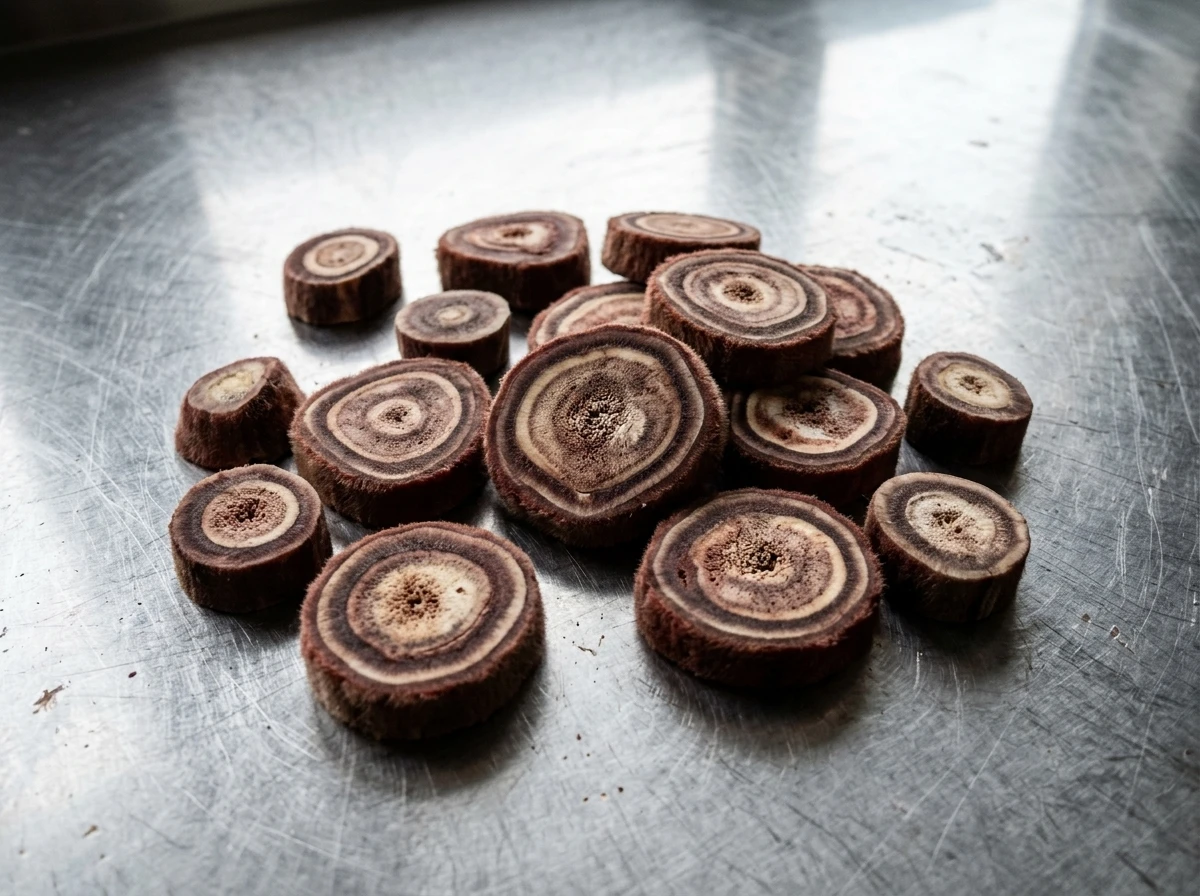
Regen Elixir Directory
Commit to the Practice
Tonic herbalism rewards consistency. The deep, systemic building work happens quietly over a 45 to 90-day cycle of continuous saturation. Supply the raw materials your body needs with our premium 3-pack.
Shop the 3-Pack Formulation1. What is Regen Elixir?
What is Regen Elixir, exactly? Let me answer that the honest way, because the name is the job description, and this is one of three velvet bottles we craft, so the first thing worth knowing is which one you're holding.
Regen Elixir is a regeneration formula. Fifty percent of the bottle is deer antler velvet, the growth material itself, and the other fifty percent is a fourteen-herb support cast, assistants, synergists, and activators, each one there to wake the system the growth work runs on. Straight velvet is the raw material. This is the formulated version, the velvet plus the crew.
Now the family, one tight pass, because it makes the positioning plain. Our general deer antler velvet bottle is the everyday base, plain velvet, maintenance and joints. Power Velvet is the concentrated surge, double the material, built for the day and the performance windows. Regen Elixir is the evening bottle, the rebuild bottle. Power in the day, regeneration at night.
Classification before benefits, always. This is an adaptogenic formulation of warming circulation tonics, invigorating in character, taken consistently over time to support, maintain, and promote health.
And here's the honest gloss on the word doing all the work in this conversation. Anabolic simply means building up. Catabolic means breaking down. A training session is a controlled breaking-down, and the rebuild afterward is the building, and the building only happens in the fed, resting state. That's the whole secret of this bottle. It is not a stimulant. It supplies the raw materials for the anabolic recovery system, and it asks you to take it when that system is actually running, with the complete meal, plenty of protein, in the evening.
But get this about the core material. A stag casts his entire rack every winter and grows a completely new one every spring, and antler is the only mammalian organ that regenerates completely, year after year. The velvet is the growing-state tissue of that project, harvested in its growing window. A regeneration formula built on the fastest regeneration project in the mammal world. The material is the job.
The constituent teaser is this: the polypeptide growth factors, alongside collagens and amino acids, supplying raw materials for muscle protein synthesis and tissue repair. Your body does the building.
Taken consistently over time.
2. Where Does It Come From?
Where does Regen Elixir come from, and how is it built? The answer is the recipe, because with a formulated blend the recipe is the story, and this one is built like a court around an emperor.
The emperor is deer antler velvet, fifty percent of the bottle, and the blend is stated plainly. Sixty-five percent Red Deer and thirty-five percent Plum Blossom Deer, both species named, both percentages on the table. And the harvest standard, delivered as fact: deer are not killed, only velvet antler is taken. The whole soft antler is harvested in its growing window, and the deer walks away to grow next year's rack.
Then the assistants, thirty-five percent of the formula, and each one carries a job. Astragalus, which the Chinese named huang qi, the yellow leader, rank and not marketing, the senior of the tonic class and the classical herb for nourishing the defensive energy that guards the body's surfaces. Eleuthero, whose genus name comes from the Greek word for free, the root the Soviet researchers made their workhorse adaptogen, studied for decades for work capacity and stress. Goji, the blood-nourishing berry. And Ocean Kelp, sustainably harvested, the mineral concentrate of the sea.
Then the synergists, ten percent. Mulberries, the dark blood berry. Dang Gui, the supreme blood tonic of the tradition, and here's the detail I love: the name is classically glossed as it should return, proper order restored. A root whose name means restoration, in a formula named for regeneration. Schisandra, which the Chinese call wu wei zi, the five flavor fruit, the one berry said to carry all five classical flavors in a single fruit. And Bitter Orange Peel, the mover.
And the activators, five percent, the courier wing. Saigon Cinnamon, the true cinnamon of Vietnam, warming and aromatic. Fresh Orange Peel and Fresh Nutmeg riding the same wing. Milk Thistle, the liver's guardian herb of the Western tradition. And Black Pepper, whose piperine is one of the most famous door-openers in the kitchen, taken alongside other constituents it measurably increases their uptake.
Every herb has a seat, and every seat has a reason.
The craft is stated plainly too. Structured distilled water and triple filtered USP grade organic alcohol at twenty-five percent by volume, the water pulling one class of constituents and the alcohol pulling the other, so the whole range lands in the bottle. The ratio is one pound to one quart, about twenty-eight thousand five hundred milligrams in every two-ounce bottle. The full specifications are published on our standards page, because a craftsman hides nothing.
An emperor, three ranks of court, and honest craft holding it together. That's where this comes from.
Taken consistently over time.
3. What Does It Actually Do?
What does Regen Elixir actually do in your body? Let me walk it properly, system by system, because a formulated blend works the whole architecture at once, and the frame never changes. The velvet supplies the growth material. The cast wakes the system. Your body does the building.
First, the repair channel, and this is the heart of the formula. The polypeptide growth factors and collagens from the velvet supply raw materials for hormones and muscle protein synthesis, supporting joint tissue maintenance and repair following physical activity. Practical translation: training is a controlled breaking-down, and this is the delivery arriving for the rebuild. Growth factors are the messengers that tell cells to build and repair, the foreman's instructions on the construction site. Your body makes its own. The formula supplies raw materials alongside, and the body assembles, at its own pace.
Second, the stress channel. The astragalosides from Astragalus and the eleutherosides from Eleuthero nourish the neuroendocrine system and fortify the adrenal glands, cultivating a balanced stress response. And notice why this channel earns its seat in a recovery formula. The build only runs when the system is calm. A wound-up, mobilized body is in use mode, not grow mode. The herbs that keep the stress response balanced are the herbs that keep the rebuild window open.
Third, the defense channel. The constituent synergy supports the body's natural defense mechanisms, helping it identify foreign material, facilitate containment and removal, and maintain tissue cleanliness. The garrison watches the job site while the crew works. A recovery project with guards on the wall is a recovery project that finishes.
Fourth, the barrier and the cleanup. The antioxidant bioflavonoids from Goji and Schisandra neutralize free radicals to maintain the skin's natural barrier function, the outer protective wall. And the liver and kidneys, the natural elimination pathways, carry the waste out. When the deliveries increase, the drainage stays supported.
And fifth, the glandular channel, the gentle one. The iodine from Ocean Kelp nourishes the network of glands to maintain glandular function and systemic balance. The thyroid is the thermostat of that network, the pace-setter of energy metabolism in every cell, and this formula gives it a basic, gentle nudge, a feeding, not a whipping. That's the honest register for it, and it's all it needs.
So there's the whole picture. Growth material, calm system, guarded site, clean channels, fed glands. The formula stimulates the entire system alongside the velvet, and the result is holistic growth and recovery, built by your body, at its own pace, over the cycle.
Benefits accumulate over time.
4. Who Is It For?
Who is Regen Elixir actually for? Let me paint the pictures, because this bottle serves a specific crowd, the people whose lives include hard physical days and the recovery that has to follow them.
First, the recovery day person, and this is the flagship. Resting and taking a day off is when the natural regenerative processes actually run, and this formulation supplies the raw materials for cellular repair and regeneration, promoting joint comfort and mobility. The bottle sits next to the ice pack, because rest is when the rebuilding happens, and the tonic feeds the rebuild.
Then the body builder. Lifting weights and dealing with soreness requires continuous muscle protein synthesis, and the polypeptide growth factors support exactly that, replenishing nutrient reserves to promote natural recovery from exertion. The bottle lives in the gym bag, right next to the lifting belt, and the soreness stops deciding your week.
Then the convalescent, the one getting strength back and trying to feel normal again. This formulation nourishes from within, replenishing energy stores and supporting systemic balance to help the physical form rebuild. Rebuilding is a supply-line project, and this is a supply.
And the lovers. Physical intimacy requires physical energy and connection, and these warming circulation tonics maintain hormonal balance and healthy sex hormones, supporting the circulation and warmth of the body. The nightstand drawer, and that was never a men-only drawer.
Then the fast roll, because the page serves them all. The high-stress crowd, navigating chaotic days and dealing with people, the adaptogens feeding the neuroendocrine system and fortifying the adrenals. The immunity crowd, around people in crowded spaces, and here's the detail worth knowing: the goji and mulberry in this blend literally bleed pigment when you slice them, and the pigment is the antioxidant constituent itself, the color is the activity. The tonic herbalist, keeping the daily routine, the synergistic botanicals well-absorbed and accumulating over time. And the sage, aging well and staying sharp, the constituents supporting cellular health and longevity.
Now the easy part, and it matters more than it sounds. This blend is easy to take. The berries sweeten it, the spices warm it, the cast rounds it, and a recovery dose runs higher than most, so the bottle has to be livable. Potent enough to work, but good-enough so that the bottle may be finished. The tonic you keep taking is the tonic that works, and this one is built to be kept.
And one note for the stackers: taken alongside our Power Pack, this bottle completes it, performance in the day and regeneration at night, consistent deer antler velvet dosing across the whole day.
The honest redirect, told plainly. If your life is maintenance and everyday joints, the general velvet bottle is the fit. If your life is performance windows and training days, Power Velvet is the fit. If your life includes hard days and the recovery that follows them, this is your shelf.
Right bottle, right window, right job.
Taken consistently over time.

5. How Do You Take It?
This is Regen Elixir, the recovery formulation of deer antler velvet and its fourteen-herb support cast, in a two-ounce bottle with sixty dropper servings.
One dropper is one press of the rubber bulb, which fills the tube to just above half-way. That's thirty drops, which is also one milliliter.
To find a functional dose, start with a minimum dose and work up. We suggest fifteen drops to one to three droppers, taken one to two times per day, which is five hundred to one thousand five hundred milligrams daily. And notice the starting floor, fifteen drops, the highest minimum on our shelf, because this formulation runs on enough. Not enough doesn't work.
Shake gently. Secure the lid and turn the bottle over back-and-forth three to five times to evenly distribute the liquid extract. Vigorous shaking oxidizes the volatile constituents, so gentle is the word.
By mouth, hold the liquid under the tongue for sixty to ninety seconds before swallowing, or mix the drops into two to four ounces of drinking water. Never hot water. Hot liquids damage the fragile constituents and lessen potency.
Now timing, and this is where the recovery identity lives. Best taken with the full complete meal, with plenty of protein, because this formulation turns on the anabolic recovery system, and that system builds from the plate. And oftentimes we recommend the evening for it, and here's the honest reason why. It can lower blood sugar during the day and put you into recovery mode when you didn't ask for it. The evening is the honest window, when you want the downshift.
For rapid assimilation, it may be taken on the empty stomach, up to thirty minutes before eating, followed by the complete balanced meal. Either door works. The meal behind it is the constant.
Storage is simple. An opened bottle holds about thirty to forty-five days. Unopened, about two years from the batch date. Keep it dark and cool.
Some effects are immediate within the first few days, one to three days. Other effects are building and are noticeable within one to two weeks.
Bingo, that's the whole practice.
Taken consistently over time.
6. How Long Until You Notice Results?
How long until you notice something from Regen Elixir? Let me give you the honest timeline, recovery edition, because tonics keep a different calendar than stimulants, and recovery keeps its own calendar on top of that.
Some effects are immediate within the first few days, one to three days. With this bottle, the immediate layer is the downshift. The evening dose with the big meal, the calm that follows it, the sleep that lands deeper because the system was fed and settled.
Other effects are building and are noticeable within one to two weeks. That's the rebuild layer, and it's the one you notice in retrospect. The morning after leg day feels different. The week stacks without grinding you down. Recovery work compounds quietly, overnight, dose after dose, and one day you look back and notice the whole picture changed.
And the deep work, tissue repair, the glandular layer, the structural rebuild, comes as you continuously saturate the body over a good tonic cycle. A good tonic cycle is forty-five to ninety days. Rebuilding is slow work by nature. The body doesn't take orders. It takes deliveries, and it schedules the construction itself.
Nothing is a quick fix. Anyone selling you a quick fix in a bottle is selling snake oil. Tonics reward time, not dosage.
And you gotta take enough to make it work. The range runs to one thousand five hundred milligrams daily, and this blend is easy to take more of, consistently, which is exactly why it was built the way it was. But enough is the target, and someone can only take so much of anything at any time. Your body sets the ceiling.
And the meals are mandatory. The growth material needs lumber, and plenty of protein at the meal is the practice. Skipping meals and eating incomplete meals will lead to ineffective results, because a recovery tonic on an empty workbench rebuilds nothing.
Don't quit at the doorstep. The deep work is behind that door.
Benefits accumulate over time.
7. Safety and Quality
Is Regen Elixir safe, and how do you know you're getting a quality bottle? Both questions deserve straight answers, and with a formulated blend, the answer is what's stated on the label.
Start with the formulation, stated plainly. Fifty percent deer antler velvet, sixty-five percent Red Deer and thirty-five percent Plum Blossom Deer, both species named, both percentages on the table. Thirty-five percent assistant herbs, ten percent synergistic herbs, five percent activator herbs, and every single herb listed by name, Goji, Astragalus, Eleuthero, Ocean Kelp, Mulberries, Dang Gui, Schisandra, Bitter Orange Peel, and the activator wing, all organic or sustainably harvested. A label that tells you every player and every percentage is a label that isn't hiding anything, and a label that won't, is saying something anyway.
Then the craft. Structured distilled water and triple filtered USP grade organic alcohol at twenty-five percent by volume, one pound to one quart, about twenty-eight thousand five hundred milligrams in every two-ounce bottle. The full extraction and lab standards are published on our standards page, because a craftsman hides nothing.
And the taste tells you it's real. This blend is the friendly one. The berries sweeten it, the spices warm it, the cast rounds it, and it's easy to take, which is deliberate, because a recovery dose runs higher and longer than most. The more you taste the stronger it is. Your own tongue is the lab.
Now the honest-use register, and the blood-sugar note is information, not a warning. This formulation can lower blood sugar during the day and put you into recovery mode, which is why we often recommend the evening. Work with the material's character and it works with you.
The harvest standard, delivered as fact. Deer are not killed, only velvet antler is taken. The deer walks away unharmed to grow next year's rack.
And the doctrine that keeps it all honest. Herbs are more effective and more powerful in the long term for supporting health, whereas drugs are more effective and more powerful in the short term for treating conditions and emergencies. Do not use an herb when one should use a drug, and do not use a drug when one should use an herb. Each has its own job, and this bottle's job is the long game of rebuilding.
Generally, this formulation may be taken with other dietary supplements, and it works synergistically alongside complete balanced meals.
Be the Best and Buy the Best. It is important to do your own research.
Health is the most valuable asset of one's life and the most valuable investment.
8. The Anabolic Recovery Meal
Why does Regen Elixir need the complete meal with plenty of protein? Because the dose and the fuel are one practice. This is the transcript that explains the whole bottle, so let me walk it properly.
The frame first. This formulation turns on the anabolic recovery system, and that system builds from the plate. The growth factors and collagens supply the raw materials, but raw materials without fuel are freight at a dock with no crew. The switch and the fuel have to arrive together, or nothing happens.
Now the biology underneath, told plainly. The body toggles between two states, and it cannot run both at once. There's the mobilized state, the fuel-burning, go-mode state you spend your day in. And there's the resting, fed state, the grow-mode state, where repair and building actually run. Recovery only happens in the second one. That's not a supplement claim. That's the operating system.
And here's the part most people never get told. The biggest natural pulses of growth hormone your body ever produces arrive during deep sleep. The night is literally the build shift, when tissue repair runs hardest. Which is why the evening dose with the big meal is the whole design: you're landing the deliveries exactly when the construction crew clocks in.
So the recovery meal, stated plainly. Plenty of protein, because muscle protein synthesis assembles from amino acids, and the synthesis is the project. Protein every four to six hours through the day if you're training, and the evening meal carries the biggest share, because that's the window this bottle rides. Eggs are the flagship. Keep the yolks soft, so as not to denature the cholesterol. Salt your eggs for stomach acid to absorb the protein, vitamins, fat, and cholesterol.
And that cholesterol piece is not a side note, it's the hormone story. Did you know that testosterone and estrogen are over ninety-five percent cholesterol by weight? Hormones are built, not summoned. This formulation supplies raw materials for hormones, and taking a hormone tonic without saturated fat and cholesterol will negate the effects. The gym benefits and the nightstand benefits ride the same stock, from the same plate.
Even the blood-sugar note is timing logic, once you understand the frame. This blend can nudge you into recovery mode, lowering blood sugar, downshifting the system. In the middle of the workday, that's the wrong window. In the evening, after the big meal, that's exactly the door you wanted to walk through. You're not fighting the material's character. You're steering into it.
Skipping meals and eating incomplete meals will lead to ineffective results. With this bottle, that line matters more than any other on the shelf.
Food and supplements work together. They meet in the middle.
Food heals.
9. The Whole System
Why does a regeneration formula carry fourteen herbs around the velvet? That's the fair question, and the lazy answer is a marketing word about synergistic blends, so let me give you the real one, because the real answer is a piece of engineering, and it's the whole point of this bottle.
Start with what the velvet is. It's the growth material. The polypeptides, the collagens, the amino acids, the raw stock of the rebuild. That's the emperor of the formula. But here's the thing about growth material, and it's the thing the whole cast exists to solve. Growth material landing in an unwoken system is freight at a quiet dock. The deliveries can be perfect and the site can still be asleep. A regeneration formula can't just deliver the freight. It has to wake the entire system the growth work depends on. That's the design logic, and every wing of the cast serves it.
The calm channel first, because the build only runs in the calm state. The astragalosides and eleutherosides nourish the neuroendocrine system and fortify the adrenal glands, keeping the stress response balanced so the body can actually spend its nights in grow-mode instead of standing guard. A wound-up system doesn't rebuild. This wing keeps the rebuild window open.
The thermostat channel. The iodine from the Ocean Kelp nourishes the network of glands, and the thyroid is the pace-setter of that network, the thermostat of energy metabolism in every cell of the body. And hear the honest register on this one, because it's deliberate. This is a basic, gentle nudge. A feeding, not a whipping. The thermostat doesn't need to be slammed, it needs to be nourished, and kelp does that job the way the ocean built it to.
The delivery fluid. Dang Gui and the blood berries, Goji and Mulberry, nourish the medium the whole project rides on. Every delivery, every hormone, every repair crew travels by blood. Nourish the medium, and everything riding it moves better.
The processing plant. Milk Thistle supports the liver, and the liver and kidneys are the natural elimination pathways, the plant that processes everything the body takes in and clears out. When you increase the deliveries, you increase the throughput, and the plant needs its own support to keep the site clean.
And the couriers. The five-percent activator wing, Saigon Cinnamon, the orange peels, the nutmeg, and Black Pepper, whose piperine is one of the most famous door-openers in the kitchen, measurably increasing the uptake of what it travels with. The aromatics move the recipe the last mile, out to where the work happens.
That's what formulated means. Not a pile of herbs, an architecture. The emperor and the court as one project, every seat with a reason, and your body doing the building.
Benefits accumulate over time.
10. Alone or Alongside
Can you take Regen Elixir alone, or with the other velvet bottles? Yes to both, and the answer is worth walking properly, because this is the bottle that completes a system.
Alone first, because it deserves the honest statement. Regen Elixir is a complete regeneration formula on its own. Fifty percent deer antler velvet carrying the growth material, and the full fourteen-herb cast waking every system the rebuild runs on. Recovery, stress balance, immunity, glandular support, the whole architecture in one bottle. A person could run this one bottle, with the evening meal, and be running a complete recovery program. That's the standalone truth.
Now the family, stated plainly, because we craft three velvet bottles and each one has its own job. The general deer antler velvet bottle is the everyday base. Plain velvet, one pound to one quart, taken at meals, day in and day out. Maintenance, joints, the foundation layer. Power Velvet is the concentrated surge. Double the material, tips-forward, built for the day and the performance windows, the morning and the pre-training dose. And Regen Elixir is the formulated recovery system, the evening bottle, the growth material plus the cast that wakes the whole rebuild. Power in the day, regeneration at night. That's the family in one sentence.
The stack with the regular bottle runs like this. Regular deer antler velvet at the meals through the day, keeping the baseline loaded, and Regen Elixir with the big evening meal, landing the growth material and the cast exactly when the build shift starts. That's the consistent-dosing play. Growth material from morning to night, each bottle in its own window, nothing forced, everything fed.
And for the Power Pack crowd, the short version. The pack covers the day. This bottle completes it. Performance in the day, regeneration at night, and the whole thing becomes a consistent deer antler velvet system, dosed around the clock. That's the design, and that's why this bottle exists in the lineup.
Now the honest wallet note, because price honesty is part of this voice. You don't need the whole family. One bottle, taken consistently at a functional dose, with complete meals under it, works, and any one of the three does its own job well. The family exists because the jobs exist, not because we want three bottles on your counter. Choose what your actual life asks for.
Right bottle, right window, right job.
Taken consistently over time.
Commit to the Practice
Tonic herbalism rewards consistency. The deep, systemic building work happens quietly over a 45 to 90-day cycle of continuous saturation. Supply the raw materials your body needs with our premium 3-pack.
Shop the 3-Pack FormulationPart IV: Power Pack


Power Pack Directory
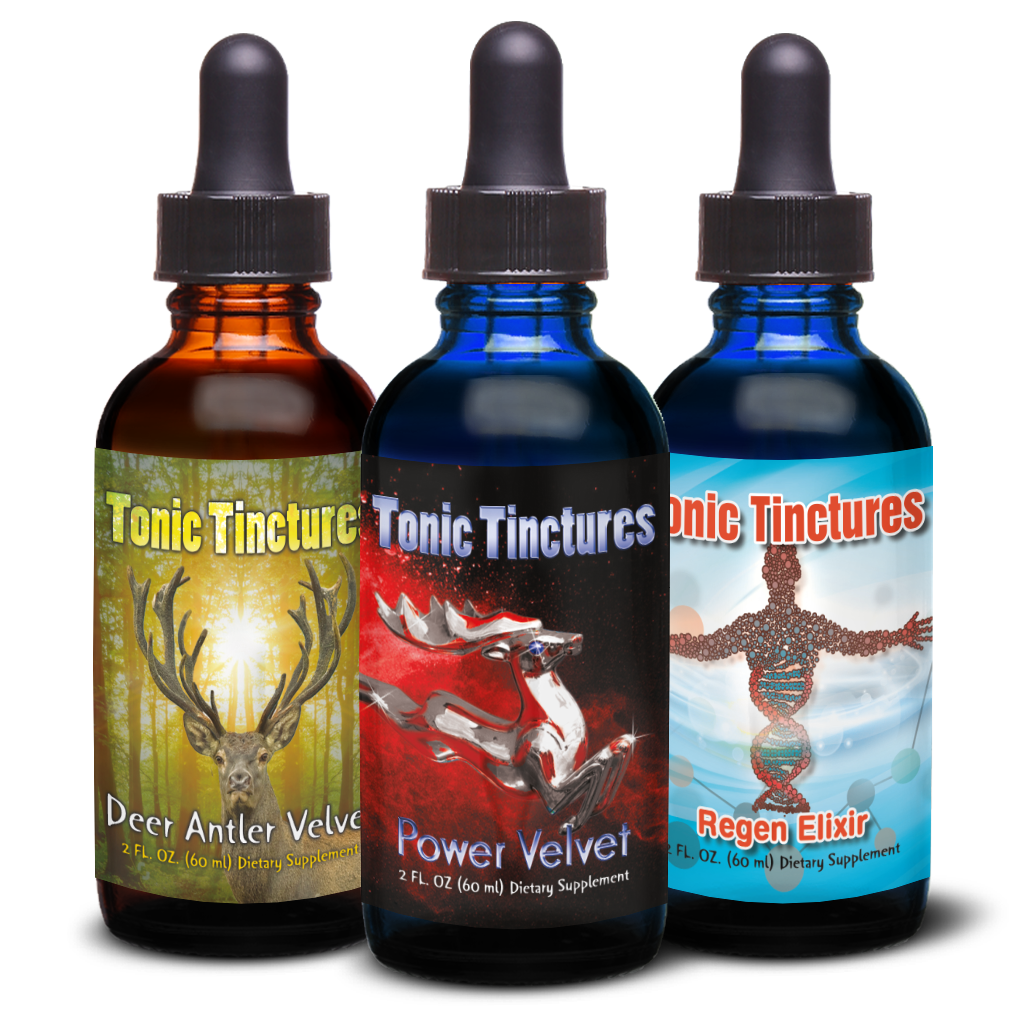
Commit to the Practice
Tonic herbalism rewards consistency. The deep, systemic building work happens quietly over a 45 to 90-day cycle of continuous saturation. Supply the raw materials your body needs with the complete Power Pack.
Shop the Complete Program1. The Program
Why does deer antler velvet come in three bottles? That's the question the Power Pack exists to answer, so let me give you the whole idea in one breath, and then we'll walk it.
Deer antler velvet is one material. The growth stock, the raw material for tissue growth, maintenance, and repair, the stuff the body rebuilds with. The Power Pack takes that one material and runs it three ways, because your day has three windows, and the body does different work in each of them.
Here's the clock. Power Velvet is the morning bottle, the performance formulation, taken at the front of the day or in the half hour before you train. Regen Elixir is the evening bottle, the recovery formulation, taken after the work is done, when the rebuilding actually starts. And the regular deer antler velvet is the anytime bottle, the baseline, taken daily including rest days, keeping you loaded in the background while the other two do their hours.
Power in the day. Regeneration at night. Foundation around the clock. That's the architecture, and every transcript in this series hangs off it.
Now, the reason it's built as three, and this is the part worth sitting with. Saturation. You want this material in you, working, all the time, and here's the catch your body runs into. It toggles between two states. There's the go-mode you spend your day in, running, lifting, working, burning fuel. And there's the grow-mode, the fed, resting state, where repair and building actually happen. And it cannot run both at once. That's not a theory. That's the operating system.
And someone can only take so much of anything at any time. You cannot take one heroic dose at seven in the morning and coast on it till midnight. The body doesn't bank it that way. So the program spreads the day instead of stacking it. A concentrated surge for the windows that ask the most. A recovery formulation for the window that rebuilds. And a baseline in between, holding the whole system loaded, never letting the deliveries lapse.
Get loaded, stay loaded, and stay in anabolic state. Anabolic just means building up, and catabolic means breaking down, and training itself is a controlled breaking-down. The work in the gym is the knock-down. The results are built afterward, fed and resting. The whole point of the pack is to keep materials arriving in every window, so the building never runs out of supplies.
And what it is not, stated plainly, because the shelf next to this one is loud. Not a stimulant stack. No jolt, no spike, no crash at hour two. Nothing gets forced, nothing gets whipped. This is a supply line, and your body does the building at its own pace.
So that's the idea. One material, three clocks, one program. This is the whole physical representation of deer antler velvet, and the rest of this series walks each piece of it.
Taken consistently over time.
2. What's Actually Happening
So what's actually going on here when I take it? That's the question worth answering properly, because the honest answer is cooler than the marketing version, and it explains why the pack is built the way it's built.
Your body toggles between two states, and it cannot run both at once. There's go-mode, the fueled, mobilized state you spend your day in, running, lifting, working, getting things done. And there's grow-mode, the fed, resting state, where repair and building actually happen. That's the whole operating system, and every result you've ever gotten from training was built in the second state, after the work, not during it.
Training itself is a controlled breaking-down. You load the muscle, the fibers take microtrauma, and that damage is the signal. The body reads it and rebuilds, and here's the beautiful part, it rebuilds slightly stronger than it was before. Not to match the load. To exceed it, so next time the same load costs less. That's called supercompensation, and it's the reason progressive overload works at all. Every training block you've ever admired is just that cycle, knock-down, rebuild-higher, stacked week after week.
Now here's where the pack walks in, because the rebuild has a supply chain, and the supply chain is what the pack feeds. The naturally occurring polypeptides and growth factors supply raw materials for tissue growth, maintenance, and repair, the actual stock the rebuilding runs on. The amino acids and essential trace minerals nourish lean tissue and assist muscle protein synthesis, replenishing the energy stores that progressive overload drains. And the adaptogenic constituents cultivate sustained energy and a balanced stress response within the endocrine system, keeping the whole operation steady instead of fried.
But get this, and it's the part that decides everything. The rebuild only runs in the fed, resting state. Grow-mode requires fuel, and it requires materials. A hard training week on skipped meals and coffee is a knock-down with no rebuild after it, and that's not discipline, that's just damage. The deliveries need lumber, and the lumber comes from complete balanced meals, protein front and center, every time.
So the pack is built to feed the cycle at every stage. Power Velvet in the windows that ask the most, supporting the exertion and the mechanics. Regen Elixir in the evening, when the build shift actually starts, and here's the piece I love, the biggest natural pulses of growth hormone your body ever produces arrive during deep sleep. The night is literally when the construction crew clocks in, and the evening dose lands the materials right on schedule. And the regular bottle anytime, including rest days, because rest days aren't off days. They're build days. The whole program knows that.
You knock it down, you feed it, it builds back higher. That's what's actually going on, and the pack supplies every link in that chain.
Benefits accumulate over time.
3. Body Composition
Let's talk about weight loss and body composition, because this is the thread nobody in the tonic world handles honestly, and you deserve the straight version before anything else.
Nothing in a dropper burns fat. That's the honest floor, and anyone selling you a fat burner in a tincture bottle is selling you the promise, and the promise is the only thing in their bottle. Tricky tricky. So if that's the shelf you came from, good. You're in the right place now, and the real story is better.
The real story is composition. Your weight on the scale is two different things mixed together, and the ratio between them is what actually decides how you look, how you feel, and how your body runs. Lean tissue is living, active, fuel-burning material. Your muscles are your metabolic engine, running around the clock, even at rest. Fat mass stores fuel. One of these works for you every minute of the day, and the program that grows it raises your whole operating baseline.
That's what this pack does with training. The polypeptides and amino acids nourish lean tissue and assist muscle protein synthesis, feeding the engine while you build it. The essential trace minerals support the metabolic output the engine runs on. And by supplying essential nourishment to the endocrine system, the formulations support energy regulation and metabolic output, promoting the systemic balance your body uses to sculpt and refine the physical form. That's the page's own language, and it's the honest version of the physique project. You're not melting anything. You're building the machine that runs hot and keeping the whole system balanced while it runs.
Now the spare tire, because that's the phrase that brought half of you here. Here's the doctrine, and it runs against everything the diet industry taught you. Someone is overweight because their body is lacking nutrition. Under-fed bodies hold onto stores, because the system reads scarcity and responds to it, and the cravings that sink every diet are the body asking for materials it isn't getting. The answer is more nutrient density, not less food. Complete balanced meals, protein at every one, the vitamins and minerals the whole engine runs on. A fed, nourished body settles. It stops hoarding. And a body in training, fed properly, building lean tissue, burns the stores off as the engine grows.
So the honest sequence, laid out plainly. The training does the burning. The meals feed the engine. The pack supplies the raw materials for the building, the endocrine balance, and the sustained energy that keeps the whole program alive across the months it takes. One bottle of anything won't do this. The training block plus the fed plate plus the loaded pack, over a real season, does this.
And the scale is the wrong scoreboard anyway, worth saying once. The physique athlete knows it already. A pound of muscle and a pound of fat weigh the same and look nothing alike, and the mirror, the tape measure, and how your clothes fit tell the true story while the scale tells you a number.
Build the engine. Feed the engine. Let the composition follow.
Benefits accumulate over time.
4. Who Is It For?
Who is the Power Pack actually for? Let me start with the crowd you'd expect, and then tell you the truth about the crowd this is really for, because it's bigger than the marketing ever admits.
The bodybuilder, sure, and the pack was built with him in mind. Lifting weights and utilizing progressive overload requires energy production and strains the physical form, and the broad spectrum of phytonutrients and amino acids replenishes energy stores and supports muscle protein synthesis, cultivating the structural integrity the work demands. His bottle lives in the gym bag, right next to the lifting belt.
The physique athlete. Physical maintenance and staying lean depend on healthy cellular function and energy regulation, and the trace minerals and polysaccharides support metabolic output and balanced composition to sculpt and refine the physical form. That bottle stands in the bathroom cabinet, next to the scale, though we already talked about the scale being the wrong scoreboard.
The combat athlete. Sparring and taking a hit demand steady physical mechanics and fast reflexes, and the unique constituents and essential trace minerals maintain structural integrity and support the nervous system. The bottle rides in the car cup holder on the way to the gym.
The fitness regular and the recovery day, going to the gym and staying consistent, and the rest days that make the training actually stick. The polypeptides maintain joint comfort and mobility, and the adaptogenic herbs and unique constituents work synergistically to support tissue growth, maintenance, and repair. The gym bag and the ice pack.
That's the core crowd, and the pack serves all of it. But here's the truth, and I want to say it plainly, because the gym marketing made everybody think this shelf isn't for them.
This pack is for everybody. The dad who used to be strong and wants it back, and wants to keep up with his kids instead of watching from the couch. The mom running the whole household's calendar, carrying the energy for a job and a family and herself, who decided her own strength is on the list too. The worker on their feet all shift, whose body is doing physical labor whether anyone calls it a workout or not. The person who just decided this is the year, who started with walks and is still deciding what the gym is for.
Fitness is for everybody, and everybody can get fit taking this. Because the pack isn't a bodybuilding product. It's a fitness-program companion. Training is a controlled breaking-down and rebuilding, and that cycle is the same cycle whether the bar is loaded to four plates or four pounds, whether the workout is a barbell block, a boxing gym, or the stairs you decided to take instead of the elevator. Your body doesn't know the difference between elite training and your training. It knows the load, the rebuild, and whether the materials showed up.
So the honest answer to who's it for. It's for anybody with a program, or anybody starting one. The body feeds on the same supply line at every level, and the pack runs that supply line around the clock. The intensity is yours. The materials are the materials.
Meet your program where it is, and load the supply line underneath it.
Taken consistently over time.
5. How Do You Run It?
How do you run the pack? This is the practical one, the whole schedule in one place, so let's set the bottles on the table and walk the day.
The rule first. To establish foundational intake, we suggest ten drops to one dropper of each, and work up from there. Find your functional dose, the amount your body agrees with, and hold it. The more you take, the better it works, and someone can only take so much of anything at any time, so enough is the target and consistency is the vehicle.
One dropper is one press of the rubber bulb, which fills the tube to just above half-way. That's thirty drops, which is one milliliter, about five hundred milligrams of formula extract. One drop runs about sixteen milligrams, and each two-ounce bottle holds sixty droppers. Simple math, sixty servings a bottle.
Now the clock, and this is the whole architecture in three lines. The regular deer antler velvet, one to three droppers, taken anytime, including rest days, because the baseline never clocks out. Power Velvet, one to three droppers, in the morning or thirty minutes before physical activity, held under the tongue for the fast lane. And Regen Elixir, one to three droppers, post-workout or in the evening, when the rebuild shift actually starts.
So a training day walks like this. Wake up, and Power Velvet with or before breakfast sets the day's output. Train whenever your schedule puts the session, and if you want the window, a dose of Power in the half hour before it, held under the tongue sixty to ninety seconds. That's the surge landing right where the work happens. After the session, the evening carries Regen Elixir with the last big meal, the recovery dose, the hormone-support dose, and the nightstand dose, all landing in the same window.
And the regular bottle threads through the day, anytime, with any meal, rest days included, holding you loaded in the background.
A rest day is not an off day, so hear this plainly. The baseline runs, the Regen runs in the evening, and the only thing that changes is you skip the pre-workout window, because there's no workout. The body rebuilds on rest days. Feed the rebuild.
Mechanics, quick, because they matter. Shake gently, lid on, turn the bottles over back-and-forth three to five times, and never vigorous, because vigorous shaking oxidizes the constituents. Hold the liquid under the tongue for sixty to ninety seconds before swallowing, or mix the drops into two to four ounces of drinking water. Never hot water. Hot liquids damage the fragile constituents and lessen potency.
And the foundation under all of it, because it's not optional furniture. Consistent use alongside complete balanced meals ensures nutrient absorption and assimilation. The meals are the fuel the whole program rides on, protein front and center.
Morning surge, evening rebuild, baseline all day, meals underneath. That's the whole run.
Bingo, that's the practice.
Taken consistently over time.
6. Your Program Calendar
How long until it works? Let me flip that question the honest way, because the answer isn't on the bottle. It's in your program.
How long have you been training? How long is your fitness program? Because the pack enhances everything along the way, and the way is yours. It feeds the cycle, knock-down, rebuild-higher, and the cycle turns at the speed of your training calendar, not the speed of a supplement label. The pack doesn't set the pace. It makes the pace you set actually pay.
So the honest timeline, in layers. Some effects are immediate within the first few days, one to three days. The energy layer, the sessions holding steadier, the recovery between them feeling different. That's the felt layer, and it shows up first if you're eating enough and dosing in your windows.
Other effects build and are noticeable within one to two weeks. The training week stacking without grinding you down. The joints negotiating less. The soreness that shows up but doesn't own the morning after. You notice that one in retrospect more than in the moment.
And the deep work, the composition shift, the real tissue rebuilding, runs on the program season. Here's the math, stated plainly. One of each bottle, the full pack, runs thirty to forty-five days at a functional dose. That's one cycle, and one cycle is one serious training month or month and a half of staying loaded. The pack that changes the physique is the pack you run season after season, because adaptation stacks the same way training does, and the fourth month is standing on the first three.
So judge the pack on the training block, not the week. The guy who takes it for ten days and asks where the muscle is, was never running a program. He was sampling one. The mirror changes across a season, the same season your training changes across, and the pack is the supply line underneath the whole thing.
Nothing is a quick fix, and nothing here pretends to be. The quick-fix shelf sells overnight, and delivers nothing overnight, and the cycle keeps turning anyway. This shelf asks for the one thing the quick-fix crowd won't give it, consistency, and pays back the one thing they all actually want, results that hold.
And the meals stay mandatory under the whole calendar. Skipping meals and eating incomplete meals will lead to ineffective results, and a program run unfed is a knock-down with no rebuild. The deliveries need lumber. Feed the machine.
How long until it works? As long as your program runs, and a month longer than you think. Stay loaded through it.
Benefits accumulate over time.
7. Recovery and Intimacy
Let me tell you about the evening window, because it's the quiet half of the pack and, for a lot of people, the half that matters most. The page puts it right on the label, plain as day: recovery and intimacy. Same hour, same bottle, same supply line. Let's walk why.
The day ends, and the body clocks into its build shift. The biggest natural pulses of growth hormone you ever produce arrive during deep sleep, which means the night is when the real rebuilding runs, tissue growth, maintenance, and repair, the whole construction project. Regen Elixir lands in that window, post-workout or with the evening meal, promoting the natural regenerative processes and hormonal balance. You're timing the deliveries to the crew's actual shift. That's the recovery half.
Now the intimacy half, and it's not a different story. It's the same story, told warmer. Physical intimacy depends on two foundations, energy-producing processes and a healthy hormonal system, and the pack feeds both. The nightstand drawer placement is on the page for exactly this reason, supplies essential nourishment to the network of glands to maintain hormonal balance and cultivate the vital energy to connect. And here's what I love about the architecture. The evening Regen dose and the nightstand dose are the same dose, landing in the same hour. The window doubles. You weren't planning two programs. The clock just built one.
And the mechanism deserves one teaching beat, because it dissolves half the anxiety people bring to this shelf. Hormones are built, not summoned. The glands are factories, the pack delivers raw materials to the loading dock, and the factories build what the body calls for, testosterone in men, estrogen and progesterone balance in women, all from the same supply line. Nothing gets forced, no switches get flipped, and that's why this works the same for both halves of the household. Same pack, same biology, same nightstand.
But hear the doctrine, because this is where people sabotage themselves. Testosterone and estrogen are over ninety-five percent cholesterol by weight. The factories build from stock, and the stock comes from the plate. Taking a hormone tonic without saturated fat and cholesterol will negate the effects. Eggs with soft yolks, so as not to denature the cholesterol. Salt your eggs for the stomach acid that absorbs the protein, fat, and cholesterol. The evening meal that carries your Regen dose should be a real one, protein and fats and all. You can't run a factory on an empty loading dock, and you can't build the nightstand benefits out of rice cakes.
And the felt version, the honest report over a cycle. The recovery that lands overnight. The energy that holds into the evening instead of dying at eight. The warmth, the drive, the capacity to connect, arriving because the system is fed, not because anything was forced. Not overnight, over the cycle. Foundations are poured slowly, and this one pours into both halves of the evening at once.
Recover and rebuild, connect and rest. One window, one dose, both jobs.
Taken consistently over time.
Commit to the Practice
Tonic herbalism rewards consistency. The deep, systemic building work happens quietly over a 45 to 90-day cycle of continuous saturation. Supply the raw materials your body needs with the complete Power Pack.
Shop the Complete ProgramPart V: Deer Antler Velvet Capsules
Capsules Directory

Commit to the Practice
Tonic herbalism rewards consistency. The deep, systemic building work happens quietly over a 45 to 90-day cycle of continuous saturation. Supply the raw materials your body needs with our premium 3-pack.
Shop the 3-Pack Formulation1. What Is It?
What is deer antler velvet, exactly? Let me do the quick version, because this page is really about the capsule, and the capsule is really about what it's not.
Deer antler velvet is the soft, growing antler itself, harvested in its growing window, before it ever hardens into bone. And here's the biology that makes the material worth a second look. Antler is the only mammalian organ that regenerates completely, year after year. A stag casts his entire rack every winter and rebuilds the whole thing in a single season. That's the material's whole story in one fact, and we tell the full version on the liquid extract page.
One more piece, delivered as fact. Deer are not killed, only velvet antler is taken. The deer walks away to grow next year's rack.
Now, what's in this bottle. This is the capsule form, and the distinction matters. This is not an extracted material. It's one hundred percent deer antler velvet, finely ground into a whole powder, fresh packed into vegetarian capsules, with nothing done to it that would degrade the nourishment. The species are stated plainly: ninety percent Red Deer from New Zealand, ten percent Plum Blossom deer from Asia.
Classification before benefits, always. This is a restorative tonic, and the honest word for its character is gentle.
Because here's what this bottle is not, stated plainly and early. It is not the performance bottle. The growth factors, the potent fraction, the noticeable lift, that material requires the alcohol extraction and the liquid delivery, and that's a different bottle in our lineup, stated honestly. The capsules carry the durable nutrient fraction instead. The collagens. The glucosamine and chondroitin. The minerals.
And that's not a consolation prize. Glucosamine and chondroitin are the classic joint pair, the two constituents people have bought as separate bottles for decades, arriving here in the whole material, alongside collagen proteins and a full roster of essential minerals. It's a nutrient tonic, a food-class supplement you can take every single day.
Mild, forgiving, and easy. That's the character. The practice is what makes it work.
Benefits accumulate over time.
2. Where Does It Come From?
Where does the deer antler velvet in these capsules come from? The facts first, stated plainly, because this is the gentle bottle and plainness is the whole posture.
One hundred percent deer antler velvet powder. Ninety percent Red Deer from New Zealand, the heartland of velvet farming. Ten percent Plum Blossom deer from Asia, the tradition's own deer. Both species named, both percentages on the table, because a label that states its material is a label that isn't hiding anything.
And the form is the story. This is finely ground whole powder, fresh packed into vegetarian capsules. Not an extracted material. Nothing was pulled, concentrated, or rearranged. The durable nutrient fraction, the part that survives drying without complaint, is delivered exactly as it sits in the material, and nothing was done that would degrade the essential nourishment.
Now, here's the piece worth pausing on, because it reframes the whole bottle. Glucosamine and chondroitin have been the classic joint pair on the supplement shelf for decades. People buy them as separate bottles. Then a collagen bottle. Then hyaluronic acid. Then calcium, then magnesium, then a trace-mineral complex. A whole cabinet, assembled one purchase at a time, one aisle at a time. This one material carries the entire list. The joint pair, the collagen proteins, the hyaluronic acid, the full mineral roster, all arriving together in one whole food.
And the names tell on themselves, the honest way. Chondroitin comes from the Greek chondros, cartilage. The constituent is literally named after the tissue it feeds. When a molecule's name is its job description, you know the tradition that named it was paying attention.
You can even taste the sourcing. The powder carries a slightly salty signature, and that's the minerals announcing themselves. We'll come back to that in the how-to section, because your own tongue is part of the quality check.
The full specifications of our methods are published on our standards page, because a craftsman hides nothing.
Honest material, plainly stated, freshly packed. That's where this comes from.
Benefits accumulate over time.
3. What Does It Actually Do?
What do these capsules actually do in your body? Let me walk it properly, because the mechanism here is quiet and structural, and the frame never changes. The capsules supply raw materials. Your body does the maintaining. And the pace is tonic speed, which is to say gentle, steady, and on your body's own schedule.
First, the joints, because that's the headline. Glucosamine and chondroitin supply the raw materials for joint tissue maintenance and repair, maintaining comfortable, flexible joints and joint mobility, and aiding the easing of minor physical discomfort. Hyaluronic acid rides along, the molecule that gives joint fluid its slip. Practical translation: the hinges get their deliveries, the creaks stay minor, and the body does the repair work on its own calendar.
Second, the structure. Essential vitamins and minerals, including calcium and magnesium, work synergistically to supply building blocks for tissue growth, maintenance, and repair. And the minerals each hold a seat on the same construction site. Magnesium, the cofactor of hundreds of enzyme systems. Manganese, the cofactor for the very enzymes that assemble the glucosamine and chondroitin family. Copper, required for the enzyme that cross-links collagen, the riveter of the framework. Zinc for tissue repair, selenium for the body's own antioxidant enzyme. The minerals and the constituents are one project, which is exactly why they arrive together in the whole material.
Third, the nourishment layer, light and honest. The collagen proteins nourish from within to maintain hydration and elasticity, supporting skin vitality and a vibrant appearance. Same collagen, same body. The outside reads the supply line.
And one sentence on the deeper layer, as the page states it. These unique constituents work with the neuroendocrine system to supply raw materials for hormones, helping the body maintain a balanced state. That's the whole claim, delivered gently, because this bottle doesn't push.
Now the fact that explains the whole calendar, and it's my favorite piece of biology in this section. Did you know cartilage has no blood supply? It's avascular. Muscle gets pipelined nutrients through the blood. Joint tissue soaks instead, bathed in the joint fluid, taking its nourishment in slowly from the bath. That's why joint nutrition is the long game, and why the cycle runs months rather than days. Slow tissue, patient practice.
Supply the joints, feed the structure, nourish from within. Your body does the work, gently, over time.
Benefits accumulate over time.
4. Who Is It For?
Who are these capsules actually for? Let me walk the cards this page serves, and you'll likely recognize yourself in at least one of them.
The recovery card first. Resting and taking a day off is when the body does its quiet rebuilding, and glucosamine and chondroitin supply the raw materials required for joint tissue maintenance and repair, assisting the easing of minor physical discomfort. The bottle sits next to the ice pack, feeding the rebuild while you rest.
Then the convalescent, getting strength back and trying to feel normal again. These unique constituents supply essential nourishment and building blocks for tissue growth, maintenance, and repair. And there's pedigree behind that card. In Asia, velvet was always the convalescent's material, served to the run-down and the rebuilding, for centuries. Some jobs never go out of date.
Then the worker. Standing on your feet and working a shift places continuous stress on the musculoskeletal system, and the essential trace minerals maintain structural integrity and fortify the body against everyday wear and tear. The bottle rides in the lunch pack, and hour ten stops being a wall.
Then the super nutrition card. Eating clean and tracking food is only as good as the gaps it fills, and the collagen proteins and essential trace minerals fill the nutritional gaps, replenishing nutrient reserves to support cellular health and integrity. The bottle lives in the pantry, next to the prep containers, right where the program runs.
Then the sage, reading, staying sharp, aging well. The collagen proteins nourish from within to promote cellular health and longevity while maintaining joint comfort and mobility. And here's the quiet fact behind that card. The body's own collagen production slows as the decades stack, so the incoming materials matter more with every year. Aging well is a supply project, and this is a supply.
And the tonic herbalist, brewing teas, taking herbs, keeping the daily routine. The consistent use of this restorative tonic provides long-term building benefits that accumulate over time, replenishing vital energy and systemic balance. Front row of the apothecary shelf.
Now the honest redirect, stated plainly, because it's part of the job. If you're shopping for performance, endurance, stamina, or drive, this is the wrong shelf, and I'd rather tell you now. Those benefits live in the liquid extracts, which carry the potent fraction this gentle bottle doesn't. And that's the flip side of the character, too. These capsules are ideal for people who find the liquid extracts too potent. Mild, forgiving, easily taken every day.
Right bottle, right person, right job.
Taken consistently over time.
5. How Do You Take It?
These are deer antler velvet capsules, the gentle nutrient tonic, in vegetarian capsules. Here's how you take them.
The label range is one to six capsules, taken one to three times per day, which is five hundred to three thousand milligrams daily. And here's the practical guidance from experience: most people do well on two to four capsules a day. Start low, work up, and let your body find the number.
Shake gently. Lightly shake the bottle so the capsules are loose. That's the whole instruction.
By mouth, swallow the capsules with lukewarm drinking water, to assist the assimilation of the vegetarian capsules. Lukewarm, never hot.
Timing, plain and simple. Take them alongside complete balanced meals, to aid nutrient absorption and support systemic balance. And there's a home field worth knowing. We recommend the capsules with the last meal of the day, to support restorative sleep. The evening slot suits this bottle's gentle character, and the overnight hours are when the quiet rebuilding runs anyway.
To supplement means to add to a complete meal. The capsules ride the food. They never replace it.
One practical note, because it catches people off guard. The powder inside tastes slightly salty. That's not a defect. That's the naturally occurring minerals, the calcium and magnesium, announcing themselves. Your own tongue is the lab, even in capsule form.
Bingo, that's the whole practice.
Some effects are immediate within the first few days, one to three days. Other effects are building and are noticeable within one to two weeks. Consistency is what builds the rest.
6. How Long Until You Notice Results?
How long until you notice something from these capsules? Here's the honest calendar, and this bottle keeps a quiet one on purpose.
Some effects are immediate within the first few days, one to three days. With a gentle nutrient material, the felt layer is subtle by design. Subtle is not the same as nothing.
Other effects are building and are noticeable within one to two weeks. The steadier joints. The easier mornings. The kind of shift you notice in retrospect, looking back at a week that went easier than the weeks before it.
And the deep work, the joint tissue, the structural layer, comes as you continuously saturate the body over a good tonic cycle. A good tonic cycle is forty-five to ninety days. And remember the biology from the body section. Cartilage has no blood supply. It soaks. Slow tissue, patient practice, and no dose hurries that calendar.
Nothing is a quick fix. Anyone selling a quick fix in a bottle is selling snake oil. Tonics reward time, not dosage.
And you gotta take enough to make it work. Most people do well on two to four capsules a day, held consistently. Not enough doesn't work. And someone can only take so much of anything at any time, so enough is the target and consistency is the vehicle.
Keep the meals under all of it, every time. Skipping meals and eating incomplete meals will lead to ineffective results.
Benefits accumulate over time.
7. Safety and Quality
Are these capsules safe, and how do you know you're getting quality? Both questions deserve straight answers, and with this bottle they run together.
Start with what's stated, plainly. One hundred percent deer antler velvet powder. Ninety percent Red Deer from New Zealand, ten percent Plum Blossom deer from Asia, both species named, both percentages on the table. Vegetarian capsules, finely ground, fresh packed. And the full specifications of our methods are published on our standards page, because a craftsman hides nothing. Species, source, form, and standards. Every one of those is a checkable claim.
The harvest standard, delivered as fact. Deer are not killed, only velvet antler is taken. The deer walks away to grow next year's rack.
Now the honest-use register, because it's this bottle's whole identity. This is food-class material, mild by design, easily taken every day. And here's the trust fact worth holding onto. The minerals arrive inside the living matrix, alongside their cofactors and carriers, the way food delivers minerals and the way isolated tablets don't. The crew and the materials travel together. That's the whole-food difference, and it's why a gentle everyday supplement can be a real one.
And your own tongue is the lab, even here. The powder tastes slightly salty, and that salty flavor is the naturally occurring minerals, the calcium and magnesium. The taste is the fingerprint.
Compatibility is simple. Generally, this formulation may be taken with other dietary supplements. And the family routing is stated honestly. The liquid extracts carry the full range, the potent fraction, the performance work. The capsules carry the nutrients and the joints. Alternate between them if you like, the capsules alongside the last meal of the day, and each bottle does its own job.
One piece of doctrine to keep the frame honest. Herbs are always more effective and more powerful in the long term for supporting health, whereas drugs are always more effective and more powerful in the short term for emergencies. Do not use an herb when one should use a drug, and do not use a drug when one should use an herb. Each has its own job, and this bottle's job is the long, gentle game of maintenance.
Honest material, honestly stated, honestly made. Be the Best and Buy the Best.
It is important to do your own research. Health is the most valuable asset of one's life and the most valuable investment.
Commit to the Practice
Tonic herbalism rewards consistency. The deep, systemic building work happens quietly over a 45 to 90-day cycle of continuous saturation. Supply the raw materials your body needs with our premium 3-pack.
Shop the 3-Pack Formulation