
Discover the honest truth about Ashwagandha—the classical Ayurvedic adaptogen prized for thousands of years as the premier rejuvenative root. Whether you are looking to support a balanced stress response, enhance systemic recovery, or cultivate relaxed, clear-minded focus, the secret lies in the deep, restorative power of this desert-native plant. This guide strips away the marketing hype to teach you exactly what ashwagandha is, what it does, and how to properly use it for steady, grounded vitality.
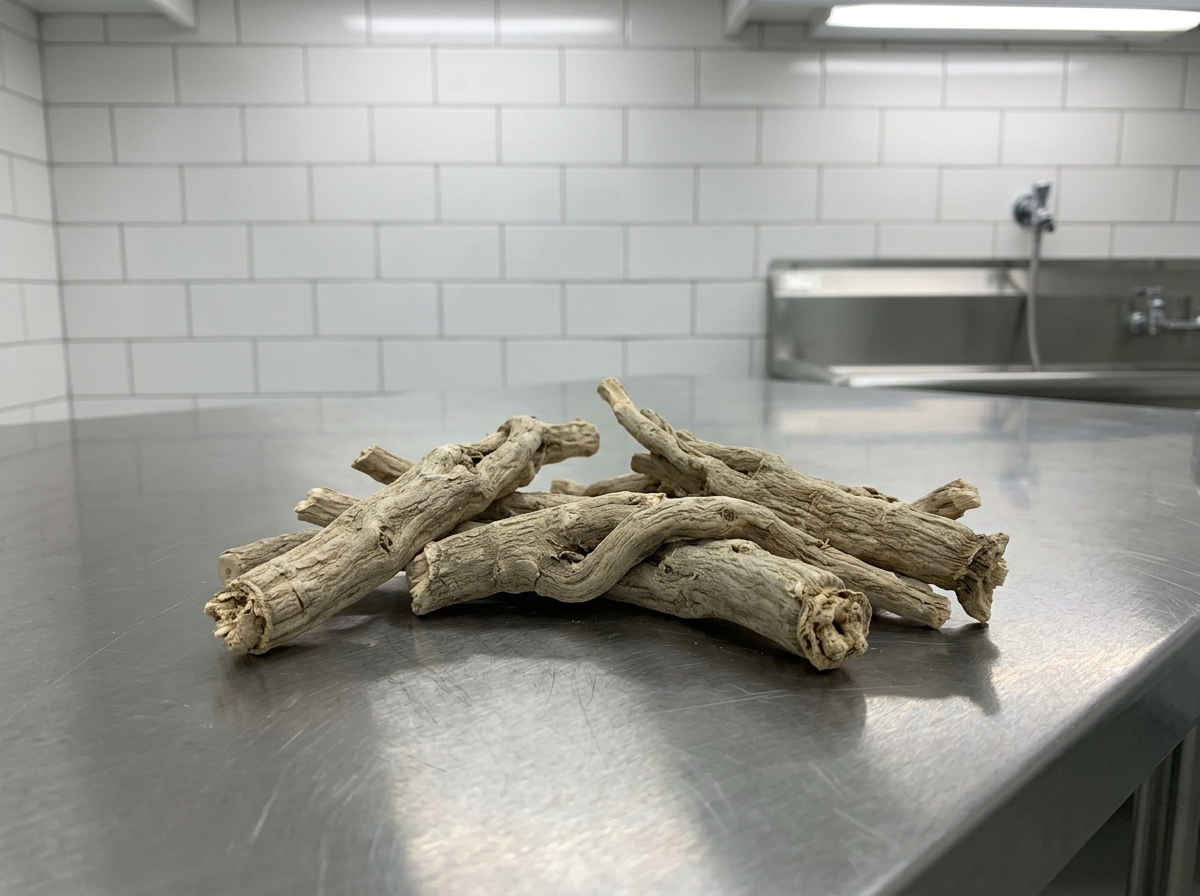

I recorded these audios to directly answer the questions I've received most over the last 26 years. The text below contains the actual transcripts.
Jason J. DukeOwner / Artisan
Reference Directory

Commit to the Practice
Tonic herbalism rewards consistency. The deep, systemic building work happens quietly over a 30 to 90-day cycle of continuous saturation. Supply the raw materials your body needs with our premium 3-pack.
Shop the 3-Pack Formulation1. What is Ashwagandha?
So, what is ashwagandha, exactly? The answer starts with the name, because this root carries two names, and both of them are true at once.
The Sanskrit name, ashwagandha, translates as strength of the stallion. It comes from the scent of the fresh root, which carries something of the horse about it, and from what the root was understood to give: the vigor of a horse, power held inside a calm frame. Then there's the botanical name, Withania somnifera, and somnifera means sleep-bearing. One name promises horsepower. The other promises rest. And that pairing isn't a contradiction. It's the whole personality of the plant.
Classification before benefits, always. Ashwagandha is an adaptogenic tonic, and in its own tradition it sits in the rasayana class, which translates as the rejuvenatives. The roots taken over time to rebuild, restore, and nourish. Plain English: this is the class of materials that give back what the years take.
One word deserves care here, because it's the word most often attached to this root. Calming does not mean sedating. Ashwagandha won't put you to sleep, and it won't wire you up either. Adaptogens work with the body to maintain a balanced state. What people describe is relaxed alertness. Settled and clear at the same time. The engine idles low, and the power is right there when you reach for it. A stallion at rest. The tradition chose that image for a reason, and it holds.
And here's the part that separates this root from the purely soothing herbs. It builds while it calms. It steadies the nervous system and nourishes the deeper systems in the same serving, so the calm isn't an empty calm. It's a fed calm.
The signature constituents are the withanolides, a class of triterpenes, supplying the raw materials your body uses for a balanced stress response and steady energy metabolism. That's the pairing the two names promised. Strength on one side, rest on the other, one root holding both.
This is the calm-strength root. Rebuild while you rest. That's not a slogan. That's the plant.
Taken consistently over time.
2. Where Does It Come From?
Where does ashwagandha come from? Not a bottle. Not a farm supply chain. A plant, from some of the hardest country a plant can grow in, and the story of where it lives explains almost everything about why the tradition prizes it.
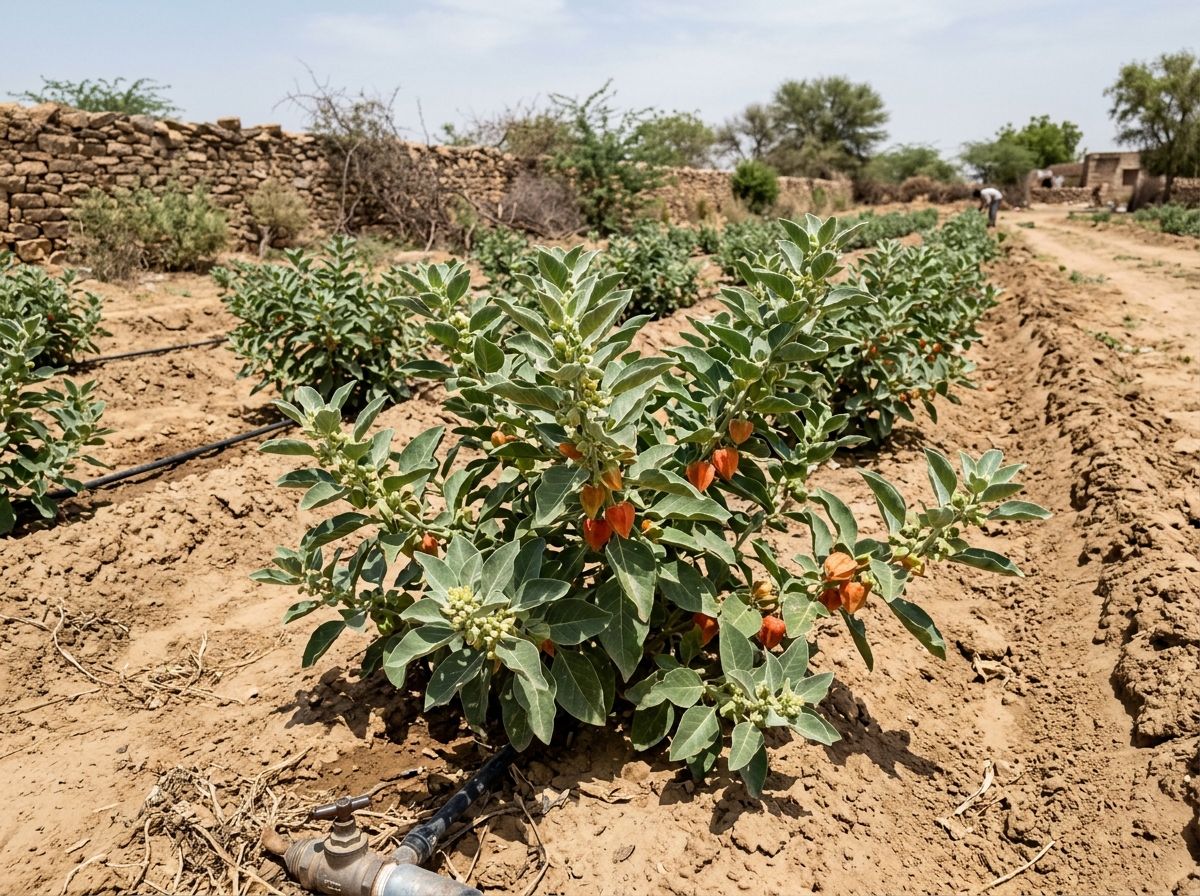
Start with the map. Ashwagandha is native to India, and especially the dry northwestern belt, the arid stretches of Rajasthan and Madhya Pradesh and Gujarat. Lean soils, real heat, long dry seasons. It also grows wild across North Africa and the Middle East, which tells you the range: this is a plant of the dry places of the Old World. It doesn't come from the lush tropics. It comes from country that makes plants work for a living.
And that's the observation the herbalists made, plain and practical. This shrub thrives where other crops quit. Drought, poor soil, punishing sun, and it carries on. The old reading of that is character: the plant that masters hard conditions in its own life becomes the classic material for bodies facing hard conditions in theirs. Not mysticism. Just how the tradition matched materials to needs.
Now the surprise most people never hear. Withania somnifera is a nightshade. Solanaceae. The same family as the tomato, the pepper, the eggplant, and the potato. India's great tonic root is a cousin of the garden vegetables in your kitchen. Family reunions would be interesting.
The plant itself is small and unassuming. A shrub that stands knee-high, velvety grey-green leaves, tiny pale flowers, and berries that ripen red-orange inside papery husks, like little lanterns. Those husks earned it a nickname that stuck: winter cherry. A lantern-lit cousin of the cherry, standing in dry fields.
But here's what matters. The whole plant exists to feed one thing: the root. The medicine is the root, and everything above ground is machinery. The shrub spends its season assembling its constituents underground, and it spends more than a year doing it. The root is dug after the plant has flowered, fruited, and begun to fade, because that's when the work underground is done and the material is at its fullest.
And at the moment of harvest, the name announces itself. Cut a fresh root and it carries the horse smell. The scent the whole tradition is named for, rising right out of the ground. That's how you know you're holding the real material.
Today the root is grown on farms across its native belt, with India the heartland, and good cultivation keeps it true to the wild plant: the same dry country, the same patience, the same root at the end.
A plant that masters hardship, feeding a root that rebuilds the tired. That's where ashwagandha comes from.
Good root, honestly grown, carefully pulled.
3. What Does It Actually Do?
What does ashwagandha actually do in your body? Let me give you one picture, and then walk it through, because the picture is the mechanism.
A deep well. Most herbs hand you a cup of water. This one feeds the well. That's the difference between a soothing herb and a rejuvenative, and ashwagandha is the rejuvenative. The root supplies, the body draws on it, and the reserve is there when the day needs drawing from.
Start with the center of the picture, the stress axis. Your neuroendocrine system is the network of glands that reads your day and sets your response, and the withanolides, the signature triterpenes of this root, work with that system directly. They supply the building blocks required to maintain a balanced stress response. What that means in plain living: the day still comes at you, but your body stops treating every wave like a storm. Easing of tension. A calm mind. Not flattened, not sedated. Present.
Then the strength half of the root, and this is the part people don't expect from a calming herb. When the system isn't held in constant mobilization, energy changes character. It steadies. The root supports energy metabolism, the process your body runs to turn fuel into output, and that support shows up as sustained endurance and stamina. Not a push. A well that doesn't run dry. People describe it as relaxed alertness, clear and awake without the engine running loud.
Then the recovery class, the deepest layer. Prolonged exertion and daily stressors deplete the nutrient reserves your body draws on to keep running, and the rejuvenatives are the materials that replenish those reserves. Recovery, regeneration, and growth. This is the work that happens underneath, quietly, while you go about your life, and it stacks over the weeks. Restorative sleep is part of it, because the nightly rebuild is where the drawing-down gets refilled.
One thing this root does not do, stated plainly. It does not create energy out of thin air. It assists your body in efficiently using the food you eat. The fuel comes from complete balanced meals, always, and the root feeds the systems that put that fuel to work.
Supply the well, steady the response, rebuild the reserves. Calm and strength, one root, both halves working at once.
Benefits accumulate over time.
4. Who Is It For?
Who is ashwagandha actually for? The short answer is the run-down, but that covers more people than you'd think, and each of them wants something a little different from this root. Let me walk the shelf of lives it fits.
The high-stress buyer first, because that's the flagship. Chaotic days, dealing with people hour after hour, the weight of other people's problems landing on your desk. The withanolides work with the neuroendocrine system, supplying the building blocks to maintain a balanced stress response, so the day can keep coming without your body treating all of it as an emergency. The bottle ends up in the bottom desk drawer, and the days stop costing so much.
The entrepreneur. Long days, back-to-back decisions, the particular fatigue of choosing all day long. This root nourishes the nervous system, supplying what it needs to process information effectively and hold a state of relaxed awareness. The bottle rides in the laptop bag. The mind stays clear even when the calendar doesn't let up.
The athlete, and this is the quiet specialty. Consistent training, waking up stiff, asking the body to rebuild faster than the schedule rests it. Ashwagandha is a recovery root. Exertion depletes nutrient reserves, and this root replenishes them, supporting the body's own recovery, regeneration, and growth between sessions. The bottle lands in the training bag. Training is where you spend; this is where you refill.
The convalescent, getting strength back after the body has been through it. This is the classic job of the rejuvenative class: replenish the reserves, support the natural regenerative processes, cultivate vital energy back. The bottle sits right on the nightstand next to the water glass.
The meditator and the yogi, for whom this root was almost made. Sitting still and quieting the brain, holding poses and stretching stiff muscles: the withanolides ease tension and support the calm mind and structural integrity that mindful movement runs on.
The sage, staying sharp and aging well. The same nourishment that steadies the nervous system maintains the higher-level cognitive functions and a clear sense of perception, which is the rejuvenative class doing its long work.
And the vitality buyer, worth naming on its own. Grounded energy, hormone support, the strength side of the root. The glands are part of the neuroendocrine system, and the root feeds the whole network, building blocks included.
Now the honest redirect. If what you're after is fire, lift, and drive first thing in the morning, this is the wrong shelf. The warming roots do that job. Ashwagandha is for the tank that's been drained, not the engine that wants a turbo. Right root, right job.
Tired but still standing? This is your root.
Taken consistently over time.
5. How Do You Take It?
Tonic Synergy & Timing: We remind you that with consistent use, benefits accumulate over time.
For rapid assimilation, we recommend taking it on an empty stomach (up to 30 mins before eating), followed by a complete balanced meal to provide the heavy building blocks (proteins/fats) your body requires to rebuild and restore.
This is the ashwagandha liquid extract, the general-use tonic in a two-ounce bottle with sixty dropper servings.
One dropper is one press of the rubber bulb, which fills the dropper tube to just above half-way. That's thirty drops, which is also one milliliter.
To find a functional dose, start with a minimum dose of ten drops to one dropper and work up. We suggest ten drops to one to three droppers, taken one to three times per day, which is one hundred sixty to four thousand five hundred milligrams daily.
The bottle has two jobs, and it's worth knowing both. For immediate impact, hold one to two droppers under the tongue, sublingually, for fifteen to thirty seconds. Longer isn't necessary. For tonic building, to continually saturate your system and build deep, long-term health, take one to two droppers with meals, or up to two to three droppers with your largest meal.
Shake gently. Secure the lid and turn the bottle over back-and-forth three to five times to evenly distribute the liquid extract. Vigorous shaking oxidizes the constituents, so don't do that.
By mouth, two ways. Hold the liquid under the tongue for fifteen to thirty seconds before swallowing, or mix the drops into two to four ounces of drinking water. Room temperature or cool, never hot. Heat damages the delicate constituents and lessens potency.
Timing, plain and simple. For rapid assimilation, take it on an empty stomach, up to thirty minutes before eating, followed by a complete balanced meal to provide the building blocks, the proteins and fats. And this root suits mindful moments especially: alongside meditation, yoga, or the evening wind-down, whenever the settled state is what you're after.
Storage is easy. An opened bottle holds about thirty to forty-five days. Unopened, about two years from the batch date. Keep it dark and cool.
If it didn't sit right, try again at a lower dosage and with a complete meal.
Some effects are immediate within the first few days. Consistency at a functional dose is what builds the rest.
6. How Long Until You Notice Results?
How long until you notice something from ashwagandha? Most-asked question in this category, so here's the straight answer, in three windows.
Some effects are immediate within the first few days, one to three days. That's the felt layer. The easing of tension. The sense of the shoulders coming down. The day arriving without the edge on it. The immediate layer is real, and it's often the first signal that the dose is right.
Other effects are building, and become noticeable within one to two weeks. The steadier energy. The sleep that starts doing its job better. The mood that holds level when the day goes sideways. The deeper work doesn't announce itself. It accumulates underneath while you go about your life.
Then the deep layer. The systemic shifts and the deeper hormonal benefits arrive as you continuously saturate your body over a thirty to ninety day cycle. That's the rejuvenative class doing what it's named for. Rebuilding is not an event. It's a saturation process, and the body puts the materials to use on its own schedule. The body doesn't take orders. It takes deliveries.
A good tonic cycle is thirty to ninety days. That's not a sales line; that's how tonics work. A tonic is a practice, not an event.
And you gotta take enough to make it work. The more you take, the better it works. Not enough doesn't work. Someone can only take so much of anything at any one time, so enough is the target, and consistency is the vehicle that gets you there.
Nothing is a quick fix. Anyone selling a quick fix in a bottle is selling snake oil. Tonics reward time, not dosage.
And keep the foundation under all of it: complete balanced meals, every time. Skipping meals and eating incomplete meals will lead to ineffective results. The tonic rides on food; it doesn't replace it.
Benefits accumulate over time.
7. Safety and Quality
Is ashwagandha safe, and how do you know you're getting a quality bottle? With this root, those are the same question, and the answer is in the markers you can check yourself.
Start with what's stated plainly. The ingredients are organic, and they say so on the label, root material and all. The formulation is custom crafted, multi-step, and micro-batched, which matters because small batches hold their potency instead of sitting in some warehouse losing their character. Rapid absorption, high bioavailability, and the full extraction and lab methods are published on our standards page. That last part is worth pausing on. Most companies tell you to trust them. We hand you the methods.
And your own tongue is the lab. A real ashwagandha extract is thick and strong, and thickness is the fingerprint of raw botanical material. The more you taste the stronger it is. A thin, pale tincture tastes like exactly what it is: mostly nothing. The taste is the proof, and it's the one test no marketing department can fake.
Now, honest use, plainly stated. This is food added to the diet. It works alongside your meals and generally with other dietary supplements you're already taking, filling nutritional gaps rather than replacing anything. The root never promotes skipping meals, and everything it does rides on complete balanced meals underneath.
One piece of doctrine to keep the whole picture straight. Herbs are always more effective and more powerful in the long-term for supporting health, whereas drugs are always more effective and more powerful in the short-term for treating diseases, conditions, and any emergencies. Do not use an herb when one should use a drug, and do not use a drug when one should use an herb. Each has its own job, and this root's job is the long term.
And the price. You shouldn't pay a lot for ashwagandha mystique, because this is a farmed root with a real commodity market behind it, not some rare treasure. Pay for the root and the craft, not for the story. At the same time, be wary of the cheap bottle too, because a thin tincture at a bargain price is still the most expensive way to buy nothing.
Be the Best and Buy the Best.
It is important to do your own research. Health is the most valuable asset of one's life and the most valuable investment.
8. The Formulation
Why cherry, rhodiola, and schisandra alongside ashwagandha? Fair question, and the answer is that this bottle was built the way a good crew is built: one anchor, three specialists, every herb earning its slot. Let me walk the formulation, because each part is doing a job you can name.
Ashwagandha is the anchor, sixty percent of the bottle, and the reason the product exists. The withanolides, its signature triterpenes, work with the neuroendocrine system, supplying the building blocks for a balanced stress response, the easing of tension, and a calm mind. Calm strength is the foundation, so calm strength leads the formulation.
Black cherry, twenty percent, brings the antioxidant arm. Its anthocyanins and polyphenol bioflavonoids are potent antioxidants, supplying what the body uses to neutralize free radicals and manage oxidative stress, the cellular by-products of exertion. That work supports joint tissue maintenance and repair, which is why the athlete angle on this blend runs deeper than most.
Rhodiola, fifteen percent, carries the energy side. Its rosavins and salidrosides facilitate energy metabolism and the efficient use of energy, promoting physical endurance and sustained stamina. Where ashwagandha steadies, rhodiola keeps the fire burning clean. Steady and enduring together, not wired.
Schisandra, five percent, closes the loop with defense. Its schisandrins and complex polysaccharides supply the raw materials that fortify the adaptive immune response, helping the body identify foreign material, facilitate containment and removal, and maintain tissue cleanliness.
And the reason they're together at all: they work synergistically to provide a broad spectrum of phytonutrients. One root calms, one fruit defends the tissue, one root energizes, one berry cleans. Four jobs, one bottle, no filler.
Now the craft, because the formulation is only as good as the extraction behind it. Every batch is custom crafted, multi-step, and micro-batched. The liquid is structured distilled water and triple filtered USP grade organic alcohol at thirty-five percent by volume. The water pulls one class of constituents, the alcohol pulls the other, and the whole process stays cold, unheated, so the fragile constituents hold their shape in fluid suspension for maximum absorption.
The ratio is right on the label: one pound of herb to one quart of liquid. That works out to about twenty-eight thousand five hundred milligrams extracted into every two-ounce bottle, sixty dropper servings. Nothing hidden, nothing dressed up.
And the taste tells on it. This extract comes out thick and strong, and thickness is the fingerprint of raw botanical material. The more you taste the stronger it is.
The right herbs, in honest proportion, pulled with real craft. That's the formulation.
Taken consistently over time.
9. Cortisol and the Stress Axis
What does ashwagandha actually do for stress? That's the question most buyers are really asking, so let me walk it properly, because the answer runs deeper than most people expect.
Start with the axis itself. Your neuroendocrine system is the network running from the hypothalamus in the brain, down through the pituitary, to the adrenal glands sitting on top of the kidneys. That's the control tower. It reads your day, decides what's a threat, and sets your body's response. When it's calibrated, you rise to real challenges and settle when they pass. When it's stuck in the on position, everything gets treated as an emergency, and you pay for that in wear.
Here's a piece of biology worth knowing. Cortisol is your mobilization hormone. It's the body's sprint fuel: it raises blood sugar, sharpens attention, and prepares muscles for action. Perfect for running from something. The problem is that modern life doesn't send bears; it sends emails, traffic, and other people's emergencies, one after another, all day. A hormone built for minutes gets asked to run for months. And a body held in mobilization that long stops recovering, because the rebuild happens in the settled state, and the settled state never quite arrives.
That's the tank ashwagandha addresses. The withanolides work with the neuroendocrine system itself, supplying the building blocks that system needs to maintain a balanced stress response. The tower gets what it needs to do its own recalibrating. The day still comes at you, but your body stops treating every wave like a storm. That's the difference between being flattened by a stressful week and moving through it upright.
What people report over the cycle sounds modest until you've lived the other way. The shoulders come down. The reactivity drops; the thing that would have set you off at two in the afternoon just... doesn't. The evening arrives and the system winds down on its own, because it was never fully cranked up. Relaxed alertness is the phrase: clear, present, awake, without the engine screaming underneath.
And one honest limit, stated plainly. This root doesn't remove stressors. The job stays stressful, the commute stays long, the relatives stay themselves. What changes is the body's response, which is the part you actually own. The tradition never promised to fix the world; it promised to help you stand steady in it.
Feed the tower, steady the response, and let the rebuild happen.
Taken consistently over time.
10. Testosterone Deep Dive
Can ashwagandha support testosterone? That question gets asked quietly and answered badly all over the internet, so let me give it the honest treatment, because the real answer is better than the hype and more useful.
Start with the plumbing, because the mechanism matters. Testosterone is built by glands, and those glands are part of the neuroendocrine system, the same network the withanolides work with. This root's signature constituents supply the building blocks that network uses to do its work, and the reproductive glands are stations on that network. So when you nourish the system, you nourish the glands. The support is structural, not a jolt. Testosterone production in males runs on fed glands, not on stimulants pretending to be hormones.
Now the teaching that makes the hormone half make sense. Hormones are built, not summoned. Did you know that testosterone and estrogen are over ninety-five percent cholesterol by weight? The glands are factories, and cholesterol is the raw stock they assemble hormones from. Which means the plate carries the program. Taking a hormone-supporting tonic without saturated fat and cholesterol in the diet will negate the effects. Eggs with soft yolks, so as not to denature the cholesterol. Salt your eggs for stomach acid to absorb the protein, vitamins, fat, and cholesterol. The root supplies unique constituents; the meals supply the heavy building blocks. Both, or neither works.
And the stress half of the story, which almost nobody connects. A body held in constant mobilization deprioritizes building. The sprint state is for surviving, not for growing; the rebuild, including the hormone work, happens in the settled state. So the same root that steadies the stress response is, in a very real sense, clearing the workshop for the building to happen. Calm and testosterone are not separate projects. For the run-down man, they're the same project.
The intimacy half follows naturally. Connection runs on a settled nervous system and a fed endocrine system, and this root works on both at once. Grounded energy, presence, the ability to settle in and actually be there with your partner instead of arriving wired and leaving distracted. Some couples keep this bottle on the nightstand for exactly that reason, and the tradition would not be surprised.
And the honest redirect, plainly. If the goal is fire and ignition specifically, the warming class does that job, and there's a real bottle for it. This root is the foundation layer: the fed, settled, building body that everything else stands on. Foundations first.
Hormones are built, not summoned. Feed the builders.
Taken consistently over time.

11. Strength and Recovery
Can ashwagandha help with strength, training, and recovery? Yes, and the honest version of how is more interesting than the marketing version, because this root works on the side of the equation most people ignore.
Here's the truth about training that every serious athlete learns eventually: the workout is the spending, and the recovery is the earning. You don't get stronger in the gym. You get stronger in the hours and the sleep after the gym, when the body takes the raw materials and does its recovery, regeneration, and growth. Training writes the request. Recovery fills the order.
That's where this root lives. Prolonged exertion depletes nutrient reserves, the stocks your body draws on to rebuild between sessions, and daily stressors drain the same reserves when you're not training at all. The rejuvenative class is named for exactly this job: replenishing what gets depleted. The withanolides supply building blocks for the steady state the rebuild runs in, and a body that's settled recovers better than a body that's still running from its own day. Work-tolerance and anti-fatigue are the old words for it, and they're good words: the capacity to keep working and to keep coming back.
Picture the buyers. The man with the physical job, on his feet all shift, who needs to do it again tomorrow. The trainer waking up stiff, stacking sessions faster than the calendar allows rest. The older athlete who notices the rebuild takes longer than it used to and wants the recovery side fed, not just the output side. All three are the same buyer at bottom: someone spending faster than they're refilling.
And what do they report over a cycle? The stiffness after training eases. The afternoon of the second day doesn't feel like a wall. The sleep deepens, and sleep is where most of the rebuilding is actually scheduled. The strength gains hold steadier, because the body finally has materials arriving on a regular basis instead of a feast-and-famine rhythm. That's not a stimulant's promise of more output today. It's a tonic's promise of more rebuilding every day, which compounds.
Now the food doctrine, because it's not optional here. Recovery, regeneration, and growth require raw materials, and the heavy building blocks, the proteins and fats, come from complete balanced meals. The body can't bank protein; it needs it arriving consistently, every four to six hours through the day. The root feeds the systems; the meals feed the construction. Anyone asking this root to rebuild a body on skipped meals and protein-light eating is asking a mason to build with no bricks.
And the honest note, as always. If the goal is the aggressive drive, the fire-and-lift feeling for the session itself, the warming class is the tool for that day. This root is the other half of the program: the recovery root, the rebuild root, the one that makes tomorrow's session possible.
Spend in training. Refill in recovery. Feed both.
Taken consistently over time.
12. Sleep and Evenings
Will ashwagandha help you sleep, and will it make you sleepy during the day? Two questions, one root, and the answers fit together neatly once you understand what it actually does.
The daytime half first, because it's the worry that stops people from buying. No, it will not make you sleepy. Adaptogenic herbs provide raw materials to maintain a balanced state; they are not sedatives, and they don't put you under. What people describe through the day is relaxed alertness, clear and awake, with the volume of the internal noise turned down. The engine isn't slowed; it's just not screaming. Ask the entrepreneur who takes it before a decision-heavy afternoon: that's not a sedated man. That's a settled one, and there's a world of difference.
Then the evening half, where the root's second name earns its keep. Remember, the botanical name is Withania somnifera, and somnifera means sleep-bearing. The species was named for this. Not because it knocks you out, but because it supports the natural regenerative processes and restorative sleep, the nightly rebuild where the body does its deepest repair work. A system that was held at full throttle all day can't just drop into that work; it has to downshift. This root assists the downshifting. The wired system eases out of the day's tension, and sleep arrives the way sleep used to arrive before the world got loud.
That's the trade this root offers, and it's a fair one: better days and better evenings, from the same bottle. The afternoon stays level, so the nervous system never gets fully cranked, so the night winds down on its own. The day and the night are not separate projects. They're one rhythm, and this root steadies the whole of it.
Timing follows the character. There's no morning cutoff here, the way the invigorating roots have one. This root suits the evening wind-down especially, which is why you'll find it on the nightstand next to the water glass more often than by the coffee maker. The tradition even has a delivery for exactly this use: the bitter root taken with warm sweet milk before bed. The old herbalists knew what the evening was for.
One honest caveat, because unique constitution is real. A small number of people feel any nourishing of energy metabolism as alertness, the same way a strong meal can. If that's you, you'll find your line in the first few days; keep the dose earlier in the day and let the evenings belong to the wind-down. That's not a flaw in the root; that's just knowing your own machine.
Somnifera. Sleep-bearing. The plant was named for what it does. The tradition rarely gets that kind of thing wrong.
Taken consistently over time.
13. The Ayurvedic Root
Why has ashwagandha stood the test of time? Because it has been tested by more time than almost any material on the shelf, continuously, for thousands of years, by one of the most systematic herbal traditions the world has produced. Let me tell you the story properly, because it's a good one.
The root comes out of Ayurveda, the classical Indian system of medicine, and in that system it holds a seat in the rasayana class. Rasayana translates roughly as the path of essence, and the class itself is the rejuvenatives: the materials taken over time to rebuild the depleted, restore what the years take, and nourish the whole person, body, emotions, mind, and spirit. This wasn't a folk remedy drifting on rumor. It was a classified material in a working system, with texts, teachers, and centuries of clinical judgment behind its placement. The rasayana seat is the most respected chair in that house, and ashwagandha has held it as long as the house has kept records.
The name story deserves its own beat. Ashwagandha translates as strength of the stallion, from the scent of the fresh root, which carries something of the horse, and from what the root gives: the vigor of a horse, power held inside a calm frame. When a tradition names a root after the strength of a stallion, it's telling you what it saw across centuries of use. And the twin name, somnifera, sleep-bearing, came later from the Latin botanists, who noticed the other half of the personality. Two traditions, centuries apart, naming the same root, and both names are true at once. That's rarity.
The delivery was its own piece of craft. The root is bitter, honestly bitter, and the tradition never hid that; it worked with it. The classical preparation was the root taken with warm sweet milk, often in the evening, the milk carrying the bitterness down and the whole pairing aimed at the rebuild that sleep performs. The old herbalists matched the material to the meal even then. There's a lot of modern doctrine packed into that one old habit.
The tradition's standing earned the root a nickname as it traveled: Indian ginseng. And the nickname is a decent map, because like ginseng it's an adaptogenic tonic with a reputation for strength and vitality. But the personalities are different, and the differences matter: ginseng leans bright and energizing, ashwagandha leans calm and rebuilding. Cousins with different temperaments, each true to its own climate and its own tradition.
And the modern chapter is worth noticing. The world has caught up to this root. It's now among the most-studied tonic herbs on the planet, with research interest running hot across the stress, sleep, strength, and vitality questions the tradition was asking all along. That doesn't make the tradition right by default, and it doesn't replace your own judgment either. But when thousands of years of use and the modern lab both keep pointing at the same root, that's a convergence worth respecting.
An old seat in an old house, held for thousands of years. That's the test of time, passed.
Taken consistently over time.
14. Do You Cycle It?
Do you have to cycle ashwagandha? Straight answer: no, you don't. This root is a tonic, and tonics are built for continuous use. But the question deserves the full answer, because there are two real reasons to ever pause, and knowing them tells you how the whole game actually works.
First, the main ruling. The rejuvenative class was never meant to be taken in bursts. The whole premise is saturation over a cycle: continually supplying the raw materials so the body can put them to use on its own schedule, week after week. Generally, you can always take tonics. People in the traditions that produced this root have taken it continuously for lifetimes, not rounds. Cycling off every few weeks is a habit imported from the stimulant world, and it solves a problem this root doesn't have.
But here's the exception that matters, and it's not what people think. Sometimes a tonic seems to stop working. The calm flattens out, the energy stops responding, and the instinct is to blame the root and cycle off it. Nine times out of ten, the root didn't stop working. The raw materials underneath it ran out. You've been skipping meals, running light on protein, letting the building blocks run dry, and the root supplies unique constituents, not the heavy materials. It can't nourish a system that has nothing to work with. The fix isn't cycling off the tonic. The fix is filling the tank back up: complete balanced meals, consistent protein, the vitamins and minerals, and then the root has what it needs to work with again. The tonic isn't the fuel; it's the specialist that arranges the fuel. No fuel, no arranging.
So if it stops working, eat more, eat complete, and let the nutrition catch back up. That's the maintenance. Not a break from the root, a refill under it.
The second reason to pause is simpler and completely legitimate: you want to take other tonics. Someone can only take so much of anything at any one time, and there are only so many slots in a day for droppers. If you want to rotate to a different root for a season, the warming class for the winter, something else for another project, you rotate. That's not cycling off because the root failed; that's using the shelf the way it's meant to be used. Each tonic has its job, and you're allowed to change jobs.
What you almost never need is a scheduled break from a root that's working for you, on the theory that everything needs a rest. The body doesn't get tired of being nourished. It gets tired of being under-supplied.
Feed the foundation, keep the root, rotate when you want to. That's the whole cycling doctrine in three moves.
Taken consistently over time.
15. How It Works
How does ashwagandha actually work? Not what it does. How. That's the piece nobody explains, so let me walk it from the molecule up to the system, because once you see the shape of it, everything else about this root makes sense.
Start with what a withanolide actually is, because the chemistry hides something worth knowing. Withanolides are steroidal lactones, and the backbone of the molecule is a four-ring skeleton. Now, hold that fact next to this one: your body builds its own steroid hormones, cortisol, testosterone, estrogen, on the same four-ring architecture. Same blueprint, different decorations. And that structural kinship is why the body reads this root at all. The withanolides aren't strangers at the door; they arrive built like the body's own language, and the systems that manage hormones recognize the family resemblance. That's the root of the word adaptogen in practice: constituents that work with the body's own chemistry rather than pushing against it.
Inside the class, a few names carry the fame, worth knowing the way you'd know the names of key crew. Withaferin A and withanolide D are the famous pair, withanone working alongside them, and the sitoindosides carrying the antioxidant side of the class. You don't need to memorize any of it. Just know the class is a family, not a single molecule, and the family works together.
Now the three doors where the work happens.
First door: the nervous system. Your brain runs on communication between nerve cells, and the withanolides support that signaling, supplying what's required to process information effectively and maintain the higher-level functions. This is the calm-mind door. The root isn't doing the thinking; it's feeding the wiring the thinking runs on, and turning the noise down on the line.
Second door: the control tower. The neuroendocrine axis, hypothalamus, pituitary, adrenals, reads your day and sets your response. The withanolides work with this system directly, supplying the building blocks required to maintain a balanced stress response, and by the same channel, the building blocks for hormonal balance, because the glands are stations on the same network. The stress answer and the testosterone answer are the same door. That's the anchor of everything this root does.
Third door: the fuel line. Energy metabolism, the process that turns food into usable energy, runs better in a settled system, and the constituents assist the efficient use of energy, supporting sustained endurance and stamina. Steady delivery, no spike, no crash.
And hold the whole picture with one rule: the root supplies, the body uses. Nothing here is a switch being flipped. It's deliveries arriving at a site that was already working. Which is why the meals underneath matter so much: the heavy building blocks, the proteins and fats, come from complete balanced meals, and the root's work rides on them. It does not create anything out of thin air. It assists your body in efficiently using the food you eat.
That's the how. A molecule shaped like the body's own language, knocking on the three doors that matter, with a fed body doing the work.
Benefits accumulate over time.
16. Ashwagandha vs. Ginseng
Ashwagandha or ginseng? That's a fair shelf question, and the honest answer is that it's the wrong question, because these roots aren't rivals. They're different tools for different jobs, and knowing which is which is most of the wisdom in this category.
Let me line them up. Ginseng, the classical Asian root, is the bright-energy herb: invigorating, warming, leaning toward output, drive, and lift. It's the morning root, the get-up-and-go root, the one the traditions reached for when the engine needed turning on. The warming class carries fire, and fire is a real job.
Ashwagandha is the other half of the shelf. It's the calm-strength root: grounding, steadying, leaning toward recovery, rebuilding, and the deep reserves. It's the evening-and-rebuild root, the one the traditions reached for when the tank was drained and the system was running on its nerves. The rejuvenative class carries restoration, and restoration is also a real job.
Different plants, different traditions, different temperaments, and neither one outranks the other. Fire without restoration is a burnout schedule. Restoration without fire is a comfortable stall. The body needs both halves across a life, and the shelf is built to serve both.
So the routing, in plain terms. If you run cold and depleted-in-drive, if mornings are the problem and what you want is lift and ignition, the warming ginsengs are the honest answer. If you run wired and drained, if the problem is that the system never settles and the reserves never refill, ashwagandha is the honest answer. Look at which half of the picture your life is actually living right now, and route accordingly. That's not indecision; that's knowing the tools.
And plenty of people keep both, and that's often the smartest play of all. The ginseng for the morning job, the ashwagandha for the evening job, each doing its own work at its own hour. The traditions themselves never saw these roots as competitors; the tonic shelf was always a toolbox, and a craftsman owns more than one tool.
Two roots, two temperaments, two jobs. Right root, right job, right hour. That's the whole doctrine, and it's enough.
Be the Best and Buy the Best.
Commit to the Practice
Tonic herbalism rewards consistency. The deep, systemic building work happens quietly over a 30 to 90-day cycle of continuous saturation. Supply the raw materials your body needs with our premium 3-pack.
Shop the 3-Pack Formulation