
Discover the honest truth about Berry Blood—a classical blood tonic built with one deep root anchoring three pigmented berries. Whether you are looking to support sustained daily energy, fortify your skin and vision, or maintain a deep antioxidant buffer, the secret lies in this food-class adaptogenic blend of Astragalus, Goji, Mulberry, and Schisandra. This guide strips away the marketing hype to teach you exactly what a blood tonic is, what it does, and how to properly use it for deep, systemic vitality.

I recorded these audios to directly answer the questions I've received most over the last 26 years. The text below contains the actual transcripts.
Jason J. DukeOwner / Artisan
Reference Directory
Commit to the Practice
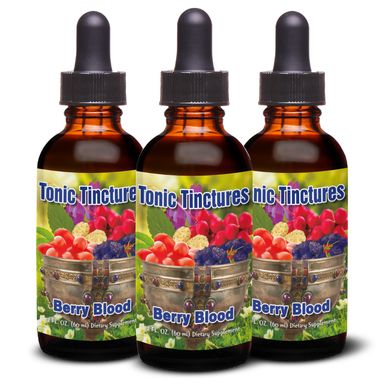
Tonic herbalism rewards consistency. The deep, systemic building work happens quietly over a 45 to 90-day cycle of continuous saturation. Supply the raw materials your body needs with our premium 3-pack.
Shop the 3-Pack Formulation1. What is Berry Blood?
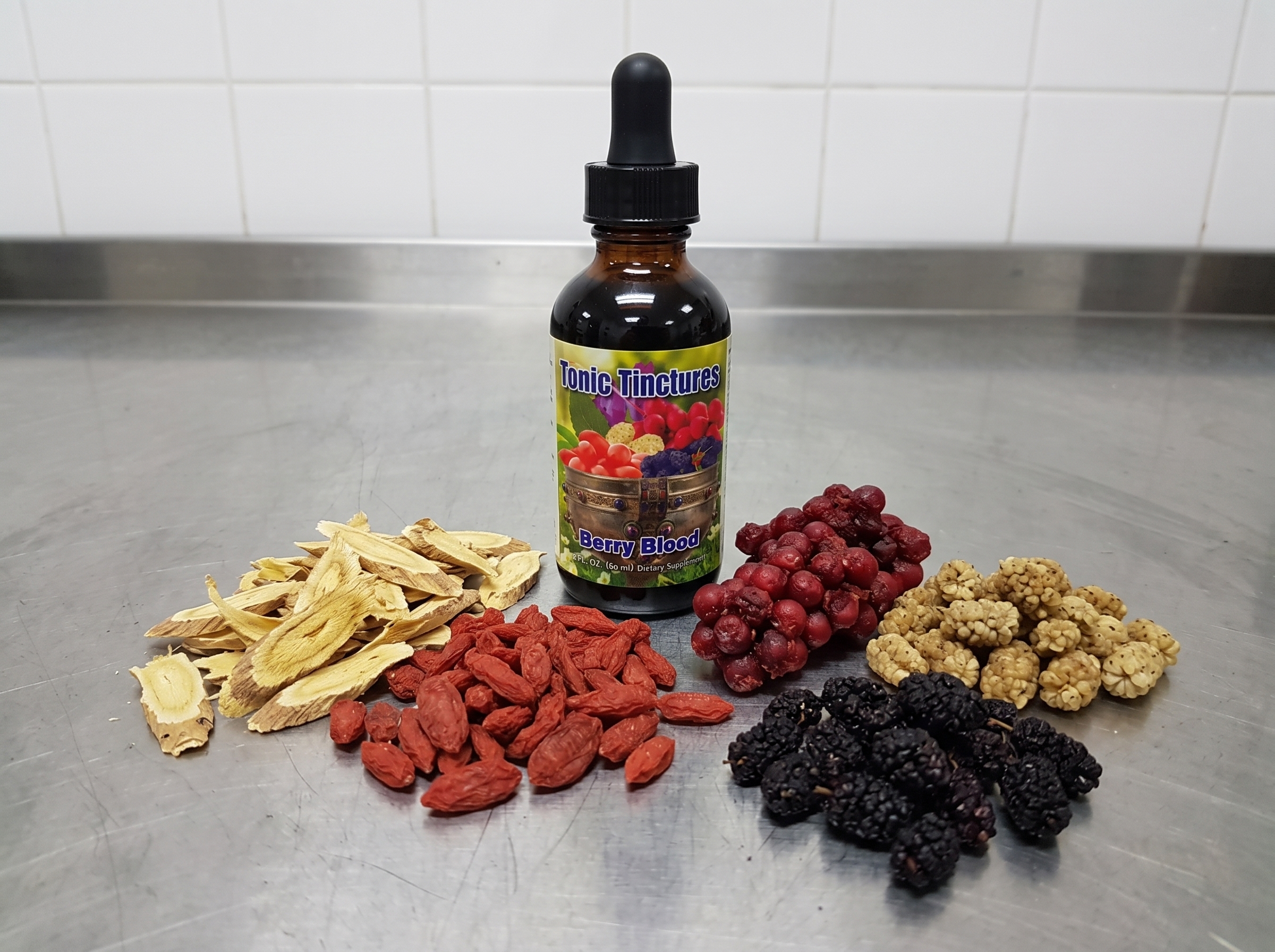
What is Berry Blood, exactly? Here's the useful answer first: it's a blood tonic, built the classical way, with one deep root anchoring three pigmented berries. Astragalus is the root. Goji, mulberry, and schisandra are the berries. And the name is not decoration. It's the recipe.
Here's the part worth knowing, because it tells you what you're actually holding. These berries literally bleed. Slice a ripe mulberry open and your fingers come away stained dark purple, and the old herbalists read exactly that: a fruit that colors like blood is a fruit that feeds the blood. That's the doctrine of signatures, the tradition's old way of reading a plant by its appearance. Now the modern update, and it's the honest one. The pigment doing the bleeding is the constituent. The anthocyanins are the color and the activity in the same event. The old reading and the chemistry agree, and that's rarer than you'd think.
Classification before benefits, always. Berry Blood sits in the adaptogenic herbs and the superior tonics, food-class material from the tradition's top shelf.
And in that tradition, the sweet herbs were the daily herbs, the ones taken for a lifetime. This formulation tastes exactly like what it is, berry-sweet and dark, with nothing added. The sweetness is the berries' own.
One thing it is not: bitter medicine. Most liquid extracts taste like medicine, and you pay that toll every single morning. This one you hold under your tongue and it's pleasant, and that's not an accident. That's the material itself, and it changes the whole practice, because a tonic you enjoy taking is a tonic you keep taking.
The work underneath is plain to say. The complex polysaccharides from the astragalus root feed the energy side of the formula, and the botanical pigments from the berries feed the blood side, the vision, the skin, the antioxidant buffer. Root for the base. Berries for the blood. Your body does the building with both.
A blood tonic you can take every day, for as long as you like. That's the whole idea.
Taken consistently over time.
2. Where Does It Come From?
Where does Berry Blood come from, and why has it stood the test of time? The useful answer: from four plants that each carry centuries of daily use behind them, grown the way they're meant to grow, and extracted with the craft they deserve. Let me walk the recipe.
Astragalus first, because it's sixty percent of the formulation. The Chinese call it huang qi, which translates to yellow leader, the yellow root core and its ranking as a leader among tonic herbs. It has run as a premier daily tonic for over two thousand years of continuous use, and it anchors this formula exactly the way the tradition uses an anchor: down the middle, steady, foundational.
Then the berries, and each one carries its own world. Goji was never locked in an apothecary. In Asia it's a kitchen herb, eaten dried by the handful, dropped in soup pots, steeped in tea, a whole-household food for a lifetime. Mulberry comes from the tree that dressed empires, because mulberry leaves fed the silkworms and the silkworms made the silk of the Silk Road. The same tree that clothed the court fruits one of the tradition's classic blood-nourishing tonics. And schisandra grows wild on twisting vines, the berry the tradition prizes as a beauty and vitality material.
The sourcing is worth stating plainly. Wild astragalus growing in natural dirt. Vibrant goji bushes on farms. Mulberry trees on rural land. Wild schisandra on the vine. All four organic, all ethically sourced, and that's the standard for a bottle you take every day.
On our end, the craft is built to honor the material. Structured distilled water and triple filtered USP grade organic alcohol at thirty percent by volume, the water pulling one class of constituents and the alcohol pulling the other, so the whole range lands in the bottle. The ratio is stated plainly: one pound of botanicals to one quart of liquid, about twenty-eight thousand five hundred milligrams in every two-ounce bottle.
And the proof is in the glass. A real extract is dark, because the pigments made it dark. It's sweet, because the berries made it sweet, and nothing else did. The more you taste the stronger it is, and here tasting is a pleasure, not a toll.
Four plants, centuries of daily use, one honest extraction. That's where it comes from.
Taken consistently over time.
3. What Does It Actually Do?
What does Berry Blood actually do in your body? Let me give you the useful frame first, because it makes every mechanism easy to hold: your blood is the delivery system, and this formulation feeds the delivery system. The root supplies for energy. The berries supply for blood. Your body does the work with both. Now the specifics.
Energy first, because it's the foundation. The astragalosides and complex polysaccharides from the astragalus root supply the raw materials for energy metabolism, replenishing nutrient reserves for sustained vital energy. Your body runs its own energy-producing processes instead of running on fumes. Practical translation: energy that holds through the afternoon without a cliff.
Then the immune side, and the polysaccharides do this work too. They nourish the white blood cells, the body's own defense crew, supporting its inherent capacity to identify foreign material, facilitate containment and removal, and maintain tissue cleanliness. The skin is part of this system, the outer protective wall that divides the territory of the internal body from the external world. Practical translation: crowded rooms stop being a gamble.
Then vision, and here's one of the quietly useful parts of this formula. Zeaxanthin from the goji berries delivers essential nourishment directly to the ocular tissues and the retina, and it helps neutralize free radicals to maintain clear, comfortable vision. Practical translation: screens all day, and your eyes are still comfortable at five o'clock.
Then the antioxidant buffer, and this is where the berries shine. Here's the thing worth knowing about anthocyanins: the plant makes them to shield the ripening fruit from sun and oxidation. The pigment is the fruit's own sunscreen. Delivered to the body, the same pigment class fortifies the internal environment and buffers against everyday oxidative wear and tear, maintaining cellular health and integrity. The fruit's protection becomes yours.
And that same action shows up where you can see it, which is the beauty side. The botanical pigments maintain hydration and elasticity, fortify the skin's natural barrier function, and promote natural collagen production for skin vitality and a vibrant appearance. This is the beauty the blood shows. The face is the readout of the supply line.
One light touch on the endocrine: the constituent synergy works directly with the endocrine system, supplying raw materials for hormones to maintain hormonal balance across the network of glands. A base layer for the whole system.
Feed the supply line. The blood delivers. Your body does the building.
Benefits accumulate over time.
4. Who Is It For?
Who is Berry Blood actually for? The useful answer: nearly everyone, because it's a base tonic, and every program needs a base. But let me show you the people it serves best, in their own mornings.
The Beauty card first, because it's the heart of this formulation. Waking up looking fresh, keeping up the skin, watching the mirror change slowly over months. The botanical pigments fortify the skin's natural barrier function, maintaining hydration and elasticity and promoting natural collagen production. And this has centuries of pedigree behind it, because schisandra was the complexion berry of the imperial courts in Korea and China, favored by the women of the palace. The tradition put beauty in the blood, and the tradition was working with these exact berries. The bottle lives on the bathroom vanity.
Then the Office card. Sitting all day and staring at screens leads to oxidative stress and the afternoon slump. The zeaxanthin and specific botanical pigments deliver essential nourishment directly to the visual system, maintaining clear, comfortable vision through the longest screen day. The bottle sits right next to the keyboard.
Then the Immunity card. Being around people in crowded spaces tests the body's natural defenses. The adaptogenic roots nourish the white blood cells, supporting the body's capacity to identify foreign material and maintain tissue cleanliness. The bottle waits in the medicine cabinet, ready for season after season.
And the everyday people around all of them, running errands and skipping the afternoon nap, getting strength back after being run down, reading and staying sharp and aging well. Every one of them is running the same supply line.
Now the honest redirect, told plainly. This is not a rescue herb and not a stimulant. If you're looking for overnight change or a jolt, you're looking at the wrong shelf, and I'd rather tell you that than sell you the wrong bottle. This is the maintenance layer, taken daily, indefinitely, as long as you like.
We sell a straight astragalus tincture, and it's a fine classic on its own. But when someone asks which bottle to run every day as the base, we point here, and Section nine explains exactly why.
Right bottle, right job, every day.
Taken consistently over time.
5. How Do You Take It?
Tonic Synergy & Timing: We remind you that with consistent use, benefits accumulate over time.
For rapid mucosal assimilation, we recommend taking it on an empty stomach first, followed by complete balanced meals (proteins, fats, and carbohydrates) to provide the fuel the base layer rides on.
This is Berry Blood, the sweet root-and-berry base tonic, a two-ounce bottle with sixty dropper servings.
One dropper is one press of the rubber bulb, which fills the tube to just above half-way. That's thirty drops, which is also one milliliter.
To find a functional dose, start with a minimum dose of ten drops to one dropper and work up. We suggest ten drops to one to three droppers, taken one to three times daily, which is one hundred sixty to four thousand five hundred milligrams daily. The more you take, the better it works, and consistency at a functional dose is the key.
Shake gently. Secure the lid and turn the bottle over back-and-forth three to five times to evenly distribute the extract. Vigorous shaking oxidizes the fragile constituents, so don't do that.
By mouth: hold the liquid under the tongue for sixty to ninety seconds before swallowing, or mix the drops into two to four ounces of lukewarm drinking water. Never boiling water. Boiling water alters the delicate naturally occurring substances.
Timing. For rapid assimilation, take it on an empty stomach first, followed by complete balanced meals to aid nutrient absorption. The meals aren't optional furniture. They're the fuel the base layer rides on, protein, fat, and carbohydrate together.
And here's the part that makes this one easy. Hold it under your tongue and let it be sweet. This is the rare extract where the functional moment and the pleasant moment are the same moment, and that's the whole reason a daily program survives. The tonic you enjoy is the tonic you finish. Bingo. Better mornings start pleasant.
Storage is simple. An opened bottle holds about thirty to forty-five days. Unopened, about two years from the batch date. Keep it dark and cool.
Some effects are immediate within the first few days, one to three days. Other effects are building and are noticeable within one to two weeks. Consistency at a functional dose is what builds the rest.
Benefits accumulate over time.
6. How Long Until You Notice Results?
How long until you notice something from Berry Blood? Here's the honest timeline, and it's the same timeline every honest tonic runs on.
Some effects are immediate within the first few days, one to three days. The felt layer, usually the pleasant surprise of an extract you don't have to brace for, and the early lift in daily energy.
Other effects are building and are noticeable within one to two weeks. The steadier layer: eyes holding up through the screen day, the system feeling less run down by the week's end.
And the deep layer, the skin, the resilience, the beauty the blood shows, comes as you continuously saturate the body over a good tonic cycle. A good tonic cycle is forty-five to ninety days. You're feeding systems that put materials to work at their own pace. The body doesn't take orders. It takes deliveries.
Nothing is a quick fix. Anyone selling a quick fix in a bottle is selling something else. Tonics reward time, not dosage.
And you gotta take enough to make it work. Not enough doesn't work. Someone can only take so much of anything at any time, so enough is the target, and consistency is the vehicle that gets you there. Here's the advantage this bottle carries: the sweet taste removes the friction that sinks most tonic programs. People quit bottles they dread taking. Nobody quits a bottle they enjoy. The practice survives on pleasure, and the practice is the whole game.
Keep complete balanced meals under all of it, because the base layer rides on the food.
The deep work is behind the door, and the door opens on a schedule.
Benefits accumulate over time.
7. Safety and Quality
Is Berry Blood safe, and how do you know you're getting a quality bottle? The useful answer: the safety is in the classification, and the quality is in the craft. Let me show you both.
Start with the classification, because it does the safety work. Berry Blood sits in the adaptogenic herbs and the superior tonics, food-class material from the tradition's top shelf, and here's what that class actually meant: herbs safe for daily, consistent, lifelong use. In the old ranking, the superior class was the category you take over a long life. The sweet taste is part of that signature, because in the tradition the sweet herbs were the daily herbs. This is a bottle built to be taken every day, indefinitely, as long as you like, and the category it comes from is exactly why.
Then the quality markers, stated plainly. All four botanicals are organic and ethically sourced. The extraction runs on structured distilled water and triple filtered USP grade organic alcohol at thirty percent by volume. The ratio is honest: one pound of botanicals to one quart of liquid, about twenty-eight thousand five hundred milligrams in every two-ounce bottle. Multi-step extraction holds the constituents intact in fluid suspension, and the full specifications are published on our standards page if you want to see the work.
And here's a check you can run yourself. No artificial sweeteners are added, and nothing else is either. The sweet profile arises entirely from the botanical pigments and naturally occurring substances in the berries themselves. The label and the taste agree with each other, and your own tongue is the lab. A real extract is dark and sweet and strong, the kind you can taste minutes after taking it. If it's thin and faint, it is what it tastes like.
Compatibility is simple. Generally, this formulation may be taken with other dietary supplements. It's the base layer that other tonics stack on, and it works synergistically with complete balanced meals.
One piece of doctrine to keep the frame honest. Herbs are always more effective and more powerful in the long-term for supporting health, whereas drugs are always more effective and more powerful in the short-term for any emergency. Each has its own job. This bottle's job is the long term.
Honest material, honestly grown, honestly made. Pay for the botanicals and the craft, not for mystique.
Be the Best and Buy the Best.
It is important to do your own research. Health is the most valuable asset of one's life and the most valuable investment.
8. What is a Blood Tonic?
What is a blood tonic in Chinese herbalism? Here's the definition worth keeping, glossed plainly: in that tradition, blood is the nourishing medium, what carries visible vitality to every tissue, and a blood tonic is an herb or food that feeds that medium. Not a lab value. The living supply line itself.
And the tradition was very direct about where you see it. The blood shows. It shows in the complexion, in clear eyes, in strong hair, in a steady spirit. In that framework, beauty lives in the blood, because the face is the readout of the supply line. When the blood is well nourished, it shows on the outside. When it runs thin, that shows too. That's why the beauty herbs and the blood herbs were so often the same herbs.
The category has its daily representatives, and they're fruits. Goji and mulberry are two of the classic blood-nourishing berries of the tradition, eaten by the handful, daily, for a lifetime. Not medicine taken in courses. Food that feeds the blood, the way the kitchen understood it.
And here's the pairing doctrine that makes the whole recipe make sense. The tradition cultivates energy and blood as a pair, and the classical line says it exactly: energy is the commander of the blood, and the blood is the mother of energy. Glossed plainly: energy moves the blood, and the blood feeds the energy back. Neither one gets grown alone, which is why the tradition so often pairs roots with fruits. The root brings the sustained energy base. The fruit brings the blood layer. Two halves of one cycle.
Berry Blood is that architecture in a single bottle. Sixty percent astragalus root for the energy base. Goji, mulberry, and schisandra for the blood layer, the pigments, the vision, the skin. The classical pairing, drawn in a recipe, and the taste tells you it's food-class material the whole way through.
A tradition that spent two thousand years watching what nourished the blood put these exact plants in the category. That's the lineage, stated as record, not mystique.
Food that feeds the supply line. Taken every day.
Taken consistently over time.
9. Why Berry Blood (vs. Astragalus)?
We already sell a straight astragalus tincture, so why did we build Berry Blood? That's the fair question, and here's the straight answer: the straight astragalus is a fine classic, the traditional daily base on its own, and you can learn plenty on that page. But when someone asks us which bottle to run as the daily tonic, indefinitely, we point here. Let me tell you why, because the reasoning is the product.
First, the berries complete the base. Astragalus carries the energy side beautifully, the polysaccharides, the immune nourishment, the deep daily foundation. But the blood layer is a dimension the root alone doesn't carry. The berries bring the pigments, the vision support, the skin and beauty layer, the antioxidant buffer, the whole blood side of the classical pairing. The tradition never grew energy and blood separately, and a base tonic shouldn't either. Berry Blood is the complete base. The straight root is one half of the cycle.
Second, and this is the practical reason that decides most programs: a daily tonic is taken every single day, indefinitely, as long as you like, so it has to be a bottle you actually enjoy. The straight root tastes like what it is, an earthy medicinal extract, and plenty of people take it happily for years. But this formulation is sweet, dark, and satisfying, and nothing added, the sweetness is the berries' own. The tonic you enjoy is the tonic you finish, and finishing the bottle is the entire practice. We recommend the one that makes the practice easy, because easy is what survives contact with a real life. That's really how good of a tonic this is.
Third, the stack framing. Run Berry Blood as the foundation layer, every day, and the specialists stack on top when you want them. The base makes every specialist work better, because every specialist rides on the same supply line.
So that's the honest catalog answer. Learn from the straight astragalus page if the root alone interests you. But for the everyday bottle, the base program, the one you take as long as you like and never dread, this is the one we recommend.
The everyday bottle. The complete base.
Taken consistently over time.
Commit to the Practice
Tonic herbalism rewards consistency. The deep, systemic building work happens quietly over a 45 to 90-day cycle of continuous saturation. Supply the raw materials your body needs with our premium 3-pack.
Shop the 3-Pack Formulation