
Discover the honest truth about Bilberry—the wild European botanical prized for nourishing the eyes and circulatory system. Whether you are looking to support clear, comfortable vision during long screen days, maintain healthy cardiovascular structure, or sustain higher-level cognitive focus, the secret lies in the berry's specific botanical pigments. This guide strips away the marketing hype to teach you exactly what wild-crafted bilberry is, what it does, and how to properly use it for deep, systemic vitality.

I recorded these audios to directly answer the questions I've received most over the last 26 years. The text below contains the actual transcripts.
Jason J. DukeOwner / Artisan
Reference Directory

Commit to the Practice
Tonic herbalism rewards consistency. The deep, systemic building work happens quietly over a 30 to 90-day cycle of continuous saturation. Supply the raw materials your body needs with our premium 3-pack.
Shop the 3-Pack Formulation1. What is Bilberry?
So, what is bilberry, exactly? Is it just a blueberry with an accent? No. Same plant family, but a different animal entirely, and the difference is the whole reason this bottle exists.
The botanical name is Vaccinium myrtillus, and myrtillus means little myrtle, because the small leaves resemble myrtle. The old names stack up across the north of Europe. The Scots call it the blaeberry, which just means blue berry, plain as a hammer. England called it the whortleberry, and Ireland the fraughan. A berry so old it collected a name in every country it grew in.
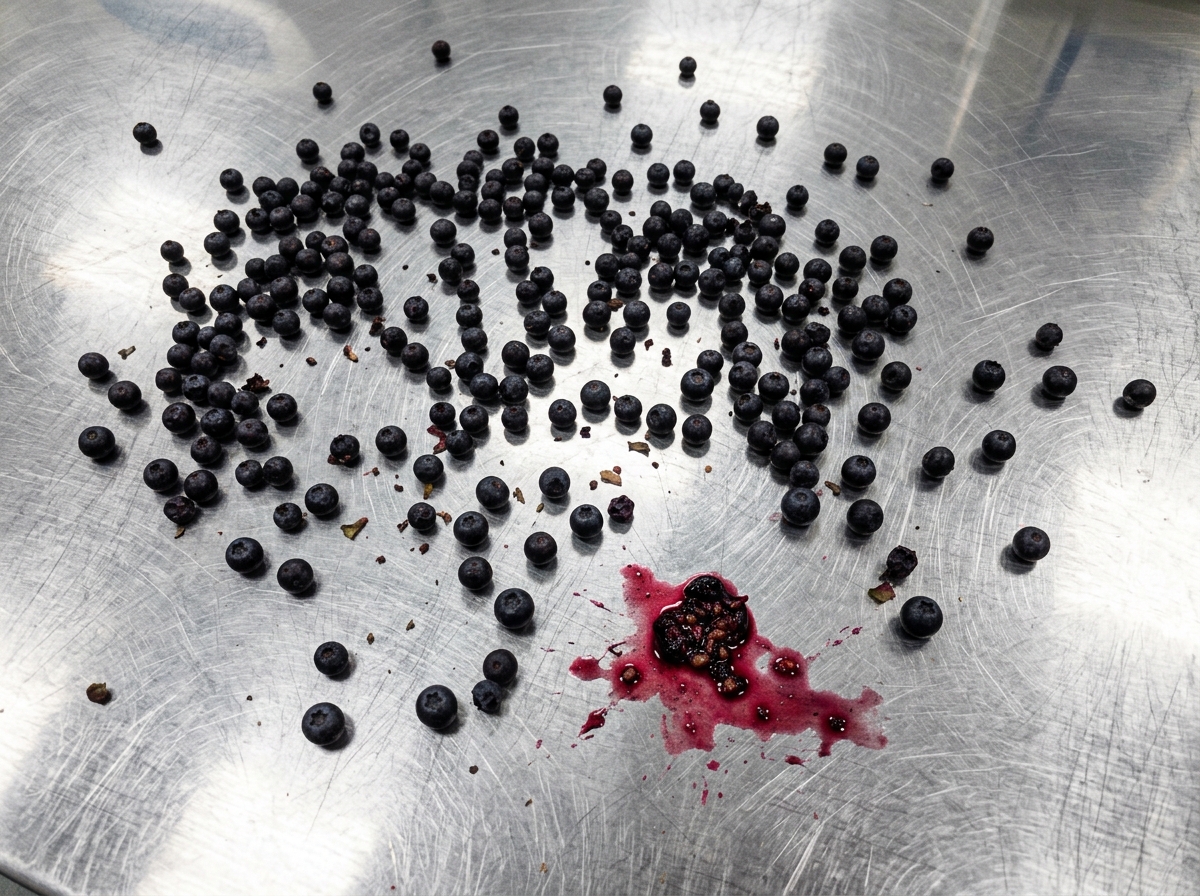
Now, here's the distinction that matters, because everybody knows the blueberry and almost nobody knows its wild cousin. A blueberry is pale inside. The pigment sits in the skin and nowhere else. A bilberry is dark all the way through. Flesh, juice, seeds, everything, that deep violet-purple. It stains your fingers, stains the basket, stains everything it touches.
And that stain is not a side effect. The stain is the constituent. The pigment is the material, the whole point of the berry.
Classification before benefits, always. Bilberry is an antioxidant support herb and a superior tonic, and its signature is the pigment class: the anthocyanosides, the specific botanical pigments that assimilate into the ocular tissues, the eyes, and nourish the retina. That's the heart of this bottle, and the full chemistry gets its own piece in this series.
Plain English on the category: this is not the fire-and-drive shelf. There's no ignition here, no lift, no push. This is the structure-and-circulation bottle. The one that feeds the fine plumbing, especially the small capillaries behind the eyes, so the visual system gets what it needs to hold clear, comfortable vision.
And there's a story here worth telling, a famous one. Second World War, Royal Air Force pilots, bilberry jam, and night missions over the Continent. Whether the story is true matters less than what it started, and it gets its own piece in this series. It's worth the listen.
This is the pigment bottle. The practice is what makes it work.
Benefits accumulate over time.
2. Where Does It Come From?
Where does bilberry come from? Short answer: the wild forests and moorlands of Europe. Real answer: a berry that refuses the farm, a legend from the Second World War, and a cold extraction built to respect the pigments.
First, the facts, straight. This is one hundred percent bilberry, Vaccinium myrtillus, wild-crafted and European sourced, hand-harvested in its short season and fresh dried right at harvest, so the pigments arrive at the extraction bench intact. Nothing else in the bottle. One berry, stated plainly.
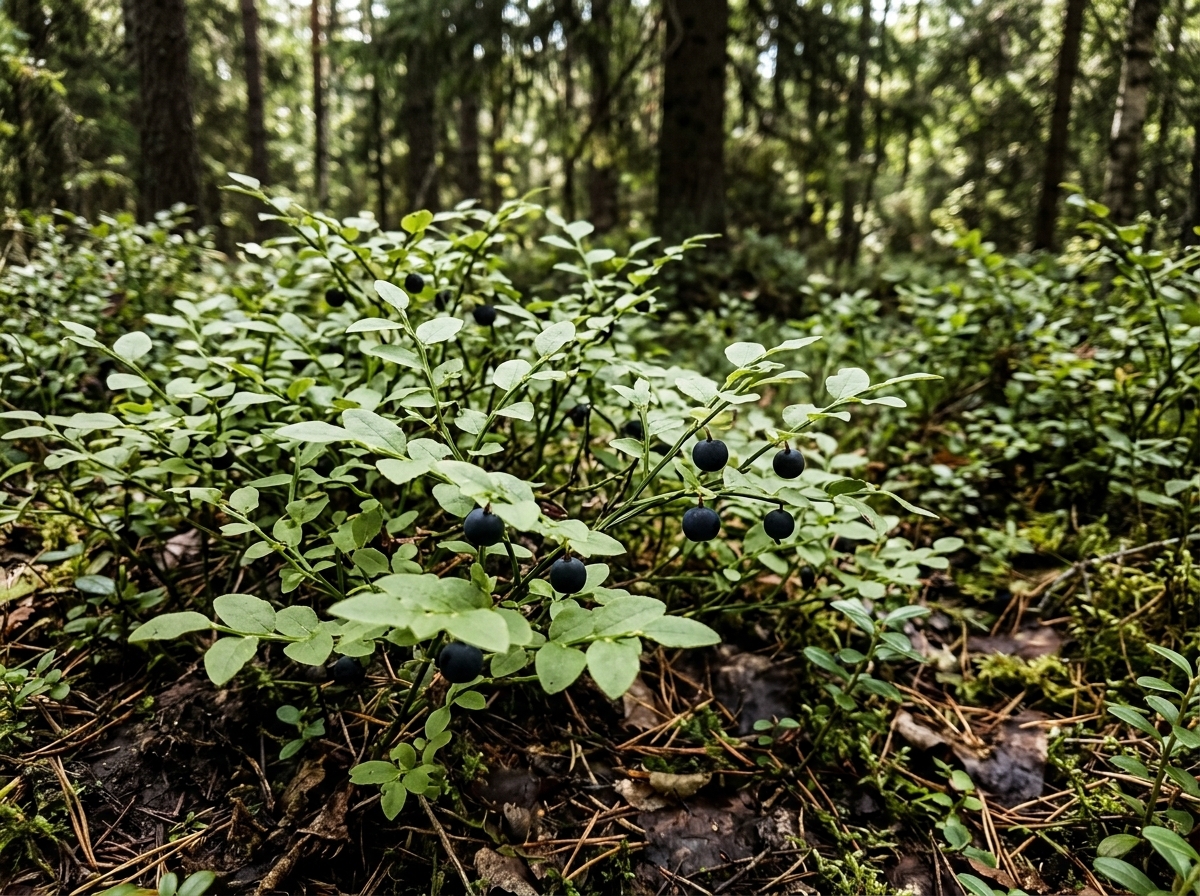
Now, why wild-crafted is botany and not marketing. Bilberry has never really accepted domestication. It wants forest shade, acid moorland soil, and cold northern summers, and it has shrugged off every attempt to plantation it the way its cousin the blueberry got farmed. So virtually all true bilberry in the world is wild-harvested by hand, one picking a year, in a season that closes fast. The berry refuses the farm. That's the quality story behind the label.
Then the legend, told honestly. Second World War, British pilots flying night missions, and the story goes they ate bilberry jam before the dark sorties and credited it with sharper night vision and better hit rates on the night raids. Here's the honest part: that story is lore. It was never verified, and the historians will tell you the real edge was probably the new airborne radar, hush-hush at the time. But get this. The legend is what launched the science. In the decades after the war, researchers picked up the trail and studied the berry's pigments on night vision adaptation, and the anthocyanoside extraction industry got built off the back of that story. The story is a story. The science it launched is real.
Then the extraction, built to respect the material. Every batch is custom crafted, multi-step, and micro-batched, with structured distilled water and triple filtered USP grade organic alcohol at thirty percent by volume. The water pulls one class of constituents, the alcohol pulls the other, and the whole process stays cold, unheated, so the fragile pigments hold their shape in fluid suspension for maximum absorption.
The ratio is right on the label: one part herb to two parts fluid. A classical extraction ratio, honest and heavy with material.
And the taste tells on it, and so does the color. This extract comes out thick and strong, deep violet-purple, and it stains the glass. The more you taste the stronger it is, and the stain is the fingerprint of the pigment itself. A clear, thin tincture tastes like exactly what it is: mostly nothing.
Good berries, honestly wild, carefully pulled. That's where it comes from.
Taken consistently over time.
3. What Does It Actually Do?
What does bilberry actually do in your body? Let me skip the list and give you one picture, because the picture is the mechanism.
The fine plumbing. Your circulatory system runs from the great pipes down to capillaries so fine that blood cells pass through them single file, and that's the level where delivery actually happens: oxygen, nutrients, everything the tissues burn, moving through the microvascular networks. And no tissue in the body runs on finer plumbing than the eye. The retina is fed by some of the smallest capillaries you own, which is exactly why the old tradition pointed at the eyes first. And the rule underneath never moves: the berry supplies the raw materials. Your body maintains the plumbing.
Start with the eyes, since that's where the berry leads. The anthocyanosides assimilate directly into the ocular tissues, nourishing the retina and supplying the structural raw materials your body uses to process information and maintain clear, comfortable vision. And here's the piece of biology that makes this click: your retina's own light-sensitive pigment for low-light vision is called rhodopsin, and when scientists first isolated it, back in the eighteen-seventies, they named it visual purple, because that is literally its color. The night pigment inside your eye is purple. The pigment inside the berry is purple. The material and the worksite match.
Next, the vessels. The bioflavonoids, the broad spectrum of phytonutrients, work to maintain the integrity and flexibility of your blood vessels, so the body can circulate blood efficiently and deliver oxygen and nutrients to every cell. That's cardiovascular support at the structural level, the walls of the plumbing itself.
Then the brain, through that plumbing. The naturally occurring polyphenols facilitate healthy blood flow to the brain, supplying the nourishment your body uses to maintain mental acuity, reasoning and understanding, and higher-level cognitive functions. The quiet kind of sharp. Focus that holds because the delivery line holds.
Then the antioxidant layer, and here's why a plant pigment does this job at all. The plant builds those pigments as its own armor, its own protective chemistry against the stress of full sun exposure. Same class of work, different customer: in your body, these potent antioxidants neutralize free radicals and directly support your body's own antioxidant enzymes, such as superoxide dismutase, buffering the internal environment against everyday wear and tear and promoting cellular health and longevity.
And finally, the cleanup crew. A unique complex of flavonoids and glycosides works synergistically with the liver, one of the body's primary natural elimination pathways, to metabolize cellular waste and neutralize toxins.
And one thing it flat out does not do. It does not create energy out of thin air. These natural processes run on drinking water and complete balanced meals, the fuel your body uses to put the materials to work. So the meals aren't optional furniture here. They're the foundation.
Supply, and maintain. Feed the plumbing, and the body holds it.
Benefits accumulate over time.
4. Who Is It For?
Who is bilberry actually for? Let me tell you who buys it, because it's not who the marketing usually points at. This is the screens-and-backpack bottle. The berry for people whose eyes work for a living.
The gamer, first, because that's the most modern buyer and the page leads with it. Staring at screens all day, holding reaction times, asking the visual system for continuous processing, hour after hour. Bilberry supplies specific anthocyanosides that nourish the visual system and the retina, maintaining clear, comfortable vision during prolonged exertion. The bottle sits right next to the keyboard, and the screen day stops being a grind on the eyes.
The office worker. Sitting all day, staring at screens, and that stillness limits oxygenation. This berry supports the cardiovascular system and healthy blood flow to the brain, delivering the essential nourishment that maintains mental acuity and higher-level cognitive functions. The bottle sits on the desk, and the afternoon brain stays fed.
The student and scholar. Late nights over textbooks, assignments stacking up, focus demanded long past the natural hours. The broad spectrum of phytonutrients maintains the integrity and flexibility of the blood vessels, providing the structural raw materials necessary to process information effectively. The bottle rides in the backpack.
The sage. Reading, staying sharp, aging well, and all of it depending on cellular health. The potent antioxidants support the body's natural antioxidant enzymes, buffering the internal environment to maintain cellular health and longevity. The bottle sits on the bookshelf next to the reading lamp, right where the reading happens.
The adventurer. Hiking, outdoors, on your feet all day, the body exposed to environmental challenges. These constituents neutralize free radicals, supporting physical resilience and the inherent capacity to meet life's demands. The bottle lands in the gear bag.
And the tonic herbalist, stated briefly, because this buyer knows the routine already. A daily practice of taking herbs, complete balanced meals underneath, constituent synergy doing the quiet work of cultivating systemic balance, nourishing from within.
Now the honest redirect, because it matters with this bottle. If you're after fire and drive, ignition and lift, this is not your berry. That job belongs to the warming roots, and plenty of people keep both and take them at different times of day. This is the long-game bottle: structure, circulation, the fed retina, the fine plumbing held steady for decades. Quiet work, but it's the work the eyes and the brain run on.
Right berry, right job. The structure bottle for the screen age.
Taken consistently over time.
5. How Do You Take It?
Tonic Synergy & Timing: We remind you that with consistent use, benefits accumulate over time.
For rapid mucosal assimilation, we recommend taking it on an empty stomach (up to 30 mins before eating), followed by a complete balanced meal (proteins, fats, and carbohydrates) to provide the fuel your body requires.
This is bilberry liquid extract, the general-use tonic in a one-ounce, thirty-milliliter bottle with thirty dropper servings.
One dropper is one press of the rubber bulb, which fills the dropper tube to just above half-way. That's thirty drops, which is also one milliliter.
To find a functional dose, start with a minimum dose of fifteen drops to one dropper and work up. We suggest fifteen drops to one to three droppers, taken one to three times per day.
Now, the bottle has two jobs, and it's worth knowing both. For immediate impact, hold one to two droppers under the tongue, sublingually, for fifteen to thirty seconds. Longer isn't necessary. For tonic building, to continually saturate your system and build deep, long-term health, take one to two droppers with meals, or up to two to three droppers with your largest meal.
Shake gently. Secure the lid and turn the bottle over back-and-forth three to five times to evenly distribute the liquid extract. Vigorous shaking oxidizes the fragile volatile constituents, so don't do that.
By mouth: hold the liquid under the tongue for sixty to ninety seconds before swallowing, or mix the drops into two to four ounces of lukewarm drinking water. Never boiling water. Boiling water alters the delicate botanical compounds.
Timing, plain and simple. For rapid mucosal assimilation, take it on an empty stomach, up to thirty minutes before eating, followed by a complete balanced meal to provide the heavy building blocks, the proteins and fats.
One practical note, because it catches people off guard. This extract comes out deep violet-purple, and it stains. That's normal, not a defect. The stain is the fingerprint of the pigments themselves, the anthocyanosides held in suspension. A clear, pale tincture would be the defect.
Storage is easy: an opened bottle holds about thirty to forty-five days. Unopened, about two years from the batch date. Keep it dark and cool.
If it didn't sit right, try again at a lower dosage and with a complete meal.
Some effects are immediate within the first few days. Consistency at a functional dose is what builds the rest.
6. How Long Until You Notice Results?
How long until you notice something from bilberry? Most-asked question about any tonic, so here's the straight answer, in three windows. And this berry honestly splits its audience, so let me name that up front.
Some effects are immediate within the first few days, one to three days. That's the felt layer. Plenty of people notice this berry right away: eye comfort, the sense that the visual system is finally being fed, the screen day that doesn't leave the eyes worked by evening. If that's you, you'll know inside the first few days.
And other people need longer, and here's the mechanism reason why. The small capillaries. The felt effects can show fast, but structure is slow construction. The microvascular networks, the fine plumbing behind the eyes and through the body, get maintained on the body's own schedule, not on the calendar you'd prefer. That's not the berry failing. That's construction being construction.
Other effects and benefits are building, and become noticeable within one to two weeks. The steadier focus. The eyes that hold comfortable through a full screen day. The deeper work doesn't announce itself. It stacks up underneath, quietly, while you go about your life.
Then the long game. The systemic shifts arrive as you continuously saturate your body over a thirty to ninety day cycle. That's how every tonic works. You're feeding a system that puts materials to use on its own schedule. The body doesn't take orders. It takes deliveries.
A good tonic cycle is thirty to ninety days. That's not a sales line; that's just how tonics work. A tonic is a practice, not an event.
And you gotta take enough to make it work. The more you take, the better it works. Not enough doesn't work. Someone can only take so much of anything at any one time, so enough is the target, and consistency is the vehicle that gets you there.
Nothing is a quick fix. Anyone selling a quick fix in a bottle is selling snake oil. Tonics reward time, not dosage.
And keep the foundation under all of it: complete balanced meals, every time, and drinking water. These natural processes run on the fuel. Skipping meals and eating incomplete meals will lead to ineffective results.
Benefits accumulate over time.
7. Safety and Quality
Is bilberry safe, and how do you know you're getting a quality bottle? With this berry, those are the same question, and the answer isn't a promise printed on a label. It's the honesty of the sourcing, the freshness of the harvest, and the craft.
Start with the markers that matter, stated straight. Species named: one hundred percent bilberry, Vaccinium myrtillus, nothing else in the bottle. Source named: wild-crafted, European sourced, hand-harvested in season and fresh dried right at harvest, so the pigments arrive at the bench intact. Craft named: every batch custom crafted, multi-step, and micro-batched, extracted with structured distilled water and triple filtered USP grade organic alcohol at thirty percent by volume, cold processed so the fragile pigments hold their integrity in fluid suspension for maximum absorption. The ratio is a classical one part herb to two parts fluid. Rapid, high bioavailability, and the full extraction and lab methods are published on our standards page, if you want to see exactly how the work gets done.
And your own tongue is the lab, and so is your eyesight. A real bilberry extract comes out deep violet-purple, and it stains the glass, because the pigment is the constituent. Now, a quick note here on why that pigment exists at all. The plant builds it as its own armor, its protective chemistry against the stress of full sun, so the berry arrives pre-equipped for exactly the class of work your body recruits it for. The more you taste, and the deeper it stains, the stronger it is. A clear, thin tincture is mostly what it tastes like: mostly nothing.
Now, honest use, plain and simple. These botanicals are food added to the diet, suitable for daily use. Generally, this formulation may be taken with other dietary supplements, and it works synergistically with other formulations and with your complete balanced meals underneath. The body needs the macronutrients, protein, complex carbohydrates, and healthy fats, to assimilate all of it.
One piece of doctrine to keep the whole thing straight. Herbs are always more effective and more powerful in the long-term for supporting health, whereas drugs are always more effective and more powerful in the short-term for treating diseases, conditions, and any emergencies. Do not use an herb when one should use a drug, and do not use a drug when one should use an herb. Each has its own job, and this bottle's job is the long term.
And the price. You shouldn't pay mystique prices for bilberry, because this is a wild berry with a real harvest market behind it, not some rare treasure. Pay for the berry and the craft, not for the story.
Be the Best and Buy the Best.
It is important to do your own research. Health is the most valuable asset of one's life and the most valuable investment.
Commit to the Practice
Tonic herbalism rewards consistency. The deep, systemic building work happens quietly over a 30 to 90-day cycle of continuous saturation. Supply the raw materials your body needs with our premium 3-pack.
Shop the 3-Pack Formulation