
Discover the honest truth about Black Ant Extract—a classical adaptogenic insect tonic prized for over two thousand years. Whether you are looking to support sustained daily energy, supply your body with raw materials for athletic recovery, or nourish your deepest energetic reserves, the secret lies in the wild Polyrhachis vicina species. This guide strips away the marketing hype to teach you exactly what black ant is, what it does, and how to properly use it for deep, systemic vitality.

I recorded these audios to directly answer the questions I've received most over the last 26 years. The text below contains the actual transcripts.
Jason J. DukeOwner / Artisan
Reference Directory
Commit to the Practice
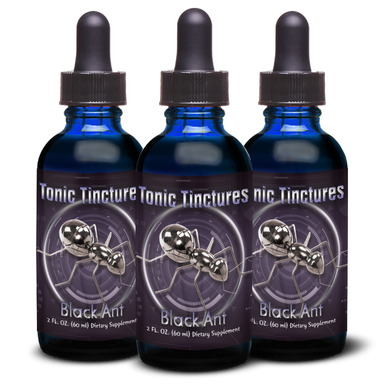
Tonic herbalism rewards consistency. The deep, systemic building work happens quietly over a 30 to 90-day cycle of continuous saturation. Supply the raw materials your body needs with our premium 3-pack.
Shop the 3-Pack Formulation1. What is It?
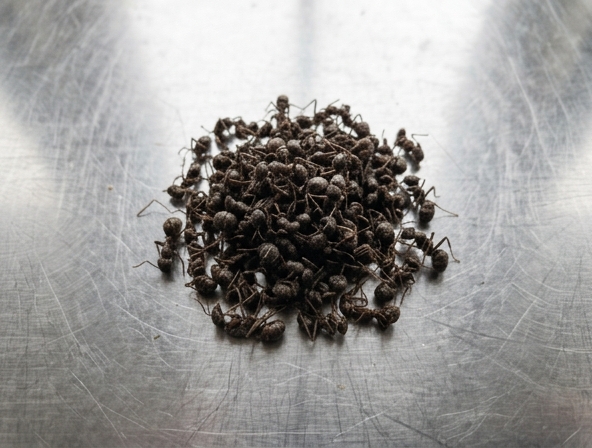
Black ant is an insect tonic. That's the surprise most people need first, because the label doesn't prepare you for it, and yes, you read that right. You are holding an extract of ants. Wild, edible, mountain ants. And once you get past the surprise, you're holding one of the most complete nutritional materials in the entire materia medica.
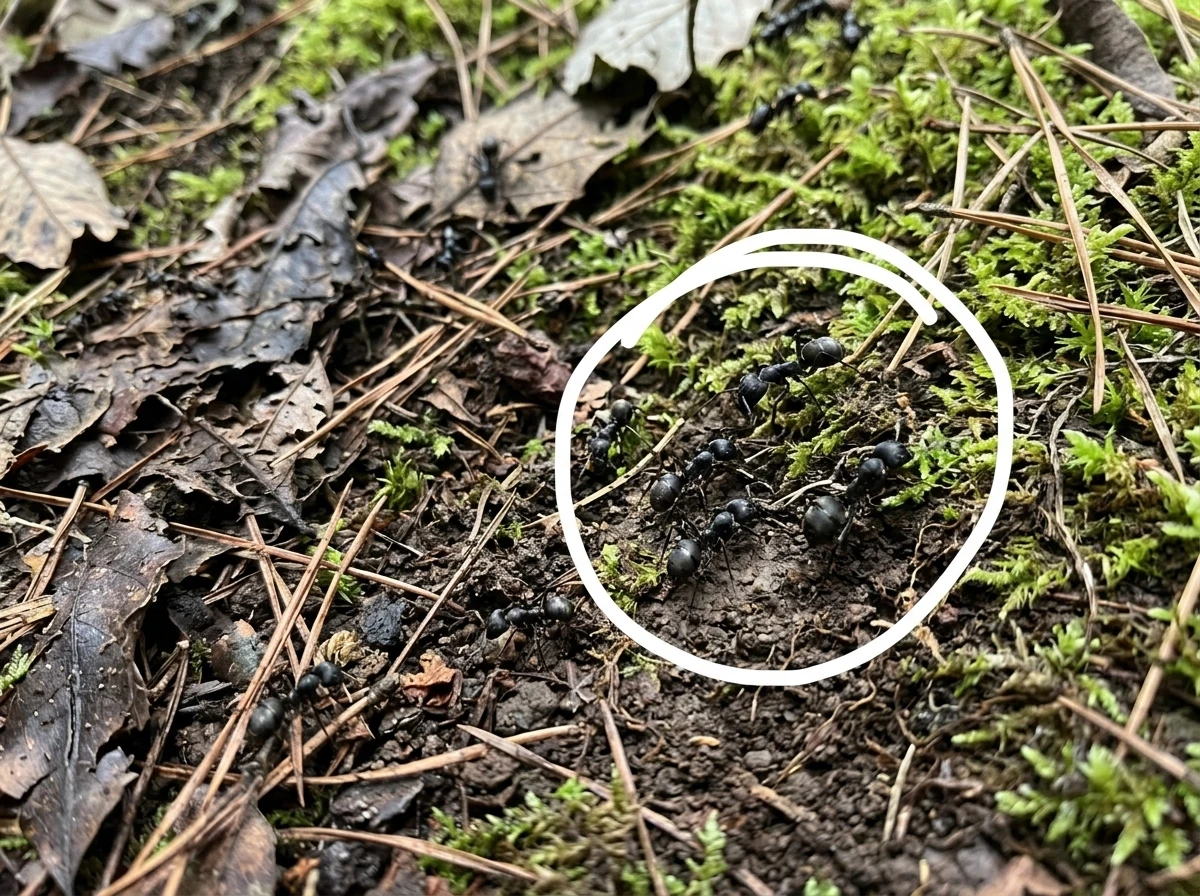
The species is Polyrhachis vicina Roger, the Black Mountain Ant, and the Chinese call it hei ma yi, the black horse ant. Not a farm animal, not a lab culture. A wild insect harvested from the mountain highlands of southern China, the same ants the Chinese have used as food and tonic for over two thousand years.
Now here's the detail that tells you the tradition took this seriously. In Chinese herbalism, materials are ranked by temperament, warming or cooling, building or clearing, and most things lean one way. Black ant is one of the rare materials classified as balanced in both, yin and yang together. That's why people describe its energy as centered rather than charged. Not a jolt. Not a sedative. A tonic that supports your body's own middle ground.
And the material itself is a nutritional freak of nature. This insect carries some of the highest protein content of any known food, with free-form amino acids your body absorbs without digestion. It carries creatine, the compound weightlifters buy in tubs, occurring naturally in the ant. It carries adenosine triphosphate, ATP, the actual currency of cellular energy. It's one of the richest animal sources of zinc on earth, the classic mineral of hormone production and immunity. Plus ecdysterone, the insect molting compound that modern research programs, particularly in Southeast Asia, have studied for its remarkable anabolic-type effects, and superoxide dismutase, one of your body's own premier antioxidant enzymes.
So what is this, exactly? Classification before benefits, always. Black ant is an adaptogenic tonic, taken consistently over time to support, maintain, and promote health. In China it's officially classified as a food-therapy material, medicine and food sharing the same origin, the same category as ginseng and goji berries. It sits closer to dinner than to pharmacy.
And one thing it is not: a stimulant. Not caffeine, not a spike with a drop-off. The constituents supply raw materials. Your body does the building. Steady, not spiky.
An insect, treated as food, prized for twenty-three centuries. That's what's in the bottle.
2. Where Does It Come From?
Every bottle of ours starts in the mountains of southern China, in the wild highland country where the Black Mountain Ant actually lives. Not a farm. Not a warehouse culture. Wild country, and that's the story worth telling about where this comes from.
The species is Polyrhachis vicina Roger, and it forages free in the mountain forests of the south, the borderlands of Yunnan and Guangxi. These ants live clean, wild lives, feeding on the forest, and the material we use is the whole wild insect, nothing farmed, nothing lab-grown. The herbal traditions of the local peoples, the Zhuang and the Li of Guangxi and Hainan, worked with this ant as food and tonic long before the broader materia medica absorbed it, and the wild-harvest trade still runs the way it has for centuries.
Then the formulation. This is not a lone material dumped in a bottle. Eighty percent is the Black Mountain Ant itself. Twelve percent is supporting tonics, Schisandra berry and Aged Tangerine Peel. Eight percent is activation tonics, Turmeric root and Ginger root. The Schisandra carries schisandrins for the liver and neuroendocrine system. The Tangerine Peel moves the digestion. The Turmeric and Ginger are warming circulation tonics that promote healthy bile production and flow, waking up the assimilation so the whole formulation lands. Every ingredient has a job, and the jobs stack.
And the craft is built to honor the material. Custom crafted, multi-step, micro-batched. Structured distilled water and triple filtered USP grade organic alcohol at thirty percent by volume, water pulling one class of constituents and alcohol pulling the other, so the whole living matrix lands in the bottle. And the ratio is stated plainly, and it's heavy: three pounds of material to one quart of liquid. That's about one hundred forty-four thousand milligrams extracted into every two-ounce bottle. Compare that to the shelf capsules and you'll understand why we print the number and they don't. Tricky tricky.
And you can taste the care. The more you taste the stronger it is. A real extract of this material comes out dark, dense, almost jelly-thick. If it's see-through, it's thin.
Wild ants, a classical formulation, and honest craft. That's where it comes from.
3. What Does It Actually Do?
What does black ant actually do in your body? Let me answer it with a picture instead of a list, because the picture is the mechanism.
Think of your body as a construction site. Not a broken one, not one that needs fixing. Just one that runs better when the deliveries keep coming. That's the frame for everything this ant does, and it never changes: the ant supplies. Your body builds.
Start with the energy supply. This insect carries adenosine triphosphate, ATP, the actual currency your cells spend for every contraction, every thought, every heartbeat. It carries creatine, the compound that recycles spent energy back into usable form, occurring naturally in the ant. And it carries B vitamins, the cofactors your energy metabolism runs on. Practical translation: steady, anti-fatigue energy that holds through the day, built from raw materials rather than borrowed from caffeine.
Then the structural supply, and this is the mechanism most people never hear about. Black ant carries free-form amino acids, the building blocks of protein, in forms your body absorbs without digestion, plus essential trace minerals like zinc, calcium, and phosphorus. Your muscles, joints, and connective tissue are construction projects that never stop, and this is the lumber arriving at the job site. That's why athletes and lifters reach for it: the raw materials for muscle protein synthesis and structural integrity, delivered with the meal.
Then the hormonal supply. Zinc and plant sterols are the classic raw materials of hormone production, and this ant is one of the richest animal sources of zinc on earth. The constituents work synergistically with the neuroendocrine system, supplying what the glands use to maintain healthy hormone balance and a balanced stress response. The glands are factories. The ant delivers to the loading dock.
Then the defense supply. Superoxide dismutase, one of your body's own premier antioxidant enzymes, occurs naturally in the ant, along with trace minerals that support immune function. The schisandrins from the Schisandra berry nourish the liver and promote a balanced, adaptive immune response.
And the formulation finishes the job in the kitchen. Turmeric and Ginger promote healthy bile production and flow, and the Aged Tangerine Peel supports the digestive tract, so the enzymes break down your meals and the body assimilates the vitamins and minerals. The ant supplies the material. The ginger and tangerine make sure the delivery gets unloaded.
Supply the energy, supply the structure, supply the glands, guard the site. Your body does the building.
Benefits accumulate over time.
4. Who Is It For?
Who reaches for this ant? I'll tell you who actually calls about it, because it's a wider crowd than you'd guess.
First, the worker. Had a guy call last fall, runs a shipping dock, ten-hour days on his feet, said his problem wasn't starting the day, it was the wall at hour seven. The naturally occurring creatine and amino acids support energy metabolism and the physical mechanics of standing, lifting, and moving all day. The bottle ends up in the lunch pack, and the wall stops being a scheduled event.
Then the athlete and the bodybuilder. Keeping up with a training schedule demands raw materials, and lifting demands them by the truckload. Concentrations of amino acids, creatine, and essential trace minerals support muscle protein synthesis and structural integrity. It's in the gym bag, next to the lifting belt, taken with the post-workout meal when the body is hungry for lumber.
Then the recovery day people, and they matter as much as the training day people. Resting is when the body actually rebuilds. The trace minerals and schisandrins replenish nutrient reserves and support the body's natural regenerative processes, managing the everyday wear and tear. The bottle next to the ice pack.
Then the combat athletes, the sparrers, the ones who take hits for a living or for love. Robust physical mechanics run on a nourished musculoskeletal system, and this formulation maintains structural integrity and supports natural regeneration. Same supply line, harder job site.
Then the lovers. Physical intimacy requires endurance and vital energy, and this formulation nourishes the neuroendocrine system to maintain healthy sex hormones and supply the stamina needed to connect. That's the nightstand drawer, and it was never a men-only drawer until modern marketing got hold of it.
And the stressed, the over-scheduled, the people-heavy jobs. This is a balanced adaptogen, yin and yang together, supporting a balanced stress response without pushing you up or dragging you down.
And one crowd deserves an honest redirect: if you can't get past eating ants, that's a real thing, and we carry plenty of other tonics. But if you can, this is one of the most complete materials in the catalog.
Taken consistently over time.
5. How Do You Take It?
Tonic Synergy & Timing: We remind you that with consistent use, benefits accumulate over time.
For rapid mucosal assimilation, we recommend taking it on an empty stomach (up to 30 mins before eating), or holding the liquid extract under the tongue. Because this is a food-class building tonic, it must be followed by a complete balanced meal (proteins, fats, and carbohydrates) to provide the fuel your body requires to process these dense nutrients.
This is Black Polyrhachis Ant liquid extract, the wild-insect tonic in a two-ounce bottle with sixty dropper servings. One dropper is one press of the rubber bulb, which fills the dropper tube to just above half-way. That's one milliliter, and at this extraction ratio, that's a heavy serving.
To find a functional dose, start low and work up. We suggest fifteen drops to one to three droppers, taken one to three times per day. That's a wide range, seven hundred fifty to nine thousand milligrams daily, and it's honest: the more you take, the better it works, and consistency at a functional dose is the key. Not enough doesn't work. Someone can only take so much of anything at any time, so enough is the target, and your body will tell you where that line sits.
Shake gently. Secure the lid and turn the bottle over back-and-forth three to five times to evenly distribute the extract and the naturally occurring substances. This material is dense, real extract, jelly-thick, and it settles. Vigorous shaking oxidizes the fragile compounds, so don't do that.
By mouth: hold the liquid under the tongue for sixty to ninety seconds before swallowing, or mix the drops into two to four ounces of lukewarm drinking water. Never hot water. Hot liquids damage the fragile constituents and lessen potency. The sublingual route matters with this material: those free-form amino acids and small compounds cross directly into the bloodstream under the tongue, no digestion required.
Timing. Best taken fifteen to thirty minutes before physical activity, or with meals and food to promote nutrient absorption. This is a food-class tonic, and it works with food, not instead of it. The amino acids and creatine do their building alongside complete balanced meals, the protein, fat, and carbohydrates your construction site runs on. Take it before training with food in you, and take it with dinner for the overnight rebuild.
Storage is simple. An opened bottle holds about thirty to forty-five days. Unopened, about two years from the batch date. Keep it dark and cool.
Some effects are immediate, within two to five days. Other effects build over one to two weeks and beyond. Consistency at a functional dose is what builds the rest.
Benefits accumulate over time.
6. How Long Until You Notice Results?
How long until you notice something from black ant? I'm going to answer that with a story I've watched happen a hundred times, because it teaches the timeline better than any chart.
Someone picks up the bottle, takes a real dose for a few days, and feels the first layer: energy through the afternoon, less drag at hour seven, a sense of steadiness. That's the immediate window, two to five days, the felt layer most people pick up first. Then, right about week one or two, they notice the building layer: better recovery between sessions, steadier mood, the kind of shift you feel in retrospect more than in the moment.
And then they stop. Right there. They felt two layers, decided the bottle had shown them everything, and quit at the doorstep of the third window. The systemic shifts, the deep hormonal and structural benefits, come as you continuously saturate your body over a thirty to ninety day cycle. That's how every tonic works. You're feeding systems that put materials to work at their own pace. The body doesn't take orders. It takes deliveries.
Nothing is a quick fix. Anyone selling a quick fix in a bottle is selling snake oil. Tonics reward time, not dosage.
And you gotta take enough to make it work. The more you take, the better it works. Not enough doesn't work. Enough is the target, and consistency is the vehicle.
Keep the foundation under all of it: complete balanced meals, every time. This ant supplies amino acids, creatine, and minerals, but your body assembles them into muscle and hormone alongside real food. Skip the meals and you're delivering lumber to a job site with nobody working.
Don't stop at the doorstep. The deep work is behind that door.
Benefits accumulate over time.
7. Safety and Quality
Is black ant safe, and how do you know you're getting a quality bottle? With this material those are the same question, and the answer isn't a promise on a label. It's the species, the wild sourcing, and the honesty of the craft.
Start with the material. Polyrhachis vicina Roger is an edible species with over two thousand years of continuous use as food and tonic in China, and China classifies it today as a food-therapy material, medicine and food sharing the same origin. Two billion humans on this planet eat insects as ordinary food. This is a food with a track record, not a novelty.
Then the sourcing. Ours is wild-harvested from the mountain highlands of southern China, whole insect, nothing farmed, nothing lab-cultured. Wild material means a wild diet, and the constituent density rides on that. Then the craft: custom crafted, multi-step, micro-batched, extracted in structured distilled water and triple filtered USP grade organic alcohol at thirty percent by volume. The ratio is honest and heavy: three pounds to one quart, about one hundred forty-four thousand milligrams in every two-ounce bottle. Rapid, high bioavailability, and the full methods are published on our standards page.
And the taste tells you it's real. The more you taste the stronger it is. A real extract of this material is dark, dense, jelly-thick, the kind you can taste minutes after taking it. One reviewer called it super concentrated jelly consistency. Your own tongue is the lab.
One honest note: insect material is a known allergen class, the same family as shellfish, so if you carry shellfish sensitivities, respect that and start low or choose another tonic. Honest use is part of quality use.
And the doctrine that keeps it all honest: herbs and food-class tonics are always more effective in the long-term for supporting health, whereas drugs are always more effective in the short-term for treating disease and emergencies. Each has its own job. This bottle's job is the long term.
Honest material, honestly wild, honestly made, honestly priced.
Be the Best and Buy the Best.
It is important to do your own research. Health is the most valuable asset of one's life and the most valuable investment.
8. Constituent Codex
This is the science section, the full breakdown of what's actually inside a black mountain ant. Fair warning: once you hear this list, the surprise of eating insects starts sounding like the least remarkable thing about them.
The protein story first. Black ant carries some of the highest protein content of any known food, roughly half its dry weight, and here's the kicker: much of it comes as free amino acids, twenty-eight of them, including all the essentials. Free-form means no digestion required. They cross into the bloodstream directly, which is why the sublingual hold under the tongue matters with this material.
The energy compounds. Naturally occurring creatine, the compound lifters buy in tubs, sitting in the ant as food. Adenosine triphosphate, ATP, the actual molecular currency your cells spend for every heartbeat and contraction. B vitamins as cofactors for energy metabolism. You're not taking something that mimics energy. You're taking the energy economy's own parts.
The mineral story. Black ant is one of the richest animal sources of zinc on earth, plus calcium, phosphorus, iron, manganese, copper, and selenium. Zinc is the classic mineral of testosterone production, immune function, wound healing, and taste acuity. These are enzyme cofactors, the spark plugs of thousands of biochemical reactions.
The hormone-related compounds. Ecdysterone, the insect molting hormone, studied extensively by modern research programs, particularly in Southeast Asia, for its remarkable anabolic-type and adaptogenic-type effects, without behaving like a steroid. Plus plant sterols, campesterol, stigmasterol, and sitosterol, steroid-backbone raw materials your glands can build from.
The protective compounds. Superoxide dismutase, SOD, one of your body's own premier antioxidant enzymes, occurring naturally in the ant. Nucleosides including uridine for mitochondrial support. Antibacterial peptides, the insect's own immune chemistry. And formic acid, the compound that gives ants their name, from the Latin formica, naturally antimicrobial.
One insect, carrying protein, energy currency, minerals, sterols, enzymes, and immune chemistry. The formulation adds schisandrins from Schisandra, bioflavonoids and polyphenols from Turmeric and Ginger, and the digestion-moving Tangerine Peel.
That's not a supplement label. That's a whole biological operating system in a dropper.
9. The Hormone Answer
Does black ant raise testosterone? Let me fix the question before I answer it, because the question as asked is the trap.
Asking does it raise testosterone treats this material like hormone replacement, a switch you flip. Black ant is not a switch. It's a supply line. The ant supplies raw materials. Your body does the building. That division of labor never changes, and it's the whole answer. But let's walk it properly, because this ant's reputation as a hormone tonic is earned on three fronts.
Front one: zinc. Black ant is one of the richest animal sources of zinc on earth, and zinc is the classic mineral of testosterone production. The enzymes that build testosterone are zinc-dependent; the glands simply cannot do the work without the mineral. It's the single most direct supply-line story in the tonic world.
Front two: the sterols and the stock. Plant sterols, campesterol, stigmasterol, sitosterol, carry the steroid backbone, and here's the fact that reframes everything: testosterone and estrogen are over ninety-five percent cholesterol by weight. Hormones are built, not summoned, and they're built from something very specific. A hormonal material delivers the stock.
Front three: the neuroendocrine nourishment. The constituents work synergistically with the neuroendocrine system, supporting the adrenals, the glands that run your stress response and your stamina, and the reproductive axis that builds testosterone in males and balances estrogen and progesterone in females. Same supply line, same factories.
Which brings the food doctrine in, because this is where people sabotage themselves. Taking a hormone tonic without saturated fat and cholesterol will negate the effects. Eggs with soft yolks, so as not to denature the cholesterol. Salt your eggs for stomach acid to absorb the protein, fat, and cholesterol. The ant delivers to the loading dock. The meal fills the warehouse. You can't run a factory on an empty dock.
So the honest answer, stated plainly: black ant does not flip any switches, in a man or a woman. It supplies zinc, sterols, and amino acids to glands that build what the body calls for, at their own pace, from the food you eat alongside it. That's also why women take this material without concern: nothing gets forced.
What people report over a thirty to ninety day cycle: steady drive, energy that holds, the capacity to connect. The downstream of a well-supplied system, exactly as the mechanism predicts.
Hormones need a constant supply of raw materials.
10. Intimacy Deep Dive
Can black ant support intimacy? That's the question behind half the searches on this material, so let's take it seriously, for men and for women both, and answer it the way I'd answer it on the phone.
Start with something worth noticing. In China, this ant was always a whole-household material, a food-therapy tonic served to families, and its reputation for supporting vitality and stamina was never a men-only thing until modern marketing got hold of it and shrank it down. Connection is a human thing, not a gym thing.
Now the mechanism, told plainly. Physical intimacy depends on two foundations: vital energy and healthy glandular function. Black ant works on both. It's one of the richest animal sources of zinc on earth, the mineral the testosterone-building enzymes literally cannot run without, plus plant sterols carrying the steroid backbone, plus the free amino acids that feed the whole construction. The constituents nourish the neuroendocrine system, supplying what the glands use to maintain healthy sex hormones and the stamina to act on them. Zinc, sterols, and energy currency. That's the whole picture, and it's the same picture for a woman as for a man.
And the stamina side is where the ant earns its nightstand reputation. ATP and creatine are the compounds of sustained physical output, and this insect carries both, naturally. The anti-fatigue layer that holds your workday together is the same layer that holds the evening together.
The food doctrine rides along here too. Taking a hormone tonic without saturated fat and cholesterol will negate the effects. Eggs with soft yolks, salted for stomach acid. The glands are factories, the ant delivers to the dock, and the meals stock the warehouse. You can't build hormones from an empty pantry.
What do people actually report, over a cycle? The capacity to connect, the drive that shows up, the energy that holds through the evening, the warmth. Not overnight. Over the thirty to ninety day cycle of continuous saturation. Intimacy is a foundation project, and foundations are poured slowly.
That's why this one lives in the nightstand drawer. Both halves of the household, same supply line, same bottle.
Taken consistently over time.
11. Fatigue and Stress
Why is black ant known as an anti-fatigue and stress tonic? Because of a distinction most people have never had explained to them: the difference between borrowed energy and supplied energy.
Caffeine is borrowed energy. It forces output, whips the adrenals, and drops you two hours later lower than where you started. Anyone who's ridden that cycle all day knows the shape of it. Stimulants impersonate energy. Black ant supplies it.
The ant carries the actual parts of the energy economy: adenosine triphosphate, the currency itself; creatine, the recycler that turns spent energy back into usable energy; B vitamins, the cofactors of energy metabolism; and free amino acids that need no digestion to arrive. The ecdysterone and adaptogenic constituents support the body's own balanced output rather than forcing it. The difference shows up in the shape of the curve: no spike, no cliff, just a higher floor.
And the stress side. This is a balanced adaptogen, yin and yang together, which is why one of our reviewers put it perfectly: you won't feel wired, you won't feel sedated, it just brings you to that adaptogenic center point of homeostasis. The constituents nourish the neuroendocrine system, the adrenals included, supplying the raw materials for the hormones that run your stress response. When the glands are fed, the stress response stays proportional. The day gets loud. You stay level.
This maps to the old Chinese designation exactly. Black ant is a kidney tonic, and in that system the kidney governs jing, the deep essence that runs the adrenals, the reproduction, the bones, and the resistance to exhaustion. Fatigue, in that language, is a supply problem, and a supply problem is solved by supply. The ancients framed it as essence. The biochemists frame it as ATP, zinc, and fed adrenals. Same observation, two vocabularies.
So the honest pitch for the over-scheduled: this is not the tonic that makes you feel fast. It's the tonic that makes fatigue arrive late. Steady floor, level head, and at the end of the day, energy that ended honestly rather than crashed.
And remember what runs under it: the complete meals. The energy compounds work with your food, not instead of it. Coffee on an empty stomach is two fires and no wood.
Steady, not spiky. Supplied, not borrowed.
Benefits accumulate over time.
12. Muscle and Strength
Why do lifters and athletes reach for black ant? Because the material is, almost embarrassingly, a sports supplement that happens to be an insect. Let me count what's on the label of nature's own pre-workout.
Creatine, naturally occurring. The single most studied ergogenic compound in existence, the one that recycles spent ATP back into usable energy and supports muscle protein synthesis, sitting in the ant as food rather than in a plastic tub. Weightlifters pay good money for exactly this molecule.
Free amino acids, all the essentials, in forms that need no digestion. Your muscles are built from amino acids, and the post-training window is when the body is hungriest for them. This material arrives pre-dissolved.
ATP, the energy currency itself, plus B vitamins as the cofactors of energy metabolism.
Zinc, calcium, and phosphorus, the minerals of testosterone production and structural integrity. Bones, joints, connective tissue, all construction projects that never stop.
And ecdysterone, the insect molting compound that modern research programs, particularly in Southeast Asia, have studied for its remarkable anabolic-type effects, without behaving like a steroid. It doesn't bind androgen receptors. It works with the body's own protein synthesis machinery.
One of our reviewers said it plainly: way more repetitions in the bench and squat. That's the honest report from a fed construction site.
Now the practice, because the material doesn't work alone. Take it fifteen to thirty minutes before training for the session, and with the meal after for the rebuild, because rest is when the building actually happens. And the complete meal is non-negotiable: protein every four to six hours, the body can't bank it. The ant delivers lumber. The meals and the rest supply the crew. Skimpy meals mean deliveries at a job site with nobody working.
For combat athletes the same supply line does a harder job: the amino acids and minerals maintain the musculoskeletal system's structural integrity, supporting the body's natural regenerative processes between sessions. Take hits, rebuild, come back.
Train, eat, sleep, repeat. The ant handles the deliveries.
Benefits accumulate over time.
13. Kidney Tonic Deep Dive
The Chinese have a name for black ant: the King of Kidney Tonics. That title needs translation, because once you understand what kidney means in that system, you'll understand why this ant earned a crown.
In Chinese herbalism, the kidney is not just the filtration organ. It's the system that governs jing, the deep essence, and jing runs everything the modern world calls the neuroendocrine axis: the adrenals, the reproductive system, the bones, the marrow, the low back, the knees, the hearing, the hair, and the pace of aging itself. The old texts say the kidney is the root of life. Spend your jing faster than you refill it, in their language, and the whole tower starts leaning: fatigue, weakness of the back and knees, declining drive, premature aging.
Now look at what black ant carries, and watch the two maps overlap. Zinc, the mineral of testosterone and the reproductive axis. Sterols, the raw backbone of hormones. Free amino acids, the building blocks of tissue. ATP and creatine, the energy currency. Trace minerals, the cofactors of thousands of reactions. Superoxide dismutase, the anti-aging enzyme. The tradition called it kidney nourishment. The biochemistry calls it complete raw material for the exact axis the tradition was describing. Two vocabularies, one observation, twenty-three centuries apart.
And the traditional indications read like a jing-deficiency checklist: fatigue and exhaustion, weakness of the low back and knees, declining libido, joint discomfort, depletion following periods of heavy stress, premature graying and aging. Every one of them maps onto the neuroendocrine and musculoskeletal supply lines.
That's also why the tradition ranks this ant as food-class, medicine and food sharing the same origin. A material this nourishing doesn't fight the body. It feeds it. The old physicians prescribed it at the table as much as the clinic, and the Zhuang and Li peoples of the southern highlands kept it in the kitchen as ordinary eating with extraordinary material in it.
The crown was earned. Not by mystique. By what it does, generation after generation.
Benefits accumulate over time.
14. Food Not Drug
Is black ant a supplement or a food? Here's the answer that changes how you use the whole bottle: it's a food-therapy material, food-class by official Chinese designation, and that's not a compromise. That's the entire concept.
The Chinese phrase is yao shi tong yuan: medicine and food share the same origin. In that system, the kitchen and the apothecary share one door, and the old physicians prescribed at the table as much as the clinic. Black ant sits in that food-therapy class alongside ginseng and goji berries, materials so nourishing and so safe that they belong at dinner. Two billion humans on this planet eat insects as ordinary food, and in the southern highlands of China, ant has been on the folk menu for millennia, steeped in wines, cooked into dishes, taken as a tonic food for the whole household.
Now watch how the classification explains the dosing. Food-class tonics are taken with meals, because they work with food. The amino acids and creatine do their building alongside the proteins and fats of the meal. The zinc feeds the glands that use the meal's cholesterol to build hormones. The ginger and tangerine in the formulation promote the bile and enzyme activity that assimilate the meal. That's why the label says to take it with meals to promote nutrient absorption: the ant makes your good meals work better, and the meals make the ant work better. They meet in the middle.
Nowadays, the industry turned foods into pills and forgot the meal, and the results got worse and the materials got blamed. A food-class tonic taken without food is a delivery arriving at a kitchen with no stove lit.
So use it like the tradition did. Keep the bottle at the table, with your other good food, and take it around mealtimes, complete and balanced, protein, fat, and carbohydrates together. To supplement means to add to a complete meal. That's not a footnote on our label. That's the whole doctrine.
Food and supplements work together. They meet in the middle.
Food heals.
15. Zinc and Minerals
This section is about the quietest, most underrated story in the whole bottle: the minerals. Nobody gets excited about trace minerals, and that's exactly why most supplement regimens fail, because the trace minerals are the spark plugs, and a warehouse full of fuel doesn't move without them.
Start with zinc, because black ant is one of the richest animal sources of it on earth. Zinc runs over three hundred enzymatic reactions in the human body. It's the mineral the testosterone-building enzymes literally cannot function without, which is why zinc deficiency shows up first as falling drive and flat energy. It runs immune function, wound healing, taste and smell acuity, and protein synthesis. Oysters carry their reputation for one reason, and it's zinc. The ant carries the same story in a denser package.
Then calcium and phosphorus, the structural pair, the minerals of bone and the skeleton that carries the muscle. Then iron, the oxygen carrier, the mineral of hemoglobin and the steady energy that depends on oxygen delivery. Then manganese and copper, cofactors of the antioxidant enzymes and connective tissue formation. Then selenium, the mineral of glutathione peroxidase, the body's own premier detoxification and antioxidant enzyme system.
And here's the doctrine that makes them all work: these are cofactors, not stars. A cofactor is the part that lets the enzyme do its job, the spark plug that lets the engine burn the fuel. Your body assembles hormones, muscle, bone, and energy using these minerals as the tools, and tools that are missing can't be improvised. The diet fads that strip food groups out of the diet strip minerals out with them, and then a whole shelf of supplements arrives at a body with no tools in the box.
The trace minerals in this ant arrive whole-food complexed, the way they occur in the living material, alongside the amino acids and the Schisandra's schisandrins that replenish nutrient reserves. That's the food-class difference: not isolated elements in a capsule, but the whole biological matrix, the way the tradition always used it.
The quiet minerals, doing the loud work. Supply the tools, and the body builds.
Benefits accumulate over time.
16. Edible Insect Logic
I'm eating ants? I get it. That's the wall, and it's a real wall, and this section exists to walk you over it honestly rather than talk you around it.
First, the numbers, because they reframe the whole question. Over two billion people on this planet eat insects as ordinary food, right now, today. In Mexico, in Thailand, in southern China, in much of Africa and Latin America, insects are a normal, traditional food source, sold in markets, cooked in home kitchens. The squeamishness is cultural, not biological, and it's mostly a recent Western habit. Your ancestors almost certainly ate insects. Everyone's ancestors did.
Second, the nutrition, because insects aren't a compromise food. They're elite food. Black mountain ant carries some of the highest protein content of any known food, roughly half its dry weight, with the full essential amino acid profile. It carries creatine, zinc, B vitamins, iron, calcium, and complete healthy fats. Gram for gram, this is one of the densest nutritional packages nature produces, which is exactly why the Chinese traditions prized it and why the modern world is taking a fresh look at insect protein as the livestock model strains under nine billion people.
Third, the safety logic. This is a specific, identified, edible species, Polyrhachis vicina Roger, wild-harvested from clean mountain country, with twenty-three centuries of continuous human use behind it. This is not novelty food. This is one of the oldest documented tonic foods in the world.
Fourth, the format, because the format is where the wall actually dissolves. You're not crunching exoskeletons. You're taking a liquid extract, dark and dense, held under the tongue for sixty to ninety seconds. The taste is earthy and herbal, and the tincture carries the whole matrix, the amino acids, the minerals, the ATP and creatine, without the texture that makes people hesitate. One of our reviewers admitted it took getting used to, and then said he kept going because he wanted the extra reps. That's the honest arc: the wall is in the mind, and the benefits are in the body.
Eat like the majority of humanity, or at least take your tonic like them. Either way, the material is elite, and the squeamishness fades in about a week.
Be the Best and Buy the Best.
17. Troubleshooting Guidelines
Why didn't black ant work for you? I can tell you from years of answering this phone: when this material fails, it fails for one of exactly three reasons. Let me count them down, because the order matters, and so does the fix for each.
Reason three: time. Some effects are immediate within two to five days. Other effects build and are noticeable within one to two weeks. The deep systemic work, the hormonal and structural shifts, happens over a thirty to ninety day cycle. Most people who tell me it didn't work took it for two or three weeks, irregularly, and stopped right at the doorstep. You can feel the first layer in days. The cycle is one to three months. Those are different windows, and judging the second by the first is the classic mistake. The fix is patience, on a schedule.
Reason two: the fuel. This is the one nobody expects, and it's the biggest. This ant supplies amino acids, creatine, zinc, and sterols, but your body assembles them into muscle, bone, and hormones alongside real food. If you've been skipping meals, eating incomplete ones, or running the low-fat diet that starves the hormone factories of their cholesterol backbone, you delivered lumber to a job site with no crew. Protein every four to six hours, complete meals with saturated fat and cholesterol, eggs with soft yolks, salted. The fix is on your plate.
And reason one, the most common of all: not enough. This material is dose-dependent, and the label says it plainly: the more you take, the better it works. If you took five drops a day for a week, you were running a test, not a tonic. The honest range is fifteen drops to one to three droppers, one to three times per day, seven hundred fifty to nine thousand milligrams daily, and most people find their functional dose somewhere in the upper half of that range. Not enough doesn't work. Enough is the target, and someone can only take so much of anything at any time, so your body sets the ceiling, not the ambition.
There's the countdown. Time, fuel, dose, in reverse order of how often they're the culprit. Check the dose, check the plate, check the calendar, in that order, and almost every failed bottle turns out to be a practice problem, not a material problem.
And one honest exclusion, because it's fair to say: if you carry shellfish-type insect sensitivities, this isn't your bottle, and that's information, not failure.
If it didn't sit right, try again at a lower dosage and with a complete meal.
The failure is almost never the material. It's the practice.
18. Ant + Velvet + Ginseng Stack
What happens when you take black ant with deer antler velvet? That's the question people ask once they've held both bottles, and it deserves a real answer, because the two materials are a natural pair, and the names of the pair are the factory and the freight.
Here's the division of labor, told plainly. Deer antler velvet is the freight: the naturally occurring growth factors, amino acids, and collagens, the raw construction stock for tissue growth, maintenance, and repair. It's what the site builds with. Black ant is the factory: the energy economy of ATP and creatine, the zinc and sterols that feed the glands, the B vitamins and free amino acids that keep the whole operation running. One material is the lumber. The other is the crew and the power tools, running on a fed electrical system.
For training and weight lifting, that's the whole stack in one sentence. Ant before the session for the ATP recycling and the amino acids in the working muscle. Velvet with the meal for the growth factors and the rebuild after the work is done. One gets you to the bar and through the set. The other repairs what the session asked for. One of our reviewers runs exactly this pairing and reports more reps in the bench and squat, and that's the honest report from a construction site that got both freight and crew.
For intimacy, the same logic, and it's just as clean. Connection runs on vital energy and a well-fed endocrine system. The ant supplies the zinc, sterols, and ATP, the drive and the stamina. The velvet supplies the raw materials the glands build hormones from, the same cholesterol-backbone stock for men and women both. The nightstand pair. Two supply lines into the same foundation.
And if you add ginseng to the pair, the stack completes: ginseng works the circulation and the delivery system, the oxygen and nutrients reaching every cell. Three materials, three jobs, one fed body doing the work.
The frame that keeps it honest: none of them replace food. Complete balanced meals, the proteins, the saturated fats, the cholesterol backbone, the carbohydrates. The stack taken on skimpy meals is freight at a dock with no crew to unload it.
How to run it, practically: ant before training or with meals, velvet with the largest meal, both over the same cycle, thirty to ninety days of continuous saturation, because that's how tonics build. That's the deep tonification protocol, and the six-bottle run is how the systemic shifts unlock.
Freight and factory. Materials and metabolism. One ant, one antler, one fed body doing the building.
Taken consistently over time.
19. Is It For Women Too?
Is black ant for women too? Yes, and I want to answer this one the way I'd answer it if you'd called and asked, because the question deserves a real answer, not a shrug.
The tradition never had this question. In the southern highlands of China, ant was always a whole-household food, a food-therapy tonic in the kitchen, and the folk memory of this material is a soup pot and a steeping jar, not a locker room. The gym-marketing era is a few decades old. The household tradition is over two thousand years.
Now, the question under the question, the one women actually ask: will this do something to my hormones? And the answer is no, in the most reassuring way possible. This material does not flip switches. It is a supply line. Zinc feeds the enzymes that build hormones. Plant sterols carry the backbone. Free amino acids feed the tissue. And the body builds exactly what it calls for: testosterone in males, estrogen and progesterone balance in females, all from the same cholesterol backbone, all assembled by glands that take orders from your body, not from the bottle. Nothing gets forced. There's no switch to worry about, which is exactly why the question dissolves.
And here's something specific to this ant: it's classified as balanced in yin and yang, the rare center-point temperament. That matters for women who have been warned off warming drive-tonics like red ginseng. Black ant doesn't push hot or cold. It supplies, and the body finds its own middle. Most constitutions sit well with it, and that's not marketing. That's the classification the tradition worked out over twenty-three centuries.
And the deeper answer is that most of what this ant does was never gendered in the first place. Anti-fatigue energy metabolism, the balanced stress response, zinc-dependent immune function, amino acids for muscle and bone, recovery from training and long days. Those are human systems, and this material feeds all of them. Women who train, women who work the long shift, women who carry the household's load, the supply line is the same one everybody shares.
And yes, connection belongs on the list too, because it's a human thing. Intimacy runs on vital energy and a well-fed endocrine system, and that supply line is the nightstand bottle for both halves of the household.
Same ant, same biology, same supply line. The tradition never even asked.
Taken consistently over time.
20. Heritage & History Timeline
Where does black ant come from, in the long sense? Not the bottle. The lineage. Over two thousand years of track record, and it runs through four distinct chapters. Let me walk them.
Chapter one: the folk origins. This ant begins in the mountain highlands of southern China, in the food and herbal traditions of the Zhuang and Li peoples of Guangxi and Hainan. Insect food was ordinary there, and this ant was the treasured one, the black horse ant, eaten as food and taken as tonic long before any formal materia medica recorded it. The kitchen memory came first. The books came later.
Chapter two: the materia medica absorbs it. The broader Chinese herbal tradition took the folk material in, examined it the way it examined everything, and ranked it: a kidney tonic, and not just any kidney tonic. The King of Kidney Tonics, the material that nourishes jing, the deep essence that runs the adrenals, the reproduction, the bones, the low back, and the pace of aging itself. And the ranking carried a temperament note that almost nothing else earns: balanced in yin and yang. Not warming, not cooling. Centered.
Chapter three: the food-therapy designation. China classified this ant into the official category of yao shi tong yuan, medicine and food sharing the same origin, the same class as ginseng and goji berries. This is the state formally recognizing what the folk tradition already knew: a material this nourishing, this safe across centuries of household use, belongs at the table. Fortified ant wines, tonic dishes, household staples in the southern provinces. The tradition never interrupted.
Chapter four: the scientists. Modern research programs, particularly in Southeast Asia, took up this material in earnest in recent decades, and the findings read like a translation of the tradition's claims: anti-fatigue effects, anabolic-type effects from the ecdysterone, liver-support findings, immune findings. The biochemists kept confirming what the herbalists had recorded, century after century. Two vocabularies, one observation.
And the West? Arrived late, found an insect, and mostly blinked. The squeamishness is cultural, not biological. Over two billion humans eat insects as ordinary food, and the longest-running consumer study on this material is the culture that never stopped taking it.
That's not mystique. That's a track record.
Be the Best and Buy the Best.
21. Immune and Recovery
This section is about the defense systems: immunity, antioxidant protection, and the recovery that rides on both. And black ant's story here is one of the most underappreciated in the whole catalog, because the ant's immune chemistry is not borrowed from a plant. It's the same defense architecture your own body runs.
Start with the fact that reframes everything: insects don't have adaptive immune systems like ours. No antibodies, no long-term memory. So how does an ant survive in the dirt, in the colony, in the wild? Chemical defense. Insects produce antimicrobial peptides, short chains of amino acids that directly disrupt the cell walls of bacteria and other pathogens. These are the insect's own frontline immune compounds, and they occur naturally in the material, alongside the polyphenols and the trace minerals.
Then the antioxidant side, and this is where it gets remarkable. The ant carries superoxide dismutase, SOD, naturally occurring. That's not a plant antioxidant. That's the actual enzyme your own body produces as its premier defense against oxidative wear, the enzyme that disarms the superoxide radical generated by your own energy metabolism. Every time your cells make ATP, they generate oxidative byproducts, and SOD is the cleanup crew. A food that carries the cleanup enzyme itself, in its active biological matrix, is a rare find.
Then zinc, the immune mineral. Zinc runs immune cell development and function, and zinc deficiency shows up first as sluggish immune response. One of our reviewers said it plainly without knowing the mechanism: he hadn't felt anywhere near being sick for months of taking it. That's the honest downstream of a well-fed defense system, and it's structure-function, not luck.
And the recovery thread ties it all together. Rest days are when the body rebuilds, and rebuilding is a construction project that needs three things: the amino acid lumber, the mineral tools, and the protection of the job site while the work is underway. The schisandrins from the Schisandra berry nourish the liver, the organ that runs the body's internal cleansing and processing, replenishing nutrient reserves and supporting the body's natural regenerative processes. The minerals and enzymes guard the site. The amino acids and creatine supply the crew.
Defense, cleanup, and rebuild. The quiet systems that make the loud ones possible.
Benefits accumulate over time.
22. Mechanisms Deep Technical
This is the deep technical section, the one for people who want the actual biochemistry, not the metaphor. Hold on. We're going in.
The energy economy first, at the molecular level. Adenosine triphosphate is the universal energy currency: every contractile event, every ion pump, every biosynthetic step in every cell is paid for in ATP, which is hydrolyzed to ADP and inorganic phosphate to release energy. The limiting factor in sustained output is not ATP supply, it's ATP resynthesis. That resynthesis runs through two main paths: the phosphagen system, where creatine kinase phosphorylates creatine to phosphocreatine, a high-energy reserve that regenerates ATP in seconds, and oxidative phosphorylation in the mitochondria, which runs on B-vitamin-derived cofactors like riboflavin and niacin. Black ant carries the parts of both paths: preformed ATP, naturally occurring creatine for the phosphagen pool, and B vitamins for the mitochondrial cofactors. It is, quite literally, food-grade energy infrastructure.
The ecdysteroid system. Insects molt under the control of ecdysteroids, chiefly ecdysone and its active form, twenty-hydroxyecdysone, the compound known as ecdysterone. This is the most studied constituent of Polyrhachis. The research programs, particularly in Southeast Asia, have characterized anabolic-type effects: enhanced protein synthesis, improved work capacity and endurance, anti-fatigue effects, all through mechanisms that do not involve androgen receptor binding. This is the critical distinction from anabolic steroids: ecdysterone does not masculinize, does not suppress the body's own hormone axis, and appears to work through membrane signaling and protein synthesis enhancement. An anabolic-type compound from food, without the steroid's mechanism. That's why the fitness world is paying attention.
The hormonal supply chain, in three biochemical steps. Step one: zinc. The zinc-finger proteins and zinc-dependent enzymes of steroidogenesis are the actual machinery that converts cholesterol into testosterone, and zinc is the structural cofactor without which the cascade stalls. Step two: the backbone. Steroid hormones are all built from the same cholesterol backbone, converted through the enzyme cascade into pregnenolone, then down the branches to testosterone, estrogen, and the adrenal corticoids. The plant sterols in the ant, campesterol, stigmasterol, and sitosterol, carry related carbon skeletons. Step three: the endocrine interface. The constituents nourish the neuroendocrine system, the hypothalamic-pituitary axis that governs the adrenals and the reproductive glands, supplying the raw materials for the hormones that run stress response, stamina, and reproductive vitality. Zinc in, backbone in, glands fed. That's the whole supply chain.
The antioxidant enzyme system. Superoxide dismutase is a metalloenzyme: it requires copper, zinc, and manganese at its active sites to catalyze the dismutation of superoxide radicals into hydrogen peroxide and oxygen, the first step of the body's enzymatic antioxidant cascade. The ant carries both the enzyme and its required metal cofactors, plus selenium for glutathione peroxidase, the second-stage enzyme, plus the polyphenols and bioflavonoids from the Turmeric and Ginger in the formulation, which act as radical scavengers alongside the enzymatic system. Enzymatic and non-enzymatic defense, in one matrix.
The digestive activation system. The formulation's activation tonics work on bile chemistry. Turmeric and Ginger provide bioflavonoids that promote healthy bile production and flow from the liver. Bile is the emulsifier: it disperses dietary fats into micelles, the absorbable form. The Aged Tangerine Peel carries its own warming, moving constituents that support gut motility and enzyme activity. The design logic is explicit: a dense, fat-soluble, mineral-rich material is best absorbed in a digestive tract primed to emulsify and move. The ant is the freight. The activation tonics are the unloading crew.
And the free amino acid advantage, the quiet pharmacokinetic edge. Whole proteins must be digested: denatured by stomach acid, cleaved by proteases in the stomach and pancreas, absorbed as di- and tripeptides and free amino acids at the intestinal brush border. Free amino acids skip the line. They cross directly at the intestinal mucosa, and the small, water-soluble constituents cross sublingually, under the tongue, directly into the bloodstream. That's the pharmacokinetic basis for the sixty to ninety second sublingual hold: fastest route for the smallest molecules, and the formulation was built to have fast constituents in it.
ATP and creatine, ecdysteroids and sterols, zinc-finger enzymes and metalloenzymes, bile chemistry and sublingual pharmacokinetics. That's the actual machinery. The metaphors are for the phone call. This is what's underneath the metaphors.
The body doesn't take orders. It takes deliveries.
Commit to the Practice
Tonic herbalism rewards consistency. The deep, systemic building work happens quietly over a 30 to 90-day cycle of continuous saturation. Supply the raw materials your body needs with our premium 3-pack.
Shop the 3-Pack Formulation