
Discover the honest truth about Calendula—the restorative tonic prized for its deep, systemic repair capabilities. Whether you are looking to support vibrant skin vitality, fortify your natural immune defenses, or rebuild your body's reserves after physical exertion, the secret lies in the golden flower petals. This guide strips away the marketing hype to teach you exactly what calendula is, what it does, and how to properly use it for systemic regeneration and defense.

I recorded these audios to directly answer the questions I've received most over the last 26 years. The text below contains the actual transcripts.
Jason J. DukeOwner / Artisan
Reference Directory
Commit to the Practice
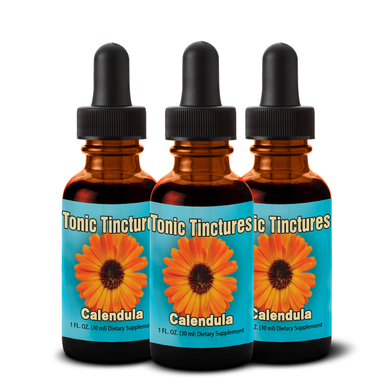
Tonic herbalism rewards consistency. The deep, systemic building work happens quietly over a 30 to 90-day cycle of continuous saturation. Supply the raw materials your body needs to rebuild and repair with our premium extraction.
Shop Calendula Extract1. What is Calendula?
So, what is calendula, exactly? Is it just a marigold with a Latin name? No, and the mixup is worth clearing up, because this flower is its own plant with its own personality, and that personality is the whole reason this bottle exists.
The botanical name is Calendula officinalis, and both words are worth a second look. Officinalis is the apothecary's word, from the officina, the workshop where the classical herbalists kept their working materials. Any plant wearing that name earned a permanent shelf in the medicine room. And calendula comes from the calends, the first day of the month in the old Roman calendar, because in mild climates this flower just keeps blooming, month after month, right down the calendar. The flower that never stops showing up for work. Keep that in mind, because it suits the job.
Classification before benefits, always. Calendula is a restorative tonic, grounding, cooling and calming, and restorative is the honest word for its whole character. This is not the fire-and-drive shelf. This is the repair shelf. The botanical that feeds the body's maintenance work.
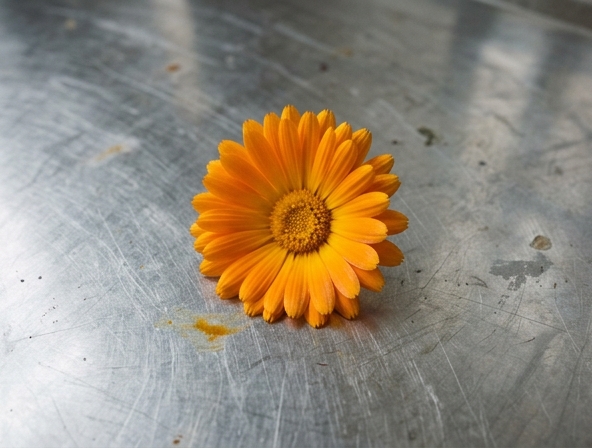
And notice the color, because the color is the material. Those golden-orange petals are loaded with pigments, the carotenoids, alongside the triterpenoids and the polyphenol flavonoids, the constituent classes the whole tradition runs on. And here's the part I find genuinely great. The flower grows in full sun, and it builds that pigment as its own armor against the light. The same class of pigments your skin and your body already know how to work with. The plant that stands in the sun all day, supplying the materials that sun-tested surfaces use.
Plain English on what that means for you. Everyday physical exertion wears down the surface barrier. Calendula supplies the raw materials the body uses to regenerate surface tissues and maintain an active immune defense. Skin, repair, defense. One bottle, one job, stated plainly.
So who buys it? People whose surfaces take a beating. Hard workouts, crowded rooms, long days, weather, work. The skin that has to hold up, the body that has to rebuild, the crowd that has to be filtered. That's the market for this bottle, and it always has been.
The full name story, the marigold mixup and the bride of the sun, gets its own piece in this series. It's worth the listen.
This is the repair flower. The practice is what makes it work.
Benefits accumulate over time.
2. Where Does It Come From?
Where does calendula come from? Short answer: Egypt. Real answer: a sun-loving flower grown in the sun belt, a history that runs from Roman garlands to kitchen pots, and a cold extraction built to respect the pigment.
First, the facts, straight. This is one hundred percent calendula flower petals, Calendula officinalis, organic, grown in Egypt. Nothing else in the bottle but the liquid. And notice the word petals, because that's a precision claim. Not the whole plant, not the stems and leaves. The flower petals, where the resin and the pigment actually live. The part of the plant that does the work is the part that goes in the bottle.
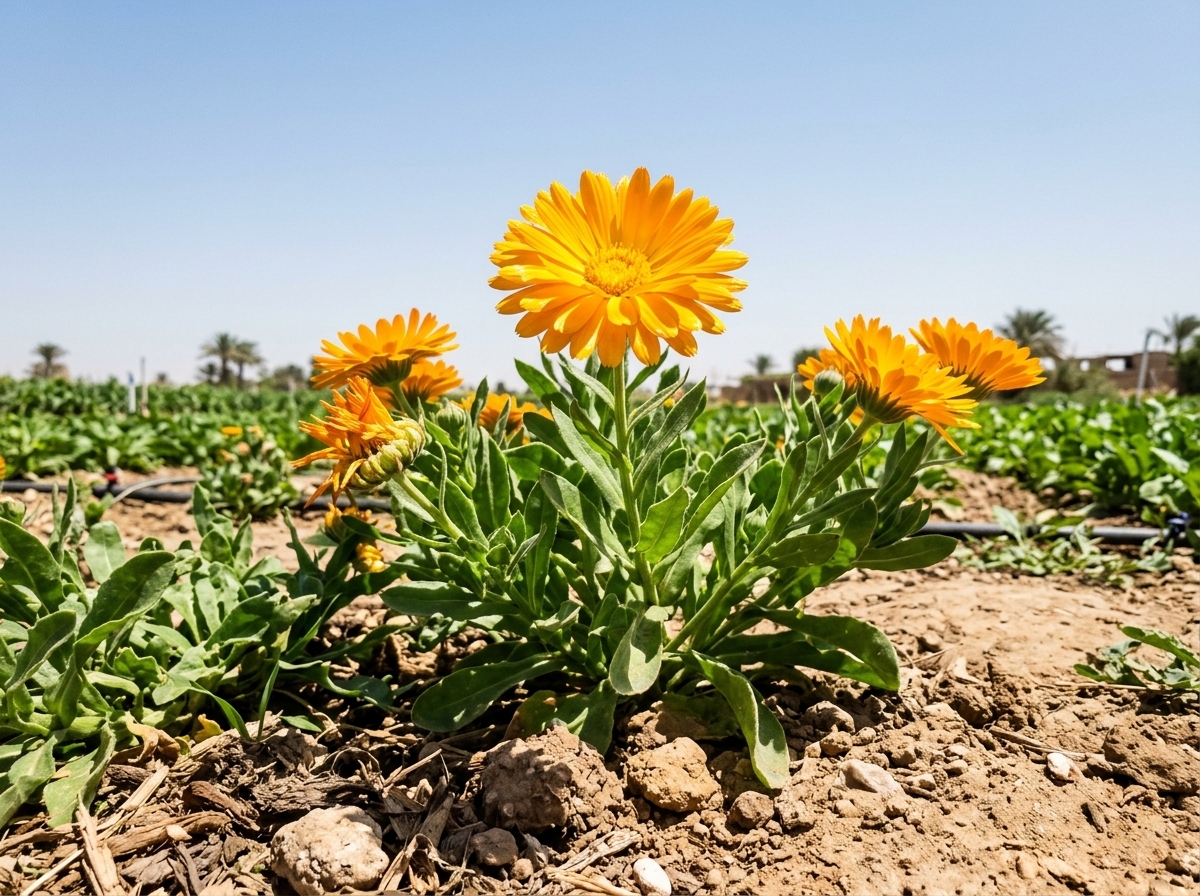
Now why Egypt suits this flower. Calendula is a sun plant, full light and warm soil, and Egypt is the sun belt. A flower that builds its golden pigment as armor against full sun wants to grow where the sun actually is. Sun-grown petals arrive at the extraction bench loaded with the carotenoids and the resinous constituents that are the whole point. Location is character with this flower, same as it is with any crop.
Then the extraction, built to respect the material. Every batch is custom crafted, multi-step, and micro-batched. Structured distilled water and triple filtered USP grade organic alcohol at twenty-five percent by volume. The water pulls one class of constituents, the alcohol pulls the other, and the whole process stays cold, unheated, so the fragile pigments and resins hold their shape in fluid suspension for maximum absorption.
The ratio is right on the label: one part herb to nine parts liquid. A classical ratio for flower material. Delicate petals extract differently than dense roots, and the ratio respects the material instead of forcing it.
Quick history note, because people ask. This flower has been working for a very long time. Romans garlanded with it and named it for the calends. Medieval kitchens stirred the petals into the pot, which is where the name pot marigold comes from, and used them to gild butter and cheese when saffron ran short. Poor man's saffron, they called it. And battlefield doctors kept it in their field kits right through the Civil War era. A garden flower with an apothecary's name, and the reputation arrived long before the packaging did. The full story gets its own piece in this series.
And the color tells on it. This extract comes out golden-orange, and the color is the fingerprint of the pigment itself, the carotenoids in suspension. The more you taste the stronger it is. A clear, thin tincture tastes like exactly what it is: mostly nothing.
Good petals, honestly grown, carefully pulled. That's where it comes from.
Taken consistently over time.
3. What Does It Actually Do?
What does calendula actually do in your body? Let me skip the list and give you one picture, because the picture is the mechanism.
A repair crew. Your body is a construction site that never closes. Surfaces wear down, tissues get rebuilt, the work never stops, and calendula is the supply run for that crew. And the rule underneath never moves: the botanical supplies the raw materials. Your body does the building.
Start with the surface, because that's where the flower leads. The triterpenoids promote tissue growth, maintenance, and repair, actively supporting the skin's natural barrier function and physical resilience against everyday wear and tear. What that looks like in real life: skin that holds up through a working day, a working week, a working season, instead of showing the whole day's damage by dinner.
Next, the defense. The polyphenol flavonoids neutralize free radicals and fortify the natural defense mechanisms, giving your body the nutritive support it uses to identify foreign material, contain it, remove it, and keep tissue clean. A balanced, adaptive immune response, fed from the inside. This is the part for anyone who spends their days in crowded rooms, because the body runs that filter constantly, and filters need feeding.
Then the delivery line. The botanical pigments and carotenoids work with the cardiovascular system to circulate blood, delivering oxygen and nutrients to every cell, maintaining the circulation and warmth of the body. Warm hands, steady fuel, the delivery line every construction site runs on. And the same antioxidant action buffers the internal environment against everyday wear, promoting cellular health and longevity.
Now the anchor, because this is the heart of the flower's character. As a grounding, cooling and calming restorative tonic, calendula helps buffer against everyday stress and daily stressors, helping your body maintain a balanced state while the repair work continues underneath. The crew works better when the site is calm. Everyone knows this from the inside.
And one thing it flat out does not do. It does not create tissue out of thin air. The unique constituents arrive with the dropper, but the heavy building blocks, the proteins and fats, come from complete balanced meals. The flower feeds the crew. The food supplies the lumber. Skip the meals and you've got a well-fed crew standing in an empty lot.
Supply, and repair. Feed the crew, and the body does the building.
Benefits accumulate over time.
4. Who Is It For?
Who is calendula actually for? Let me tell you who buys it, because it's not who the marketing usually points at. This is the vanity-and-ice-pack bottle. The flower for people whose surfaces take a beating.
The beauty buyer, first, because the page leads with it. Constant exposure to environmental pollutants and irritants, weather, wind, work, all of it landing on the outer form. The triterpenoids nourish the skin's natural barrier function, promoting cellular repair and regeneration to maintain skin vitality and a vibrant appearance. The bottle sits on the bathroom vanity, right next to everything that only works from the outside, feeding the wall from within.
The recovery crowd, and this one's the flagship. Physical activity taxes the musculoskeletal system, and anyone who trains knows the rhythm: break it down today, rebuild it by tomorrow. The unique constituents in this botanical promote tissue growth, maintenance, and repair, supplying the building blocks the body uses to recover and rebuild physical mechanics. The bottle lands next to the ice pack, and the recovery shift gets its deliveries.
The immunity buyer. Being around people in crowded spaces, offices, planes, gatherings, demands a constant, adaptive immune response. The polyphenol flavonoids neutralize free radicals to fortify the natural defense mechanisms, helping the internal environment identify foreign material and maintain tissue cleanliness. The bottle earns its spot in the medicine cabinet.
The rejuvenation buyer. A demanding schedule exhausts the internal environment, and the comeback runs on two things: materials and rest. Calendula works synergistically with restorative sleep to circulate blood and maintain cellular homeostasis, promoting renewal and revitalization. The bottle sits on the nightstand, right next to the water glass, because the repair shift does its best work overnight.
And the steward. Keeping the house running, running errands, skipping the afternoon nap, demanding steady output from a body that has to keep going anyway. The naturally occurring carotenoids support the efficient use of energy and maintain the circulation and warmth of the body to meet life's demands. The bottle lives on the counter next to the keys, and it goes out the door with them.
Notice what all five have in common, because it's the whole thesis. Every one of them is buying repair. The skin that has to hold up, the muscle that has to rebuild, the crowd that has to be filtered, the schedule that has to be recovered from, the house that has to keep running. Same job, five uniforms.
Right flower, right job. The repair botanical for the wear-and-tear life.
Taken consistently over time.
5. How Do You Take It?
Tonic Synergy & Timing: We remind you that with consistent use, benefits accumulate over time.
For rapid mucosal assimilation, we recommend taking this formulation on an empty stomach (up to 30 mins before eating), followed by a complete balanced meal to provide the building blocks (protein, complex carbohydrates, and healthy fats) necessary for cellular repair and regeneration.
This is calendula liquid extract, the general-use tonic in a one-ounce bottle with sixty dropper servings.
One dropper is one press of the rubber bulb, which fills the dropper tube to just above half-way. That's thirty drops, which is also one milliliter.
To find a functional dose, start with a minimum dose of ten drops to one dropper and work up. We suggest ten to ninety drops, taken one to three times per day.
Now, the bottle has two jobs, and it's worth knowing both. For immediate impact, hold one to two droppers under the tongue, sublingually, for fifteen to thirty seconds. Longer isn't necessary. For tonic building, to continually saturate your system and build deep, long-term health, take one to two droppers with meals, or up to two to three droppers with your largest meal.
Shake gently. Secure the lid and turn the bottle over back-and-forth three to five times to evenly distribute the liquid extract. Vigorous shaking oxidizes the volatile constituents, so don't do that.
By mouth: hold the liquid under the tongue for sixty to ninety seconds before swallowing, or mix the drops into two to four ounces of drinking water. Never boiling water. Boiling water alters the delicate volatile compounds.
Timing, plain and simple. For rapid mucosal assimilation, take it on an empty stomach, up to thirty minutes before eating, followed by a complete balanced meal to provide the building blocks, the protein, complex carbohydrates, and healthy fats, that the repair work actually runs on. And since this is a repair botanical, say it plainly: the meals aren't optional furniture here. The flower supplies the unique constituents. The food supplies the lumber. You can't rebuild a wall with deliveries alone.
One practical note, because it catches people off guard. This extract comes out golden-orange, and it stains, faintly but honestly. That's normal, not a defect. The color is the fingerprint of the pigments themselves, the carotenoids held in suspension. A pale, watery tincture would be the defect.
Storage is easy: an opened bottle holds about thirty to forty-five days. Unopened, about two years from the batch date. Keep it dark and cool.
If it didn't sit right, try again at a lower dosage and with a complete meal.
Some effects are immediate within the first few days. Consistency at a functional dose is what builds the rest.
6. How Long Until You Notice Results?
How long until you notice something from calendula? Most-asked question about any tonic, so here's the straight answer, in three windows. And with this flower, the honest answer has a twist: the felt effects can show fast, but the repair work runs on the body's clock, not yours.
Some effects are immediate within the first few days, one to three days. That's the felt layer. The sense of the system finally being fed, the steadier state, the surfaces that stop complaining quite so loud by evening. If that's you, you'll know inside the first few days.
And here's the mechanism reason the deeper work takes longer. Structure is slow construction. Tissue growth, maintenance, and repair get done on the body's own schedule, cell by cell, shift by shift, and the body doesn't take orders. It takes deliveries. A wall isn't rebuilt because you showed up with a truck once. It's rebuilt because the deliveries kept coming and the crew kept working.
Other effects and benefits are building, and become noticeable within one to two weeks. The skin that settles down. The recovery that comes back quicker. The deeper work doesn't announce itself. It stacks up underneath, quietly, while you go about your life.
Then the long game. The systemic shifts arrive as you continuously saturate your body over a thirty to ninety day cycle. That's how every tonic works. A good tonic cycle is thirty to ninety days. That's not a sales line; that's just how tonics work. A tonic is a practice, not an event.
And you gotta take enough to make it work. The more you take, the better it works, up to what your body can put to use at any one time. Someone can only take so much of anything at any one time, so enough is the target, and consistency is the vehicle that gets you there.
Nothing is a quick fix. Anyone selling a quick fix in a bottle is selling snake oil. Repair rewards time, not dosage.
And keep the foundation under all of it: complete balanced meals, every time, with your protein and your fat. Skipping meals and eating incomplete meals will lead to ineffective results. The crew can't build from an empty loading dock.
Benefits accumulate over time.
7. Safety and Quality
Is calendula safe, and how do you know you're getting a quality bottle? With this flower, those are the same question, and the answer isn't a promise printed on a label. It's the honesty of the formulation, the sourcing, and the craft.
Start with the markers that matter, stated straight. Species named: Calendula officinalis, one hundred percent flower petals, nothing else in the bottle but the liquid. Source named: organic, grown in Egypt, the sun belt, where a sun-loving flower gets the full light it wants. Craft named: every batch custom crafted, multi-step, and micro-batched, extracted with structured distilled water and triple filtered USP grade organic alcohol at twenty-five percent by volume, cold processed so the fragile pigments and resins hold their integrity in fluid suspension for maximum absorption. The ratio is a classical one part herb to nine parts liquid, the honest ratio for flower material. Rapid, high bioavailability, and the full extraction and lab methods are published on our standards page, if you want to see exactly how the work gets done.
And your own tongue is the lab, and so is your eyesight. A real calendula extract comes out golden-orange, floral and properly bitter, and that color is the fingerprint of the pigments themselves. The more you taste the stronger it is. A clear, thin tincture is mostly what it tastes like: mostly nothing.
Now, honest use, plain and simple. These botanicals are food added to the diet, suitable for daily use. Generally, this formulation may be taken with other dietary supplements. As food added to the diet, it works synergistically with other formulations and with your complete balanced meals underneath. And since this is the repair bottle, the pairing matters more than most: protein and fat are the lumber. The flower without the meals is a supply truck with no job site.
One piece of doctrine to keep the whole thing straight. Herbs are always more effective and more powerful in the long-term for supporting health, whereas drugs are always more effective and more powerful in the short-term for treating diseases, conditions, and any emergencies. Do not use an herb when one should use a drug, and do not use a drug when one should use an herb. Each has its own job, and this bottle's job is the long term.
And the price. You shouldn't pay a lot for calendula, because it is not rare and mystical. This is a garden flower, a farmed crop with a real market behind it, and the honest price is for the petals and the craft, not for a story. Anybody charging mystique prices for marigold is selling the packaging.
Be the Best and Buy the Best.
It is important to do your own research. Health is the most valuable asset of one's life and the most valuable investment.
8. Beauty Deep Dive
Can calendula support the skin? Fair question, and it deserves the honest version, because the skin is the largest organ you own and the beauty shelf is full of promises painted on top of it. The honest answer runs underneath the paint.
Start with the doctrine, because it settles the whole question. The skin is the outer protective wall, the barrier that divides the territory of the internal body from the external world. And a wall is built, not painted. Creams and serums dress the surface, and some of them do their job well. But the wall itself is constructed from raw materials, delivered from inside, and that's the side of the project this bottle works on.
The mechanism, told plainly. The triterpenoids nourish the skin's natural barrier function, promoting tissue growth, maintenance, and repair, supplying the building blocks for cellular repair and regeneration. That's skin vitality from the supply side. And the carotenoids are the quiet half of the story: the golden pigments the flower built in full sun are the same class of pigments the body knows exactly where to put. The skin runs on that material class. The plant that armed itself against the sun supplies the materials the sun-tested wall uses.
Now the teaching that makes the food half click. Your skin's own barrier is built largely from fats, lipids, the mortar between the cells of the wall. Which means the plate matters, more than most people ever hear. Protein every meal, because the body can't bank it, and fat, because the mortar is made from it. Eggs with soft yolks, so as not to denature the cholesterol. Salt your eggs for stomach acid to absorb the protein, vitamins, fat, and cholesterol. A wall built on salad and skipped meals is a wall built from nothing. The flower supplies the unique constituents. The meals supply the mortar.
And here's the history that backs the whole idea, told honestly. People have been putting this flower on their skin for centuries, infused into oils and salves, one of the most-used skin flowers in the world's traditions, from medieval kitchens to modern baby creams. The external reputation is earned and real. This bottle is the internal half of the same idea: feed the wall from the side the wall is actually built from.
One more pairing, because the page states it and it deserves its say. Calendula works synergistically with restorative sleep. The repair shift does its best work overnight, while the body is down and the crew is on. Materials by day, rest by night, and the wall rebuilds on its own schedule.
The honest expectation, over the cycle: thirty to ninety days of continuous saturation, meals underneath, rest alongside. Not a paint job. A construction project.
The wall builds from within.
Taken consistently over time.
9. The Repair Botanical
Why does one bottle serve the skin, the immune system, the recovery crowd, and the tired all at once? That's the question under this whole product, and the answer is one word: repair. Let me give that word its own room, because it's the through-line of everything calendula does.
Here's the frame. Your body is a construction site that never closes. Every day, surfaces wear down and get rebuilt, tissues break and get mended, the internal environment gets challenged and gets cleaned. The body is always mid-project. And everyday physical exertion, the ordinary kind, a workout, a long shift, a hard week, accelerates the wear. That's not damage in the dramatic sense. That's just the deal of having a body that gets used.
The repair work has a name on the label, and it's the right name: tissue growth, maintenance, and repair. The triterpenoids promote it. The unique constituents supply the building blocks for it. And notice how one job shows up in what looks like different departments. The skin's natural barrier function, that's repair of the outer wall. The musculoskeletal system after training, that's repair of the frame. The immune response, that's repair of the site's security and cleanup. The recovery from a demanding schedule, that's repair of the reserves. Same crew, different job sites, and one supply line feeds them all.
That's why the ice pack sits next to the bottle in the recovery crowd's kitchen. The ice manages the immediate aftermath. The flower feeds the rebuild that follows. Two different jobs, one table.
And the interior and the surface are one territory, which is the piece most people miss. The outer protective wall, the skin, divides the internal body from the external world, and both sides of that line get maintained from the same deliveries. Feed the crew and the crew works everywhere, wall, frame, defenses, reserves. There is no version of this where only one department benefits, because the body doesn't shop departmentally. It takes deliveries and routes them where the work is.
Now the honesty that keeps the whole thing straight. The flower supplies. The body builds. And the heavy materials, the proteins and the fats, come from complete balanced meals, because the body requires macronutrients, protein, complex carbohydrates, and healthy fats, to recover and rebuild. A well-supplied crew with no lumber stands around. Skipping meals and eating incomplete meals will lead to ineffective results.
And the clock. Repair is a practice. A good tonic cycle is thirty to ninety days, continuous saturation, meals underneath, consistency as the vehicle. The body doesn't take orders. It takes deliveries, and it builds on its own schedule.
One flower, one job, everywhere it's needed.
Benefits accumulate over time.
10. The Marigold Mix-Up
Is calendula the same marigold I see at the garden center? No, and the mixup is worth clearing up, because the name carries one of the best stories in the whole herb garden. Let me walk it.
Two different plants are sharing the name. The marigolds filling the garden-center shelves in spring are Tagetes, French and African marigolds, bold flowers, strong scent, a different genus entirely. Calendula is the other one: Calendula officinalis, the pot marigold, the classical European flower, softer in color, golden-orange, edible, and carrying the apothecary's name. Two plants, one shared nickname, and the one with the long working history is the one in this bottle.
The name itself is a calendar joke that became a compliment. Calendula comes from the Latin calendae, the calends, the first day of the month in the old Roman calendar. In the mild climates around the Mediterranean, this flower just kept blooming, month after month, first day to first day, right down the calendar. The Romans garlanded with it and hung the name on it: the flower of the calends. The one that shows up on schedule, every month, forever. For a repair botanical, that name is almost too perfect. The flower that never stops showing up for work.
Then there's the sun story, and this one the poets noticed. Calendula is heliotropic, a follower of the sun. The blooms open with the sunrise and close at dusk, face the light all day and fold at dark. Folk names stack up on this habit: bride of the sun, sun's bride, summer's bride. Shakespeare put it in The Winter's Tale, the marigold that goes to bed with the sun and rises with him weeping. A flower whose whole daily life is oriented to the sun, and whose working chemistry is pigment armor built against that same sun. The poetry and the botany agree.
Medieval England renamed it again, and that's where marigold actually comes from. Mary's gold, the golden flower given to the Virgin Mary, Marygold, marigold. The garden name most people know is a medieval devotional name, not a botany name. And into the kitchen pots it went, which is the pot marigold: petals stirred into soups and stews, brewed into drinks, and used to gild butter and cheese when saffron ran short. Poor man's saffron, they called it, an honest substitute in an age when saffron cost more than gold by weight. The flower fed people, and then doctors carried it. Battlefield surgeons kept it in their field kits through the Civil War era, and the golden petals worked their way into the folk and herbal traditions of three continents.
One flower, five names, four jobs, and every one of them earned. The calends flower, the bride of the sun, Mary's gold, the pot herb, the field kit petal. The repair flower the world never forgot.
Right flower, right shelf, right history.
Taken consistently over time.
Commit to the Practice
Tonic herbalism rewards consistency. The deep, systemic building work happens quietly over a 30 to 90-day cycle of continuous saturation. Supply the raw materials your body needs to rebuild and repair with our premium extraction.
Shop Calendula Extract