
Discover the honest truth about Chaga—the grounding adaptogen and daily tonic prized for its deep systemic fortification. Whether you are looking to support daily immunity, maintain clean-running elimination pathways, or nurture your skin's natural barrier from the inside out, the secret lies in consistency. This guide strips away the marketing hype to teach you exactly what Chaga is, what it does, and how to properly use it for sustained, deep vitality.

I recorded these audios to directly answer the questions I've received most over the last 26 years. The text below contains the actual transcripts.
Jason J. DukeOwner / Artisan
Reference Directory

Commit to the Practice
Tonic herbalism rewards consistency. The deep, systemic building work happens quietly over a 30 to 90-day cycle of continuous saturation. Supply the raw materials your body needs with our premium formulation.
Shop the Chaga Formulation1. What is Chaga?
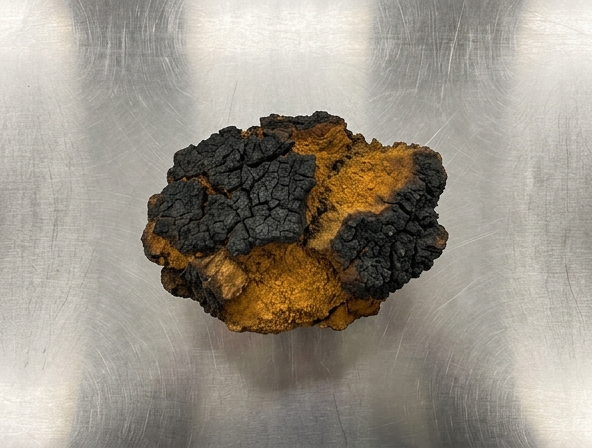
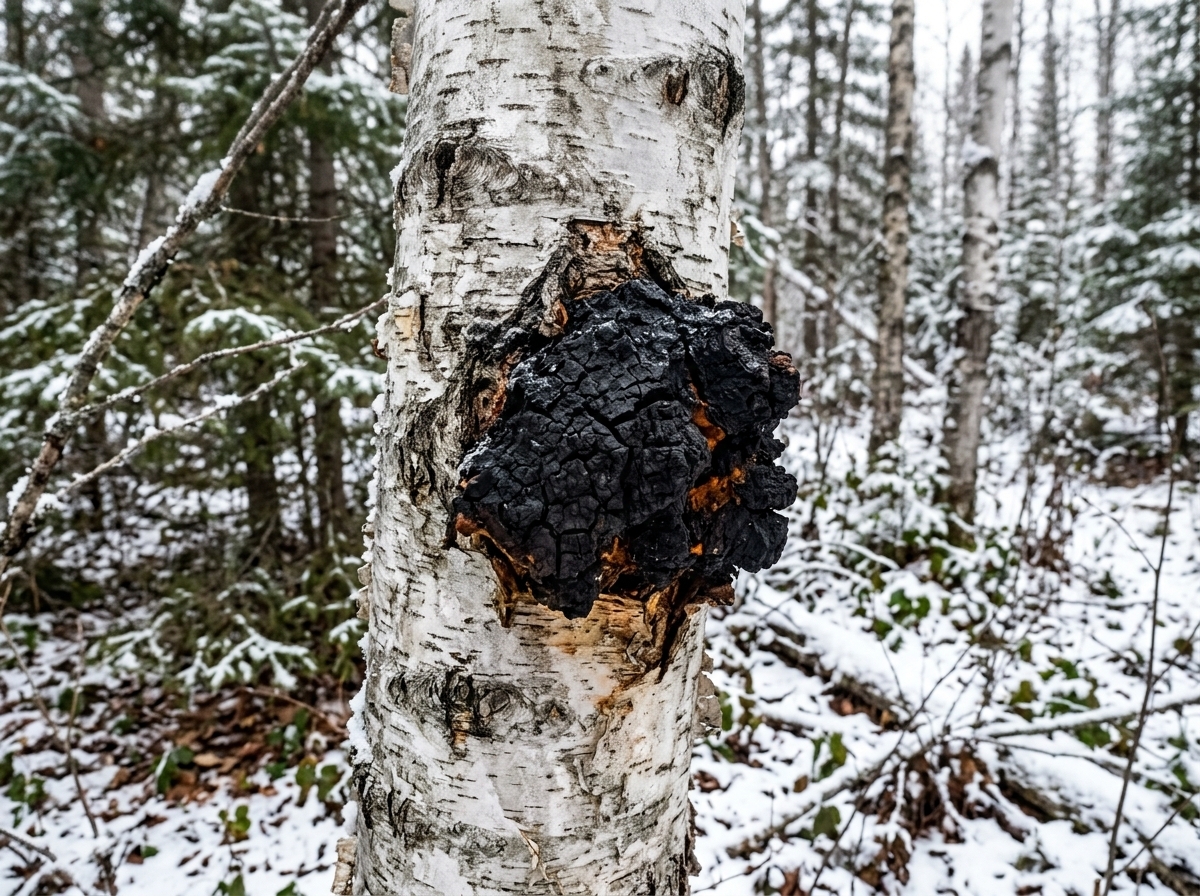
Chaga is not actually a mushroom. That's the surprise most people need first, because everyone calls it one. The black mass you see bulging from a birch trunk is a sclerotium, a dense conk of fungal tissue fused with the wood of the tree itself. The real mushroom, the fruiting body of Inonotus obliquus, almost never shows itself. It only appears after the host tree has died. What you harvest, what you take, is the years-long accumulation: the fungus and the birch, grown together into one dense black mass.
And that relationship is the whole story. Chaga lives on birch, and only birch, for years. It draws compounds from the living tree that it cannot make on its own. The birch bark carries betulin, and the fungus converts it into betulinic acid, a triterpenoid you simply do not get without that tree in the picture. It's not a parasite in any way that reads as destruction. It's a long residence, a symbiosis, the fungus and the birch trading chemistry for a decade or more in the cold.
The cold matters. This material grows slow, in the far north, through hard winters, Russia, Siberia, Northern Canada, the mountains of the Pacific Northwest. The hardship is the concentration. A chaga conk that survived twenty winters is a different thing than anything grown fast and easy.
Look at the outside of that conk. The cracked black crust is nearly pure melanin. Chaga carries one of the highest melanin concentrations of any natural material on earth. Melanin is the same pigment family that colors your skin, your hair, your eyes. That fact alone tells you a lot about what this material is built for, and we'll come back to it.
Classification before benefits, always. Chaga is an adaptogen and a grounding herb, cooling and calming in character, and it's a daily tonic. Taken every day, consistently over time, to support, maintain, and promote health. Not a rescue remedy. Not a booster. A daily food for the systems that keep you standing.
And one thing it is not: a stimulant. No jolt, no spike, no drop two hours later. Chaga supports the systems that make energy, so the stamina shows up as endurance and resistance to stress, a steadiness under load rather than a rush.
The birch made it. The cold concentrated it. The daily practice makes it work.
2. Where Does It Come From?
Where does our chaga come from? Let me start with the decision most companies never explain, because it's the one that matters: eighty-eight percent of our material is organic hardwood log-grown in the Pacific Northwest, and twelve percent is wild-harvested old-growth from Northern Canada. Most of the bottle is farmed on purpose. Here's why that's the right call.
Wild chaga takes years, sometimes decades, to grow on a living birch in the far north. Harvest it, and you're taking from a wild ecosystem that can't replace it fast enough. Demand for this material has exploded, and wild stands are feeling it. Log-grown chaga lets us grow the fungus on hardwood logs the way a farmer grows a crop, dense, consistent, and clean, without taking a single conk from a wild forest. That's not a compromise. That's stewardship.
And here's what log-grown does best: polysaccharides. The beta-glucans come out dense and consistent, every batch, because the growing conditions never vary. The immune side of this material lives in those polysaccharides.
Then the twelve percent, and that fraction is doing real work. Wild old-growth conks from Northern Canada survived twenty hard winters on living birch, and that hardship is where the melanin and the trace minerals concentrate. The dark, cracked crust that took decades to build. We add it for exactly what it carries.
Then the craft. Custom crafted, multi-step, micro-batched. Structured distilled water and triple filtered USP grade organic alcohol at twenty-five percent by volume, the water pulling one class of constituents and the alcohol pulling the other, so the whole matrix lands in the bottle. The ratio is stated plainly: two pounds of chaga to one quart of liquid, about fifty-seven thousand milligrams in every two-ounce bottle.
And you can taste the care. The more you taste the stronger it is. A real chaga extract is dark and syrupy. If it's see-through, it's thin.
Grown, not stripped. Blended on purpose. Crafted honestly. That's where it comes from.
3. What Does It Actually Do?
What does chaga actually do in your body? Let me answer with a picture instead of a list, because the picture is the mechanism.
Think of your body as a fortress under quiet, constant siege. Not one dramatic attack. Wind, sun, stress, long days, crowded rooms. Chaga's job is not to fight for you. It's to fortify the walls, and it does that from four directions at once.
First, the watchtowers, the immune system. The beta-glucans work with your white blood cells, supporting pattern recognition, the ability to identify foreign material for containment and removal. Your immune system is a surveillance network, and the polysaccharides supply the raw material that keeps the surveillance trained and adaptive. Balanced, not overstimulated. That word matters.
Second, the moat, the elimination pathways. The triterpenoids support the liver and kidneys, the organs that metabolize cellular waste and neutralize toxins. Chaga doesn't flush anything out in a wave. It supports the drainage channels that are already there, so the tissue stays clean the way a moat stays clean, by constant, quiet maintenance.
Third, the walls themselves, antioxidant defense. The melanin and polyphenols neutralize free radicals, the oxidative wear that comes from just being alive in a stressful environment. Cellular health and integrity, maintained from the inside.
Fourth, the stores. The trace minerals, the lanthanides, play a role in energy metabolism, replenishing energy reserves. And here's a piece people don't expect: chaga has a normalizing effect on blood sugar. Not lowering it, not juggling it, just nudging it toward steady. Which is why it supports stamina, endurance under load, because a steady fuel supply is what stamina actually is.
Under all of it, the constituents support healthy communication between nerve cells. That's the grounding effect. Steadier nerves, steadier fuel, steadier walls.
Fortify the watchtowers. Keep the moat flowing. Hold the walls. Feed the stores. Your body does the standing.
4. Who Is It For?
Who reaches for chaga? Let me tell you where the bottles actually end up, because the placements tell the story.
The glovebox. That's the high-stress driver, the one navigating chaotic days and dealing with people all day without wanting to snap. Chaga is cooling and calming, a grounding adaptogen, and the constituents support healthy communication between nerve cells. The steady-temper bottle. Relaxed awareness instead of white knuckles.
The medicine cabinet. That's the immunity call, the people in crowded spaces, teachers, nurses, anyone in open offices and airports who doesn't want to wear themselves down by February. The beta-glucans work with white blood cells, supporting pattern recognition, the body's own surveillance staying sharp. This is daily fortification, not a rescue capsule when you're already down. That's the whole difference.
The bathroom vanity. That's the beauty crowd, the people who care about waking up looking fresh. The melanin, the same pigment family that colors your own skin and hair, plus the polyphenols, provide potent antioxidant support, nourishing from within to maintain the skin's natural barrier. You fortify the largest organ you have from the inside.
And the counter next to the keys. That's the steward, the one running the household, the chores, the family calendar, everyone's logistics. Chaga supports energy metabolism and normalizes blood sugar toward steady, which shows up as stamina, the sustained energy that holds through the whole list, not the front of it.
One thread runs through all four placements, and it's the word daily. This is a daily tonic. The fortress gets maintained a little every day, or it doesn't get maintained at all.
Consistency is the whole practice.
5. How Do You Take It?
Tonic Synergy & Timing: We remind you that with consistent use, benefits accumulate over time.
Chaga has a digestive aspect and a normalizing effect on blood sugar, meaning it works best with the food you eat. Take it right before or with a complete meal to properly align with your body's fuel metabolism.
This is chaga liquid extract, a two-ounce bottle with sixty dropper servings.
One dropper is one press of the rubber bulb, which fills the tube to just above halfway. That's thirty drops, which is also one milliliter.
To find a functional dose, start at ten drops and work up. We suggest ten drops to one to three droppers, taken one to three times per day, which is three hundred thirty-three to six thousand milligrams daily. The more you take, the better it works, and consistency at a functional dose is the key.
Shake gently. Secure the lid and turn the bottle over back-and-forth three to five times to evenly distribute the extract. Vigorous shaking oxidizes the fragile compounds, so don't do that.
By mouth: hold the liquid under the tongue for sixty to ninety seconds before swallowing, or mix the drops into two to four ounces of drinking water. Never hot water. Hot liquids damage the fragile constituents.
Now the timing, and this one has a twist unique to chaga. Best taken with meals, and here's why. This material has a digestive aspect. It supports digestion, and it has a normalizing effect on blood sugar, which means it can make you hungry. You take it on an empty stomach and twenty minutes later your body is asking for food. That's not a side effect. That's the mechanism talking. Your fuel supply is being nudged toward use, so give it fuel. Take it with food or right before a complete meal, and the hunger cue and the meal line up perfectly.
And that's the daily doctrine: this is a food-class tonic, taken every day, with your meals. Breakfast, lunch, or both. Build the rhythm and keep it.
Storage is simple. An opened bottle holds about thirty to forty-five days. Unopened, about two years from the batch date. Keep it dark and cool.
Some effects show inside one to three days. Others build over one to two weeks. The rest is the cycle.
Benefits accumulate over time.
6. How Long Until You Notice Results?
How long until you notice something from chaga? I'm going to answer with the story I've watched happen a hundred times, because it teaches the timeline better than any chart.
Someone picks up the bottle, takes a real dose daily for a week. First thing they usually report is the steadiness. Not a lift. Steadiness. The afternoon that doesn't cave in, the temper that holds when the day goes sideways. That's the immediate window, one to three days, the felt layer.
Then around week two, the building layer. The hunger cue settles into rhythm with real meals. The skin starts looking less tired in the morning. The crowded-room season arrives and they're not the one who goes down. That's the one to two week window.
And then, right about there, they stop. Every time. They felt two layers, decided the bottle had shown them everything, and quit at the doorstep of the third window. The deep systemic work, the maintained immunity, the clean-running elimination pathways, the antioxidant defense holding season after season, comes over a thirty to ninety day cycle of continuous saturation. That's how every tonic works. You're feeding systems that put materials to work at their own pace. The body doesn't take orders. It takes deliveries.
Nothing is a quick fix. Anyone selling a quick fix in a bottle is selling snake oil. Tonics reward time, not dosage.
And you gotta take enough to make it work. The more you take, the better it works. Not enough doesn't work. Enough is the target, and consistency is the vehicle that gets you there.
Keep the meals under all of it. Chaga has a digestive aspect and a normalizing effect on blood sugar, so it works with the food you eat. It doesn't create fuel from thin air. Skip the meals and you're asking the fortress to hold on an empty pantry.
Don't stop at the doorstep. The deep work is behind that door.
Benefits accumulate over time.
7. Safety and Quality
Is chaga safe, and how do you know you're getting a quality bottle? With this material those are the same question, and the answer isn't a promise on a label. It's the sourcing and the honesty of the craft.
Start with the sourcing, because this is where the chaga market gets murky. Demand has exploded, and a lot of bottles are stripped wild conks, taken from forests that can't replace them, with no word on where or how. Ours is eighty-eight percent organic hardwood log-grown in the Pacific Northwest. Grown as a crop, dense and consistent, without taking a single conk from a wild ecosystem. The other twelve percent is wild-harvested old-growth from Northern Canada, taken deliberately and in small fraction, for exactly what decades on a living birch concentrate: the melanin and the trace minerals. The blend is stated plainly, both sources, both percentages. A label that won't tell you where the material came from is telling you something anyway.
And here's the lowdown on standardization. When you see a chaga label bragging one standardized percentage, polysaccharides this, beta-glucans that, that's a company compensating for a thin material, dressing up one number while the rest of the matrix is missing. A complete material needs no engineering. The log-grown supply brings the dense polysaccharides, the old-growth brings the melanin and minerals, and the whole matrix lands in the bottle together.
Then the craft. Custom crafted, multi-step, micro-batched. Structured distilled water and triple filtered USP grade organic alcohol at twenty-five percent by volume, water pulling one class of constituents, alcohol pulling the other. The ratio is honest and heavy: two pounds of chaga to one quart of liquid, about fifty-seven thousand milligrams in every two-ounce bottle. The full methods are published on our standards page if you want to see the work.
And the taste tells you it's real. The more you taste the stronger it is. A real chaga extract is dark, syrupy, and strong, earthy and bitter, the kind you can taste minutes after taking it. Your own tongue is the lab.
Honest material, honestly grown, honestly blended, honestly made. Pay for the material and the craft, not for mystique.
Be the Best and Buy the Best.
It is important to do your own research. Health is the most valuable asset of one's life and the most valuable investment.
8. Detox Deep Dive
Everyone in the wellness world sells detox, and most of what they sell is a wave. Flush, cleanse, purge. Chaga doesn't work like a wave, and that's exactly why it's better at the actual job.
Here's the honest picture of what detoxification really is. Your body already runs a waste management system, twenty-four hours a day. The liver takes cellular waste and metabolizes it. The kidneys filter and carry it out. That's not a special event you schedule twice a year. That's Tuesday. The question was never whether you detox. It's whether the drainage channels run clean or clogged.
The triterpenoids in chaga support those channels. They work with the liver and kidneys, assisting in metabolizing cellular waste and neutralizing toxins, maintaining tissue cleanliness. Not by forcing anything out in a rush. By supporting the organs that do the work every single day, so the work keeps getting done. Constant quiet maintenance instead of an occasional flood.
And the picture gets better, because chaga supports elimination from both ends. The melanin and polyphenols neutralize free radicals at the source, reducing the oxidative wear that generates cellular waste in the first place. Fewer pollutants entering the stream, cleaner channels to carry the ones that arrive anyway. That's a system, not a scrub.
Now the practical piece, and this is where people get it wrong. Chaga has a digestive aspect. It supports digestion, and it has a normalizing effect on blood sugar, which means it can make you hungry. Your body shifts toward using fuel, and it asks for fuel. So the daily practice is: take it with meals, complete ones. The elimination pathways and the digestion run on the same schedule, and you keep both fed.
And the timeline, stated honestly. This is the deep layer. You'll feel steadiness inside days, but clean-running elimination is thirty to ninety day work, continuous saturation, daily practice. The channels didn't clog in a week and they don't clear in one.
Detox isn't an event. It's a drainage system, maintained daily.
Clean channels, quiet work.
9. Stress & Adrenal Deep Dive
Let's talk about chaga and stress, because the word adaptogen gets thrown around constantly and nobody explains what it actually asks of your body, or gives back.
Here's the frame. Stress isn't an event. It's a load. Every day carries one: the schedule, the people, the noise, the worry. Your body answers that load with a stress response, hormones and nerves marshaling resources. Run that response hot and constant, and you get the burnout picture: wired and tired, snapping at small things, energy that caves in the afternoon.
Chaga is a grounding adaptogen, cooling and calming in character, and it works on the load-bearing side of that system. The constituents support healthy communication between nerve cells, and they supply the raw materials the nervous system uses to maintain a balanced stress response. Translation: the nerves that carry the day stop fraying at the edges. Relaxed awareness instead of white knuckles. You still feel the day. It just doesn't own you.
And there's a stamina story underneath, and here's the mechanism nobody connects. Steadiness under stress is a fuel problem as much as a nerve problem. Chaga has a normalizing effect on blood sugar. Not lowering it, not juggling it. Nudging it toward steady. A steady fuel supply is what resistance to stress actually feels like from the inside: you don't cave at four o'clock, because the tank never swung empty in the first place.
Same thread shows up as the digestive aspect. It can make you hungry, because a body nudged toward using fuel asks for fuel. So take it with meals. The stress resistance and the meals are the same practice. Skip the meals and you're asking for endurance on an empty tank.
And the word that governs all of it: daily. Adaptogens are trained, not triggered. A daily dose, every day, over the thirty to ninety day cycle, is what builds the buffer. The fortress wall is maintained a little every day or not at all.
Steady nerves. Steady fuel. Steady you.
That's what resisting stress actually is.
10. Skin, Hair, & Eyes Deep Dive
Let's talk about chaga and appearance, because there's a fact buried in this material that the whole beauty industry should have picked up years ago.
The black crust on a chaga conk is nearly pure melanin. Chaga carries one of the highest melanin concentrations of any natural material on earth. And melanin is not some foreign chemical. It's the same pigment family that colors your own skin, your hair, your eyes. The pigment that tans you in summer, that colors the iris, that sits in every strand of hair. When you hold chaga, you're holding the same pigment your body builds itself with, concentrated by two decades of cold.
Now what does that mean for skin, told honestly? The skin is under constant oxidative siege. Sun, wind, pollution, just being alive. The melanin and polyphenols in chaga are potent antioxidants. They neutralize free radicals, and melanin in particular is built to absorb ultraviolet radiation, the wavelength band that drives photoaging. Chaga supports the skin's natural barrier function from within, nourishing from the inside to maintain cellular health and integrity. You fortify the largest organ you have at the source, instead of painting the outside of the wall.
The hair and the eyes ride the same supply line. Pigment and cellular integrity are built from nutrients, and a daily material carrying the pigment family plus the antioxidant defense supports the whole appearance project: hair with its color and strength, eyes with their pigmented structures maintained, skin that looks rested instead of worn.
And here's the piece the beauty crowd needs to hear most: this is slow work. Creams sit on the surface overnight. This is a foundation project. Daily doses, complete meals, and the thirty to ninety day cycle, and the change shows up in retrospect: waking up looking fresher, the skin that doesn't look tired at four o'clock anymore.
Because there's a second mechanism riding along. The normalizing effect on blood sugar and the steady fuel supply show up on the face. Steady people look steady.
Nourish the pigment. Defend the cells. Let the mirror catch up.
Beauty is built from within.
11. Wild vs. Log-Grown
Wild chaga versus log-grown. This is the argument running under the whole chaga market, and most companies settle it with a marketing word, wildcrafted, as if wild automatically means better. Let me give you the honest version, because the answer is more interesting.
First, what wild chaga actually is. A conk that spent ten, twenty, sometimes thirty years growing on a living birch in the far north. That slow hardship concentrates things you can't fake: the melanin crust, dark and cracked, built winter by winter, and the trace minerals drawn up through the tree. Old-growth wild chaga is a real treasure, and there's a reason it's prized.
Now the problem. Wild chaga cannot be farmed on demand. It grows at the forest's pace, not the market's. Demand for this material has exploded, and foragers are stripping conks, whole ones, off living birches, faster than the forests can replace them. A wild conk takes a decade or more to return. Over-harvest is a real pressure on real ecosystems. That's not a marketing problem. That's a stewardship problem.
Log-grown chaga answers it. The fungus is cultivated on hardwood logs, the way a farmer grows a crop. Consistent, clean, dense, and renewable, without taking a single conk from a wild forest. And here's what people don't expect: for the polysaccharides, the beta-glucans, the immune side of the material, log-grown isn't a downgrade. It's dense and it's consistent, every batch, because the growing conditions never gamble with a wild winter.
So the honest answer is: neither alone. That's why our formulation is eighty-eight percent organic log-grown from the Pacific Northwest, carrying the dense, consistent polysaccharides, and twelve percent wild old-growth from Northern Canada, carrying the melanin and trace minerals that only decades on a living birch can build. The blend is stated plainly, both sources, both percentages, and each is doing the job it's best at. Complete constituent synergy, without strip-mining a forest to get it.
That's the whole answer in one line: grown where growing works, wild where wild matters, and honest about which is which.
Be the Best and Buy the Best.
12. Chaga Hunting
Chaga hunting. Let me take you into the woods, because once you can read this material in the wild, you understand everything about what's in the bottle.
You're walking northern birch country, late fall or winter, Pacific Northwest mountains, Northern Canada, places where paper birch stands in the cold. You're looking for a black mass bulging from a trunk, cracked like burnt charcoal on the outside, and here's the tell most people miss: inside, that same conk is a golden amber-brown, woody and dense. Black crust, golden heart. If you find something black all the way through, that's not chaga. The real thing wears two colors, and the crust is nearly pure melanin, the same pigment family that colors your own skin and hair.
You only find it on birch, and mostly paper birch. That's not a preference. It's dependence. Chaga draws compounds from the living tree it cannot make on its own, converting betulin from the bark into betulinic acid. No birch, no chaga. The tree and the fungus are one system, and the conk is the record of that partnership.
A good conk is years in the making, a decade, two, sometimes more, slow growth through hard winters. That's why ethical harvest matters. A careful forager takes only mature conks, takes part rather than the whole, leaves enough that the tree and the fungus can carry on. A careless one strips the forest faster than it can ever answer back, and that's the pressure wild stands are under right now, because demand exploded.
Which brings the story home. That's why our material is mostly log-grown on purpose, eighty-eight percent, cultivated on hardwood in the Pacific Northwest so the wild forests don't have to carry the whole market, with a measured twelve percent of wild old-growth from Northern Canada added for what only decades on a living birch can build.
Knowing how to hunt it is knowing how to shop it. Ask where the material came from, and whether the people selling it can say what the forest would say.
Grown where growing works. Wild where wild matters.
13. Chaga and Coffee
Can I take chaga with my coffee? I get that question constantly, and chaga has a special claim on the answer, because this material has been standing in for coffee for eighty years.
The history first, because it's true and almost nobody knows it. During the war years, up in Finland and across Northern Europe, coffee disappeared from the shelves. So people did what northerners do: they went to the forest. Chaga conks, dried and simmered, made a dark, earthy, bitter brew that stood in for the morning cup, and a lot of households never fully gave up the habit. The taste fits because the material fits, dark and rich, like coffee's forest cousin.
Now the practical answer. Yes, they coexist fine, and the combination is actually better than the sum of its parts, if you understand the difference in how they work. Caffeine is a stimulant. It forces output, then drops you, lower than where you started, two hours later. Anyone who's ridden that cycle all day knows the shape of it. Chaga doesn't impersonate energy. It supports the systems that make it, energy metabolism replenished, blood sugar nudged toward steady. The coffee gives you the spike. Chaga supports the baseline.
And here's the honest note on hunger. Chaga has a digestive aspect and a normalizing effect on blood sugar, which means it can make you hungry. Coffee on an empty stomach plus chaga on an empty stomach is a recipe for a shaky morning. So run the pair with breakfast, a complete one. The chaga helps your body use the meal, the hunger cue lines up with the food, and the coffee rides on top of a fed system instead of a hollow one.
Some people tell me, over the cycle, that the coffee stops being load-bearing. They drink it because they enjoy it, not because they need it to function. That's not chaga doing anything to the coffee. That's a well-fed system not needing the crutch.
Enjoy the cup. Feed the system. Let the forest cousin hold the baseline.
14. Troubleshooting Guidelines
Why didn't chaga work for you? I can tell you from years of answering this phone: when this material fails, it fails for one of exactly three reasons. Let me count them down, because the order matters, and so does the fix for each.
Reason three: time. Some effects show inside one to three days, the steadiness layer. Others build over one to two weeks. The deep work, maintained immunity, clean-running elimination, antioxidant defense that holds season after season, comes over a thirty to ninety day cycle. Most people who tell me it didn't work took it for two or three weeks, irregularly, and stopped right at the doorstep. The fix is patience, on a schedule. Daily, not sometimes.
Reason two: the fuel. This is the one nobody expects. Chaga has a digestive aspect and a normalizing effect on blood sugar. It can make you hungry, because a body nudged toward using fuel asks for fuel. If you fought the hunger cue, skipped meals, ran it on coffee and air, the material had nothing to work with. That's not chaga failing. That's deliveries arriving at a job site with no lumber on the truck. The fix is on your plate: complete meals, taken with the dose.
And reason one, the most common of all: not enough. This material is dose-dependent, and the label says it plainly: the more you take, the better it works. If you took ten drops a day for a week, you were running a test, not a tonic. The honest range is ten drops to one to three droppers, one to three times per day, three hundred thirty-three to six thousand milligrams daily, and most people find their dose somewhere in the upper half of that range. Enough is the target, because someone can only take so much of anything at any time, and consistency is the vehicle.
There's the countdown. Time, fuel, dose, in reverse order of how often they're the culprit. Check the dose, check the plate, check the calendar, in that order, and almost every failed bottle turns out to be a practice problem, not a material problem.
If it didn't sit right, try again at a lower dosage and with a complete meal.
The failure is almost never the material. It's the practice.
Commit to the Practice
Tonic herbalism rewards consistency. The deep, systemic building work happens quietly over a 30 to 90-day cycle of continuous saturation. Supply the raw materials your body needs with our premium formulation.
Shop the Chaga Formulation