
Discover the honest truth about Ginger—the classical warming circulation tonic prized for thousands of years. Whether you are looking to support active digestion, enhance robust circulation out to the extremities, or maintain systemic warmth, the secret lies in formulating with both the fresh and dried roots. This guide strips away the marketing hype to teach you exactly what ginger is, what it does, and how to properly use it for deep, systemic vitality.

I recorded these audios to directly answer the questions I've received most over the last 26 years. The text below contains the actual transcripts.
Jason J. DukeOwner / Artisan
Reference Directory
Commit to the Practice
Tonic herbalism rewards consistency. The deep, systemic building work happens quietly over a 30 to 90-day cycle of continuous saturation. Supply the raw materials your body needs with our premium formulation.
Shop Ginger Extract1. What is Ginger?
So, what is ginger, exactly? Most people know it as the knobby beige hand in the produce bin, the thing that makes gingerbread taste like gingerbread. But there's a whole plant behind that knob, a whole history, and a whole family of chemistry, and all three belong in this bottle's story.
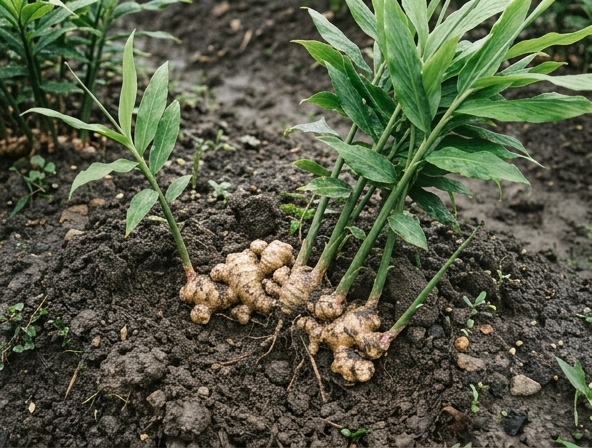
Start with the shape, because the shape named the plant. The botanical name is Zingiber officinale, and zingiber descends through Greek from an old Sanskrit word meaning, roughly, horn-shaped, horn-body. Because the rhizome doesn't grow as a round tuber. It branches, knuckle after knuckle, like a stubby antler. And rhizome is the right word, worth defining: an underground stem, not a root proper, the plant's storage locker and its growth engine both. The produce bin even calls them hands. You've been buying hands all along and never knew it.
Classification before benefits, always. Ginger is an invigorating, warming circulation tonic, and warming is the honest word for its whole character. The old herbal classes called this the pungent class, and every tradition on earth that met ginger sorted it the same way: the root that fires the digestion and moves the warmth. Plain English: this is the fire-and-circulation bottle. The one that gets the kitchen running and keeps the blood moving out to the edges, the fingers and toes, where cold likes to sit.
Now the signature constituents, and this is where ginger gets genuinely interesting. The root carries three pungent members of one family: gingerols, shogaols, and zingerone. And they're not three separate accidents. Fresh root carries the gingerols. Drying converts some of those gingerols into the hotter shogaols. And real cooking gives you zingerone, the warm, sweet, round note that gingerbread smells like. One plant, three personalities, and which one you meet depends on how the root was treated before it met you.
That's the formulator's move in this bottle: the label says both fresh and dried ginger root, so both personalities arrive in the glass. That story earns its own piece in this series, and it's worth the listen.
And the honest contrast, because classification comes with it. This is not the cool-and-calm shelf. This root will not settle you down or sedate you; it's the other half of the tonic shelf, the half that wakes things up. It's also not some rare rainforest botanical with a mystery premium on it. This is the world's working spice, one of the most-traded and most-trusted plants in human history, and its reputation arrived centuries before the packaging did.
This is the warming, working root. The practice is what makes it work.
Benefits accumulate over time.
2. Where Does It Come From?
Where does ginger come from? Short answer: an organic farm, both fresh and dried root. Real answer: the most-traveled spice in human history, carried by a plant that can't even pack its own suitcase.
The facts first, straight. This is one hundred percent ginger root, Zingiber officinale, organic, farm grown, nothing else in the bottle but the liquid. And notice the phrase on the label: both dried and fresh ginger root. Most ginger products take one form or the other and never say which. This one takes both, because the fresh root and the dried root carry different personalities of the same chemistry, and the formulator wanted the full range in the glass.
Now, the piece of biology that explains ginger's whole history. But get this: ginger rarely flowers and almost never sets viable seed. For thousands of years it has traveled by human hands alone, a piece of rhizome planted to grow a new plant, cut and carried, farm to farm, port to port. The growers call the planting pieces seed ginger, though there's no seed in it at all. Every ginger field on earth is a cutting of a cutting of a cutting. Ginger never spread on its own, so it spread wherever people valued it enough to carry it. And they carried it nearly everywhere.
And the heritage, told as settled history. The Chinese were writing about ginger before most cultures were writing about much of anything, and the classical materia medica classed it early and kept it permanently. Confucius, twenty-five hundred years back, kept fresh ginger at his table at every meal. In India, the Ayurvedic tradition ran so far in ginger's corner that one of its names for the root translates as the universal medicine. Rome knew it and paid for it by weight. Medieval Europe put it in every sauce pot and built guilds around the spice cakes it perfumed, and the story goes that Queen Elizabeth the First handed out gingerbread baked in the likeness of her guests, which is where the gingerbread man is said to come from. Shakespeare's crowd used ginger hot in the mouth as their figure of speech for liveliness. Three continents, three thousand years, one root, and the reputation was earned before anyone alive was born.
Then the extraction, built to respect the material. Custom crafted, multi-step, and micro-batched, with structured distilled water and triple filtered USP grade organic alcohol at thirty-five percent by volume. The water pulls one class of constituents, the alcohol pulls the other, and the whole process stays cold, unheated, so the volatile oils and fragile constituents hold their shape in fluid suspension for maximum absorption. And note on that thirty-five percent: a root carrying this much volatile essential oil wants the solvent strength to hold it in solution, unheated and intact. The percentage is the craft answering the material.
The ratio is honest and heavy: four pounds of root to one quart of liquid, about twenty-eight thousand five hundred milligrams extracted into every two-ounce bottle. Nothing hidden, nothing dressed up.
And the taste tells on it. This extract comes out sharp, warm, and properly pungent, the bite you can feel in the throat going down. The more you taste the stronger it is. A clear, thin tincture tastes like exactly what it is: mostly nothing.
Good root, honestly grown, carefully pulled. That's where it comes from.
Taken consistently over time.
3. What Does It Actually Do?
What does ginger actually do in your body? Let me skip the list and give you one picture, because the picture is the mechanism.
A hearth, lit. Not a furnace, not a bonfire. A hearth warms the rooms, and it drafts the chimney: the heat rises and pulls the air through the house, so everything moves, warm and moving at once. That's ginger in one image. And the rule underneath never moves: the root supplies the raw materials. Your body does the warming and the moving.
Start with digestion, because that's where this root has always led. The gingerols, shogaols, and zingerone support the production and activity of your digestive enzymes, the workers that break food down into pieces small enough to absorb. And alongside the workers, the root maintains gut motility and regularity, which is the conveyor the finished pieces ride out on. When crew and conveyor are both running, the complete balanced meal you ate actually gets assimilated, the essential vitamins and minerals arrive where they're going, and there's no food coma. A meal that's actually broken down doesn't sit there hogging the afternoon.
Next, the circulation, and here's the piece of mechanism that clarifies what warming actually means. Warming does not mean ginger runs your temperature up like a furnace. The pungent constituents work with the nerve receptors that sense warmth, the same family of receptors that chili talks to. And the essential oils and the broad spectrum of phytonutrients work with the cardiovascular system to maintain the integrity and flexibility of your blood vessels, promoting healthy blood flow to the tissues and the circulation and warmth of the body. What that looks like in real life: warmth that reaches the edges, the fingers and toes, and an internal environment that adapts when the day runs cold.
Then the cleanup and the guards. The potent antioxidants neutralize free radicals, maintaining cellular health and integrity, and they work within the natural elimination pathways, the liver and kidneys, maintaining healthy liver function. And the broad spectrum of phytonutrients supports the adaptive immune response, giving your body the nutritive support it uses to identify foreign material, facilitate containment and removal, and maintain tissue cleanliness. The household systems, swept and guarded, fed from the same dropper.
And one thing this root flat out does not do. It does not create energy out of thin air. It assists your body in efficiently using the food you eat. So the meals aren't optional furniture here. They're the entire point, and the root exists to make them count.
Supply, and move. Light the hearth, and the house does the rest.
Benefits accumulate over time.
4. Who Is It For?
Who is ginger actually for? Let me tell you who buys it, because the warming root has a specific customer, and the constitution question decides it. This is the dining-table-and-carry-on bottle. The root for people who run cold.
The eater, first, because that's the flagship. Real meals, complete meals, and the sluggish hour that used to follow them. The gingerols and shogaols support the production and activity of digestive enzymes, maintaining gut motility and regularity, so the meal gets broken down and assimilated instead of parked, and the food coma stops being a scheduled event. The bottle sits on the dining table, right where the work happens.
The traveler. Jet lag, long transit, sleeping in different beds, hours in recycled cabin air, the body's steady state pulled in every direction. By promoting the circulation and warmth of the body, this formulation maintains the internal environment and works with the digestive tract to fortify against the effects of stress during travel. And ginger has history in this exact job: sailors carried it on every ocean for centuries, the stomach's old travel companion. This one rides zipped in the carry-on, exactly where the page puts it.
The juicer. Liquid diets and nutrient absorption demand active digestion, and raw nutrition is only as good as the enzymes that receive it. The phenolic constituents support a balanced enzymatic response, ensuring the raw materials and broad spectrum of phytonutrients from your daily nutrition are well absorbed by the body. The bottle stands right next to the blender, making the smoothie count.
The recovery crowd. Resting, taking a day off, managing minor physical discomfort while the body does its quiet rebuild. This warming tonic works with the cardiovascular system to maintain healthy blood flow to the tissues, supporting the body's natural regenerative processes. The bottle lands next to the ice pack, and the comeback gets its deliveries.
And the steward, running errands and skipping the afternoon nap, demanding steady output from a body that has to keep going anyway. By maintaining healthy liver function and promoting efficient nutrient absorption, this formulation provides the vital nourishment needed to cultivate core vitality and meet life's demands. The bottle lives front and center on the kitchen counter, next to the coffee and the keys, and it goes out the door with them.
Notice the common thread, because it's the whole thesis. Every one of these buyers is purchasing fired function: the meal that digests, the trip that doesn't wreck the middle, the smoothie that assimilates, the comeback that circulates, the day that holds its warmth and its output. One fire, five hearths.
Now the honest redirect, because with a warming root it matters. If you run hot, lean wired, over-caffeinated and warm already, this is not your first bottle. The cooling roots are the honest answer for that constitution, and plenty of people keep both and take them at different hours of the day. Right root, right constitution. And the seasonal honesty: warming works year round, but this root shows up most obvious when the weather turns cold and the fingers go with it.
Taken consistently over time.
5. How Do You Take It?
Tonic Synergy & Timing: We remind you that with consistent use, benefits accumulate over time.
For rapid mucosal assimilation, we recommend taking this formulation on an empty stomach (up to 30 mins before eating). Because ginger supports the active production of digestive enzymes, it is best utilized by following up with a complete balanced meal (proteins, fats, and carbohydrates) to give those enzymes the fuel your body requires.
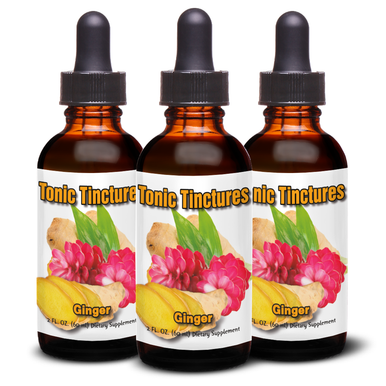
This is ginger liquid extract, the warming circulation tonic in a two-ounce bottle with sixty dropper servings.
One dropper is one press of the rubber bulb, which fills the dropper tube to just above half-way. That's thirty drops, which is also one milliliter.
To find a functional dose, start with a minimum dose of ten drops to one dropper and work up. We suggest ten drops to one to three droppers, taken one to three times per day, which is one hundred sixty-seven to three thousand milligrams daily.
Now, the bottle has two jobs, and it's worth knowing both. For immediate impact, hold one to two droppers under the tongue, sublingually, for fifteen to thirty seconds. Longer isn't necessary. For tonic building, to continually saturate your system and build deep, long-term health, take one to two droppers with meals, or up to two to three droppers with your largest meal.
Shake gently. Secure the lid and turn the bottle over back-and-forth three to five times to evenly distribute the liquid extract. Vigorous shaking oxidizes the volatile constituents, so don't do that.
By mouth: hold the liquid under the tongue for sixty to ninety seconds before swallowing, or mix the drops into two to four ounces of drinking water. Never boiling water. Boiling water alters the delicate volatile compounds, and this root carries a full set of them.
Timing, plain and simple. Take it on an empty stomach, up to thirty minutes before eating, for rapid mucosal assimilation, followed by a complete balanced meal to provide the heavy building blocks, the proteins and fats. With this root the order is the whole trick: the pungent bite arrives first, the enzymes and the conveyor gear up, and the meal walks in to find the crew already on shift. Prime, then eat.
One practical note, because it catches people off guard. A real ginger extract comes out sharp and warming, a genuine bite on the tongue and the throat. That's normal, not a defect. The bite is the fingerprint of the gingerols and the volatile oils in suspension. A pale, mild tincture would be the defect.
Storage is easy: an opened bottle holds about thirty to forty-five days. Unopened, about two years from the batch date. Keep it dark and cool.
If it didn't sit right, try again at a lower dosage and with a complete meal. Pungent roots are strong material, and some constitutions start lower. That's not a failure, that's finding your dose.
Some effects are immediate within the first few days. Consistency at a functional dose is what builds the rest.
6. How Long Until You Notice Results?
How long until you notice something from ginger? Most-asked question about any tonic, so here's the straight answer, in three windows. And like any digestion root, the first window is closer than most.
Some effects are immediate within the first few days, one to three days. That's the felt layer: the meal that doesn't put you to sleep, the easing after eating, the warmth that reaches the fingers. Digestion gives fast feedback, because you run the experiment three times a day.
Other effects and benefits are building, and become noticeable within one to two weeks. The steadier afternoon. The energy that holds because the meals are actually being used. The deeper work doesn't announce itself. It stacks up underneath, quietly, while you go about your life.
Then the long game. The systemic shifts arrive as you continuously saturate your body over a thirty to ninety day cycle. That's how every tonic works. You're feeding a system that puts materials to use on its own schedule. The body doesn't take orders. It takes deliveries.
A good tonic cycle is thirty to ninety days. That's not a sales line; that's just how tonics work. A tonic is a practice, not an event.
And you gotta take enough to make it work. This page says it plainly: the more you take, the better it works. Not enough doesn't work. Someone can only take so much of anything at any one time, so enough is the target, and consistency is the vehicle that gets you there.
Nothing is a quick fix. Anyone selling a quick fix in a bottle is selling snake oil. Tonics reward time, not dosage.
And keep the foundation under all of it: complete balanced meals, every time, with your protein and your fat. Skipping meals and eating incomplete meals will lead to ineffective results. The root rides on food; it doesn't replace it.
Benefits accumulate over time.
7. Safety and Quality
Is ginger safe, and how do you know you're getting a quality bottle? With this root, those are the same question, and the answer isn't a promise printed on a label. It's the honesty of the formulation, the sourcing, and the craft.
Start with the markers that matter, stated straight. Species named: Zingiber officinale, one hundred percent ginger root, organic, nothing else in the bottle but the liquid. Formulation named: both fresh and dried root, which is the rare marker in this category, because most ginger products are one or the other and the label usually doesn't bother saying which. Craft named: custom crafted, multi-step, and micro-batched, extracted with structured distilled water and triple filtered USP grade organic alcohol at thirty-five percent by volume, cold processed so the volatile oils and fragile constituents hold their integrity in fluid suspension for maximum absorption. The ratio is honest and heavy: four pounds of root to one quart of liquid, about twenty-eight thousand five hundred milligrams in every two-ounce bottle. Rapid, high bioavailability, and the full extraction and lab methods are published on our standards page, if you want to see exactly how the work gets done.
And your own tongue is the lab. A real ginger extract comes out sharp, warm, properly pungent, the kind of bite you can still feel in the throat a minute later. The more you taste the stronger it is. A clear, mild tincture is mostly what it tastes like: mostly nothing.
Now, honest use, plain and simple. These botanicals are food added to the diet, suitable for daily use, and generally this formulation may be taken with other dietary supplements. It works synergistically with other formulations and with your complete balanced meals underneath. And it pairs honestly with the kitchen counter's other warming favorite: turmeric and ginger travel together in this tradition, and they travel together in a bundle on the page, doing related jobs.
One piece of doctrine to keep the whole thing straight. Herbs are always more effective and more powerful in the long-term for supporting health, whereas drugs are always more effective and more powerful in the short-term for treating diseases, conditions, and any emergencies. Do not use an herb when one should use a drug, and do not use a drug when one should use an herb. Each has its own job, and this bottle's job is the long term.
And the price. You shouldn't pay mystique prices for ginger, because this is one of the world's great commodity spices, a farmed crop with a real market behind it, not some rare treasure. Pay for the root and the craft, not for the story.
Be the Best and Buy the Best.
It is important to do your own research. Health is the most valuable asset of one's life and the most valuable investment.
8. Fresh and Dried Roots
Why does the label say both fresh and dried ginger root? Because in this plant's long history, fresh and dried ginger were never just two formats. They're two materials, with two temperaments, and some traditions classed them as two different herbs. Let me walk it, because it's the formulator's craft move behind this bottle.
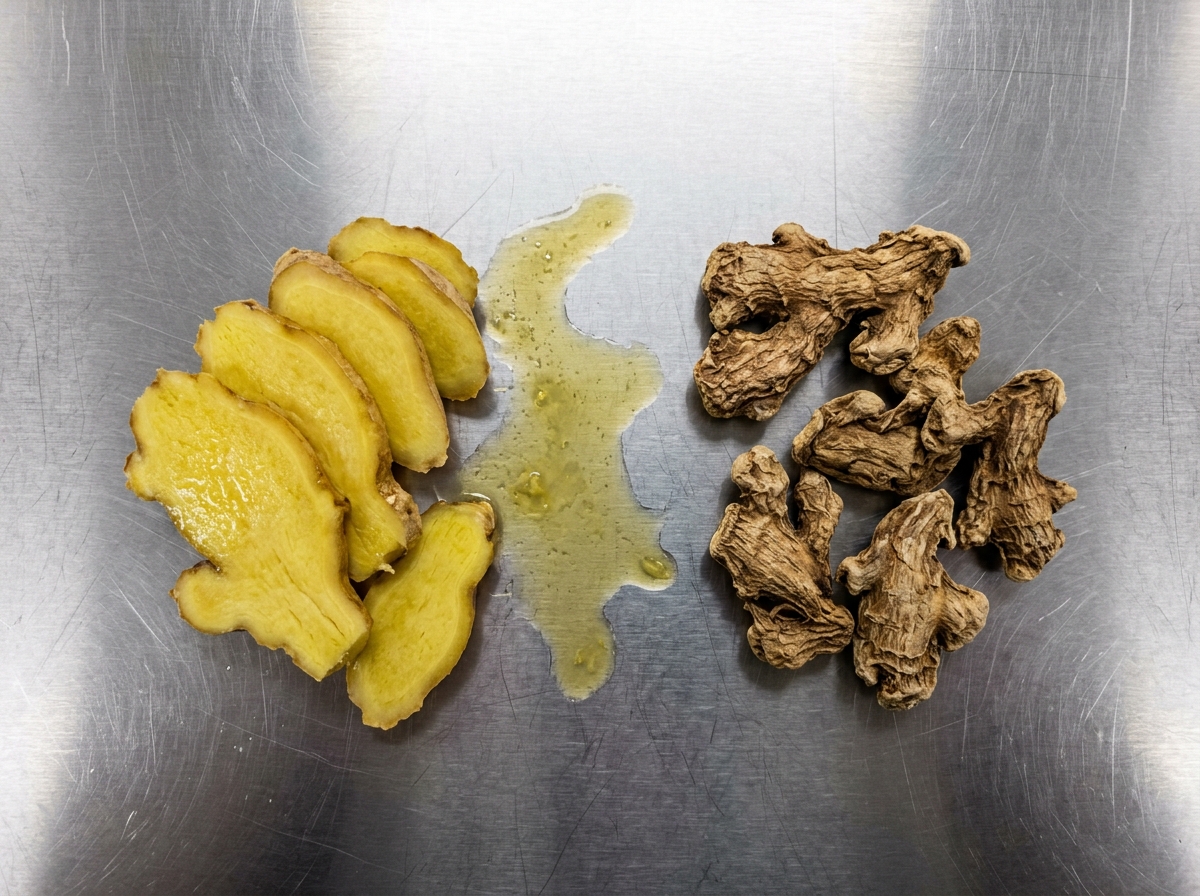
Start with the chemistry, which is genuinely elegant. Fresh ginger root carries gingerols, the sharp, bright bite of the raw knob. Leave that root to dry, and the gingerols slowly convert, molecule by molecule, into shogaols, which are sharper and hotter, a deeper burn than the fresh bite. Same plant, aging into its second personality. And apply real cooking heat, and you get the third member of the family: zingerone, the warm, sweet, round note that makes gingerbread smell like gingerbread. A chemical cousin of vanilla, born of the oven. One root, three constituents, and which one you meet depends on how the root was treated before it met you.
And the names carry the story. Gingerol is named from ginger itself, plain English. But shogaol is named from the Japanese word for ginger, shoga. The two lead constituents of this root carry the plant's name in two different languages, and the family portrait hangs in every pharmacology paper ever written about it.
Now the tradition, because the Chinese materia medica saw all of this centuries before the chemists wrote it down. In that system, fresh ginger and dried ginger are entered as separate herbs, with separate classings and separate jobs. Fresh ginger, sheng jiang, is the younger, quicker personality: it disperses, it warms the surface, and it settles the stomach, the first move of the kitchen. Dried ginger, gan jiang, is the deeper, hotter one: it warms the interior, the middle of the body, the slower and steadier burn. Two entries, one plant. The tradition read the chemistry correctly before chemistry could.
And that's the formulator's move in this bottle. Most ginger products pick a lane: fresh juice, dried powder, one format, one personality. This extract takes both roots and runs them through the same cold, multi-step process, so the fresh bite and the dried burn both arrive in the glass, held in fluid suspension. The full range of the plant, in one dropper.
One more piece, because it closes the loop. The Ayurvedic tradition, on the other side of the Himalayas, drew the same line: fresh ginger and dried ginger as two different materials for two different moments. Two great traditions, opposite sides of the mountain range, same root, same split, same conclusion. When two systems that never compared notes arrive at the same map, that's not coincidence. That's the plant insisting on itself.
Both hands of the root, in one bottle. That's the formulation.
Taken consistently over time.
Commit to the Practice
Tonic herbalism rewards consistency. The deep, systemic building work happens quietly over a 30 to 90-day cycle of continuous saturation. Supply the raw materials your body needs with our premium formulation.
Shop Ginger Extract