
Discover the honest truth about Goji—the classical blood tonic and grounding nourishment prized by the tradition for centuries. Whether you are looking to support clear vision after a long day at screens, cultivate an adaptive immune response, or replenish systemic energy reserves, the secret lies in the delicate, sun-dried berries of the Yellow River floodplain. This guide strips away the juice-marketing hype to teach you exactly what goji is, what its unique pigments do, and how to use it for deep, daily vitality.

I recorded these audios to directly answer the questions I've received most over the last 26 years. The text below contains the actual transcripts.
Jason J. DukeOwner / Artisan
Reference Directory

Commit to the Practice
Tonic herbalism rewards consistency. The deep, systemic building work happens quietly over a 30 to 45-day cycle of continuous saturation. Supply the raw materials your body needs with our premium 3-pack.
Shop the 3-Pack Formulation1. What is Goji, Exactly?
So, what is goji, exactly? That's the right question to start with, because this little berry carries a standing in the herbal world that its size completely hides.
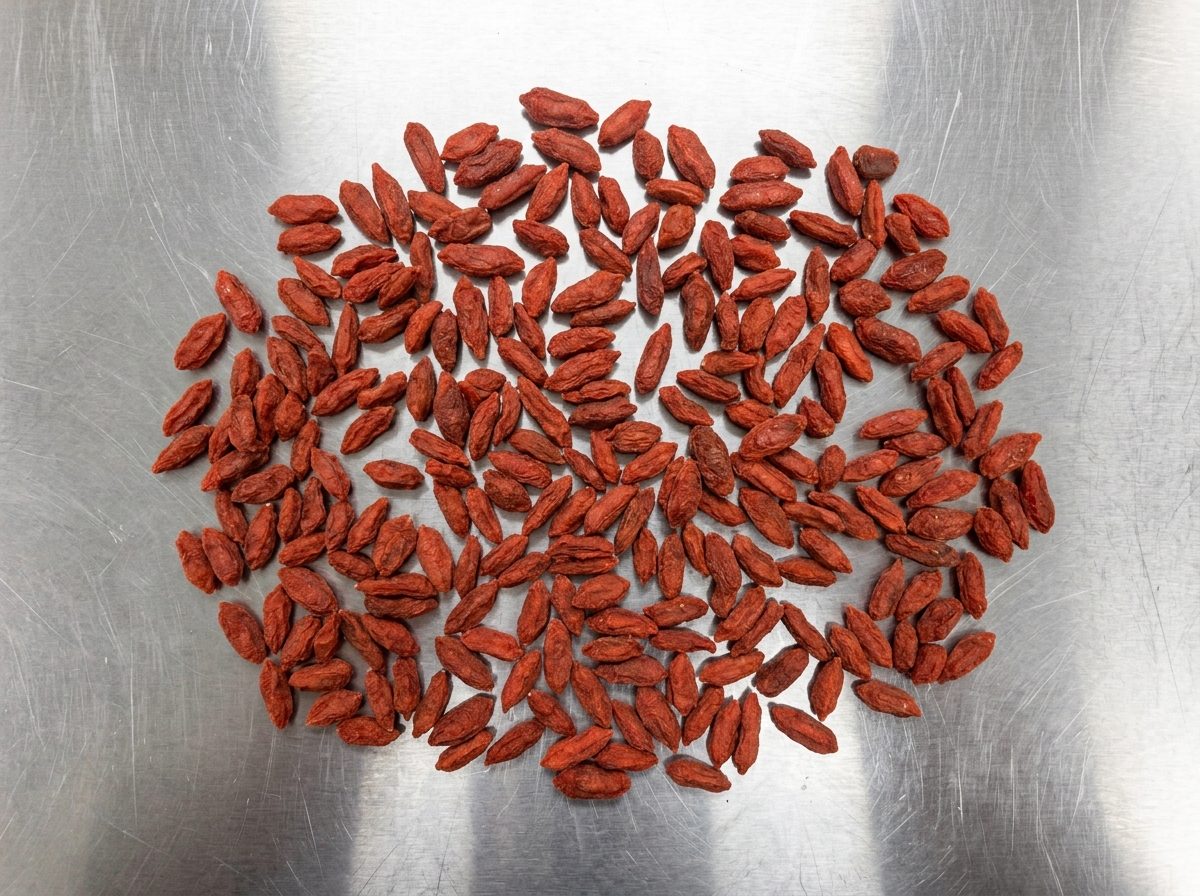
Goji is a liquid extract made from one hundred percent goji berries, organic, grown in China, sun-dried the traditional way, and nothing else in the bottle but the extraction. In our classification it's two things at once, and that's rarer than you'd think. It's a blood tonic, and it's grounding nourishment, cooling and calming in character. Most berries lean one direction. This one feeds the blood while it settles the system, which is exactly why the tradition kept it on the daily shelf.
But get this. These berries literally bleed. Slice a ripe goji open and your fingers come away stained red-orange, and the old herbalists read exactly that. A fruit that colors like blood is a fruit that feeds the blood. That's the doctrine of signatures, the tradition's old way of reading a plant by its appearance. And here's the part I love. The modern reading agrees. The pigment doing the bleeding is the constituent doing the work. The color is the activity, and we'll walk that mechanism later.
The record backs the name up, too. Goji sits in the superior class of the founding materia medica of Chinese herbalism, the top category, the food-class materials taken over a long life, and Li Shizhen recorded it again in his great encyclopedia of the fifteen-nineties. When a berry holds a top-class ranking for centuries, that's not a trend. That's a verdict.
Now, the constituent I'll name here is the one that carries goji's signature. They're called Lycium barbarum polysaccharides, and they're unique to this berry, the compound class the whole world knows goji by. The polysaccharides feed one side of the house, the pigments feed the other, and your body does the building with both.
And the honest boundary. Goji is not a stimulant. There's no jolt, no spike, no drop two hours later. It's food-class material, a tonic, and tonics work by supplying raw materials steadily, over time, at the pace your body sets. That's why goji is one of the tonics you can simply keep taking, as long as you like.
Take it for thirty to forty-five days at a functional dose and see how it works for you.
Taken consistently over time.
2. Where Does It Come From?
So where does goji come from, and why has it stood the test of time? The answer starts on a floodplain.
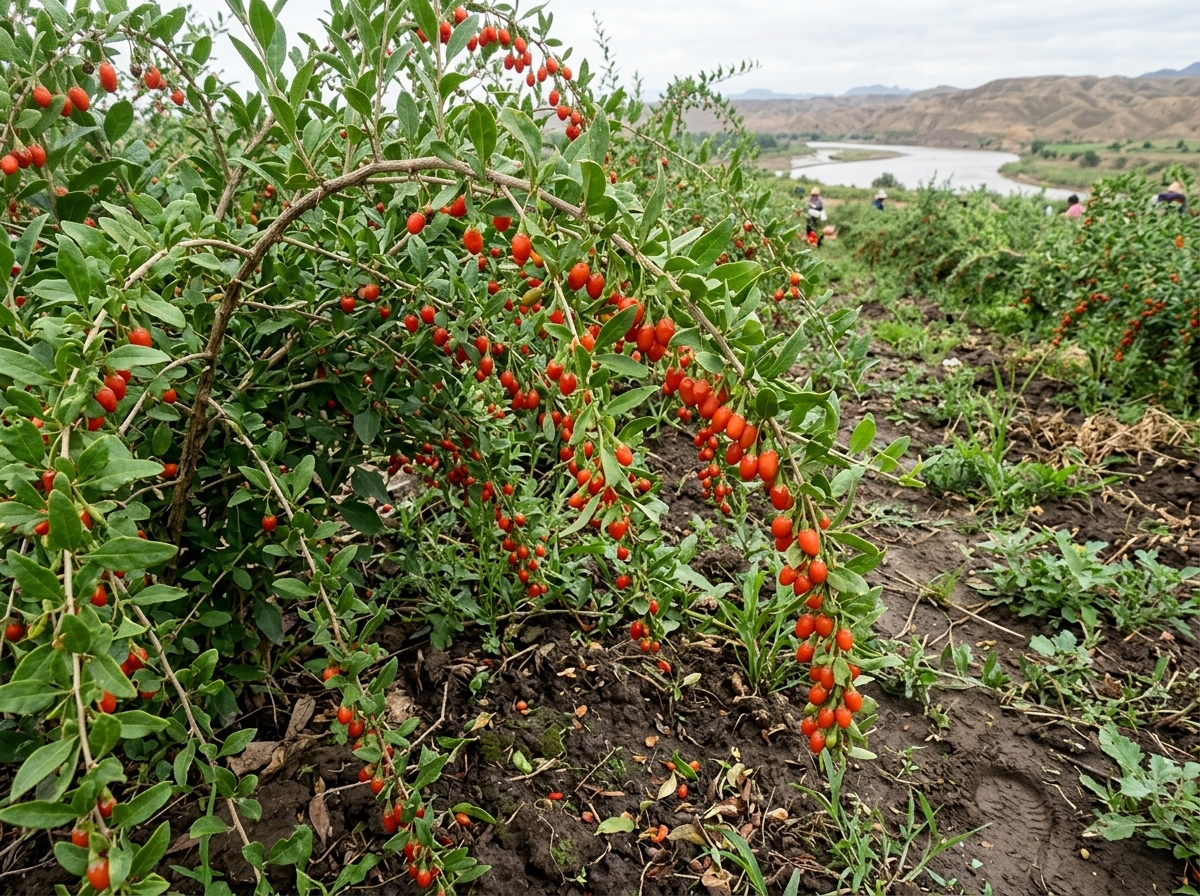
Did you know the goji heartland is Ningxia, the alkaline soil along the Yellow River in northern China? Hot days, cold nights, desert-edge growing country, and the berries from that region set the benchmark grade for the entire trade. The discerning Asian markets still pay for region the way wine buyers pay for valley. When a whole trade agrees on a homeland, that's worth knowing, and ours is grown right there, organic, in China.
Then the heritage, because this berry's history is a kitchen history as much as an apothecary one. In Asia, dried goji was never locked away in a medicine cabinet. It was eaten by the handful, dropped into soup pots, simmered into congee, steeped into teas and tonic wines. The grandmother's jar and the physician's shelf held the same berry. A food-class material for the whole household, taken for a lifetime.
But get this about the berry itself. Goji is too delicate to ship fresh. The skin is thin and the fruit spoils fast off the branch, so the harvest is sun-dried almost immediately, the only way a goji travels at all. Delicacy is why the world knows it dried. And the harvest is patient work. The berries ripen in waves, so the bushes are picked through again and again across the summer. Slow material, patient hands.
Our extraction respects all of that. The berries are one hundred percent goji, organic, sun-dried, and nothing else. We extract in structured distilled water and triple filtered USP grade organic alcohol, twenty-five percent by volume, cold processed, so the fragile constituents hold their structural integrity in fluid suspension for maximum absorption. The water pulls one class of constituents, the polysaccharide side, and the alcohol pulls the other, the pigment and flavonoid side, and the whole berry's synergy comes through into the bottle. Two pounds of berries to every quart of liquid.
And you can taste it. A real goji extract comes out dark and sweet, the berries' own sweetness, and the more you taste the stronger it is.
A river valley, a kitchen tradition, a delicate berry, and honest craft. That's where this comes from.
Taken consistently over time.
3. What Does It Actually Do?
What does goji actually do in your body? That's the question this whole page answers, so let me walk it properly, system by system, and the frame never changes. Goji supplies. Your body does the work.
First, the eyes, and this is the mechanism goji is famous for. Specific botanical pigments, the zeaxanthin and beta-carotene, assimilate directly into the ocular tissues and the retina itself. Not vaguely, not somewhere downstream. Directly into the tissue. That nourishment supports clear, comfortable vision and maintains the structural integrity of the eye, which matters most at the end of a long screen day, when the eyes are tired and the world is still sharp.
Second, the antioxidant defense, the buffer layer. Lycopene works alongside the berry's other antioxidant constituents to neutralize free radicals, the oxidative wear that comes from just being alive in a stressful environment. This maintains cellular health and integrity and buffers the body against everyday wear and tear. The plant made these pigments to shield the ripening berry from sun and oxidation, and delivered to your body, the fruit's own defense becomes yours.
Third, the immune channel, and here's where goji's signature compounds do their work. The Lycium barbarum polysaccharides cultivate a balanced and adaptive immune response. They help your body's natural defense mechanisms identify foreign material, facilitate containment and removal, and maintain tissue cleanliness. Balanced is the word. This is not a switch that gets flipped. It is nourishment for a system that stays responsive.
And underneath all three, the foundation work. The essential trace minerals maintain hydration for the skin, supporting elasticity and natural collagen production, so the nourishment shows on the outside too. And the broad spectrum of phytonutrients replenishes nutrient reserves, supporting energy metabolism and systemic balance across the whole body.
Now, a quick note here, because this is my favorite convergence in the whole materia medica. In classical Chinese herbalism, the liver system opens into the eyes. The old physicians linked blood nourishment to vision directly, nourish the liver blood, and the eyes receive it. So for centuries, the tradition routed this berry, a blood tonic, straight to the eyes. They could not name a carotenoid. They did not need to. The pigment chemistry arrives at the same tissue by a different road. When the old map and the new map mark the same spot, you pay attention to both.
That's the whole picture. The pigments feed the eyes, the antioxidants buffer the cells, the polysaccharides cultivate the defenses, and the minerals and phytonutrients feed the blood and the skin underneath it all.
Your body does the building. Goji keeps the deliveries coming.
Benefits accumulate over time.
4. Who Is It For?
Who is goji actually for? Let me paint the pictures, because this berry serves more kinds of people than most, and you will likely recognize yourself in at least one of them.
First, the office. Sitting all day and staring at screens is a modern demand the eyes were never designed for, and goji delivers the specific botanical pigments, the zeaxanthin and beta-carotene, that assimilate directly into the ocular tissues and the retina to support clear, comfortable vision. The bottle ends up right next to the keyboard, and the five o'clock eyes stop being a scheduled event.
Then the gamer, and this card is really the office card after hours. Staring at screens requires physical mechanics, actual work from the visual system, and the specific botanical pigments and broad-spectrum flavonoids neutralize free radicals to maintain cellular health and integrity, buffering against everyday wear and tear on the visual system. Same supply line, longer sessions. The bottle sits next to the controller.
Then the beauty crowd, waking up looking fresh and keeping up the skin. The essential trace minerals and antioxidant support nourish from within, maintaining hydration and elasticity, supporting natural collagen production, and fortifying the skin's natural barrier function for a vibrant appearance. This one lives on the bathroom vanity, and the mirror changes slowly, over the cycle.
Then the immunity card. Being around people in crowded spaces demands a responsive defense, and the unique polysaccharides cultivate a balanced and adaptive immune response, helping the body's natural mechanisms identify foreign material and maintain tissue cleanliness. That bottle waits in the medicine cabinet, season after season.
And the sage, reading and staying sharp and aging well. Replenishing energy stores maintains a clear sense of perception, and the vitamins and minerals support energy metabolism and systemic balance, promoting cellular health and longevity. The bookshelf bottle, next to the reading lamp.
The recovery day and the errand day ride the same line. Resting relies on natural regenerative processes, and this grounding botanical works with the liver and kidneys to metabolize cellular waste and rebuild physical resilience. Running errands and skipping the afternoon nap demands sustained energy, and the phytonutrients replenish the reserves that carry it.
Now, here's the thing worth noticing about that whole list. Not one of those cards is a men's card or a women's card. This berry was never gendered. In Asia it was a whole-household food, the grandmother's jar and the grandfather's teacup and the kid's congee, the same berry for everybody at the table. The modern shelf likes to sort people into aisles. The tradition just fed everybody.
So the short version. If your day is long on screens, long on crowds, long on years, or long on errands, this berry has a delivery for you.
Long term results bring the most satisfaction.
5. How Do You Take It?
Tonic Synergy & Timing: We remind you that with consistent use, benefits accumulate over time.
For rapid mucosal assimilation, we recommend taking it on an empty stomach (up to 30 mins before eating). Because Goji is a gentle, food-class material, timing is incredibly flexible—you can take it morning, midday, or evening. It works with your day instead of demanding a schedule.
This is goji liquid extract, the blood tonic and grounding berry in a two-ounce bottle with sixty dropper servings.
One dropper is one press of the rubber bulb, which fills the tube to just above half-way. That's thirty drops, which is also one milliliter.
To find a functional dose, start with a minimum dose of fifteen drops and work up. Our suggested range is fifteen drops to one to three droppers, taken one to three times daily, which is five hundred to three thousand milligrams a day. The more you take, the better it works, and consistency at a functional dose is the key.
Shake gently. Secure the lid and turn the bottle over back-and-forth three to five times to evenly distribute the liquid extract. Vigorous shaking oxidizes the fragile constituents, so gentle is the word.
By mouth, hold the liquid under the tongue for sixty to ninety seconds before swallowing, or mix the drops into two to four ounces of drinking water. Never hot water. Hot liquids damage the fragile constituents and lessen potency.
And here's the easy part, the part people love about this berry. Timing is yours. Take it whenever you want. Morning, midday, evening, it's food-class material, gentle and flexible, and it works with your day instead of demanding a schedule. That's what easy-to-take actually means.
Some effects are immediate within the first few days, one to three days. Other effects are building and are noticeable within one to two weeks.
Bingo, that's the whole practice.
Taken consistently over time.
6. How Long Until You Notice Results?
How long until you notice something with goji? Let me give you the honest timeline, because tonics keep a different calendar than stimulants, and this one keeps the friendliest calendar in the catalog.
Some effects are immediate within the first few days, one to three days. The felt layer tends to arrive first, a steadiness, a settled quality, and often the pleasant surprise of a sweet daily practice you actually look forward to.
Other effects are building and are noticeable within one to two weeks. That's the nature of a tonic. The pigments accumulate where they're headed, the reserves refill, and the changes show up in retrospect more than in the moment.
And the honest window to judge the whole project is thirty to forty-five days at a functional dose. That's the cycle to run before you decide what this berry does for you. And here's the part I love about goji. It's one of the tonics you can simply keep taking after that, indefinitely, as long as you like. Food-class material doesn't wear out its welcome. The tradition took it for a lifetime, and the tradition was right.
Nothing is a quick fix. Anyone selling you a quick fix in a bottle is selling snake oil. Tonics reward time, not dosage.
You gotta take enough to make it work, and consistency is the vehicle that gets you there.
Benefits accumulate over time.
7. Safety and Quality
Is goji safe, and how do you know you're getting quality? Let me answer both plainly, and the answer to the first question is the answer to the second.
Goji is a food-class berry. It has been eaten by the handful across Asia for centuries, simmered into soup, steeped into tea, served to whole households, and ranked in the superior class of the classical materia medica, the category of materials taken over a long life. The safety is in the classification. This is a berry that sits closer to dinner than to pharmacy, and that's the honest register for everything it does.
Now, quality, and here are the markers. One hundred percent goji berries, organic, grown in China, sun-dried. Structured distilled water and triple filtered USP grade organic alcohol at twenty-five percent by volume. Two pounds of berries to every quart of liquid, about fifty-seven thousand milligrams extracted into each two-ounce bottle. Cold processed, so the fragile constituents hold their integrity in fluid suspension for maximum absorption. The full extraction and lab standards are published on our standards page, because a craftsman hides nothing.
And the taste tells you it's real. The more you taste the stronger it is. A real goji extract is dark, sweet, and strong, the berries' own sweetness, the kind you can taste minutes after taking it. Your own tongue is the lab.
Now, a quick note here, because goji earned some weird baggage over the years. A while back this berry got famous through the juice-marketing wave, hyped numbers, expensive bottles, promises the berry never made. Tricky tricky. The wave passed through and moved on. And the berry is still standing, still in the pharmacopoeia, still in the soup pot. That tells you which part was real.
Herbs are more effective and more powerful in the long term for supporting health, whereas drugs are more effective and more powerful in the short term for treating conditions and emergencies. Use each for its own work.
Be the Best and Buy the Best. It is important to do your own research, and health is the most valuable asset of one's life and the most valuable investment.
8. Why Buy the Tincture Instead of Eating Berries?
Why buy the tincture instead of just eating the berries? That's the fair question, and I'd rather answer it straight than dodge it, because the honest answer is a good one.
First, the concession. The berries are wonderful, and the handful-a-day habit is real food. The tradition did exactly that for centuries, and nobody is arguing with the grandmother's jar. If you're eating goji by the handful, you're doing something right.
But here's the lowdown on what the extract actually does for you. Our ratio is two pounds of berries extracted into every quart of liquid, which lands about fifty-seven thousand milligrams of goji in a single two-ounce bottle. Run that math against the snack habit. Nobody eats two pounds of dried goji in a month. The handful is a snack dose of a serious material, pleasant, but light. The bottle is the berries, concentrated, at a dose that actually reaches a functional level.
And here's the second half of that math. Dried goji is a whole fruit, and the constituents ride with the fruit sugars. Eating your way up to a real daily dose means eating your way through a lot of dried fruit to get there. The extraction concentrates the botanical fraction, the polysaccharides, the pigments, the flavonoids, and skips the chewing. You get the delivery without hauling the whole freight.
Then the extraction does work your body would otherwise have to do. The dual solvent is the whole trick. Water pulls one class of constituents, the polysaccharide side, and alcohol pulls the other, the pigments and flavonoids. That pulling normally happens in your digestion, slowly, from a dried fruit. We do it before the bottle, cold processed, so the fragile constituents arrive intact, and your body starts from material that's already drawn.
And then the fast lane. Hold the liquid under the tongue for sixty to ninety seconds, and the small constituents begin assimilating directly, before digestion even starts. That's the fastest route the body offers, and it's the reason we suggest the hold.
A real goji extract proves itself in the glass. Dark, sweet, strong, the berries' own character, concentrated. The more you taste the stronger it is.
So that's the honest case. The berries are the food. The tincture is the berries, at a dose that works, delivered by the fast lane, without the sugar freight.
The bottle is the berries, concentrated.
Taken consistently over time.
9. Pigments Deep Dive (Eyes & Vision)
What do the pigments in goji actually do? This is the deep science section, and it starts with a fact so clean it sounds made up. It isn't.
Did you know that the yellow spot at the center of your retina is literally named for its pigment? The macula lutea, Latin for yellow spot, the tissue your sharpest vision depends on, holds the highest concentration of zeaxanthin anywhere in the body. The name and the nutrient are the same fact. The anatomists named the spot before anyone knew what colored it, and the color turned out to be a nutrient. That's the kind of thing I get excited about.
Here's the second fact, and it's the delivery problem. Your body cannot make carotenoid pigments. Not one. Every pigment in your eyes arrived through your diet, and only a select class of them crosses into the eye's central tissue at all. The eye's pigmentation is a supply question, and the supply comes from what you eat.
That's what makes goji's pigment profile remarkable. The zeaxanthin assimilates directly into the ocular tissues and the retina, nourishing the exact tissue that concentrates it. And it doesn't travel alone. Beta-carotene is the orange of carrots, lycopene is the red of tomatoes, and goji carries those pigment lines too, plus its signature zeaxanthin. Three of the great pigment families in one small berry.
Now, what the pigment does once it arrives, and this is the mechanism worth hearing. The macular pigments sit in front of the photoreceptors, the light-sensitive cells themselves, and they absorb the most scattered, most energetic band of visible light before it reaches them. Internal sunglasses is the plainest name for it. And the plant made these pigments for exactly that job, to shield the ripening berry from sun and oxidation. The fruit's sunscreen, delivered to your eye, does the same work at the same wavelength. The fruit's protection becomes yours.
And alongside the shading, the antioxidant work. The pigments and the berry's other antioxidant constituents neutralize free radicals, maintaining cellular health and integrity, buffering the visual system and the whole body against everyday wear and tear. Pigments are dual-purpose by nature. The color is the defense.
But get this, the convergence that ties the whole section together. In classical Chinese herbalism, the liver system opens into the eyes. The old physicians linked blood nourishment to vision directly, and they routed this berry, a blood tonic, to the eyes, centuries before anyone could name a carotenoid. The old map and the new chemistry mark the same spot. When that happens, you're not looking at a coincidence. You're looking at two traditions describing one truth from two directions.
The color is the activity. That's the whole lesson of this berry, and it's why the pigments get their own section.
Food for the eyes, from the fruit that feeds the blood.
Benefits accumulate over time.
10. Is It For Women? (And Everybody)
Is goji for women? Yes. And for everybody. And the honest answer to both halves of that question is one of my favorite things about this berry.
Start with the tradition, because the tradition never asked this question at all. In Asia, goji was a whole-household food, eaten by the handful, dropped in the soup pot, steeped in the teacup, simmered into congee for the kids. The grandmother's jar and the physician's shelf held the same berry. There was never a men's goji or a women's goji. There was just the berry, and everybody at the table got some.
And here's the history the beauty shelf forgot. In the palace culture of China, the complexion foods of the court women included this berry. Long before marketing found it, the women who had access to the finest materials in the empire kept goji on their list. That's not a trend claim. That's a record, and the beauty tradition and the blood tradition were writing the same page.
Because in the classical frame, beauty lives in the blood. The blood is the nourishing medium, and the face is the readout of the supply line. Complexion, clear eyes, strong hair, a steady spirit, all of it reads out from the same supply line. When the blood is well nourished, it shows on the outside. That's why the blood herbs and the beauty herbs were so often the same herbs. And it's why this berry bleeds red-orange when you slice it. The old herbalists read that color as the signature, a fruit that colors like blood feeds the blood, and the pigment doing the bleeding is the constituent doing the work.
Now the mechanism, in modern dress. The essential trace minerals and antioxidant constituents nourish from within, maintaining hydration and elasticity, supporting natural collagen production, and fortifying the skin's natural barrier function for a vibrant appearance. That's the Beauty card made honest, and it's the same supply line the court women were feeding.
And the deeper answer is that everything else this berry does was never gendered either. The same pigments serve the eyes of everybody at the screen. The same polysaccharides cultivate the defenses of everybody in the crowded room. The same phytonutrients replenish the reserves of everybody running the errand list. Women kept the beauty recipe the longest, and good for them. The recipe works for the whole table.
Same berry, same biology, same supply line.
Taken consistently over time.
Commit to the Practice
Tonic herbalism rewards consistency. The deep, systemic building work happens quietly over a 30 to 45-day cycle of continuous saturation. Supply the raw materials your body needs with our premium 3-pack.
Shop the 3-Pack Formulation