
Discover the classical truth about He Shou Wu—the legendary restorative adaptogen prized for over twelve hundred years. Whether you are looking to support vibrant hair and skin, ease daily tension, or rebuild your deep energy reserves, the secret lies in the classical curing of the prepared root. This guide strips away the marketing hype to teach you exactly what He Shou Wu is, what it does in your body, and how to properly use it for deep, systemic restoration.

I recorded these audios to directly answer the questions I've received most over the last 26 years. The text below contains the actual transcripts.
Jason J. DukeOwner / Artisan
Reference Directory

Commit to the Practice
Tonic herbalism rewards consistency. The deep, systemic building work happens quietly over a 90 to 180-day cycle of continuous saturation. Supply the raw materials your body needs to rebuild its reserves.
Shop the Formulation1. What is He Shou Wu?
What is He Shou Wu, exactly? That's the question worth starting with, because the answer begins with a surprise. The name is a story. He Shou Wu translates to Mr. He's black hair, and the herb is literally named after a man's result. We'll walk that legend properly in its own section, but hold that thought, because it tells you what kind of material this is. This is one of the most famous tonics in all of Chinese herbalism, and the name is the reputation.
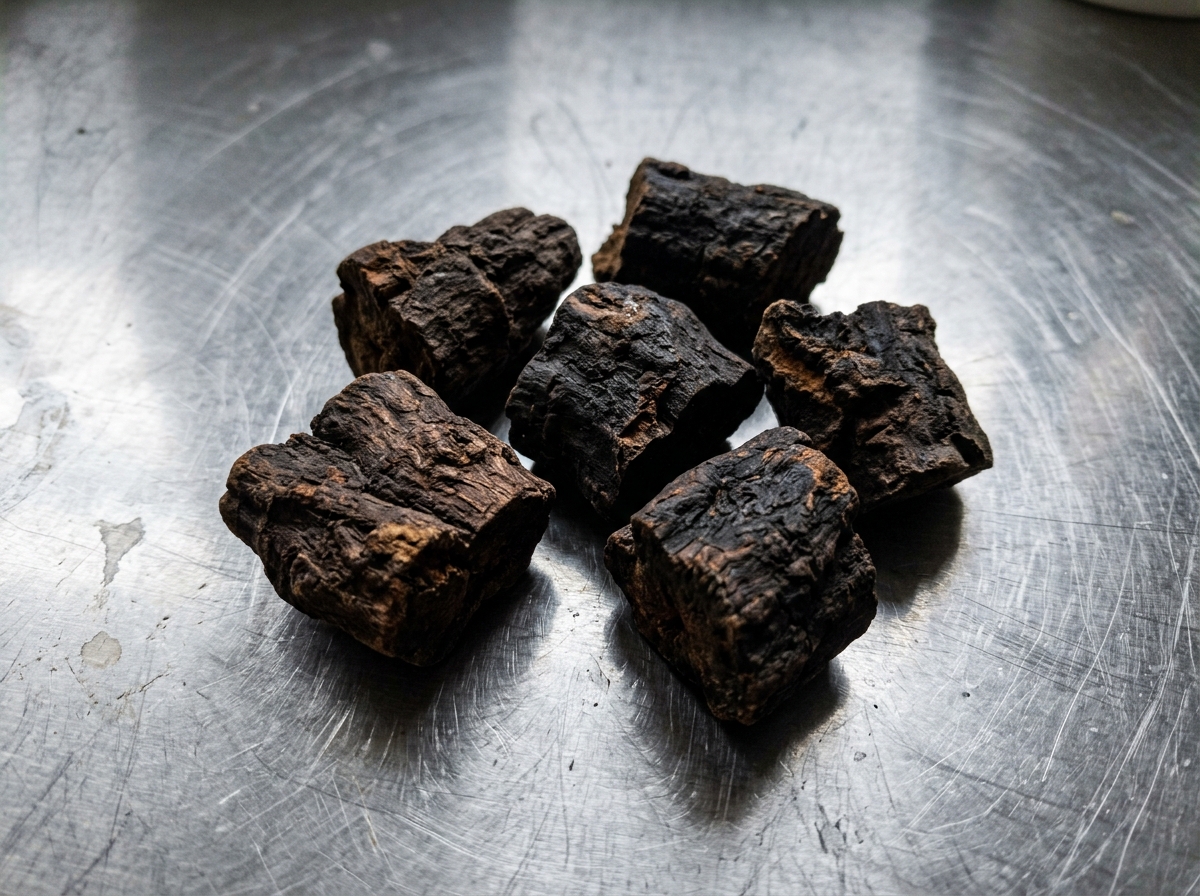
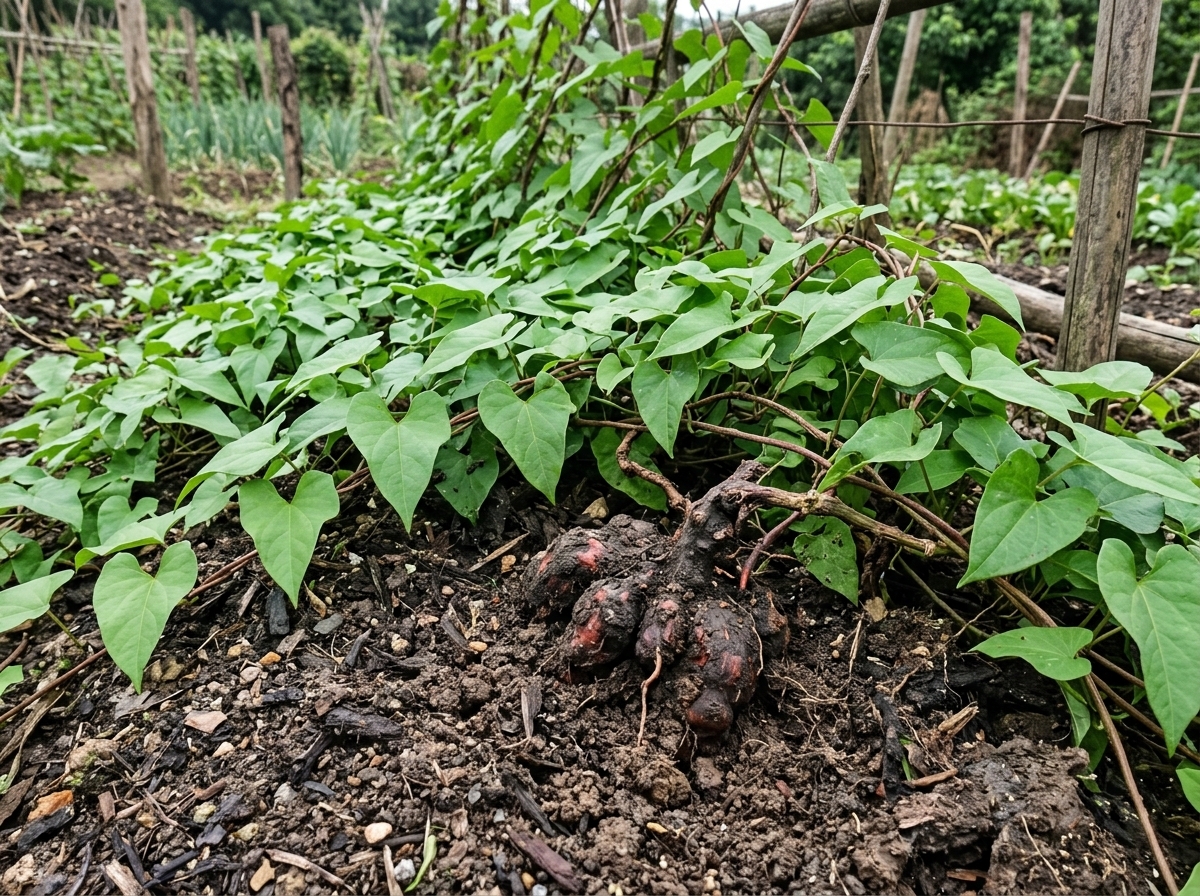
So, definition first. He Shou Wu is a liquid extract of the prepared root of Polygonum multiflorum, a vigorous climbing vine, and the medicine is the tuber. The plant climbs and sprawls with astonishing energy above ground, and it stores its reserve below, in a dense root that fills season after season. The root is the reserve, concentrated. Ours is one hundred percent prepared root, organically grown.
Now, the word prepared is doing real work in that sentence, and this is the detail most people miss. The raw root and the prepared root are different materials. In the tradition, the raw root runs clearing, and the prepared root is the tonic. The preparation is a cure with black bean soup, a traditional method generations deep, and that curing transforms the root's raw materials, concentrating the constituents the tradition prizes for restoration. Our bottle is the prepared root, the cured root, the classical tonic form. That distinction is the whole reason the word prepared sits on the label.
Classification before benefits, always. He Shou Wu is a restorative tonic and an adaptogenic herb, taken consistently over time to support, maintain, and promote health. Restorative is the key word. This is a root for refilling, not pushing.
And here's a teaser of what's inside. The signature constituents are resveratrol-like glycosides, the same compound family that made red wine famous. This root carries its own version of that family, and we'll walk what it does in your body in the mechanism section.
One thing it is not: a dye, a quick fix, or a stimulant. Nothing gets forced. The root supplies raw materials, and your body does the building, at its own pace, over time. That division of labor never changes.
A good tonic cycle is ninety to one hundred eighty days.
Taken consistently over time.
2. Where Does It Come From?
So where does He Shou Wu come from, and why has this root stood the test of time? The honest answer is that almost nothing in the herbal world has longer paper. This root is on record for over twelve hundred years, first written down in the Tang Dynasty by a scholar named Li Ao, and it has been cited continuously ever since. When a material is still being taken, still being respected, after twelve centuries, that is not a trend. That is a verdict rendered by an unbroken line of practitioners.
And here's the part I love. The tradition never treated preparation as optional. The classical method is a cure with black bean soup, and the curing is generations deep, worked out and refined over centuries. The raw root and the prepared root are different materials, and the tradition knew it, and the tradition wrote it down. Our formulation honors that method exactly, because craft like that is not something you improve. It's something you keep.
Now, a quick note here, because the shelf name deserves some honesty. You'll see this root sold as Fo-Ti, and Fo-Ti is not a Chinese name. It's not a translation. It's an American trade-name coinage from the nineteen-seventies. The real name is he shou wu, and the real name is a story, Mr. He's black hair. When a marketing department invents a name for a twelve-hundred-year-old root, that's tricky tricky.
Concerning our craft. The root is one hundred percent prepared he shou wu, organic, nothing else. We extract in structured distilled water and triple filtered USP grade organic alcohol, twenty-five percent by volume, cold processed so the fragile constituents hold their integrity in fluid suspension. The ratio is stated plainly: one pound of root to one quart of liquid, about twenty-eight thousand five hundred milligrams in every two-ounce bottle.
And you can taste the care. The more you taste the stronger it is. A real extract is dark and strong. If it's thin and faint, it is what it tastes like.
Twelve hundred years of record, a cure the tradition perfected, and craft that keeps it whole. That's where this comes from.
Taken consistently over time.
3. What Does It Actually Do?
What does He Shou Wu actually do in your body? This is the question the whole page answers, and the answer is a lesson in how restorative tonics work. So let me walk it properly, system by system, and keep one frame in view the whole way. The root supplies. Your body does the building. That division of labor never changes.
First, the antioxidant defense, because it runs underneath everything else. The dense profile of resveratrol-like glycosides and polyphenols provides potent antioxidants, and antioxidants neutralize free radicals, the oxidative wear that comes from just being alive in a stressful environment. This is managing oxidative stress at the cellular level, which maintains cellular health and integrity. The resveratrol family made red wine famous for the same reason. Practical translation: your cells get a buffer against everyday wear, and the buffer works quietly, all day, in the background.
Second, the stress response. The botanical pigments and polyphenols work with the nervous system and the endocrine system, the network of glands, promoting adaptive processes, so the body adapts to various challenges and maintains a balanced stress response. And notice the phrase on the label, because it matters: without over-stimulation. This root does not whip anything. It nourishes the systems that keep you level, and level is what you feel. Calm under load, tension easing, the day arriving loud and you staying steady.
Third, the structure. The essential trace minerals and B-vitamins supply the raw materials and building blocks for keratinized tissues, which are hair, skin, and nails, supporting tissue growth, maintenance, and repair. Your hair and nails are construction projects that never stop, and this is the mineral delivery arriving at the job site. That's why the beauty crowd reaches for this root, and we'll walk that fully in the hair sections.
And fourth, the delivery and the drainage. The glycosides promote healthy blood flow, maintaining the integrity and flexibility of your blood vessels, so oxygen and nutrients circulate efficiently to every cell, replenishing energy stores and cultivating core vitality. Meanwhile the flavonoids and trace minerals fortify the natural elimination pathways, the liver and kidneys, assisting in metabolizing cellular waste and maintaining tissue cleanliness. The deliveries come in, the waste goes out, and the site stays clean.
Under all of it, remember the frame. The root supplies the materials, and your body does the building, at its own pace, over time. No constituent forces anything. Everything feeds a system that was already designed to work.
Benefits accumulate over time.
4. Who Is It For?
Who is He Shou Wu actually for? Let me paint the pictures, because this root serves more kinds of people than most, and you will likely recognize yourself in one of them.
First, the person carrying the loud day. Chaotic schedules and dealing with people all day tests the nervous system, and this formulation works with it to maintain a balanced stress response and an easing of tension. The bottle ends up in the bottom desk drawer, and the day stops owning you.
Second, the beauty-minded. Waking up looking fresh and keeping up the skin is a supply-line project, and the essential trace minerals and B-vitamins here are the building blocks for natural collagen production and the structural integrity of hair, skin, and nails. The bottle lives on the bathroom vanity, and the mirror catches up over the months.
Third, the reader, the one staying sharp. The resveratrol-like glycosides support healthy epigenetic processes and provide antioxidant support, maintaining cellular health and longevity, which is the long game of a sharp mind. The bottle sits on the bookshelf next to the reading lamp.
Fourth, the lovers. Physical intimacy and the energy to connect run on circulation and warmth, and this root supports cardiovascular health and the circulation and warmth of the body, assisting natural recovery. The nightstand bottle, for both halves of the household.
And fifth, the one catching up on rest. Weekends off and recovery time are when reserves get refilled, and this root nourishes the endocrine system and replenishes nutrient reserves, promoting natural recovery and a genuine feeling of rejuvenation. The deep restorative, doing its quiet work.
Now, who is this not for? I'll tell you plainly. If you're shopping for a jolt, a stimulant, an overnight fix, this is the wrong shelf. This is a restorative tonic. It refills rather than pushes, and refill takes time.
The short version: the person who wants their stress balanced, their structure fed, their blood moving, and their reserves rebuilt, that is who this root is for.
Long term results bring the most satisfaction.
5. How Do You Take It?
Tonic Synergy & Timing: We remind you that with consistent use, benefits accumulate over time.
Because He Shou Wu is a deep restorative, the timeline matters more than the volume. Consistency is the variable that builds results. Take it alongside a healthy, protein-rich diet, as the trace minerals require physical building blocks to fortify structural tissues effectively.
This is He Shou Wu, the liquid extract of one hundred percent prepared polygonum multiflorum root, in a two-ounce bottle with sixty dropper servings.
One dropper is one press of the rubber bulb, which fills the tube to just above half-way. That's thirty drops, which is also one milliliter.
To find a functional dose, start with a minimum dose of ten drops to one dropper and work up. Our suggested range is ten drops to one to three droppers, taken one to three times daily, which is one hundred sixty to three thousand milligrams daily. And here's the practical guidance from experience: most people do well on two to three droppers a day. If you're more active, with more going on, you might go up to four. More than that is generally unnecessary, because with this root, the time frame matters more than the volume.
Shake gently. Secure the lid and turn the bottle over back-and-forth three to five times to evenly distribute the extract. Vigorous shaking oxidizes the volatile constituents, so gentle is the word.
By mouth, hold the liquid under the tongue for sixty to ninety seconds before swallowing, or mix the drops into two to four ounces of drinking water. Never hot water. Hot liquids damage the fragile constituents and lessen potency.
Concerning timing, this formulation is flexible. It can be taken at any time. It is often consumed with meals and food, because the food aids the assimilation of the essential trace minerals. And if you're eating well, three full meals a day, an empty stomach works fine too. The important thing is not which meal you choose. The important thing is that you don't miss. Consistency is the variable that builds the results.
Some effects are immediate within the first few days, one to three days. Other effects are building and are noticeable within one to two weeks.
Bingo, that's the whole practice.
Taken consistently over time.
6. How Long Until You Notice Results?
How long until you notice something from He Shou Wu? Let me give you the honest timeline, because restorative tonics keep a different calendar than stimulants.
Some effects are immediate within the first few days, one to three days. The felt layer usually arrives first, a sense of steadiness, tension easing, the day going loud and you staying level.
Other effects are building and are noticeable within one to two weeks. That's the nature of a restorative. The reserves are refilling, and refill is gradual by design.
And then the deep work. A thirty-day run will show you the first layers, and thirty-day is a fair entry point. But the honest cycle for this root is ninety to one hundred eighty days. This is a deep restorative tonic, and deep restoratives keep a long calendar. The structural work, the hair and skin and nails, the deep reserve rebuilding, happens over the long cycle, as you continuously saturate the body and keep the deliveries coming. The body doesn't take orders. It takes deliveries.
Here's the mistake I've watched a hundred times. Someone takes it for two or three weeks, feels the first layer, decides the bottle showed them everything, and quits at the doorstep of the deep work. Don't stop at the doorstep. The deep work is behind that door.
And you gotta take enough to make it work, but with this root, enough is not a big number. Most people run two to three droppers a day, four if they're highly active, and more than that is generally unnecessary. The variable that matters is not volume. It's the time frame, and not missing doses.
Nothing is a quick fix. Tonics reward time, not dosage.
Benefits accumulate over time.
7. Safety and Quality
Is He Shou Wu safe, and how do you know you're getting a quality bottle? Both questions deserve straight answers.
First, quality, because with this root, quality begins with a distinction. The raw root and the prepared root are different materials. The raw root runs clearing and is traditionally used short-term. The prepared root, cured with black bean soup, is the tonic, the classical restorative form. Our bottle is one hundred percent prepared he shou wu root, organically grown, and nothing else. Correct form, whole root, no fillers. That is where quality starts with this material, and it's the first question worth asking of any bottle on the shelf: is this the prepared root or not?
Then the craft. We extract in structured distilled water and triple filtered USP grade organic alcohol, twenty-five percent by volume, cold processed to preserve the integrity of the fragile constituents in fluid suspension, so they're well-absorbed by the body. The ratio is stated plainly: one pound to one quart, about twenty-eight thousand five hundred milligrams in every two-ounce bottle. And the full specifications of our extraction and lab methods are published on our standards page, because a craftsman hides nothing.
The taste tells you it's real. The more you taste the stronger it is. A real extract of this root is dark and strong, the kind you can taste minutes after taking it. If it's thin and faint, it is what it tastes like.
Now, the honest register. This is a steady, nourishing botanical, not an aggressive one. It supplies raw materials, and your body uses them at its own pace. Herbs are more effective and more powerful in the long term for supporting health, whereas drugs are more effective and more powerful in the short term for emergencies. Use each for its own work. Do not use an herb when one should use a drug, and do not use a drug when one should use an herb.
Be the Best and Buy the Best. Selecting the right supplement is a personal responsibility, and it is important to do your own research.
Health is the most valuable asset of one's life and the most valuable investment.
8. The Legend (Mr. He's Hair)
Did you know this herb is named after a man's hair? Not a place, not a discoverer, not a Greek god. A man's hair. And the story behind that name is one of the best-known legends in all of Chinese herbalism, so let me tell it properly.
The Tang Dynasty, over twelve hundred years ago. A man surnamed He, and the record describes him honestly: old before his time, frail, run down, his hair gone white early, and unable to father children. In the language of that tradition, his deep reserves were spent. Then, on the advice of a sage, or in some versions a dream, he takes to the mountains and finds a strange vine with a dark tuberous root, and he begins taking that root, consistently, over years.
And here is what the story says happened. His hair returned to black. His vitality returned. He fathered children, and the record says several of them. And he lived, the story claims, past one hundred and twenty years of age, healthy to the end.
Now, the honest frame, because I don't sell mystique. A legend is a legend, and every founding story survives in versions that disagree on details. But get this. This one was written down by a scholar named Li Ao, in the Tang Dynasty, and it has been cited continuously for twelve centuries. A culture that kept meticulous records watched this root for that long, ranked it among their great restoratives, and put a man's result in its name. He Shou Wu, Mr. He's black hair. The name is the claim, and the claim is the record.
The story also tells you who this root is for, if you read it plainly. The run-down. The prematurely aged. The person whose reserves are spent and whose body is asking to be refilled. That was Mr. He, and that is the picture the tradition has carried ever since.
And one more piece of honesty, because the shelf deserves it. You'll see this root sold as Fo-Ti, and that name is a nineteen-seventies American trade coinage. The real name is the legend. When you know the story, you know what you're holding.
A twelve-hundred-year reputation, earned one restored head of hair at a time.
Taken consistently over time.
9. Liver Health & Drainage
Can He Shou Wu really support liver health? Yes, and the reason is worth walking properly, because the liver is one of the most underrated organs in the whole conversation about feeling good.
Here's the anatomy lesson first. Your liver is the body's chemical processing plant. Everything you absorb from the gut, every nutrient, every compound, passes through the liver first, and the liver metabolizes it, prepares it for use, and processes the cellular waste the body generates around the clock. The kidneys filter and carry the rest out. Together they are the natural elimination pathways, the drainage system of the whole operation. That system runs twenty-four hours a day whether you think about it or not. Detox isn't an event you schedule. It's Tuesday.
Now, what this root does for that system. The flavonoids and essential trace minerals in prepared he shou wu fortify the natural elimination pathways, the liver and kidneys, assisting in metabolizing cellular waste and maintaining tissue cleanliness. Not a flush, not a purge, not a wave. The drainage channels get supported so they keep running clean, day after day. Constant quiet maintenance beats the occasional flood, every time.
And here's the piece that ties it together, because the antioxidant story is a liver story too. The processing plant takes oxidative wear from doing its own work, the same wear your cells take from just being alive. The resveratrol-like glycosides and polyphenols provide potent antioxidants that neutralize free radicals, managing oxidative stress at the source. Fewer pollutants entering the stream, cleaner channels carrying the ones that arrive anyway. That's a system, not a scrub.
But get this, because the old tradition drew a line from the liver all the way to your hair. In classical Chinese herbalism, the liver stores the blood, and the hair is called the surplus of the blood. Glossed plainly: when the blood runs well nourished, it shows in the hair, and when it runs thin, that shows too. The modern version says something compatible: the minerals and circulation the liver-and-blood system runs on are the same supply line the follicles draw from. Two vocabularies, one observation.
So the honest picture is this. The liver keeps the site clean. The antioxidants buffer the wear. The minerals feed the pathways. And the whole supply line runs onward to the structure, which we'll walk in the hair sections.
Clean channels, quiet work, fed pathways. That's liver support, honestly told.
Benefits accumulate over time.
10. Does It Restore Hair Color?
Does He Shou Wu really restore hair color? That's the question behind more searches on this root than any other, so let me answer it the way I'd answer it on the phone. Not a dye, and not overnight. But the mechanism is real, and it's worth understanding, because once you understand why hair grays, you'll understand what a nourished follicle can do with the right materials.
First, why hair actually goes gray. Your hair gets its color from melanocytes, specialized cells in the follicle that build melanin, the same pigment family that colors your skin and eyes. With age and oxidative wear, those cells slow down and their numbers thin. And here's the part most people have never heard: hydrogen peroxide builds up inside the follicle and bleaches the melanin from the inside. Your hair literally bleaches itself. Gray hair is oxidative wear you can see on your head.
Now, what this root carries. The signature constituents are resveratrol-like glycosides, the same compound family that made red wine famous, and the most studied member of this root's family is a molecule called tetrahydroxystilbene glucoside, TSG for short. Modern research programs have taken a serious interest in that molecule concerning hair color specifically, studying it for supporting tyrosinase, the enzyme that builds melanin, and for buffering that hydrogen peroxide effect. Narrated plainly, that's the research record. I don't sell it as a promise, but that's what the laboratories have been looking at, and it lines up exactly with what the tradition claimed the root does.
And the supply line matters just as much, because pigment is a construction project. Melanin is built from raw materials: tyrosine, an amino acid that comes from protein, plus copper, iron, and the B-vitamins. The root supplies essential trace minerals and B-vitamins directly, and the resveratrol-like glycosides promote healthy blood flow, so the delivery system reaches every follicle. The protein has to come from your plate. You cannot paint a house from an empty paint truck.
The old tradition drew the same map in different words. The liver stores the blood, and the hair is the surplus of the blood. Feed the blood, and it shows in the hair. Twelve hundred years later, the biochemistry says something compatible: fed follicles, buffered wear, supported pigment enzymes.
So the honest answer: this is nutrition for pigment, not paint. And nutrition, at the follicle's own pace, takes a full season. The protocol for that is its own section, and it's next.
Long term results bring the most satisfaction.
11. The Hair Protocol
If you're taking He Shou Wu for your hair, here's the honest protocol, because this is the use where cutting corners fails people, and I'd rather lose the sale than let you buy the wrong expectation.
The headline first. Pigment is rebuilt at the follicle's own pace, and that pace is slow. A good tonic cycle is ninety to one hundred eighty days. The thirty-day bottle is the entry point, not the project. Hair grows on its own calendar, roughly half an inch a month, and the pigment machinery inside the follicle turns over slower than the hair itself. If you're serious about the hair project, you're signing up for two full cycles of the calendar, minimum, and anyone selling you faster is selling you a dye.
The dose. Two to three droppers a day covers most people. If you're more active, with more going on, you can run up to four. More than that is generally unnecessary, because with this root the time frame matters more than the volume. The variable that builds results is never missing a dose, not taking heroic ones.
Now, the stack, and this is where people sabotage themselves. The root supplies essential trace minerals and B-vitamins, but the pigment project needs the full crew, so add a B-vitamin supplement alongside. The B-vitamins are the cofactors of pigment and keratin production, and a dedicated supplement closes the gap the diet leaves. If you take other hair-support supplements, they stack on top of this cleanly. Generally, this formulation may be taken with other dietary supplements.
And the foundation under all of it: protein, enough of it, daily. Melanin is built from tyrosine, which comes from protein. Keratin, the hair shaft itself, is protein. Your hair is a protein project wearing pigment, and the body can't bank protein, so it needs deliveries at every meal. Complete balanced meals, protein every time, and the tonic added to the meal, supplying its unique constituents to the same construction site.
The honest expectation, stated plainly. No tonic can force pigment into a follicle that isn't fed. The root supplies materials, the meals supply the lumber, the supplements cover the cofactors, and the body does the building, at its own pace, over the long cycle. That's the whole protocol, and there's no shortcut hiding behind it.
Skipping meals and eating incomplete meals will lead to ineffective results.
Long term results bring the most satisfaction.
12. Relaxation & Unwinding
Can a tonic actually help you unwind after work? That's a fair question, because most of what gets sold for relaxation either sedates you or does nothing, and neither one is what a working person needs at six in the evening. He Shou Wu does something different, and the distinction is worth understanding.
Here's the key phrase, and it comes straight off the label: a balanced stress response without over-stimulation. That little phrase is the whole register of this root. It works with the nervous system to promote a sense of calm and an easing of tension, but it doesn't push you down, and it doesn't knock you out. Adaptogens maintain a balanced state. They don't act as sedatives. You stay present, you stay functional, you just stop carrying the day on your shoulders.
Picture the transition, because this is where the root earns its place. You walk in the door carrying the whole day, the schedule, the people, the decisions, and the body doesn't know how to put it down. The constituents work with the nervous system and the endocrine system, the network of glands, promoting adaptive processes, so the body shifts out of the defensive posture and back toward its own middle. Tension eases. The shoulders come down. The evening gets to actually be an evening.
The bottle lives on the coffee table, and unplugging becomes something the body knows how to do again.
And there's a deeper layer, the recovery layer, because unwinding is half the picture. Nutrient reserves get depleted by exertion and replenished by food, rest, and tonics. The weekend off, the caught-up sleep, the deliberate recovery time, that's when the reserves refill, and this root nourishes the endocrine system and replenishes nutrient reserves, promoting natural recovery and a genuine feeling of rejuvenation. Rest is where the rebuilding happens. The tonic feeds the rebuild.
So no, this isn't a sedative and it isn't a nightcap. It's the root that helps the body remember where its own middle is, after work, on the weekend, and every evening in between. Calm without sedation. Recovery without crashing.
Meet life's demands, and then put them down gracefully.
Taken consistently over time.
13. Adrenal & Reserve Tonic
Is He Shou Wu an adrenal tonic? Yes, and that's not marketing, that's the classical record, so let me translate it properly, because the old frame and the modern one are describing the same thing.
In Chinese herbalism, the kidney system governs jing, and glossed plainly, jing is the deep essence, the reserve the body runs on. Jing runs the adrenals, the reproduction, the bones, the marrow, and the pace of aging itself. Spend the reserve faster than you refill it, in their language, and the whole tower leans: fatigue, worn-down reserves, running on empty. He Shou Wu is one of the chief jing tonics of that tradition, the classical material for refilling the deep reserve. In modern dress, that's an adrenal-and-reserve tonic, and the two vocabularies map onto each other almost line for line.
Now the mechanism, told plainly. The botanical pigments and polyphenols work with the endocrine system, the network of glands, adrenals included, providing essential nourishment for adaptive processes, helping the body adapt to various challenges and maintain a balanced stress response. The glands are factories. The root delivers nourishment to the loading dock. When the glands are fed, the stress response stays proportional, and stamina becomes something the body builds rather than borrows.
And that's the distinction that matters in the modern world, because most of the energy market sells borrowed energy. Caffeine forces output, whips the adrenals, and drops you lower than where you started, two hours later. Anyone who's ridden that cycle all day knows the shape of it. Stimulants impersonate energy. A jing tonic refills the tank it's drawn from. Different product, different job, and the adrenal answer is refilling, not whipping.
Now, a quick note here, because this is where people sabotage themselves. The glands build their hormones from raw materials, and did you know that testosterone and estrogen are over ninety-five percent cholesterol by weight? Hormones are built, not summoned. Taking an adrenal or endocrine hormone tonic without saturated fat and cholesterol will negate the effects. Eggs with soft yolks, so as not to denature the cholesterol. Salt your eggs for stomach acid to absorb the protein, vitamins, fat, and cholesterol. And keep the B-vitamins coming, because they're the cofactors the whole energy-and-hormone economy runs on, and this root carries them alongside its unique constituents.
Feed the glands, refill the reserve, keep the deliveries coming. That's what an adrenal tonic actually is, and this root has been doing that job since before the word adrenal existed.
Hormones need a constant supply of raw materials.
Taken consistently over time.
14. Longevity & Epigenetics
Did you know He Shou Wu is one of the most-searched longevity herbs in the world? That's not an accident of marketing. That's a twelve-hundred-year reputation colliding with the internet age, and the reason people search it is the reason the Tang Dynasty wrote it down: this is the tradition's great root for aging well.
Now, the honest reframe first, because the phrase anti-aging is snake-oil register and I won't use it. Nothing stops the calendar, and anyone selling that is selling you nothing. The honest phrase is aging well, and aging well is cellular health and longevity, which is a supply-line project, and supply-line projects are exactly what tonics are for.
So, the mechanisms, and this root covers the ground from four directions at once. First, the antioxidant defense. The dense profile of resveratrol-like glycosides and polyphenols provides potent antioxidants that neutralize free radicals, the oxidative wear that accumulates from just being alive, managing oxidative stress and maintaining cellular health and integrity. The same compound family that made red wine famous, carried in this root's own version.
Second, the delivery system. The glycosides promote healthy blood flow, maintaining the integrity and flexibility of your blood vessels, so oxygen and nutrients reach every cell efficiently. Aging well runs on delivery, and this is delivery being maintained.
Third, the stress balance. The constituents work with the nervous and endocrine systems to maintain a balanced stress response, without over-stimulation, and a body that stays level spends less of its reserve. Conservation is longevity's quiet half.
And fourth, the deep layer, the one the modern world is just learning to talk about. The resveratrol-like glycosides support healthy epigenetic processes, and glossed plainly, epigenetics is the maintenance of healthy gene expression, the cell reading its own instructions correctly as the years accumulate. Supporting that maintenance is supporting the long game at its root.
And the tradition made its own longevity statement the best way it knew how: a legend. A man who took this root and lived, the story claims, past one hundred and twenty years. Myths embellish, records endure, and this root carries both.
The long view is the only honest view here. A good tonic cycle is ninety to one hundred eighty days, and the practice is the point: consistent doses, complete balanced meals, the reserves kept full, year over year. That's not a fountain of youth. That's a fed body aging on its own best terms, which is the whole thing anyone can honestly buy.
Long term results bring the most satisfaction.
Commit to the Practice
Tonic herbalism rewards consistency. The deep, systemic building work happens quietly over a 90 to 180-day cycle of continuous saturation. Supply the raw materials your body needs to rebuild its reserves.
Shop the Formulation