
Discover the honest truth about Jiaogulan—the cooling, easygoing adaptogenic leaf prized by the mountain villagers of southern China. Whether you are looking to support clear breathing, manage oxidative stress, or maintain a balanced, even keel during long days, the secret lies in the wild-sourced five-leaf vine. This guide strips away the marketing hype to teach you exactly what Jiaogulan is, how its convergent chemistry mirrors ginseng, and how to properly use it as a highly digestive daily tonic.

I recorded these audios to directly answer the questions I've received most over the last 26 years. The text below contains the actual transcripts.
Jason J. DukeOwner / Artisan
Reference Directory

Commit to the Practice
Tonic herbalism rewards consistency. The deep, systemic building work happens quietly over a 30-day minimum cycle of continuous saturation alongside meals. Supply the raw materials your body needs with our premium 3-pack.
Shop the 3-Pack Formulation1. What is Jiaogulan, Exactly?
What is Jiaogulan, exactly? Let me give you the plain answer first, because the plant is simpler than its reputation, and the reputation is worth hearing about anyway.
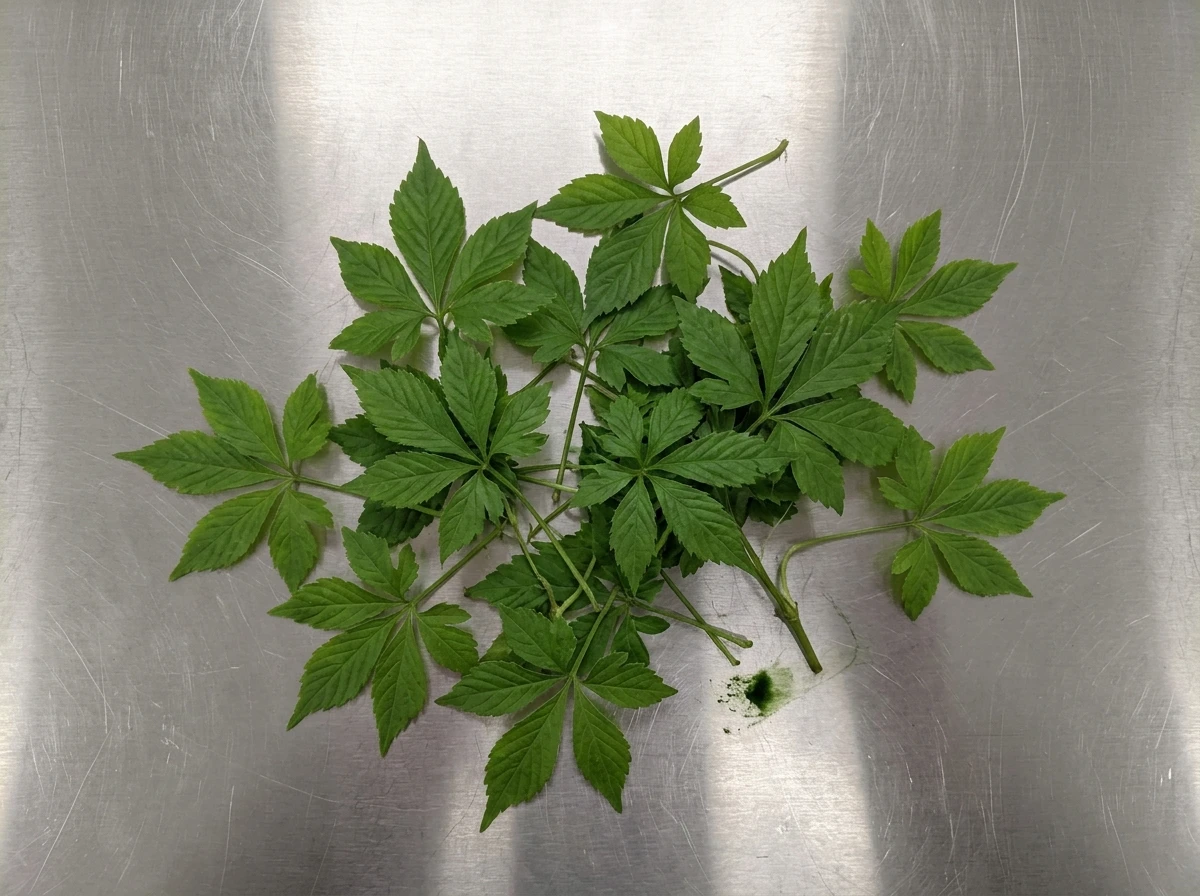
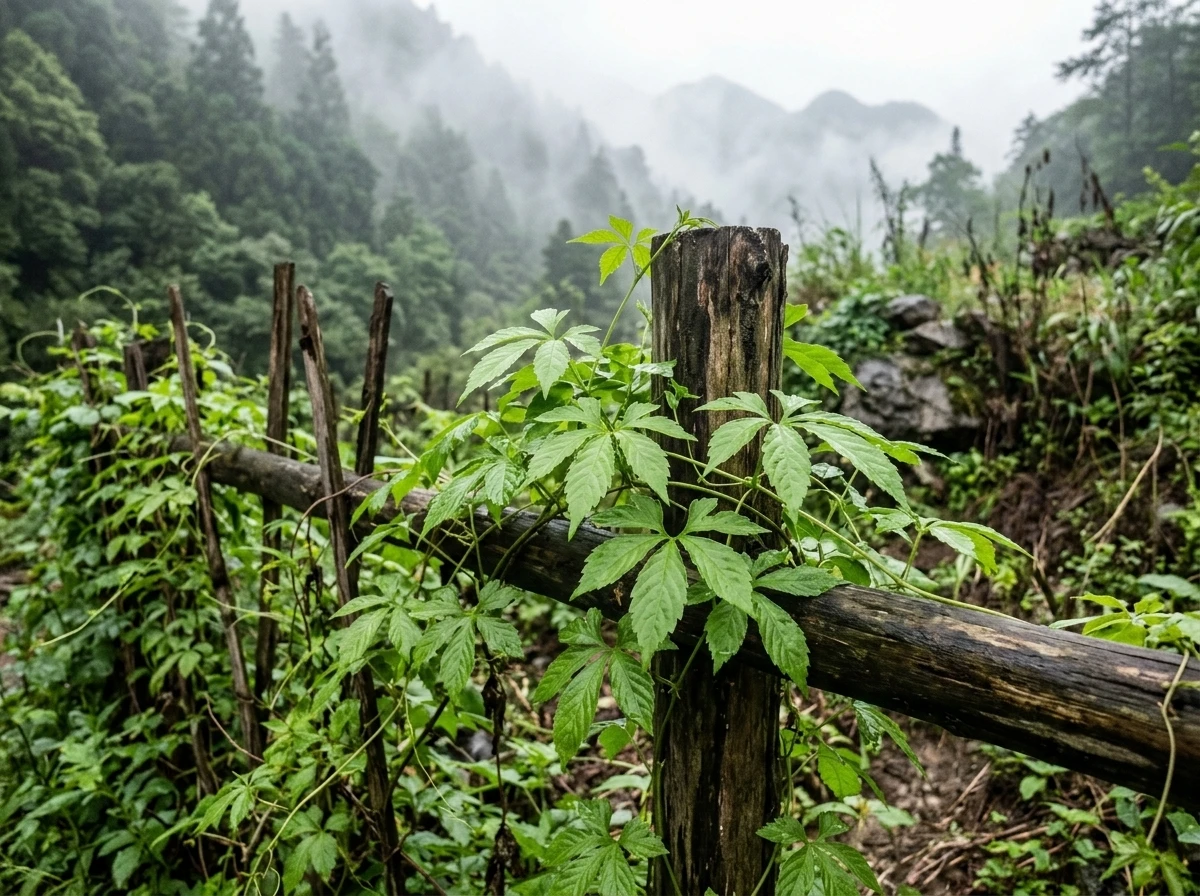
Jiaogulan is a leaf. That is the honest start. A delicate climbing vine that grows wild in its home range across the mountains of southern China, and the medicine is all in the leaf, picked and brewed and taken. The species name is Gynostemma pentaphyllum, and the name is a field guide in itself. Penta means five, and phyllum means leaf, so the vine carries its leaves in little fans of five, like an open hand reaching along a fence line. Once you can read that leaf, you can spot the plant anywhere.
Now, did you know the Chinese call this vine xiancao? It translates to the immortal herb, the herb of the immortals of the old Daoist legends. That is a big name for a little vine, and the folk tradition hung it there anyway, and held it there, for generations. We will come back to where that name came from, because the true story is better than the legend.
Classification before benefits, always. Jiaogulan is an adaptogen and a tonic. And we find that its character runs cooling and easygoing, which makes it a quiet cousin to American ginseng in temperament, though it is very much its own plant. Its own identity is plain to state. This is a breathing-and-energy herb, with some stamina behind it. Air and work. That is the core of it.
And here is the part I like most. This is ginseng-family chemistry from a leaf. The vine carries constituents called gypenosides, and those are among the raw materials your body uses to adapt to everyday wear and tear. And because the leaf grows back after harvest, it is a different economy entirely from a root that spends years underground. Ginseng-family work, at a leaf price. We will walk that properly later.
A couple of honest boundaries, stated plainly. Jiaogulan is not a stimulant. No jolt, no spike, no drop two hours later. And it is not the big imperial root, and it does not pretend to be. This is the villagers' daily drinking herb, and it earns its place by being easy to live with.
One more thing worth knowing up front. This is a highly digestive herb. It works with food, taken eating. The meal is the partner here, not the furniture.
Taken consistently over time.
2. Where Does It Come From?
Where does Jiaogulan come from, and why has it stood the test of time? The honest answer to that is one of my favorite stories in the whole catalog, because this herb's pedigree is not the palace. It is the teapot.
Start with the record, stated plainly. The great classical materia medicas, the books that canonized ginseng and astragalus, barely mention this vine. It was never an imperial medicine. It never moved as tribute. It was a folk herb of the southern mountains, a villagers' tea that the great books simply walked past. And the tradition that kept it alive was never the physicians. It was the kitchens, continuously, for centuries. I find that a better story than the palace, honestly. The books missed it, and the people kept drinking it anyway.
But get this. In the nineteen-seventies, a Chinese census turned up something odd. Clusters of very old people in the mountain villages of the southern provinces, Guizhou among them, living long in places with no pharmacies to speak of. Researchers went looking for what those villages shared, and the shared habit was a daily pot of jiaogulan tea. The local mountain tea, cheaper than green tea, brewed fresh, drunk morning to night, with meals and through the working day. Modern research into this plant began with a headcount, not a marketing plan. That is how revivals should start.
And that tea tradition tells you how to use it, too. This was always a drinking herb, taken with food, through the day, as ordinary eating with extraordinary leaf in it. Nothing about that has changed.
On our end, the sourcing is stated plainly. One hundred percent Jiaogulan leaf, wild sourced, and nothing else in the bottle. The craft honors the material. Structured distilled water and triple filtered USP grade organic alcohol at twenty-five percent by volume, the water pulling one class of constituents and the alcohol pulling the other, so the whole leaf lands in the extract. And the ratio is stated honestly. One pound of leaf to one quart of liquid, about twenty-eight thousand five hundred milligrams in every two-ounce bottle.
You can taste the care, too. The more you taste the stronger it is. A real extract of this leaf comes out green-gold and strong, sweet and bitter together, the way the tea always tasted. If it is thin and faint, it is what it tastes like.
The books missed it. The villages kept it. The census found it. That is where this comes from.
Taken consistently over time.
3. What Does It Actually Do?
What does Jiaogulan actually do in your body? This is the question worth walking properly, so let me take it system by system, the way the material deserves. And the frame never changes. The leaf supplies. Your body does the work.
Start with the signature constituents, the gypenosides, and here is the part that explains this whole herb. Gypenosides are saponins, the same family of chemistry that ginseng's ginsenosides belong to, and two plants that are not related at all, a root and a vine leaf, independently arrived at the same family of molecules. Chemists call that convergent chemistry, and it is the reason a humble vine leaf can do root work. Now, what the gypenosides do. They work synergistically with the neuroendocrine system, your network of glands, supplying raw materials for hormones, and by supplying those materials they promote glandular function and help your body maintain a balanced stress response through long, loud days. Practical translation. The day keeps coming, and you stay level.
Second, the antioxidant layer. The leaf carries a broad spectrum of phytonutrients, including polyphenol bioflavonoids and potent antioxidant constituents, and their job is cleanup. They neutralize free radicals to manage oxidative stress, the everyday wear and tear that comes from just being alive and working hard. And by buffering that wear, they support cellular repair and regeneration, which is the maintenance side of the whole operation. Practical translation. Training, long shifts, hard seasons, and the cells get their repair crews fed.
Third, the breath, and this is the core identity of the herb. The unique constituents nourish the respiratory system and the lung tissues, maintaining clear and open airways and supporting efficient gas exchange, the oxygen moving in and the waste moving out. In the folk memory, this was the laborers' cup, the tea that carried the reputation for easy breath through a long day on the hillsides. The villagers' observation and the modern framing agree completely. Air and work.
Fourth, energy. All of that runs into energy metabolism, sustained energy production, what the old herbalists called core vitality and what I would call having something left at four in the afternoon. The glands are fed, the cells are maintained, the breath is open, and the output holds.
And one more layer, stated honestly because it matters. This is a highly digestive herb. It nourishes the natural elimination pathways, the liver and kidneys, promoting healthy bile production and flow to maintain tissue cleanliness. Translation. It works with the meal. It helps the body take the meal apart and keep the house clean. That is why this herb travels with food, always.
The leaf supplies, across all of it. Glands, cells, breath, and the kitchen. Your body does the building.
Benefits accumulate over time.
4. Who Is It For?
Who is Jiaogulan actually for? Let me paint the pictures, because this herb serves a quieter crowd than the big roots, and the people it serves, it serves well.
First, the worker. Standing on your feet and working a physical job continuously depletes physical resilience, day after day. This formulation supports energy metabolism and replenishes energy stores, cultivating the core vitality needed to meet the day's demands. And there is folk pedigree behind this card, because in the southern mountains this was the laborers' tea, the cup that carried the workday. The bottle ends up in the lunch pack, with the meal, because this herb works with food.
Then the one at elevation. Adjusting to thin air requires efficient gas exchange, and the unique constituents nourish the respiratory system and lung tissues to maintain clear and open airways and healthy oxygenation. If your life puts you up high, this is your leaf, and it always has been.
Then the long-day thinker. Running a business, handling problems all day, requires sustained mental acuity. By supporting the neuroendocrine system, these adaptogenic constituents promote sustained energy and cognitive focus, so you can process information effectively, decision after decision. The bottle rides in the laptop bag, and the afternoon holds its shape.
And the everyday crowd around all of them. Running errands and skipping the afternoon nap demands consistent metabolic output, and this botanical promotes energy regulation to maintain a balanced state and the sustained energy to engage in daily activities with vitality. That is the plainest card and the truest one.
Now, who is this not for? I will tell you plainly, because honest routing is part of the job. If someone is shopping for the big warming drive, the imperial root, the deep jing-building project, that is red ginseng's work, and we craft that one too. Jiaogulan is the easy daily one, the cooling, even-keel cousin. Different shelf, different job. Right herb, right day.
And a note on the practice, because it comes with the herb. This one is taken with meals. It is highly digestive, and it does its best work alongside food, complete and balanced. The leaf and the meal meet in the middle.
Steady breath, steady energy, even keel. That is who it is for.
Taken consistently over time.
5. How Do You Take It?
Tonic Synergy & Timing: We remind you that with consistent use, benefits accumulate over time.
Because Jiaogulan is highly digestive, it must be taken alongside a complete balanced meal (proteins, fats, and carbohydrates). Do not take it on a truly empty stomach. For mucosal assimilation, hold the liquid under the tongue before swallowing, then proceed directly with your meal.
This is Jiaogulan liquid extract, one hundred percent wild sourced Gynostemma pentaphyllum leaf, in a two-ounce bottle. Here is how you take it.
One dropper is one press of the rubber bulb, which fills the tube to just above half-way. That is thirty drops, which is also one milliliter.
To find a functional dose, start with a minimum dose of ten drops to one dropper and work up. Your unique constitution and needs set the dose, and the label only bounds it.
We suggest ten drops to one to three droppers, taken one to three times per day, which is one hundred sixty to three thousand milligrams daily. The more you take, the better it works, and consistency at a functional dose is the key.
Shake gently. Secure the lid and turn the bottle over back-and-forth three to five times to evenly distribute the liquid extract. Gentle is the word.
By mouth, hold the liquid under the tongue for sixty to ninety seconds before swallowing, or mix the drops into two to four ounces of lukewarm drinking water. Never hot water. Hot liquids damage the fragile constituents and lessen potency.
Now timing, and this one matters more than usual. This is a highly digestive herb, so take it with meals, every time. In the villages it was a drinking tea, brewed and taken with food through the day, and the tradition and the chemistry agree here. The complete balanced meal is not optional furniture with this leaf. The meal and the herb work together, and skipping meals will work against you. Simply put, do not take jiaogulan on an empty stomach. Take it eating.
Storage is simple. An opened bottle holds about thirty to forty-five days. Unopened, about two years from the batch date. Keep it dark and cool.
Some effects are immediate within the first few days, one to three days. Other effects are building and are noticeable within one to two weeks.
Bingo, that is the whole practice.
Taken consistently over time.
6. How Long Until You Notice Results?
How long until you notice something with Jiaogulan? Let me give you the honest timeline, because tonics keep a different calendar than stimulants.
Some effects are immediate within the first few days, one to three days. With this herb, the felt layer tends to be the breathing and the even keel. The air feels easier, the day feels level, and that sense arrives first.
Other effects are building and are noticeable within one to two weeks. That is the nature of a tonic. The glandular support, the antioxidant layer, the steady energy underneath, all of that accumulates quietly, and you notice it in retrospect more than in the moment.
The key is consistency. Benefits accumulate over time. The more often you take it, with food and a steady routine, the more the constituents build and the more the leaf works for you. And with this herb, the with food part is not a suggestion. It is highly digestive, and it relies on food added to the diet to replenish nutrient reserves. Skip the meals and you are asking the leaf to work alone, and it was never built for that.
For a real run, give it thirty days minimum. And this is one of the easy ones, because it is a food-class drinking herb, and you can take it as long as you like. The villagers drank it morning to night for a lifetime. Nothing is a quick fix, and nothing here pretends to be. Thirty days minimum, taken eating, as long as you like.
Taken consistently over time.
7. Safety and Quality
Is Jiaogulan safe, and how do you know you are getting a quality bottle? Let me answer both plainly, because with this herb the answers are refreshingly simple.
Start with what is in the bottle. One hundred percent Jiaogulan leaf, the species Gynostemma pentaphyllum, wild sourced, and nothing else. No fillers, no companions, no engineering. Correct species, whole leaf. That is where quality starts, and with a single-ingredient bottle, it is easy to verify.
Then the sourcing story, and there is a sustainability angle here worth knowing. A ginseng root takes years underground and the plant dies at harvest. A jiaogulan vine is a leaf crop. The vine grows back after harvest, season after season, and the wild population is harvested the way a meadow is grazed, not the way a mine is worked. A leaf you can pick again is an honest economy, and it is one of the reasons this herb has always been the inexpensive route into ginseng-family chemistry. You should not pay ginseng prices for ginseng-family work from a vine leaf, and with us, you do not.
Then the craft. Structured distilled water and triple filtered USP grade organic alcohol at twenty-five percent by volume, cold honest extraction, the water pulling one class of constituents and the alcohol pulling the other, so the whole leaf's synergy lands in the bottle. The ratio is stated plainly and it is honest. One pound of leaf to one quart of liquid, about twenty-eight thousand five hundred milligrams in every two-ounce bottle. Our full extraction and lab standards are published on our standards page, because a craftsman hides nothing.
And the taste tells you it is real. The more you taste the stronger it is. A real extract of this leaf is green-gold, strong, sweet and bitter together. Your own tongue is the lab.
One piece of doctrine to keep the frame honest. Herbs are more effective and more powerful in the long term for supporting health, whereas drugs are more effective and more powerful in the short term for treating conditions and emergencies. Use each for its own work. Do not use an herb when one should use a drug, and do not use a drug when one should use an herb.
Honest leaf, honestly wild, honestly made, honestly priced. Be the Best and Buy the Best.
It is important to do your own research. Health is the most valuable asset of one's life and the most valuable investment.
8. The Herb of Immortality
Why do the Chinese call Jiaogulan the herb of immortality? That is a fair question, because the name is a big promise, and the story behind it is better than the legend.
The name is xiancao. It translates to the immortal herb, and the xian are the immortals of the old Daoist legends, the mountain sages who lived far past the ordinary span. The folk tradition hung that name on a humble climbing vine, and held it there, generation after generation. Now, I will be honest with you, no leaf makes anyone immortal, and the villagers who named it knew that too. The name is a compliment, the way a compliment works in an old tradition. It says this herb belongs in a long life, taken daily, for the whole of it.
And here is the part that makes the story true. The great classical books barely recorded this plant. It was never imperial medicine. The physicians wrote past it, and the villages kept drinking it, morning to night, a sweet-bitter mountain tea brewed with meals and carried into the fields. The pedigree of this herb is not the palace. It is the teapot, and the teapot never stopped.
But get this. In the nineteen-seventies, a Chinese census found unusual clusters of very old people in the mountain villages of the southern provinces, Guizhou among them. Researchers went looking for what those villages shared, and the shared habit was that daily pot of jiaogulan tea. That observation is where modern research into this plant began. And the chemistry followed, with Japanese scientists, who knew the same vine as amachazuru, the sweet tea vine, confirming the ginseng-like saponins in the leaf. So the full arc runs like this. The villagers drank it for centuries. The census asked why they were so old. And the chemists explained what was in the cup.
And the lesson I take from that arc is simple. The immortality herb turned out to be the everyday herb. Not rare, not imperial, not mystical. A leaf the villagers could afford, brewed daily, taken with food, for a lifetime.
That is the practice, and it is an easy one. Complete balanced meals, the leaf taken eating, and patience.
Taken consistently over time.
9. Is It a Ginseng Alternative?
Is Jiaogulan really a ginseng alternative? That is the question worth answering carefully, because the answer is yes and no at the same time, and both halves are interesting.
Start with the no, stated plainly. Jiaogulan is not ginseng. It is a vine leaf, a different plant entirely, no relation, growing wild in the southern mountains while ginseng roots mature underground for years. It never appeared in the classical rankings, never moved as tribute, never carried the imperial name. Botanically and historically, these are different plants from different worlds.
Now the yes, and it is the good part. The chemistry overlaps. The leaf carries gypenosides, saponins from the same dammarane family as ginseng's ginsenosides, and several of the molecules are identical between the two plants. Two unrelated plants independently arrived at the same chemistry. That is why the southern Chinese call this vine the southern ginseng, xinan cha, and why the reputation stuck. It is not marketing. It is convergent chemistry, and it is real.
And here is the temperament piece. We find that jiaogulan runs cooling and easygoing, which puts it closest to American ginseng in character, the cooling cousin rather than the warming drive of red ginseng. But it is its own herb, with its own identity. Its core is breathing and energy, air and work, with some stamina behind it, and a digestive character that ginseng does not carry. This leaf travels with food, always. It is highly digestive, taken eating, the meal as the partner.
So the honest routing, told evenly. If you want the big warming drive, the imperial root, that is red ginseng's job. If you want the cooling, calming cousin, that is American ginseng. And if you want the easy daily one, ginseng-family chemistry from a leaf that grows back after harvest, brewed by villagers for centuries and taken as long as you like, that is jiaogulan. Different economy, different price, same family of work.
And that is the price honesty, and it is a compliment to the leaf. You should not pay root prices for leaf chemistry, and you do not have to.
Right leaf, right job, right price.
Taken consistently over time.
Commit to the Practice
Tonic herbalism rewards consistency. The deep, systemic building work happens quietly over a 30-day minimum cycle of continuous saturation alongside meals. Supply the raw materials your body needs with our premium 3-pack.
Shop the 3-Pack Formulation