
Discover the honest truth about Male Silk Moth—one of the most remarkable and historically potent materials in the entire classical catalog. Harvested at the absolute peak of its vitality, this unique restorative tonic is packed with essential amino acids, zinc, and naturally occurring lipid messengers to support profound circulation, sensory sensitivity, and robust glandular function. This guide breaks down exactly what Male Silk Moth is, what it does in the body, and how to harness its warming, invigorating drive.

I recorded these audios to directly answer the questions I've received most over the last 26 years. The text below contains the actual transcripts.
Jason J. DukeOwner / Artisan
Reference Directory
Commit to the Practice
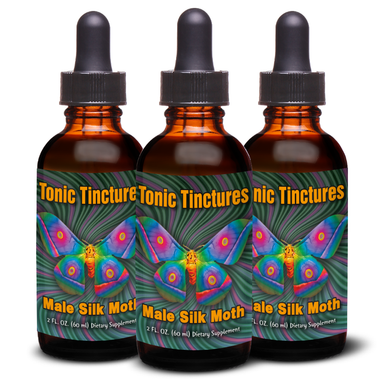
Tonic herbalism rewards consistency. The deep, systemic building work happens quietly over a 45 to 90-day cycle of continuous saturation. Supply the raw materials your body needs with our premium 3-pack.
Shop the 3-Pack Formulation1. What is Male Silk Moth, Exactly?
What is Male Silk Moth, exactly? That's the right question to start with, because this one surprises everybody, and once you understand the biology, the surprise turns into something else entirely. Yes, you read that right. This is a tonic made from moths. And it's one of the most remarkable materials in the entire catalog.
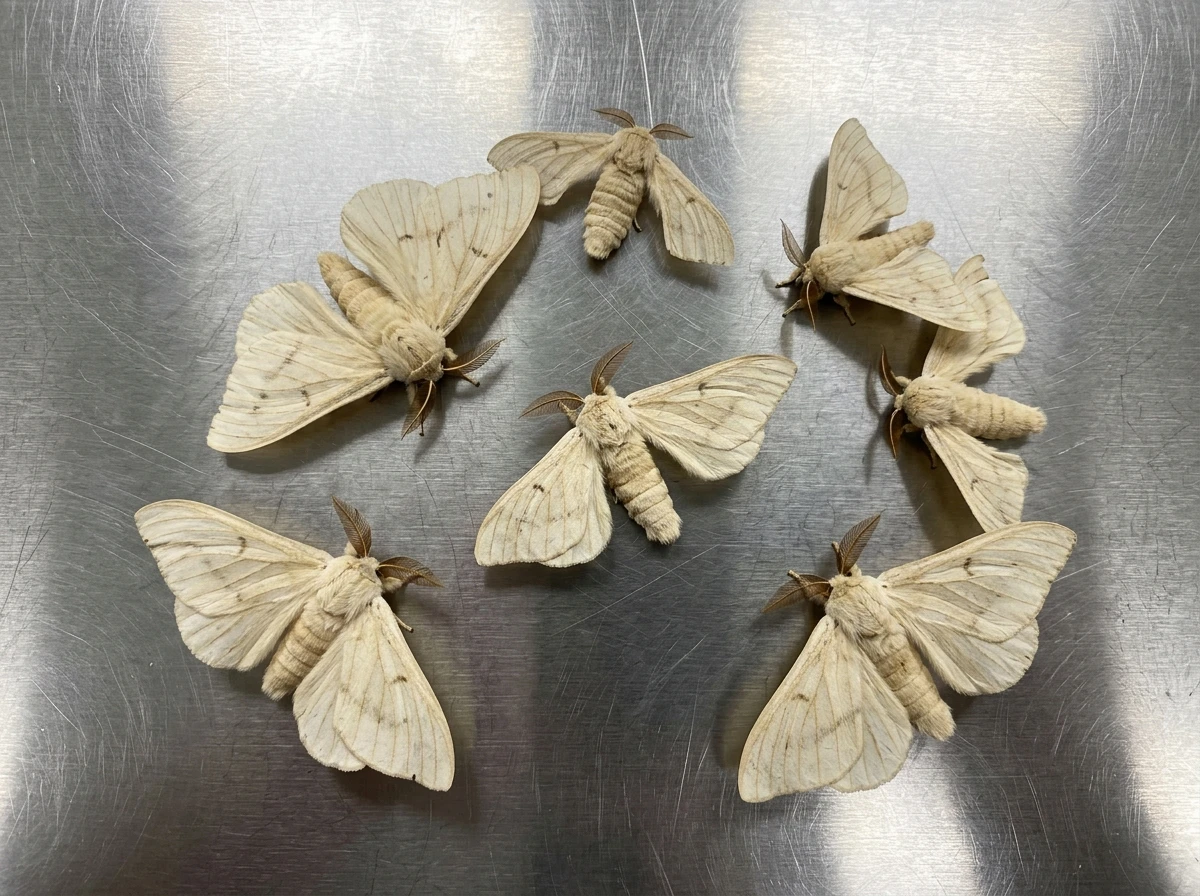
Let me tell you about the creature first, because the creature is the whole lesson. The adult silk moth has no working mouthparts. It cannot eat. It cannot drink. It emerges from its cocoon carrying everything it will ever have, a lifetime of reserves stored in one body, and it lives only a handful of days. The caterpillar did all the eating and all the storing, and the adult spends it all in a single week.
And here's what that week is for. The adult moth's entire existence is devoted to one act: mating. It emerges loaded, finds its partner, does its work, and its purpose is complete. Everything about this creature, every reserve in its body, is aimed at connection. The old Chinese herbalists read that signature the way they read every plant and animal they studied, and they reached the obvious conclusion. A creature whose whole biology is connection became the tonic for connection.
Classification before benefits, always. Male silk moth is a restorative tonic, invigorating in character, warming and output. The Chinese called that class yang, the warming, building, invigorating force. This is a sex tonic in the oldest and most honest sense of the phrase, and I'll walk every mechanism with you as we go.
The material itself is a dense biological package. The moth carries all eighteen essential amino acids, the full set your body cannot make on its own. It carries prostaglandins, which are lipid messengers built from fatty acids. It carries zinc and chromium, the gland minerals. We'll walk what each of those does in the body section, and it's a longer list than most materials can support.
Now, one thing it is not. This is not a stimulant. No jolt, no spike, no drop two hours later. People describe what this one gives them as a warm lift, a brightness, a sense of vigor, and that character comes straight from the material itself, warming and output. Steady, not spiky.
A creature that never eats, lives a week, and gives everything to one purpose. That's what's in the bottle.
Taken consistently over time.
2. Where Does It Come From?
So where does Male Silk Moth come from, and why has it stood the test of time? The honest answer is that almost nothing in the herbal world has a longer lineage, because this is the moth that built the Silk Road.
Did you know the silkworm has been in human care for five thousand years? One of the oldest domesticated animals on earth. A single silkworm spins one continuous thread, up to nine hundred meters long, from one cocoon, and for centuries China guarded silk as a state secret, worth more than gold by weight. The domesticated moth traded its flight for the care of humans, and it never asked for it back. The road that clothed empires became the most famous road in history, and this creature built it.
And the tradition was watching the whole time. The male silk moth sits in the classical Chinese materia medica, recorded in the great encyclopedia of the fifteen-nineties, prized as a warming yang tonic of the kidney class. In that system, the kidney governs the deep essence, the reserve that runs vitality, reproduction, and resistance to exhaustion. A material whose whole biology is connection, ranked as the connection material. The signature and the tradition agree.
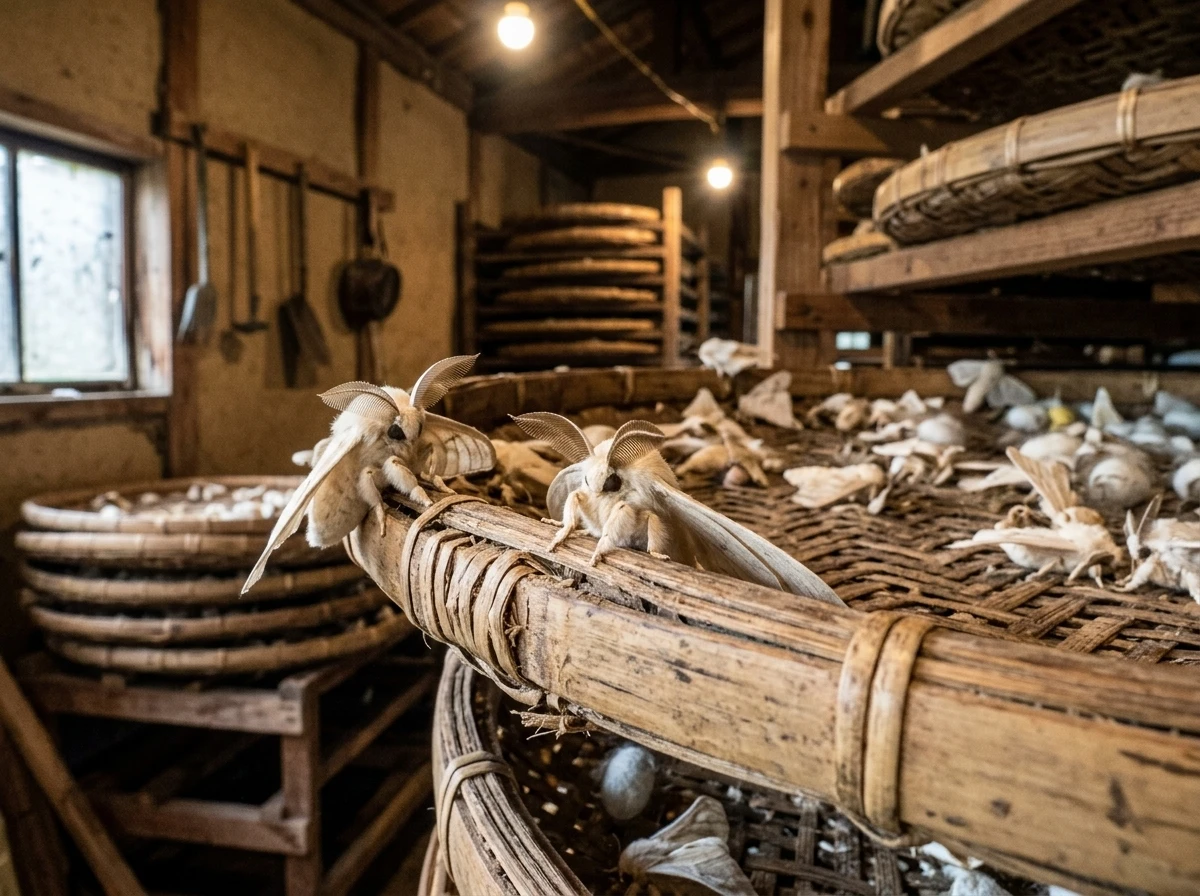
Now, the harvest, and this is where quality starts for this material. Our moths are raised on indoor racks, and they're harvested immediately after they emerge from the cocoon, before copulation. Think about what that means for a creature that cannot eat. Harvested before it has spent anything. The entire life savings, conserved. That is the doctrine of this material in one sentence, and it's the reason the page can promise maximum accumulation of vitamins, minerals, amino acids, and vital energy.
Then the formulation, and the recipe is the energetic. The companions are Saigon Cinnamon, Cornus Berry, and Clove Bud, all organic, and every one of them is warming, circulatory, and aromatic. Saigon cinnamon is the true cinnamon of Vietnam. Cornus berry is one of the classic longevity berries of the Chinese tradition. Clove is the warming spice of the apothecary shelf. The moth is yang, and the companions are yang, and the whole formulation carries one coherent character, invigorating, warming and output.
And the craft honors the material. Structured distilled water and triple filtered USP grade organic alcohol at thirty percent by volume, three parts herb to one part liquid, the water pulling one class of constituents and the alcohol pulling the other, so the whole biological matrix lands in the bottle. You can view our full extraction and lab standards on our standards page, because craft should be visible.
Five thousand years, the Silk Road, a precise harvest, and honest craft. That's where this comes from.
3. What Does It Actually Do?
What does Male Silk Moth actually do in your body? This is the question the whole page answers, and this material supports a longer list of systems than almost anything else on the shelf, so let me walk it properly, system by system. And the frame never changes. The moth supplies. Your body builds.
First, the fire and the flow, circulation. The prostaglandins and the proteolytic enzyme serrapeptase work with the cardiovascular system, maintaining the integrity and flexibility of your blood vessels, and by facilitating healthy blood flow they deliver oxygen and nutrients to every cell. And here's the piece worth knowing about those prostaglandins, because the chemistry is beautiful. Prostaglandins are lipid compounds, fatty-acid-built messengers, the same chemistry class your own body uses to regulate blood flow, warmth, and smooth muscle. The moth is a lipid-rich creature, its reserves carried largely as fats, so the lipids and the messengers are one story. Healthy blood flow, cardiovascular health, and respiratory well-being during activity, all riding the same delivery system.
Second, the glands. Zinc and chromium, alongside all eighteen essential amino acids, fortify the endocrine system and the network of glands, supplying the raw materials for hormones. Zinc is the classic gland mineral, and the enzymes that build testosterone are zinc-dependent. Hormonal balance is built from materials like these, and your body does the building.
Third, the nerves and the senses. Those same raw materials maintain healthy communication between nerve cells, and that communication is the channel for sensory sensitivity, the intimacy channel, and for nourishing brain structure and function. That shows up as relaxed alertness and sustained cognitive focus, the mind riding on a well-fed nervous system.
Fourth, the structure. The complete profile of amino acids assists in muscle protein synthesis, the essential nourishment that maintains physical form and physique. And the proteolytic enzymes support joint comfort and mobility, managing everyday wear and tear. But get this about those enzymes. The moth escapes its own cocoon by dissolving it, liquefying the silk so it can emerge. That same enzyme class, the famous serrapeptase, is the joint and blood-vessel constituent. The escape enzyme is the delivery enzyme. The biology is the formulation.
Fifth, the antioxidant layer. The polyphenols, bioflavonoids, and essential oils from the Saigon Cinnamon, Cornus Berry, and Clove Bud are potent antioxidants, neutralizing free radicals to balance oxidative stress, easing minor physical discomfort, and supporting joint tissue maintenance and repair. The spices that warm the recipe also guard the site.
So why does it feel invigorating? Because everything above feeds the same direction at once. Circulation supported, oxygen delivered, metabolism fed, glands supplied, the nerves nourished. That's the warm yang lift people describe, arriving through real mechanisms. Not caffeine's shape. No spike, no cliff. A higher floor.
And this is food-class material, so the doctrine rides along. Complete balanced meals first, protein, fat, and carbohydrates together, and the moth's constituents meet the meal in the middle.
The moth supplies. Your body builds, at its own pace, warmly.
4. Who Is It For?
Who is Male Silk Moth actually for? Let me paint the pictures, because this one serves more kinds of people than most, and you'll likely recognize yourself in one of them.
First, the athlete. Consistent training and keeping up with the schedule requires structural integrity and adaptation to physical activity. The complete profile of amino acids assists in muscle protein synthesis, while the naturally occurring proteolytic enzymes support joint comfort and mobility to manage everyday wear and tear. The bottle ends up in the training bag, next to the lifting belt, and the training cycle keeps its schedule alive.
Then the lovers, and this is the heart of the material. Physical intimacy and having the energy to connect demands proper glandular function and cardiovascular health. By supplying the raw materials for hormones, this formula fortifies the network of glands and maintains healthy blood flow to support wholesome intimacy and sensory sensitivity. And here's the story that makes that mechanism make sense. Did you know the first pheromone ever discovered in history came from this moth? Researchers spent two decades and half a million moths isolating the female's signal, a single compound called bombykol, and the male's feathered antennae are so sensitive they can respond to a few molecules of her signal, detecting her across remarkable distances. The male silk moth is the world's icon of sensory detection. A creature built to sense its partner across a field became the tradition's tonic for sensory sensitivity. The signature and the mechanism are the same story. The bottle lives in the nightstand drawer, and it was never a men-only drawer.
Then the healthy vitality crowd, running errands and skipping the afternoon nap. That takes sustained energy and overall physical fortification. This formulation supplies unique constituents to support energy metabolism and maintain the circulation and warmth of the body, providing a clear sense of perception to meet life's demands. Front and center on the kitchen counter.
And the tonic herbalist, taking herbs as a daily routine and wanting formulations that provide long-term building benefits. This superior tonic delivers unique constituents to nourish brain structure and function while maintaining cellular health and longevity. Front row of the apothecary shelf.
Now, the question under the question, the one I get asked straight out. Is this for women too? Yes, and here's the honest mechanism. Hormones are built, not summoned. This material supplies zinc, chromium, and amino acids to glands that build what the body calls for, testosterone production in males, estrogen and progesterone balance in females, all from the same supply line, and nothing gets forced. The mechanism is human, not gendered. Same moth, same biology, same nightstand drawer for both halves of the household.
So the short version. The athlete, the lover, the person running the errand list, the daily herbalist. And if you're shopping for a stimulant, a buzzy jolt, that's a different shelf, and I'll tell you plainly. This is the warm lift, the building tonic. That's who it's for.
5. How Do You Take It?
Tonic Synergy & Timing: We remind you that with consistent use, benefits accumulate over time.
For rapid mucosal assimilation, hold the liquid under the tongue for 60-90 seconds. To support physical output, take before training. To aid deep restorative building, take alongside a complete balanced meal containing quality fats, proteins, and carbohydrates.
This is Male Silk Moth liquid extract, the restorative tonic in a two-ounce bottle with sixty dropper servings.
One dropper is one press of the rubber bulb, which fills the tube to just above half-way. That's thirty drops, which is also one milliliter.
To find a functional dose, start with a minimum dose of ten drops to one dropper and work up. We suggest ten drops to one to three droppers, taken one to three times per day, which is five hundred to four thousand five hundred milligrams daily. The more you take, the better it works, and consistency at a functional dose is the key.
Shake gently. Secure the lid and turn the bottle over back-and-forth three to five times to evenly distribute the liquid extract. Vigorous shaking oxidizes the volatile constituents, so gentle is the word.
By mouth, hold the liquid under the tongue for sixty to ninety seconds before swallowing, or mix the drops into two to four ounces of lukewarm drinking water. Never hot water. Hot water will catabolize the fragile naturally occurring substances, and that's not a marketing line, that's the chemistry.
Concerning timing, this one is flexible in a good way. We recommend taking it to support adaptation to physical activity, or alongside meals to aid nutrient absorption and energy metabolism. So the practical rhythm is a dose before training for the session, and a dose alongside a complete balanced meal for the building work. The meals are not optional furniture. Protein, fat, and carbohydrates together, because the amino acids and minerals do their building alongside real food, and the glands need the saturated fat and cholesterol to build hormones from. They meet in the middle.
Storage is simple. An opened bottle holds about thirty to forty-five days. Unopened, about two years from the batch date. Keep it dark and cool.
Bingo, that's the whole practice.
6. How Long Until You Notice Results?
How long until you notice something with Male Silk Moth? Let me give you the honest timeline, and this material has a friendly one, because the warm layer tends to arrive early.
Some effects are immediate within the first few days, one to three days. The page says it plainly: a sense of vigor can be felt rapidly. The warmth, the brightness, the lift. That's the felt layer, and it's real, and it's the material's character showing up fast.
Other effects are building and are noticeable within one to two weeks. Stamina layering in, joints moving easier, focus holding longer, the shifts you feel in retrospect more than in the moment.
And then comes the mistake I've watched a hundred times. People feel those two layers, decide the bottle has shown them everything it has, and quit right at the doorstep of the third window. The deep work, the structural building, the glandular saturation, comes as you continuously saturate the body over a good tonic cycle. A good tonic cycle is forty-five to ninety days. You're feeding systems that put materials to work at their own pace. The body doesn't take orders. It takes deliveries.
Nothing is a quick fix. Anyone selling a quick fix in a bottle is selling something else. Tonics reward time, not dosage.
And you gotta take enough to make it work. The more you take, the better it works. Not enough doesn't work. Enough is the target, and someone can only take so much of anything at any time, so your body sets the ceiling, and consistency is the vehicle that gets you there.
Keep complete balanced meals under all of it, because the amino acids and minerals build alongside real food. Skipping meals and eating incomplete meals will lead to ineffective results. A hormone tonic taken without saturated fat and cholesterol will find the factories empty. You can't run a loading dock with no deliveries on the truck.
Don't stop at the doorstep. The deep work is behind that door.
7. Safety and Quality
Is Male Silk Moth safe, and how do you know you're getting a quality bottle? With this material, those are the same question, and the answer starts with the harvest, because for a moth, precision at harvest is everything.
Start with the species and the timing. This is Bombyx Mori, the classical silk moth, raised on indoor racks, and the males are harvested immediately after they emerge from the cocoon, before copulation. Think about what that means one more time. A creature that cannot eat, that lives only days, harvested before it spends anything, at the moment of maximum accumulation of amino acids, minerals, and vital energy. The entire life savings, conserved. That is the quality standard for this material, and it's stated plainly, because a craftsman hides nothing.
Then the formulation, stated just as plainly. Male silk moth, with Saigon Cinnamon, Cornus Berry, and Clove Bud, all organic, every one of them warming, circulatory, and aromatic, and every one of them carrying a job. The cinnamon and clove bring the essential oils and polyphenols that guard the antioxidants layer. The cornus berry brings its longevity pedigree. The recipe is one coherent character, invigorating, warming and output, and nothing in it is decoration.
Then the craft. Structured distilled water and triple filtered USP grade organic alcohol at thirty percent by volume, three parts herb to one part liquid. The full extraction and lab standards are published on our standards page, and they're published because the work should be visible.
And the taste tells you it's real. The more you taste the stronger it is. A real extract of this material is dark and strong, the kind you can taste minutes after taking it. Your own tongue is the lab.
Now, the honest register. This is a restorative tonic, food-class material, a companion to complete balanced meals, not a replacement for them. Herbs are more effective and more powerful in the long term for supporting health, whereas drugs are more effective and more powerful in the short term for treating conditions and emergencies. Each has its own job. Do not use an herb when one should use a drug, and do not use a drug when one should use an herb. This bottle's job is the long term.
Generally, this formulation may be taken with other dietary supplements, and it works synergistically with complete balanced meals.
Honest material, honestly harvested, honestly made. Be the Best and Buy the Best.

8. Does It Raise Testosterone?
Does male silk moth raise testosterone? Let me fix the question before I answer it, because the question as asked is the trap. Asking does it raise testosterone treats this material like hormone replacement, a switch you flip. Male silk moth is not a switch. It's a supply line. The moth supplies raw materials. Your body does the building. That division of labor never changes, and it's the whole answer. But let's walk it properly, because this material's reputation as a hormone tonic is earned on real fronts.
Front one: zinc. The trace minerals in this material are zinc and chromium, and zinc is the classic gland mineral. The enzymes that build testosterone are zinc-dependent, and the glands simply cannot do the work without the mineral. It runs hundreds of enzymatic reactions in the body, and hormone production is chief among them. It's the most direct supply-line story in the tonic world, and this moth carries it densely.
Front two: the amino acid stock. All eighteen essential amino acids, the building blocks of tissue and the raw stock the glands work from. Hormones are built, not summoned, and building needs materials.
Front three: the prostaglandins, and here's the piece that makes this material distinctive. Prostaglandins are lipid messengers built from fatty acids, and the very word is reproductive biology. Science named them after the prostate, because that's where researchers first found them, in reproductive fluid, before discovering the body makes them everywhere. The compound class this moth carries is the compound class of reproductive chemistry itself.
And did you know what the factories build with? Testosterone and estrogen are over ninety-five percent cholesterol by weight. Hormones are made from something very specific, and a hormonal material delivers the stock. The glands are factories. The moth delivers to the loading dock. The factories build what the body calls for, nothing more.
Which brings the food doctrine in, because this is where people sabotage themselves. Taking a hormone tonic without saturated fat and cholesterol will negate the effects. Eggs with soft yolks, so as not to denature the cholesterol. Salt your eggs for stomach acid to absorb the protein, fat, and cholesterol. You can't run a factory on an empty dock.
So the honest answer, plainly: male silk moth does not flip any switches, in a man or in a woman. It supplies zinc, amino acids, and lipid constituents to glands that build what the body calls for, at their own pace, from the food you eat alongside it. That's also why women take this material without concern: nothing gets forced. Testosterone production in males, estrogen and progesterone balance in females, same supply line, same factories, same stock.
9. Deep Dive: Intimacy
Can male silk moth support intimacy? That's the question behind a fair share of the searches on this material, so let's take it seriously, for men and for women both, and answer it the way I'd answer it on the phone.
Start with something worth noticing. The tradition never treated this as a men-only material. In the Chinese household tradition, tonic materials served the whole table, and the moth's reputation for supporting vitality was a household reputation. Connection is a human thing, not a gym thing.
Now the mechanism, told plainly. Intimacy depends on two foundations: circulation and warmth, and healthy glandular function. Male silk moth works on both. The prostaglandins and enzymes maintain the integrity and flexibility of blood vessels, facilitating healthy blood flow, and that flow is the delivery system everything downstream rides on. The zinc, chromium, and amino acids fortify the endocrine system and supply raw materials for hormones, the drive and the capacity to act on it. Warmth, blood flow, and fed glands. That's the whole picture, and it's the same picture for a woman as for a man.
And then the layer that makes this material unlike anything else on the shelf: the senses. The constituents maintain healthy communication between nerve cells, and that communication is the channel sensory sensitivity runs through. And here's the story behind that claim. Did you know the science of attraction began with this very moth? The first pheromone ever identified in history, a compound called bombykol, was isolated from the silk moth after twenty years of research, and the male's feathered antennae can respond to a few molecules of the female's signal, detecting her across a field. The male silk moth is the world's icon of sensory detection. The tradition took the sensing half of that system and made it the sensory tonic. The signature and the mechanism are the same story.
The food doctrine rides along, as always. Taking a hormone tonic without saturated fat and cholesterol will negate the effects. Eggs with soft yolks, salted, and complete balanced meals. The factories need stock, and the stock comes from the plate.
What do people report over a cycle? The warmth, the sensitivity, the drive that shows up because the system is fed, the capacity to connect. Not overnight. Over the forty-five to ninety day cycle of continuous saturation. Intimacy is a foundation project, and foundations are poured slowly.
That's why this one lives in the nightstand drawer, right next to the water glass. Both halves of the household, same supply line, same bottle.
10. Is It For Women Too?
Is male silk moth for women too? Yes, and I want to answer this one the way I'd answer it if you'd called and asked, because the question deserves a real answer, not a shrug.
Start with the tradition, because the tradition is more generous than the marketing. In Chinese herbalism, this material was ranked as the warming yang tonic of the kidney class, and the old texts reached for it to nourish vitality and the deep essence. But the household tradition never sorted tonics into men's shelves and women's shelves. The kitchen and the apothecary shared one door, and the materials that nourished served the whole table. The sex-tonic marketing is a few decades old. The household tradition is centuries.
Now, the question under the question, the one women actually ask: will this do something to my hormones? And the answer is no, in the most reassuring way possible. This material does not flip switches. It is a supply line. Zinc feeds the enzymes that build hormones. Amino acids supply the stock. Prostaglandins are lipid messengers your own body already uses everywhere. And the glands build exactly what the body calls for: testosterone production in males, estrogen and progesterone balance in females, all from the same cholesterol backbone, all assembled by glands that take orders from your body, not from the bottle. Nothing gets forced. There's no switch to worry about, which is exactly why the question dissolves.
And the deeper answer is that most of what this moth does was never gendered in the first place. Circulation, the delivery of oxygen and nutrients to every cell. Healthy communication between nerve cells, the senses, and sustained focus. Energy metabolism and the stamina to run the whole day. Joints, tissue maintenance and repair. Those are human systems, and this material feeds all of them. Women who train, women who work the long shift, women who carry the household's load, the supply line is the same one everybody shares.
And yes, connection belongs on the list too, because it's a human thing. Intimacy runs on circulation, warmth, and a well-fed glandular system, and that supply line is the nightstand drawer for both halves of the household.
One honest redirect, the same one I'd give anyone: this is a warming, invigorating material. If you run hot, if you lean anxious, the cooling counterpart is American ginseng, and that's a constitution question, not a gender question. Right material, right body.
11. Male Silk Moth vs. The Shelf
How do you shop the sex-tonic shelf honestly? I get this question more than you'd think, and I'm glad when it comes, because that shelf has earned its reputation, and knowing how to read it is the difference between a real material and an expensive nothing.
Here's what that shelf usually is. Loud labels, ancient-secret marketing, mystery blends with ten herbs at fairy-dust doses, capsules of unnamed material standardized to nothing. The promises are the biggest thing in the bottle. Tricky tricky.
And here's what this material is, by contrast. A specific species, Bombyx Mori, the classical silk moth, with a written record in the Chinese materia medica going back centuries. Harvested at a precise moment, immediately after emergence, before copulation, at maximum accumulation. And its constituents are named and real: all eighteen essential amino acids, prostaglandins, the proteolytic enzyme serrapeptase, zinc and chromium, vitamin E, polyphenols and bioflavonoids. That's not a mystery blend. That's a biological profile, stated plainly.
So here's the shopping guide, the questions the loud labels hope you won't ask.
Ask for the species. If the label won't name exactly what's in the bottle, down to the Latin, that's an answer.
Ask for the harvest. For an insect material, timing is everything, and a company that harvests at maximum accumulation will say so, because it takes real work to do.
Ask for the extraction. A real liquid extract states its method and its ratio. Ours is structured distilled water and triple filtered USP grade organic alcohol at thirty percent by volume, three parts herb to one part liquid. If the label won't tell you how the material was processed, ask why not.
And run the taste test, because your own tongue is the lab. The more you taste the stronger it is. A real extract is dark and strong, the kind you can taste minutes after taking it. A thin, faint liquid is exactly what it tastes like.
Then the honest part, because I'd rather sell you the right expectations than the wrong bottle. This is not an overnight miracle and not a stimulant. It's a restorative tonic, warming and invigorating, that builds over a cycle alongside meals. Anyone promising overnight transformations is selling the promises.
Pay for the material and the craft, not for mystique. Be the Best and Buy the Best.
12. What Does Yang Actually Mean?
What does yang actually mean? This is worth a section of its own, because the word shows up all over the tonic shelf and almost nobody explains it, and once you understand it, you understand this moth.
Yang is the sunny side of the hill. That's the original picture. Yin is the shaded side. The old Chinese observers watched the same hillside all day: the sunny side brightens, warms, and activates through the morning, and the shade follows the sun as it moves. Two forces, one landscape, always in relation. From that picture the vocabulary grew. Yang is the warming, activating, output force: brightness, movement, drive, expression. Yin is the cooling, storing, restorative force: reserve, depth, quiet, repair. Neither is better. They're partners, and the healthy body holds both in balance.
Now look at the moth through that lens, and watch the classification write itself. The adult silk moth emerges with no working mouth, spends everything, lives days, and converts its entire essence into warmth, drive, and connection. It is, quite literally, a week of pure yang expression. Storage is over. Everything is output now. A creature that embodies the sunny side of the hill, concentrated into a single week, became the tradition's warming yang tonic of the kidney class. That's not mysticism. That's a classification system doing exactly what it was built to do.
And the recipe agrees. The companion herbs in this formulation, Saigon Cinnamon, Cornus Berry, and Clove Bud, are all warming, circulatory, aromatic materials. The moth is yang and the companions are yang. One coherent character, invigorating, warming and output, from the first drop to the last.
So what does yang feel like, taken as a tonic? People describe the warm lift: brightness, vigor, the afternoon that doesn't cave. Not caffeine's shout. A hum with a floor under it. The character of the material arriving through real mechanisms: blood flow supported, oxygen and nutrients delivered, the glands supplied.
And the honest redirect, because the vocabulary comes with a map. If you run hot, if you lean anxious, if what you want is calm and depth rather than drive, the shaded side of the hill has its own materials, and the cooling counterpart is American ginseng. Right side of the hill, right constitution, right job.
13. The Kidney and Jing
Let me tell you about the kidney, because in Chinese herbalism that word means something much bigger than the filtration organ, and understanding it explains why the tradition reached for this particular moth.
In that system, the kidney is the root of life, the system that stores jing. Glossed plainly, jing is the body's capital reserve, the deep essence you're born with and spend through your living: what runs reproduction, vitality, the low back and the knees, the marrow, the resistance to exhaustion, and the pace of aging itself. The old texts say you arrive with an endowment, and the whole art of tonic herbalism is partly the art of not overspending it, of refilling where the system allows. Fatigue, in that language, is a supply problem, and weakness of the deep reserve is the classic pattern the kidney class addresses.
Now here's why the moth, of all creatures, earned its place in that class. Think about what the material is. A creature that cannot eat, that lives only days, harvested at the moment of emergence, before copulation, with its entire essence unspent. The tradition's kidney-yang tonic is, quite literally, concentrated unspent essence. The old herbalists could not have designed a more exact match between the classification and the creature. They didn't have to design it. The moth did the design, and they read it.
And then watch the modern map overlap. Zinc for the reproductive axis, the mineral the hormone-building enzymes cannot run without. Chromium alongside it. All eighteen essential amino acids, the raw stock of tissue and gland. Prostaglandins, the lipid messengers of reproductive chemistry. The tradition called it nourishing the kidney and replenishing the deep essence. The biochemistry calls it complete raw material for the exact axis the tradition was describing. Two vocabularies, one observation, centuries apart.
That's the pattern I love most in this work: the old map and the new map marking the same spot. The tradition spent centuries watching what this material did for run-down vitality, and the laboratory keeps translating their notes.
The deep reserve is built slowly, with meals, over a cycle. A good tonic cycle is forty-five to ninety days, and the patience is part of the medicine.
14. The Doctrine of Signatures
How did the old herbalists read a creature? Let me walk you through their method, because it's one of the most beautiful tools in the whole tradition, and this moth is one of its finest examples.
The method is called the doctrine of signatures. The old observers read a material by its signature: the shape, the behavior, the life story, the way it lives and dies. They weren't being poetic, or not only. They were using every visible clue as data, centuries before chemistry could name a constituent. The root that forks like a man became the whole-body tonic, and the Chinese named it ren shen, the root with the human body shape. The berries that bleed red when you slice them became the blood tonics, because a fruit that colors like blood was read as a fruit that feeds the blood. Signature first, centuries of observation after, and the observation kept confirming the reading.
Now the moth, and watch how every element of the signature maps. An adult whose entire existence is devoted to one act: connection. The tonic of connection. A creature whose primary equipment is sensory, feathered antennae tuned to detect a partner across a field: the tonic of the senses. A creature that emerges loaded, a lifetime of reserves at maximum accumulation, aimed entirely at vitality and reproduction: the tonic of vitality and the deep essence. Arrives loaded, spends everything, one purpose, total intensity. The old herbalists read that signature and ranked the material in the warming yang class of the kidney, and generation after generation kept the ranking.
But here's the twist that makes this story worth the telling. The modern constituent list confirms the old reading. The signature said connection, and the chemistry delivers the reproductive-chemistry compound class, the prostaglandins, named by science for the very system the tradition was feeding. The signature said senses, and the chemistry delivers the raw materials of nerve communication. The signature said vitality, and the chemistry delivers zinc, chromium, and the complete amino acid set.
The old map and the new map mark the same spot. When that happens, you're not looking at coincidence. You're looking at two traditions describing one truth from two directions, centuries apart.
15. Heritage & History Timeline
Where does male silk moth come from, in the long sense? Not the bottle. The lineage. Five thousand years, and it runs through four chapters. Let me walk them.
Chapter one: the domestication. The legend says a cocoon dropped into the empress's tea, and as she pulled it out, a single thread unreeled and unreeled, and China's silk age began. Behind the legend is the fact: the silkworm has been in continuous human care for five thousand years, one of the oldest domesticated animals on earth. The moth that built that partnership traded its wild flight for the rack and the mulberry leaf, and humans, in return, spent millennia observing it more closely than perhaps any insect in history. Every life stage known, every behavior recorded, generation after generation. That's not folklore. That's the longest observation record an insect has ever had.
Chapter two: the secret. Silk cloth was worth more than gold by weight, and China guarded the source as a state secret for centuries, the silkworms and their eggs under penalty of death for exporting them. The thread built the Silk Road, the most famous trade route in history, and the route carried more than cloth: it carried the materia medica east and west, the herbal knowledge of civilizations meeting over silk. This creature sat at the center of the longest-running exchange of healing knowledge the world has ever run.
Chapter three: the materia medica. The male silk moth earned its written place in the classical Chinese encyclopedia, recorded in the fifteen-nineties by Li Shizhen, the great compiler. He ranked it as the warming yang tonic of the kidney class, the material for vitality and the deep essence, and his record stands for what the tradition had already known for a very long time. When a materia medica that examined everything put its stamp on a material, that's a verdict.
Chapter four: the scientists. The twentieth century took up this creature in earnest, and the findings read like a translation of the tradition. The first pheromone ever chemically identified in history was isolated from this moth. The enzyme class that dissolves the cocoon became a celebrated modern supplement. The constituents were named one by one, the amino acids, the trace minerals, the prostaglandins, and the naming kept confirming the classical ranking. Two vocabularies, one observation.
The unbroken thread through all four chapters: the most domesticated, most observed, most closely recorded insect in human history, prized at every stop, from the empress's teacup to the modern lab.
16. The Science of Pheromones
Did you know the science of attraction began with this moth? Let me tell you the story, because it's one of the best facts in the entire herbal world, and it belongs to this material alone.
Nineteen fifty-nine. A German chemist named Adolf Butenandt announces the isolation of a single compound from the silk moth. Bombykol. The first pheromone ever chemically identified in history. And here's the part that puts the story over the top: Butenandt had already won the Nobel Prize, for isolating the human sex hormones, the very molecules of our own reproductive chemistry. The man who named the chemistry of attraction then spent twenty years on this moth, processing half a million of them, to pull out the molecule that carries a moth's whole love letter. The science of chemical attraction, the field that now explains behavior across the animal kingdom, was born from this creature's biology.
And the instrument on the other side of that signal is the male's antennae. Feathered, combed like sails, built for one job: catching her signal. They are so sensitive they can respond to a few molecules of bombykol, detecting a female across a field, in the dark, downwind. The male silk moth is, by broad agreement, the world's icon of sensory detection, the creature that taught science what a tuned receptor is.
Now hold that story next to the tradition's use of the same creature, and watch the two line up. The Chinese herbalists took the male moth, the sensing half of that system, and made it their tonic for the senses and for connection. They couldn't name a receptor. They didn't need to. They read the signature, a creature whose entire adult existence is detecting his partner, and they classified the material accordingly. The tonic of the sensing male became the tonic of sensory sensitivity and intimacy. And the modern mechanism says the same thing in different words: the trace minerals and amino acids maintain healthy communication between nerve cells, the channel that sensory sensitivity runs through, while the circulation and glandular supply feed the whole system.
The old map and the new map, marking the same spot, and the spot is extraordinary: the creature that taught the world what attraction is, delivering the constituents of the senses.
17. Lipids and Prostaglandins
Let me tell you about the lipids, because this is the piece of the moth's chemistry that most companies never bother to explain, and it's one of the most interesting stories on the page.
Start with the word itself. Prostaglandins. Science named them after the prostate gland, because that's where researchers first found them, in reproductive fluid, back in the nineteen-thirties, and they assumed the prostate was making them. The name stuck even after the truth arrived: the body makes prostaglandins almost everywhere, and they turned out to be one of the most important messenger classes in human biology. But look at what the name preserves. The first place science met this compound class was reproductive chemistry. The word on the label is, literally, a fossil of reproductive biology.
And what are they? Prostaglandins are lipid compounds, hormone-like messengers built from fatty acids. They're not stored; they're made on demand, from the lipids on hand, and they act locally, quickly, telling tissues what to do right now. Your body uses them to regulate blood flow, warmth, and smooth muscle. They are part of the chemistry of temperature, of circulation, of the responsiveness of tissue.
Now the moth's side of the story, and this is where it gets beautiful. The adult silk moth never eats again. It has no mouthparts. Everything it will ever run on has to be stored in the body at emergence, and the densest way to store fuel is fat. So the moth is a lipid-rich creature by design: its lifetime reserves travel largely as fats and fatty acids, the raw stock its own biology runs on for its one intense week. The creature is a concentrated lipid package, and among those constituents are the prostaglandins themselves, the fatty-acid messengers, arriving in the extract alongside the lipid matrix they live in.
So the mechanism, told plainly. These constituents work with the cardiovascular system to maintain the integrity and flexibility of blood vessels, facilitating healthy blood flow, and healthy blood flow is the delivery system for oxygen and nutrients to every cell. The warmth people report from this material is not decoration. It's the circulation layer doing its work, fed by the lipid story.
And the food doctrine rides along, naturally. A lipid-rich tonic works alongside real food, including the healthy fats of complete balanced meals. The body requires macronutrients, protein, complex carbohydrates, and healthy fats, to recover and rebuild. They meet in the middle.
18. The Serrapeptase Story
But get this about the enzyme in this bottle. The moth cannot chew its way out of its cocoon. It has no jaws to chew with. So it dissolves its way out.
Here's the biology. Inside the cocoon, the transformed moth is sealed in a fortress of its own making: a single continuous thread of silk, up to nine hundred meters long, wound tight, one of the toughest natural fibers on earth. The creature that built the fortress must escape it, within days, with no tools and no mouth. So the silkworm's biology does the engineering. Proteolytic enzymes, protein-dissolving enzymes produced in the silkworm's gut, soften the silk of the cocoon wall, liquefying the protein just enough for the moth to push through and emerge. The fortress is opened by chemistry, not force.
That enzyme class produced the famous serrapeptase, and the story of serrapeptase in the modern world is one of the strangest and best in the supplement trade. An enzyme discovered from the silkworm's own escape biology became one of the most sought-after enzyme supplements on the market, taken for joint comfort and healthy circulation. The material that dissolves the cocoon became the material people take for the maintenance of joint tissue and the flexibility of blood vessels. The escape chemistry and the tonic chemistry are the same chemistry.
And that's exactly what it's doing in this formulation. The proteolytic enzymes, serrapeptase among them, carry two jobs here. First, the blood vessels: working with the prostaglandins to maintain the integrity and flexibility of the vessels, facilitating healthy blood flow. Second, the joints: the enzymes support joint comfort and mobility, managing everyday wear and tear, and they support joint tissue maintenance and repair alongside the antioxidants. The moth's escape enzyme, at work in your pipes and your hinges.
There's a lesson in that, and it's one the old herbalists would have appreciated. Nothing in a creature's biology is wasted, and nothing is accidental. The chemistry that solves one problem, escaping a fortress of silk, is the same chemistry that solves problems that look nothing like it. Nature's toolkit is smaller than it looks and deeper than it looks, and the moth carries one of the sharpest tools in the box.
19. The Amino Acid Profile
All eighteen. That's the number worth starting with, because it's the whole structural story of this material in two words. The male silk moth carries all eighteen essential amino acids, the complete set, the building blocks your body cannot make on its own and must receive from what it eats.
Let that land for a second. Your body can synthesize many amino acids, but the essential ones have to arrive through diet, and a material that carries the full essential profile arrives as complete stock. That's rare in the tonic world. Most single botanicals carry partial profiles. This material arrives with the whole set, and for the body's continuous construction projects, that matters.
Because that's what your body is: a construction site that never closes. Muscle protein synthesis, the process every athlete is really training for, runs on amino acids, and it runs best on the complete profile. Tissue growth, maintenance, and repair, the ongoing work of joints and connective tissue and lean structure, all of it draws on the same supply. The moth delivers the lumber. Your body runs the crew.
So the athlete card, plainly. Consistent training and keeping up with the schedule requires structural integrity and adaptation to physical activity. The complete profile of amino acids assists in muscle protein synthesis, while the naturally occurring proteolytic enzymes support joint comfort and mobility to manage everyday wear and tear. The bottle in the training bag, next to the lifting belt, and the training cycle keeps its schedule alive.
And the breath rides along, because structure isn't only muscle. The prostaglandins and enzymes facilitate healthy blood flow, and that flow delivers oxygen and nutrients to every cell, supporting respiratory well-being and stamina during physical activity. The amino acids build the engine, the circulation feeds it, and the moth supplies both sides of that equation.
Now the construction-site doctrine, because the crew needs more than lumber. The complete meal is non-negotiable: protein, fat, and carbohydrates together, because the amino acids do their building alongside real food, and the body requires macronutrients to recover and rebuild. Deliveries to a job site with no crew don't build anything. The moth supplies. The meals staff. And protein every four to six hours, because the body can't bank it.
20. What Does The Lift Feel Like?
What does the lift from this material actually feel like? That's the question nobody answers honestly, so let me answer it, because knowing what to expect is the difference between a customer and a return.
Here's the shape of it. People describe a warm lift. A brightness. A sense of vigor, sometimes within the first few days. Not a jolt, not a buzz, not the shout-then-silence of caffeine. A hum with a floor under it. The afternoon that doesn't cave. The evening that ends with energy left, honest energy, spent rather than crashed.
And why does it feel like that? Because the lift isn't one mechanism, it's several feeding the same direction at once. The prostaglandins and enzymes maintain the integrity and flexibility of blood vessels, facilitating healthy blood flow, and that flow delivers oxygen and nutrients to every cell. The trace minerals and amino acids fortify the network of glands, supplying raw materials for hormones, and a fed endocrine system has a different tone than a starved one. The nerve communication layer supports relaxed alertness rather than wired tension. The circulation and warmth of the body is literally one of this material's stated functions. Stack all of that, and the felt result is vigor: warm, steady, with a floor.
Now, the timing rhythm, and this is the practical piece. This is a warming, invigorating material, and the lift can hold for hours. So take it in the morning, or midday at the latest. A dose before physical activity to support the adaptation, a dose alongside a meal for the building work. Not a bedtime bottle, for the same reason coffee isn't: it asks the system to run, and a system asked to run at nine at night will oblige.
And the flip side is the good news. People tell me the days start better, the energy is there on waking, and the evenings wind down naturally because the system wasn't whipped all day. Steady energy, honestly earned, ends honestly. No debt, no crash, no lying awake at midnight with a racing engine.
21. The Yang Stack
What happens when you run male silk moth with the rest of the shelf? That's the question people ask once they've held a few bottles, and it deserves a real answer, because this material completes a stack that covers the whole construction site.
Here's the division of labor, told plainly. Deer antler velvet is the lumber: the naturally occurring growth factors, amino acids, and collagens, the raw construction stock for tissue growth, maintenance, and repair. It's what the site builds with. Black ant is the factory: zinc and sterols feeding the glands, the energy economy of ATP and creatine, the free amino acids arriving pre-dissolved. It's the crew and the power tools. Red ginseng is the fire: the drive and the delivery system, the circulation and the glucose metabolism, the morning root. And male silk moth is the senses and the flow: the vessel integrity and the blood flow, the nerve communication and sensory sensitivity, the lipid messengers and the warmth. The materials, the metabolism, and the means to feel them all working.
Four materials, four jobs, one fed body doing the work. That's the whole stack in one sentence.
For training, run it like this: ginseng and moth before the session for the lift and the oxygen delivery, ant with the pre-training meal for the energy economy, velvet with the post-workout meal for the growth factors and the rebuild. The work capacity holds, the delivery stays open, and the repair gets its materials.
For intimacy, the same logic, and it's just as clean. Connection runs on circulation, warmth, and a well-fed endocrine system. The moth carries the flow and the senses. The ant and the velvet carry the gland supply and the hormone stock. The ginseng carries the drive. Same supply lines, same foundation, both halves of the household.
And the frame that keeps it honest: none of them replace food. Every one of these materials rides on complete balanced meals, the protein, the saturated fats, the carbohydrates. The stack taken on skimpy meals is freight at a dock with no crew to unload it.
22. Troubleshooting Guidelines
Why didn't male silk moth work for you? I can tell you from years of answering this phone: when this material fails, it fails for one of exactly three reasons. Let me count them down, because the order matters, and so does the fix for each.
Reason three: time. Some effects are immediate within the first few days, one to three days: the vigor, the warmth, the lift. Other effects are building and noticeable within one to two weeks: stamina, joints, focus. The deep work, the structural and glandular saturation, comes over a forty-five to ninety day cycle. Most people who tell me it didn't work took it for two or three weeks, irregularly, and stopped right at the doorstep. You can feel the first layer in days. The cycle is a month and a half to three months. Those are different windows, and judging the second by the first is the classic mistake. The fix is patience, on a schedule.
Reason two: the fuel. This is the one nobody expects, and it's the biggest. This is a building material, amino acids, minerals, lipid constituents, and your body assembles them into muscle, tissue, and hormones alongside real food. If you've been skipping meals, eating incomplete ones, or running the low-fat habit that starves the hormone factories of their cholesterol stock, you delivered lumber to a job site with no crew. Protein every four to six hours. Complete balanced meals, with saturated fat and cholesterol for the glandular work. Eggs with soft yolks, salted. The fix is on your plate.
And reason one, the most common of all: not enough. This material is dose-dependent, and the label says it plainly: the more you take, the better it works. If you took ten drops a day for a week, you were running a test, not a tonic. The honest range is ten drops to one to three droppers, one to three times per day, five hundred to four thousand five hundred milligrams daily, and most people find their functional dose somewhere in the upper half of that range. Not enough doesn't work. Enough is the target, and someone can only take so much of anything at any time, so your body sets the ceiling, not the ambition.
There's the countdown. Time, fuel, dose, in reverse order of how often they're the culprit. Check the dose, check the plate, check the calendar, in that order, and almost every failed bottle turns out to be a practice problem, not a material problem.
23. Does It Really Work? (Skeptic Answer)
Does male silk moth actually work, or is it snake oil? Fair question, and I'd rather answer it straight than get defensive, because this material has one of the strangest and strongest credibility stories in the entire catalog.
Start with the observation record, because it's unmatched. This is the most closely observed insect in human history. Five thousand years of domestication means five thousand years of humans watching every life stage, every behavior, every batch, generation after generation, with an economic incentive riding on getting the biology exactly right. The tradition that watched it that closely also recorded the moth as a tonic, in the classical encyclopedia of the fifteen-nineties, ranked in the warming kidney-yang class. When a material keeps its ranking through centuries of that kind of scrutiny, that's not anecdote. That's a verdict, rendered by the longest consumer study an insect has ever had.
Then the science pedigree. The first pheromone ever chemically identified in history was isolated from this moth, by a Nobel laureate, after twenty years of work. The enzyme class from its cocoon escape became a celebrated modern supplement. And the constituents are named biochemistry, not mystery dust: all eighteen essential amino acids, prostaglandins, the lipid messengers your own body already uses, zinc and chromium, the gland minerals, serrapeptase, a real enzyme with a real research history. Every claim on the page runs on that list, stated plainly.
Now the honest frame, because it cuts both ways, and I'll give it to you the way I give it to myself. Everything probably works in someway somehow. A very little bit of something probably does some degree of a little bit. A whole bunch of one thing is just that, you can't force it to work. And nothing does nothing, guaranteed. That quatrain is the whole supplement industry in four lines, and it's why the dose and the consistency matter more than the label.
And the real reason people fail with this material usually isn't the material. It's the dose, or the plate. Not enough doesn't work, and a body running on skipped meals has handed a building tonic an empty workbench. Take a real dose, eat the complete meals, run the cycle, and the reports change fast: warmth, vigor, stamina, drive, focus holding, the senses tuned in.
24. A Morning Practice
Let me describe a morning, because after all the mechanisms and the history, this is what the material is actually for. Not a laboratory morning. A Tuesday.
You wake, and the day is already there. Not urgently. Not at all. The system reports for duty on time, and that's the difference people describe first: the waking isn't a negotiation anymore.
Breakfast first, always. Complete and balanced, protein, fat, and carbohydrates together, the eggs with soft yolks, salted, the meal the whole practice rides on. And with it, or a few minutes before, the dose. Under the tongue, sixty to ninety seconds, warm and strong, the taste of real material. The lift arrives with the food, which is exactly where it belongs, because a fire wants wood.
The coffee rides on top, if you're a coffee person, and here's the quiet change people report: over the cycle, the coffee stops being load-bearing. You drink it because you enjoy it, the taste, the ritual, the heat of the cup in your hands. Not because the morning doesn't start without it. A fed system doesn't need the crutch.
Then the day, and it holds. The afternoon that used to cave at three or four just doesn't, or caves later and shallower. Errands get run. The errand list, the work, the people, the gym at five if it's a gym day, the training with the joints moving easy and the breath steady. The lift is underneath all of it. A floor, not a rocket.
And the evening, which is where the honest part lives. The energy ends honestly, spent rather than crashed, and sleep comes the way sleep is supposed to come, to a body that worked and was fed. Better mornings, better sleep, and the two are the same trade.
That's the whole practice. Meals first, the tonic with them, the dose enough to work, the calendar respected. A good tonic cycle is forty-five to ninety days, and the mornings stack up, one on the next, quietly better.
Commit to the Practice
Tonic herbalism rewards consistency. The deep, systemic building work happens quietly over a 45 to 90-day cycle of continuous saturation. Supply the raw materials your body needs with our premium 3-pack.
Shop the 3-Pack Formulation