
Discover the honest truth about Red Clover—the classical meadow blossom prized for centuries as a premier alterative. Whether you are looking to support vibrant skin vitality, maintain hormonal balance, or promote your body's natural elimination pathways, the secret lies in the raw material of the whole blossom. This guide strips away the marketing hype to teach you exactly what red clover is, what it does, and how to properly use it to keep your internal environment clean and balanced.
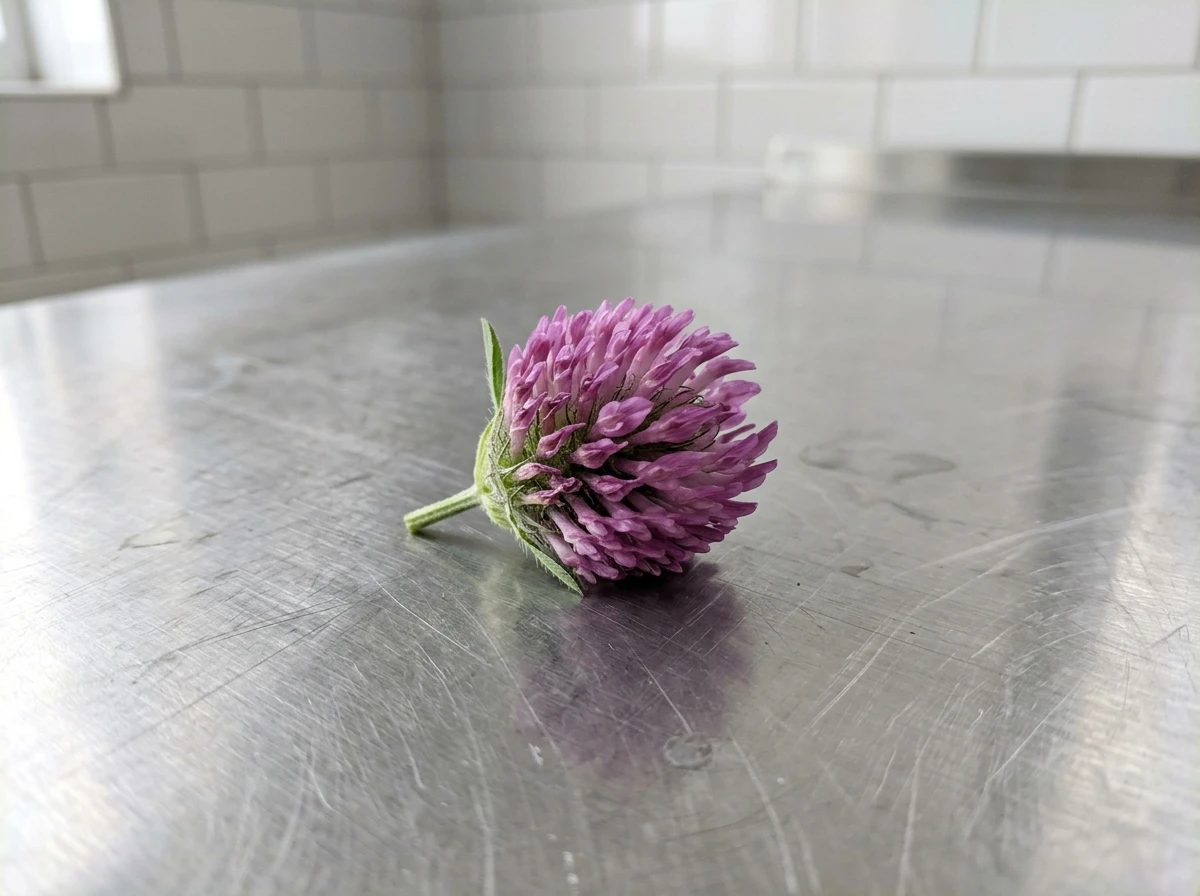

I recorded these audios to directly answer the questions I've received most over the last 26 years. The text below contains the actual transcripts.
Jason J. DukeOwner / Artisan
Reference Directory

Commit to the Practice
Tonic herbalism rewards consistency. The deep, systemic building work happens quietly over a 30 to 90-day cycle of continuous saturation. Supply the raw materials your body needs with our premium 3-pack.
Shop the 3-Pack Formulation1. What is Red Clover?
So, what is red clover, exactly? Most people meet this plant as a child, on their knees in a lawn, hunting a four-leaf clover for luck. And they never meet it again. Big mistake. Because behind that lucky lawn plant stands one of the old world's great tonic flowers, and the luck is the least of what it carries.
Start with the name, because the name is the identity card. The botanical name is Trifolium pratense. Trifolium is Latin, tres for three and folium for leaf, three-leaf. Pratense means of the meadows. The meadow's three-leafed plant, named exactly for what it is and where it lives. Botany rarely hands you a name this honest.
Classification before benefits, always. Red clover is a nutritive tonic and an alterative, and alterative is the old herbal word worth defining, because the whole tradition hangs on it. The old doctors called these the blood cleansers, the botanicals that work with the body's elimination pathways to keep the tissues clean. The modern map says the same job in plainer words, running through the liver and kidneys. Same job, told twice, centuries apart. And the energetic is grounding, cooling and calming. This is the balance-and-cleanup bottle, the cooling side of the tonic shelf. Its partner herbs warm and invigorate. This one settles and clears.
Now, the surprise inside the surprise: the plant that feeds the field. Clover is a legume, the pea family, and it hosts bacteria on its roots that pull nitrogen out of the very air and fix it into the soil. Before synthetic fertilizers existed, farmers rebuilt tired fields by planting clover, the living fertilizer, feeding the soil, the bees, and the grazing animals all at once. A nutritive plant from the roots up, literally. The blossom feeds the pollinators too. The flower is a deep cup built for the bumblebee, and clover honey is one of the classic honeys of the world. This plant spends the whole summer giving.
And the crew inside the blossom: the isoflavones, formononetin, biochanin A, daidzein, and genistein, plus the polyphenol bioflavonoids and the antioxidant enzymes. That's the engine, and the hormonal side of that engine earns its own piece in this series. It's the flagship.
What this botanical flat out is not: not a stimulant, not the wake-it-up bottle, not rare, and not mysterious. This is one of the most common plants of the temperate world, the meadow's own flower, and its power was never in the rarity. It's in the constituents, and in the folklore, which is older than the medicine and stranger than you'd guess. That story earns its own piece too, and it's a good one.
The grounding flower, in a dropper. The practice is what makes it work.
Benefits accumulate over time.
2. Where Does It Come From?
Where does red clover come from? Short answer: organic farms in Eastern Europe. Real answer: the meadows of the whole old world, the doctors who called it a blood cleanser, and the craft of pulling everything a flower has to give.
The facts first, straight. One hundred percent red clover blossom, Trifolium pratense, organically grown in Eastern Europe. Structured distilled water and triple filtered USP grade organic alcohol at twenty-five percent by volume. Extraction ratio of one part herb to eight parts liquid. Nothing else in the bottle but the liquid.
Now, the heritage, told as settled history. Red clover's old job title is alterative, and the nineteenth-century Eclectic physicians of America carried it as one of their classic blood cleansers, right through their materia medicas. The European kitchen gardens kept the blossom for a sweet, hay-scented tea, and the Chinese and Russian herbal traditions carried flower infusions of their own. Three continents, one blossom, the same assignment: keep the tissues clean, keep the balance.
And here's the move that makes the old name honest today. The modern map of this botanical runs through the liver and kidneys, the natural elimination pathways, metabolizing cellular waste and maintaining tissue cleanliness. The old doctors said blood cleanser. The new label says elimination pathways. Same job, told twice. When a tradition and a mechanism agree across two centuries, that's a plant worth keeping on the shelf.
Then the craft, and this one has a character worth explaining. This is the classic extraction, done very potent, and the material is the whole story. A blossom is light material. Flowers are the most fragile, most aerial part of the plant, and there's only so much solid matter in a flower to begin with. You can't get much more out of flowers than this process gets. So the work is custom crafted, multi-step, and micro-batched, cold processed so the fragile constituents hold their integrity in fluid suspension for maximum absorption. The water pulls one class of constituents, the alcohol pulls the other, and the ratio is honest: one part herb to eight parts liquid. The craft isn't dressing the flower up. The craft is taking the flower seriously.
And the field culture around it, because the blossom never traveled alone. Clover hay fed the livestock, clover honey sweetened the pantry, and clover roots rebuilt the soil. The farmers called it the living fertilizer. Whole farm economies ran on this plant, which is exactly why you shouldn't pay mystique prices for it. More on that in the safety and quality piece.
A meadow flower, taken seriously. That's where it comes from.
Taken consistently over time.
3. What Does It Actually Do?
What does red clover actually do in your body? Let me skip the list and give you one picture, because the picture is the mechanism.
A household, kept. Three crews on the payroll, one house. The cleanup crew sweeps the halls and hauls the waste out. The supply room keeps the raw materials stocked. And the maintenance crew guards the walls and keeps the plumbing supple. Red clover feeds all three crews from one dropper, and the rule underneath never moves: the botanical supplies the raw materials. Your body does the cleaning and the balancing.
Start with the cleanup crew, because the alterative tradition lives here. The constituents support the natural elimination pathways, the liver and kidneys, metabolizing cellular waste and eliminating the environmental pollutants and irritants that accumulate just from living in the modern world. The daily accumulation requires the body to metabolize that waste to maintain vitality, and the flower nourishes the pathways that do it. Tissue cleanliness, maintained. And here's the downstream payoff the old doctors knew without the chemistry: when the waste is moving out, the regenerative processes run better, and the skin shows it. The skin's natural barrier function, the vibrant appearance, the skin vitality. The cleanup crew is the beauty crew, wearing different overalls.
Next, the supply room, the hormonal beat, and this is where the isoflavones clock in. Formononetin, biochanin A, daidzein, and genistein work with the endocrine system, the network of glands, supplying raw materials for hormones to maintain healthy sex hormones and promote overall hormonal balance. The word worth defining is phytoestrogen, plant compound, and the mechanism is shape: these constituents are shaped close enough to fit the body's estrogen receptors, and gentle enough to dock softly rather than command. A spare key, not a new landlord. The body still decides what gets built. That picture earns a full piece of its own in this series, and it's the flagship.
Then the maintenance crew, the guards and the plumbing. The polyphenol bioflavonoids neutralize free radicals, maintaining healthy cell membranes, fortifying cellular health and integrity. The same constituents circulate blood and maintain the integrity and flexibility of the blood vessels, supporting cardiovascular health. And the constituent synergy supports the immune system as the body's natural defense mechanism, the adaptive response that identifies foreign material, promotes containment and removal. The walls guarded, the plumbing supple, the security on shift.
And one thing this botanical flat out does not do. It does not force anything. It's grounding, cooling and calming by nature, and it works with the body's own balancing schedule. So the complete balanced meals aren't optional furniture here. They're the entire point, supplying the heavy building blocks the whole household runs on.
Supply, sweep, and guard. The house, kept.
Benefits accumulate over time.
4. Who Is It For?
Who is red clover actually for? Let me tell you who buys it, because this bottle has a specific crowd, and the page serves six of them. The vanity, the mirror, the bookshelf, and the day. The people keeping a house in order, starting with their own.
The beauty crowd, first, because skin is the flagship. Looking rested, waking up fresh, keeping the skin up. The polyphenol bioflavonoids neutralize free radicals, supporting the natural regenerative processes and the skin's natural barrier function for a vibrant appearance. The bottle lives on the bathroom vanity, right where the page puts it, and the upkeep gets its deliveries.
The transformation crowd. Dropping bad habits, losing weight, watching for progress. The unique constituents fortify the natural elimination pathways, the liver and kidneys, to efficiently metabolize cellular waste and eliminate environmental pollutants and irritants, maintaining tissue cleanliness. When the body is cleaning house, that work deserves support, and the bottle stands right next to the bathroom mirror, where the progress gets tracked.
The sage. Reading, staying sharp, aging well. The isoflavones supply raw materials for hormones, working with the endocrine system, the network of glands, to maintain hormonal balance and healthy sex hormones. The bottle sits on the bookshelf next to the reading lamp, exactly where the page puts it, and the long game gets its materials.
The high-stress equilibrium crowd. Chaotic days, dealing with people, not getting annoyed. The constituent synergy offers potent antioxidants to buffer against everyday wear and tear, promoting a balanced stress response alongside cellular health and integrity. The bottle rides in the glovebox or the bottom desk drawer, close at hand for the day that keeps coming at you.
The healthy vitality crowd. Running errands, skipping the afternoon nap, demanding steady output from a body that has to keep going anyway. This formulation replenishes nutrient reserves with a broad spectrum of phytonutrients to support the energy producing processes and vital energy. The bottle lives on the kitchen counter with the other supplements.
And the steward. Taking care of family, doing the chores, keeping the house running. This formulation supports the natural defense mechanisms and an adaptive immune response, building up health and physical resilience to meet life's demands. The bottle stands in the pantry next to the prep containers, because the keeper needs keeping too.
Notice the common thread, because it's the whole thesis. Every one of these buyers is purchasing the same thing: the maintained house. Skin that regenerates, exits that stay clear, hormones that hold their balance, cells that stay guarded, energy that holds its floor. One flower, six rooms.
Now the honest redirect, because with a grounding botanical it matters. If you run cold, sluggish, depleted, running on empty and needing fire, this is not your first bottle. The warming, invigorating roots are the honest answer for that constitution, and this page's own companion is exactly that: Panax Red Ginseng, the other end of the shelf. Plenty of people keep both and take them at different hours. Right flower, right constitution.
Taken consistently over time.
5. How Do You Take It?
Tonic Synergy & Timing: We remind you that with consistent use, benefits accumulate over time.
For rapid mucosal assimilation, we recommend taking it on an empty stomach (up to 30 mins before eating), followed by a complete balanced meal to provide the heavy building blocks (proteins, fats, and carbohydrates) for sustained internal harmony.
This is red clover liquid extract, the nutritive tonic and alterative in a thirty milliliter bottle with sixty dropper servings.
One dropper is one press of the rubber bulb, which fills the dropper tube to just above half way. That's thirty drops, which is also one milliliter.
To find a functional dose, start with a minimum dose of ten drops to one dropper and work up. We suggest ten to ninety drops, one to three times per day.
Now the bottle has two jobs, and it's worth knowing both. For immediate impact, hold one to two droppers under the tongue, sublingually, for fifteen to thirty seconds. Longer isn't necessary. For tonic building, to continually saturate your system and build deep, long-term health, take one to two droppers with meals, or up to two to three droppers with your largest meal.
Shake gently. Secure the lid and turn the bottle over back and forth three to five times to evenly distribute the liquid extract. Vigorous shaking oxidizes the unique constituents and reduces biological efficacy, so don't do that.
By mouth: hold the liquid under the tongue for sixty to ninety seconds before swallowing, or mix the drops into two to four ounces of lukewarm drinking water. Never boiling water. Hot water will break down the fragile, naturally occurring substances, and this blossom carries a full set of them.
Timing, and for a flower this grounding, the sequence is simple. Take it on an empty stomach, up to thirty minutes before eating, for rapid mucosal assimilation, followed by a complete balanced meal to provide the heavy building blocks, the proteins and fats. And the page says it plainly: best taken consistently throughout the day to replenish nutrient reserves. Small servings, steady rhythm, meals underneath.
And taste? A real blossom extract tastes like the flower it came from: hay-sweet, green, faintly honeyed, the meadow in a dropper. You'll know it's red clover. The taste tells on it.
Storage is easy: an opened bottle holds about thirty to forty-five days. Unopened, about two years from the batch date. Keep it dark and cool.
If it didn't sit right, try again at a lower dosage and with a complete meal. Finding your dose isn't failure, it's calibration.
Some effects are immediate within the first few days. Consistency at a functional dose builds the rest.
6. How Long Until You Notice Results?
How long until you notice something from red clover? Most-asked question about any tonic, so here's the straight answer, in three windows. And with a grounding flower, the first window runs on ease.
Some effects are immediate within the first few days, one to three days. That's the felt layer: the easing of tension, the initial systemic balance. Grounding botanicals give fast feedback in the settle-down register, because balance is something you feel before you can name it.
Other effects and benefits are building, and become noticeable within one to two weeks. The long-term building benefits, the cellular repair and regeneration, the overall physical resilience, the skin that starts showing the cleanup underneath. The deeper work doesn't announce itself. It stacks up quietly, while you go about your life, alongside your complete balanced meals.
Then the long game. The systemic shifts and deep benefits happen as you continuously saturate your body over a thirty to ninety day cycle. That's a good tonic cycle, thirty to ninety days, and this page says it plain: a six bottle protocol unlocks the deepest systemic shifts. The practice, not the event.
And you gotta take enough to make it work. The page says it straight out: the more you take, the better it works. Not enough doesn't work. Someone can only take so much of anything at any one time, so enough is the target and consistency is the vehicle that gets you there.
Nothing is a quick fix. Anyone selling a quick fix in a bottle is selling snake oil. Tonics reward time, not dosage.
And keep the foundation under all of it: complete balanced meals, every time, with your protein and your fat. Skipping meals and eating incomplete meals will lead to ineffective results. The flower rides on food. It doesn't replace it.
Benefits accumulate over time.
7. Safety and Quality
Is red clover safe, and how do you know you're getting a quality bottle? Two questions, one answer: read the craft, and trust your own tongue.
The markers, stated straight. Species named: Trifolium pratense, one hundred percent red clover blossom, organically grown in Eastern Europe. And that hundred percent is the rare marker in this category: no blend, no filler botanicals, no spray, one flower and nothing else in the bottle but the liquid. Craft named: custom crafted, multi-step, micro-batched, cold processed so the fragile constituents hold their integrity in fluid suspension for maximum absorption. Rapid, high bioavailability. Ratio stated: one part herb to eight parts liquid. Alcohol stated: twenty-five percent by volume, structured distilled water and triple filtered USP grade organic alcohol, and that number is the craft answering the material, because a blossom wants a gentler solvent than a root does. The full extraction and lab methods are published on our standards page, if you want to see exactly how the work gets done.
Now, the honest word on what a flower extraction is, because it deserves saying straight. This is the classic extraction, done very potent. Flowers are light material, the most fragile part of the plant, and there's only so much solid matter in a blossom to begin with. You can't get much more out of flowers than this process pulls. Everything a flower has to give is in the liquid, held in suspension, and that's the whole ambition of the craft: take the flower seriously, and leave nothing behind.
And your own tongue is the lab. A real blossom extract tastes like the meadow: hay-sweet, green, faintly honeyed, the flower's own character. The more you taste the stronger it is.
Now, honest use, plain and simple. These botanicals are food added to the diet, suitable for daily use, and generally this formulation may be taken with other dietary supplements. It works synergistically with your other tonics and with your complete balanced meals underneath. And it pairs honestly with the other end of the shelf: Panax Red Ginseng, the warming root beside the cooling flower, fire and water, each doing its own job.
One piece of doctrine to keep the whole thing straight. Herbs are always more effective and more powerful in the long-term for supporting health, whereas drugs are always more effective and more powerful in the short-term for treating diseases, conditions, and any emergencies. Do not use an herb when one should use a drug, and do not use a drug when one should use an herb. Each has its own job, and this bottle's job is the long term.
And the price. You shouldn't pay mystique prices for red clover, because this is one of the most common plants of the temperate world, a farmed meadow crop with real markets behind it, not some rare treasure. The power was never in the rarity. Pay for the blossom and the craft, not for the story.
Be the Best and Buy the Best.
It is important to do your own research. Health is the most valuable asset of one's life and the most valuable investment.
8. The Spirit Warding Flower
Red clover and the spirits. Because a plant this common carries a backstory this old, and the backstory is worth the telling. The lucky clover has an ancestry, and the ancestry is stranger than the luck.
Start with the Celts and the Druids, told as settled tradition. In the old Celtic world, clover was sacred, dedicated to the goddesses, a symbol of the sun itself. And the Druids worked it as a talisman, worn and carried to ward off evil spirits and to break hostile spells. The three-leafed plant of the sunlit meadow, carried against the dark. That's the plant's first job description, and the job is protection.
And the warding customs ran through the whole household. Sprinkle the flower's infusion around a space, and the negative spirits clear out of it. Carry a sprig in the left shoe and forget it's there, and evil keeps its distance. Grow clover at the boundary of the property, and the serpents stay off the land. A whole protective system, built on one meadow flower, and every custom is a memory of a use.
Then Christianity arrived, and the folklore changed clothes instead of dying. The three leaves became a teaching: the shamrock Saint Patrick famously used to explain the Trinity is a clover family cousin. And the rare four-leaf became the cross, and possession of one meant protection against evil spirits, fairies, witches, and ill luck.
But get this: that last custom is still running. The four-leaf clover every kid hunts for in the lawn, the universal sign of good luck, is the direct descendant of spirit-warding magic. The folklore never ended. It just stopped announcing itself. Every lawn in summer is a field of talismans, and almost nobody knows it.
Now, here's the part that makes an herbalist smile. Look at what the folk record says the flower does, and then look at what the old doctors called it. The folklore says the flower clears a space of unwanted spirits. The old medicine called it the blood cleanser and pointed at the elimination pathways, the liver and the kidneys, the routes the waste leaves by. The folk job and the alterative job are the same job: this is the plant that clears things out. The people who used it for spirits and the people who used it for the body were watching the same botanical temperament, in two vocabularies, centuries apart. The folklore is the mechanism, told by people who didn't have the word mechanism.
And to be plain about it, because this voice doesn't sell mystique: I won't tell you a dropper wards off anything supernatural. That's not what's in the bottle. But when a plant has been carried against the dark for two thousand years, and the same plant sits in the materia medicas for keeping the body's house clean, that's a plant with a consistent character. Protective. Clearing. Grounding. The temperament matches across every tradition that ever bothered to write the flower down.
The meadow's own talisman, in a dropper.
Taken consistently over time.
9. Inner Harmony and Outer Form
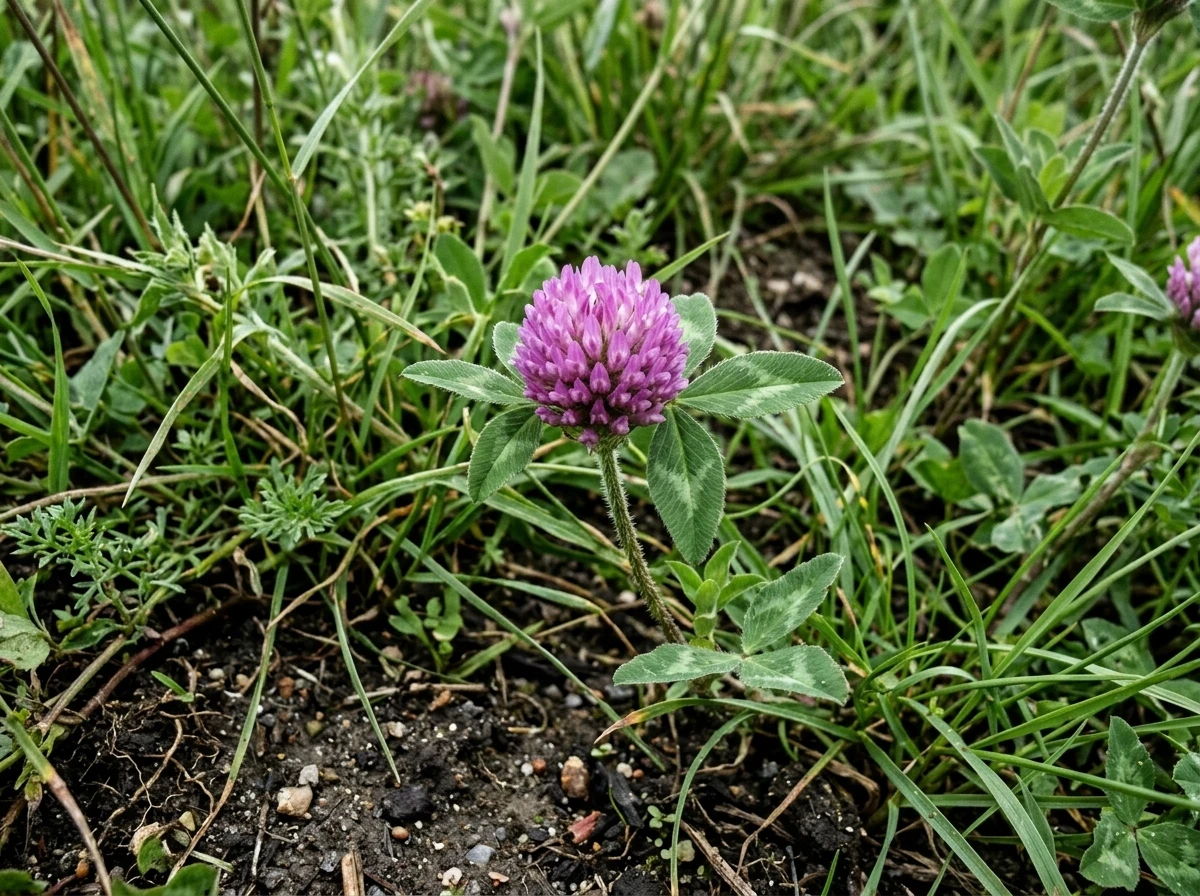
Inner harmony and outer form. The phrase comes straight off this page, and it's the honest description of what people actually come to red clover for: the hormonal side. So let's walk the isoflavones properly, because this is the flower's flagship.
The crew has four names: formononetin, biochanin A, daidzein, and genistein. And here's the fact worth knowing before anything else. Daidzein and genistein are the same two compounds that made soy famous worldwide. Soy's whole international reputation rides on those two. Red clover carries both of them, plus formononetin and biochanin A besides. The blossom out-carries the bean. Nobody puts that on a billboard, but it's true.
Now the mechanism, told plain. These are phytoestrogens, plant compounds, and the word unfolds the story: phyto for plant, and the shape is the whole trick. These constituents are shaped close enough to fit the body's estrogen receptors, and gentle enough to dock softly rather than command. Think of a spare key. It turns the lock gently. It doesn't rekey the house. The body still decides what gets built.
That's the temperament, and it's the same one the whole flower carries. The isoflavones supply raw materials for hormones. They work with the endocrine system, the network of glands, to maintain healthy sex hormones and promote overall hormonal balance. Supply, not command. The body runs the building site; the flower keeps the materials coming.
And where that supply earns its keep is the normal hormonal fluctuations, the natural rhythms and transitions of life, the seasons when the body's own balance is doing its shifting. That's the window where a steady stream of raw materials matters most. Inner harmony first, and then the outer form, because hormonal balance shows. The skin is where the body posts its internal bulletin board, and a maintained internal environment reads on the face as a vibrant appearance. The cleanup crew and the supply room are feeding each other's work.
Now the honest doctrine that has to ride underneath all of this, because it's the part the supplement industry skips. Hormones are built from raw materials, and the plant is only one of two suppliers. Did you know that testosterone and estrogen are over ninety-five percent cholesterol by weight? The isoflavones supply the plant materials. The complete balanced meal supplies the cholesterol. Two doors, one construction site, and the body does the building. And the old line stands: taking an endocrine hormone tonic without saturated fat and cholesterol will negate the effects. Eggs with the yolks kept soft, protein and fat at every meal. Skip the meals and you're handing the construction crew blueprints and no lumber. The flower can't build the house. It keeps the deliveries coming.
Inner harmony and outer form. The flower supplies, the meals supply, the body builds.
Taken consistently over time.
Commit to the Practice
Tonic herbalism rewards consistency. The deep, systemic building work happens quietly over a 30 to 90-day cycle of continuous saturation. Supply the raw materials your body needs with our premium 3-pack.
Shop the 3-Pack Formulation