
Discover the honest truth about Reishi Mushroom—the classical restorative adaptogen prized for thousands of years as the "spirit mushroom." Whether you are looking to support a balanced stress response, maintain cardiovascular circulation, or unwind into restorative sleep, the secret lies in the whole organism extract. This guide strips away the marketing hype to teach you exactly what red Reishi is, what it does, and how to properly use it for deep, systemic tranquility.

I recorded these audios to directly answer the questions I've received most over the last 26 years. The text below contains the actual transcripts.
Jason J. DukeOwner / Artisan
Reference Directory
Commit to the Practice
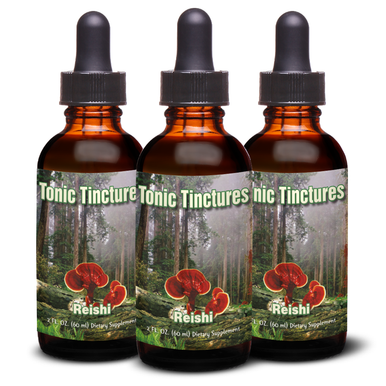
Tonic herbalism rewards consistency. The deep, systemic building work happens quietly over a 30 to 90-day cycle of continuous saturation. Supply the raw materials your body needs with our premium 3-pack.
Shop the 3-Pack Formulation1. What is Reishi, exactly?
What is Reishi, exactly? The right answer starts with the name, because with this mushroom the name is two thousand years old and it tells you what the tradition thought it was.
The Chinese call it ling zhi. Ling means spirit, soul, divine efficacy. Zhi is the ancient word for the sacred fungus itself. So the name translates to the spirit mushroom, the mushroom of spiritual potency. That is not a marketing name. That is rank, assigned by a tradition that watched a thousand plants and put this one in the superior class, the top category of the founding materia medica, the materials taken over a long life.
But get this. The old text sorts zhi into six colors, and each color was assigned an organ of the body. Black for the kidneys. Purple, yellow, white, green, each with its own domain. And the red one, the red zhi, the classic reishi, the one the whole tradition prized highest, is the heart's mushroom. A fungus that colors like blood and fire, assigned to the heart, the blood, and the spirit that lives in it. When the doctrine of signatures and the classical organ map agree on the same point, you pay attention. That is the identity of this material, and it is the spine of everything else you're about to hear.
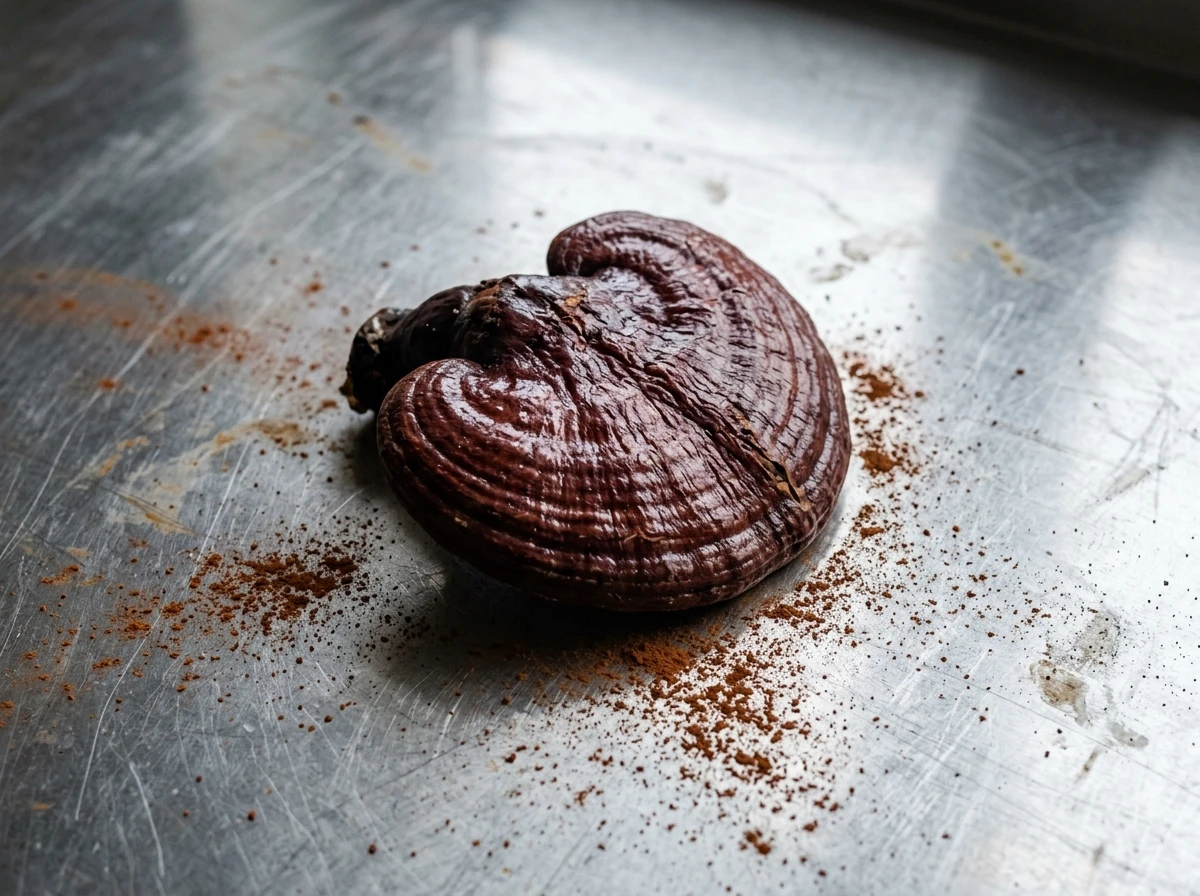
So, definition first. Reishi is a liquid extract of one hundred percent Ganoderma lucidum, the whole organism, fruiting body, spore, mycelium, and sclerotium, because different parts carry different constituents, and the whole range belongs in the bottle. The Latin name paints it: ganos, brightness, derma, skin, lucidum, shining. The lacquered, varnished-looking conk on the hardwood.
Classification before benefits, always. Reishi is an adaptogenic herb and a restorative tonic, grounding, cooling and calming in character, taken consistently over time.
Now the honest boundary. This is not a sedative, and it is not a stimulant. Adaptogens maintain a balanced state. They do not drug you down and they do not jolt you up. They feed the middle.
And the constituent teaser. The signature compounds are the triterpenes, the ganoderic acids, the heart-and-calm fraction. Reishi is one of the most bitter botanicals in the entire catalog, and the bitterness is the ganoderic acids themselves. The taste is the potency announcing itself. The more you taste the stronger it is, and with this mushroom that is almost literal.
The name made it the spirit mushroom. The tradition made it the heart's. The practice makes it work.
Taken consistently over time.
2. Where Does It Come From?
Where does Reishi come from, and why has it stood the test of time? The honest answer starts with scarcity, because for most of its history this was one of the rarest tonic materials on earth.
Did you know the old figures put a wild reishi find at roughly one in ten thousand trees? A spore has to land on the right hardwood, at the right stage of decline, at exactly the right moment, and almost none of them ever do. Nature enforced the rarity for two thousand years. Nobody restricted this mushroom. Nobody had to.
And the tradition ranked it anyway. The founding materia medica of Chinese herbalism, compiled roughly two thousand years ago, sorted every material into classes, and ling zhi sat in the superior class, the top category, the materials taken over a long life to support, maintain, and promote health. The elite company of ginseng and astragalus, and by most accounts this mushroom sat at or near the head of the table.
Which is why the emperors hoarded it. Wild material was so scarce that a mature find was treated as an omen, and top-grade reishi moved as tribute to imperial households, with envoys sent into the mountains specifically to search for it. Ordinary people simply could not get it, for most of its history. The immortality legends ride on top of all that, the first emperor sending ships east to hunt the elixir. Myths embellish. Records endure. This material carries both, and the continuous use across twenty centuries is the record.
Then the nineteen-seventies changed everything. Japanese mycologists cracked cultivation on hardwood, and for the first time in two millennia the emperor's mushroom could be grown on purpose, year after year. The rarity problem nature had enforced for two thousand years was solved by farmers in about a decade.
Our sourcing states the blend plainly. Ninety-one percent organic hardwood log-grown in the US Pacific Northwest, dense and consistent, every batch. Nine percent wild-harvested from the Northern Foothills of China, the homeland material, the lineage fraction, carrying what only the wild country builds.
And the craft honors a tough organism. A bracket fungus builds its body out of the same tough material as a crab shell, and the constituents sit locked inside it, so we extract multi-step, in structured distilled water and triple filtered USP grade organic alcohol at twenty-five percent by volume. The ratio is stated plainly: two pounds of reishi to one quart of liquid, about fifty-seven thousand milligrams in every two-ounce bottle.
You can taste the care. A real extract is dark and bitter, and with this mushroom the bitterness is the potency.
Rare for two thousand years, grown on purpose for fifty, extracted honestly. That is where this comes from.
3. What Does It Actually Do?
What does Reishi actually do in your body? Let me answer it properly, mechanism by mechanism, and I'll start with the one fact that makes the whole map make sense.
The classical texts assigned red zhi to the heart. The modern laboratory maps this same mushroom onto the cardiovascular system, the blood and its flow. Two vocabularies, twenty centuries apart, marking the same organ. When that happens, you are not looking at a coincidence. You are looking at two traditions describing one truth from two directions. Now the mechanisms.
First, the heart and the blood. Naturally occurring bioflavonoids and antioxidant constituents maintain healthy blood flow and support healthy oxygenation through the cardiovascular system, and they neutralize free radicals to maintain cellular health and integrity. Practical translation: blood that moves well and carries its oxygen well shows up as warmth in the hands, a mind that clears, a body that settles. The calm and the circulation are one story, which is exactly why the tradition put the spirit mushroom at the heart.
Second, the calm itself. The triterpenes, specifically the ganoderic acids, work with the neuroendocrine system to maintain healthy stress hormone equilibrium. That is the mechanism under the balanced stress response, the calm mind, the fortifying against the effects of stress. Your body keeps its own middle. The mushroom supplies the materials the middle runs on.
Third, the defenses. The complex polysaccharides, specifically the beta-glucans, support pattern recognition. They help the body's natural defense mechanisms identify foreign material, support containment and removal, and maintain tissue cleanliness, cultivating a balanced and adaptive immune response. The surveillance network, fed.
Underneath all three, the constituents nourish the endocrine system for healthy hormonal balance, and support the natural elimination pathways that keep tissue clean. And the frame never changes, so say it plainly. The mushroom supplies. Your body does the work. No constituent forces anything.
Now, a quick note here, because this is food-class doctrine. These constituents are consumed alongside complete balanced meals. The meals provide the raw materials, the mushroom provides the unique constituents, and the two work synergistically. Skipping meals and eating incomplete meals will lead to ineffective results.
Feed the heart, quiet the system, guard the walls. Your body does the building.
4. Who Is It For?
Who is Reishi actually for? Let me paint the pictures, because this mushroom serves a quieter crowd than the loud tonics, and the people it serves, it serves well.
First, the person carrying the loud day. Dealing with chaotic days and people requires sustained energy and mental and emotional balance, and the unique triterpenes work with the neuroendocrine system to maintain healthy stress hormone equilibrium, promoting a balanced stress response and a calm mind. The bottle ends up in the bottom desk drawer, and the day stops owning you.
Then the one winding down. When the evening comes, the physical body must properly transition into rest, and these adaptogenic herbs nourish the endocrine system and ease tension, supporting the natural regenerative processes required for restorative sleep. The bottle lives on the nightstand, and the downshift becomes something the body knows how to do.
Then the one around people. Being in crowded spaces can wear down your first line of defense, and the complex polysaccharides support natural defense mechanisms, identifying foreign material and maintaining tissue cleanliness to cultivate a balanced and adaptive immune response. The bottle waits in the medicine cabinet, season after season.
Then the one catching up on rest. Weekends off and recovery time require deep systemic balance, and this formulation works with the body to promote cellular repair and regeneration, replenishing nutrient reserves. The bedside table bottle, doing its quiet work while you sleep.
And the sage, reading well into the advanced years. Staying sharp depends on maintaining cellular health and longevity, and the natural regenerative processes supported by these vital nutrients fortify brain structure and function, promoting mental acuity and cognitive focus. The tradition's own long-life users took this material for exactly that project, over a long life, and they were the ones with the time to watch it work. The bookshelf bottle, next to the reading lamp.
I'll touch the meditation crowd lightly here, because they get their own section later. Sitting still and quieting the brain requires a harmonious flow of energy, and by maintaining healthy blood flow and oxygenating the body, this formulation supports a state of relaxed alertness and inner balance.
Now, who is this not for? I will tell you plainly. If someone is shopping for a stimulant jolt, or a sedative knockout, this is the wrong shelf. Adaptogens maintain a balanced state. They feed the middle, and the middle is what you have to want.
The person who wants the stress bled off, the sleep supported, the defenses fed, and the heart nourished. That is who reishi is for.
5. How Do You Take It?
Tonic Synergy & Timing: We remind you that with consistent use, benefits accumulate over time.
For rapid mucosal assimilation, take it on an empty stomach (up to 30 mins before eating). Because these unique constituents act synergistically with your nutrition, it must be followed by complete balanced meals (proteins, fats, and carbohydrates) to provide the building blocks your body requires.
This is Reishi liquid extract, one hundred percent Ganoderma lucidum, the whole organism, fruiting body, spore, mycelium, and sclerotium, in a two-ounce bottle with sixty dropper servings.
One dropper is one press of the rubber bulb, which fills the tube to just above half-way. That's thirty drops, which is also one milliliter.
To find a functional dose, start with a minimum dose of ten drops to one dropper and work up. We suggest ten drops to one to three droppers, taken one to three times per day, which is three hundred thirty-three to three thousand milligrams daily. The more you take, the better it works, and consistency at a functional dose is the key.
Shake gently. Secure the lid and turn the bottle over back-and-forth three to five times to evenly distribute the liquid extract. Vigorous shaking oxidizes the fragile constituents, so gentle is the word.
By mouth, hold the liquid under the tongue for sixty to ninety seconds before swallowing. Don't rush that hold, because it matters with this one. The alcohol extract and the sublingual route are fast, and a lot of people feel reishi quickly when the dose is real and the hold is proper. Or mix the drops into two to four ounces of lukewarm drinking water. Never hot water. Hot liquids damage the fragile constituents and lessen potency.
Now timing, and here is the practical doctrine. It works best on an empty stomach, up to thirty minutes before eating, followed by complete balanced meals. But hear the caveat, because it's the honest one. The empty stomach only works on a body that's eating regular, complete meals. Skip the meals and the trick delivers to a job site with no crew. So eat consistently, and take your dose in the window before the meal.
Evening consumption supports the transition into restorative sleep. Daytime consumption promotes cognitive focus and a calm mind. Choose the window that matches the job you want done.
Bingo, that's the whole practice.
6. How Long Until You Notice Results?
How long until you notice something from Reishi? Here's the honest timeline, and with this mushroom there's a genuine surprise in it, because this is one of the fast ones.
A lot of people feel reishi almost immediately. At a functional dose, held under the tongue properly, the alcohol extract assimilates fast, and the felt layer can arrive within the first dose or two. Some effects are immediate within the first few days, one to three days. With this one, that is not marketing. That is the delivery route doing its job.
And here's the elegant part, the piece most people never get told. The first doses can land with a distinctly chilling, grounding feel, a settling you can actually notice. The system downshifts, the shoulders come down, the noise recedes. But over time, you notice it less. Not because it stopped working. Because you're already living in the grounded state it supports. The gauge stops moving because the system arrived. That is the sign the tonic is doing its job, not the sign it quit.
Other effects are building and are noticeable within one to two weeks, and the deep systemic work, the immunity, the cardiovascular layer, the long game, comes with continuous saturation. The honest cycle for this material runs short. A good tonic cycle can be as short as two weeks. Most people find two to four weeks. The deep systemic work asks for up to ninety days.
Nothing is a quick fix, and the fast felt layer is not the whole project. You gotta take enough to make it work, and keep the complete balanced meals under all of it. An empty-stomach dose on an unfed body underperforms, so feed the foundation and use the window.
Don't stop at the doorstep. The deep work is behind that door.
7. Safety and Quality
Is Reishi safe, and how do you know you're getting a quality bottle? With this material those are the same question, and the answer isn't a promise on a label. It's the organism, the sourcing, and the honesty of the craft.
Start with what's in the bottle. One hundred percent Ganoderma lucidum, the whole organism, fruiting body, spore, mycelium, and sclerotium, all active parts included, because different parts carry different constituents and the whole range belongs in the extract. The sourcing blend is stated plainly: ninety-one percent organic hardwood log-grown in the US Pacific Northwest, and nine percent wild-harvested from the Northern Foothills of China. Both sources, both percentages, on the table. A label that won't tell you where the material came from is telling you something anyway.
And here's the piece of history that makes you a better shopper in this category. Wild reishi was a one in ten thousand find for two thousand years, hoarded as tribute, beyond ordinary reach, until Japanese mycologists cracked log cultivation in the nineteen-seventies. When you know that story, you know what to ask. Where was this grown, and by what method. Ours is grown where growing works, and wild where wild matters, and we say which is which.
Then the craft. Structured distilled water and triple filtered USP grade organic alcohol at twenty-five percent by volume, multi-step extraction, two pounds of reishi to one quart of liquid, about fifty-seven thousand milligrams in every two-ounce bottle. The full specifications of our extraction and lab methods are published on our standards page, because a craftsman hides nothing.
And the taste tells you it's real. Reishi is one of the most bitter botanicals in the catalog, and the bitterness is the ganoderic acids themselves, the signature triterpenes. The more you taste the stronger it is, and with this mushroom that is almost literal. Your own tongue is the lab.
The honest register: this is a grounding, calming material, and adaptogens maintain a balanced state, they do not act as sedatives. Daytime consumption promotes cognitive focus and a calm mind. Evening consumption supports the transition into restorative sleep. And the doctrine keeps it all honest. Herbs are more effective and more powerful in the long term for supporting health, whereas drugs are more effective and more powerful in the short term for treating conditions and emergencies. Use each for its own work.
Honest material, honestly grown, honestly made, honestly priced. Be the Best and Buy the Best. It is important to do your own research. Health is the most valuable asset of one's life and the most valuable investment.

8. Deep Dive: Heart and Circulation
Why is Reishi called the heart mushroom? That question is really asking why this one, out of all the botanicals in the tradition, got assigned to the heart, and the answer runs from the oldest texts straight into modern blood chemistry.
Did you know the classical materia medica sorts zhi into six colors, and each color was assigned an organ? Black zhi for the kidneys. Purple, yellow, white, green, each with its own domain. And the red zhi, the classic red reishi, the one the whole tradition prized highest, is the heart's. A fungus that colors like blood and fire, assigned to the heart, the blood, and the spirit that lives in it.
And in that system, the heart does more than pump. It is the seat of the shen, glossed plainly, the spirit-mind, the thing that scatters when you cannot sleep, cannot settle, cannot stop the inner noise. The classical job written next to this mushroom, generation after generation, is to nourish the heart and quiet the spirit. The old physicians put the spirit mushroom at the organ that houses the spirit. The assignment was never mysterious. It was precise.
Now lay the modern map over it. Naturally occurring bioflavonoids and antioxidant constituents maintain healthy blood flow and support healthy oxygenation through the cardiovascular system. They neutralize free radicals to maintain cellular health and integrity. Two vocabularies, twenty centuries apart, marking the same organ and the same job. That convergence is the spine of this whole thread.
And the spores carry their own part of it. The fatty acid lipids from the spore fraction maintain healthy blood flow, support the cardiovascular system, and fortify cellular health and longevity. The whole organism works the same project.
Here is the felt translation, because blood work should not stay abstract. Blood that moves well and carries its oxygen well shows up as warmth in the hands, a mind that clears, a body that settles. The calm and the circulation are one story. That is exactly why the tradition put the calm-the-spirit mushroom at the blood-and-heart organ, and why the meditation traditions drank it before sitting. A quiet engine is a warm, well-fed one.
The everyday picture is two engines. One runs cold and noisy, rattling through the afternoon. The other runs warm and quiet, and holds. The difference is not willpower. It is delivery.
Feed the pump. Quiet the spirit. The heart does both jobs, and this mushroom supplies both supply lines.
9. Stress After Work
Can Reishi help you unwind after work? That's a fair question, because most of what gets sold for relaxation either sedates you or does nothing, and neither one is what a working person needs at six in the evening. This mushroom does something different, and the distinction is worth understanding.
First, the honest label. This is not a sedative and not a nightcap. Adaptogenic herbs maintain a balanced state. They do not drug you down, and they do not knock you out. You stay present, you stay functional, and the body stops carrying the day on its shoulders.
Here's the mechanism. The triterpenes, specifically the ganoderic acids, work with the neuroendocrine system to maintain healthy stress hormone equilibrium, promoting a balanced stress response and a calm mind. The day keeps coming, the hormones stay proportional, and the noise stops compounding. That is what fortifying against the effects of stress actually means, and it is built, not switched on.
And the felt experience is the part I want you to hear, because it is the honest signature of this material. The first doses can land with a distinctly chilling, grounding feel. The system downshifts. The shoulders come down. You can actually notice it. And here is the elegant part. Over time, you notice it less. Not because it stopped working. Because you're already living in the grounded state it supports. The gauge stops moving because the system arrived.
That is why I call this the after-work mushroom, and the stressful-times mushroom, and the emotional-times mushroom. It bleeds accumulated stress off the system. The same supply line serves the grief-stricken season, the loud week, the day that would not end. Steadiness is built from deliveries, not willpower.
The practice is the transition dose. Take it in the window after work, on the empty stomach up to thirty minutes before dinner, and let the body put the day down before the meal lands. The old physicians would frame it exactly that way. Quiet the spirit by nourishing the heart. The scattered evening is a scattered shen, the spirit-mind, and the spirit mushroom feeds the organ that houses it.
Keep the complete balanced meals under all of it, because the grounded state is built from food and constituents together.
10. Sleep and Tranquility
Will Reishi help you sleep? Let me give you the direct answer first, and then the mechanism, because the mechanism is not what the sleep aisle sells, and you deserve to know the difference.
Yes. And the way it works is the honest way. Nothing gets drugged. Adaptogenic herbs maintain a balanced state and do not act as sedatives. That is page doctrine and it is the truth of the category. The body is not knocked out. It is supported into its own rest.
Here's the mechanism, told plainly. When winding down for the evening, the physical body must properly transition into rest, and these adaptogenic herbs nourish the endocrine system and ease tension, supporting the natural regenerative processes required for restorative sleep. The hormones settle, the tension comes out of the frame, and the body shifts into the state where the overnight rebuild actually happens. Evening consumption supports the transition. That is why the timing on the label points the evening dose at the sleep project.
The classical frame says the same thing in older words. The heart houses the shen, glossed plainly, the spirit-mind. Restlessness at night is a scattered spirit, a shen that will not settle because the system that carries it is still wound up. The tradition's job description for this mushroom was to nourish the heart and quiet the spirit, and the tradition's own sleep answer was this material, for twenty centuries. The old physicians could not name a stress hormone. They did not need to. They watched the overwrought settle, and they kept the prescription.
Practical translation. You do not lie awake at midnight with the engine racing, because the engine was not whipped in the first place. A body that ran steady all day sleeps like it worked. Rest is where the rebuilding happens, and the tonic feeds the rebuild.
So the nightstand practice. The evening dose, in the wind-down hour, on the empty stomach before a complete dinner or alongside the evening routine. The Tranquility card in the tradition's own size. Not a knockout. A downshift the body knows how to make.
11. The Spiritual Mushroom
Why do the Chinese call Reishi the mushroom of immortality? That question is asking about the name, and the name is one of the deepest pieces of paper in the entire herbal world.
Did you know the emperor's ceremonial scepter, the ruyi, has a head shaped like a reishi? The scepter of authority and wish-fulfillment, carried by emperors and nobles for two thousand years, its cloud-form head carved in the shape of this fungus. And it doesn't stop there. Look at classical Chinese painting, temple carvings, silk textiles, and the curly cloud motif you see everywhere, the stylized clouds the immortals ride, traces back to the lingzhi form. The cloud of the immortals and the mushroom of immortality are the same shape in the art. When a culture carves a mushroom into the instrument of state and paints it into the sky, that is not folk medicine. That is reverence with a paper trail.
Now the name itself, unpacked properly. The Chinese is ling zhi. Ling means spirit, soul, divine efficacy. Zhi is the ancient word for the sacred fungus of immortality. The spirit mushroom. And here's the twist most people never hear: the word reishi is the Japanese reading of that same name. The Japanese had their own common name for it, mannentake, which translates to the ten-thousand-year mushroom. The West knows this two-thousand-year-old Chinese imperial material by a Japanese pronunciation of its Chinese name. That's how the trade routes work.
The legends ride on top. The first emperor, the man who unified China, sent ships east across the sea hunting the elixir of immortality, and the mushroom of immortality is woven all through those stories. Myths embellish. Records endure. This material carries both, and the record is the superior class of the founding materia medica, the top category, two thousand years of continuous use.
Now the honest register, because I don't sell mystique. No mushroom makes anyone immortal, and the old tradition knew that too. The name is a compliment, the way a compliment works in an old tradition. It says this material belongs in a long life, taken daily, for the whole of it.
And the meditation lineages earned their claim honestly. The Daoist sitting traditions graded materials by what they did to a mind trying to go quiet, and this was their mushroom. Sitting still and tuning out noise is difficult when the nervous system is continuously active, and these grounding constituents maintain nervous system functioning, easing tension to cultivate a sense of calm and inner peace. By maintaining healthy blood flow and oxygenating the body, they support relaxed alertness. The monks were not guessing. They were running the experiment nightly for centuries.
12. Wild vs. Log-Grown
Wild Reishi versus log-grown. This is the argument running under the whole reishi market, and most companies settle it with a marketing word, wildcrafted, as if wild automatically means better. Let me give you the honest version, because the answer is more interesting.
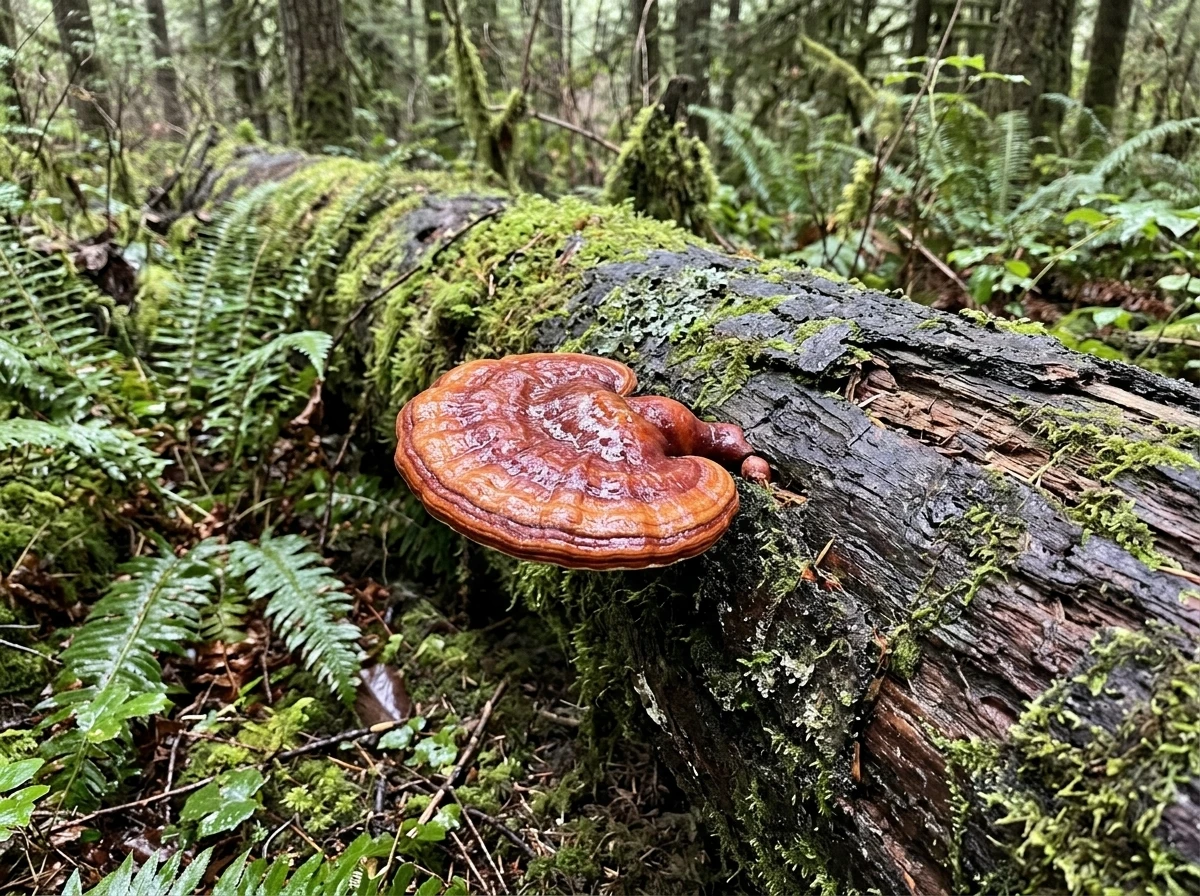
First, what wild reishi actually is. The old figures put a wild find at roughly one in ten thousand trees. A spore has to land on the right hardwood, at the right stage of decline, at exactly the right moment, and almost none of them ever do. The fungus is choosy about its host, the odds are brutal, and a mature wild conk took years to build. That is why the emperors hoarded it, why envoys were sent into the mountains specifically to search for it, and why ordinary people could not get it for most of its history. Wild reishi is a real treasure, and there's a reason it's prized.
Now the problem, and it's the same one chaga has. Wild reishi cannot be farmed on demand. It grows at the forest's pace, not the market's, and demand for this material has exploded. Foragers stripping the wild faster than it replaces itself is not a marketing problem. It's a stewardship problem.
Log-grown reishi answers it. Cultivation on hardwood was cracked open by Japanese mycologists in the early nineteen-seventies, and for the first time in two millennia the emperor's mushroom could be grown on purpose, dense, consistent, and clean, without taking a single conk from the wild. For consistency and density, batch after batch, log-grown is not a downgrade. It's the honest supply.
So the honest answer is neither alone, and our blend states it plainly. Ninety-one percent organic hardwood log-grown in the US Pacific Northwest, carrying the dense, consistent material. Nine percent wild-harvested from the Northern Foothills of China, the homeland material, the lineage fraction, carrying what only the wild country builds. Both sources, both percentages, on the table.
And that's the shopping lesson. Ask where the material came from, and by what method. A label that won't say is saying something anyway.
13. The Spores
What about the spores? That's the question that separates a whole-organism extract from the rest of the shelf, and the answer on our bottle is stated plainly. Yes. We extract all active parts, including the spores.
Now, why that matters, and it starts with the biology. Reishi is a polypore. No gills. The underside of the conk carries thousands of tiny pores, and the spores drift down through them like fine rust-colored dust. One mature conk releases an astonishing amount of that dust across a season, and almost every spore lands nowhere it can grow. That is the lottery that makes wild reishi a one in ten thousand find.
And the spores themselves are armored. Reishi spores are among the toughest in the fungal world, wrapped in a double wall so hard that swallowed whole, they pass through a digestive tract intact. The traditional practice went to the trouble of cracking them to get at the inside, because the inside is where the spore fraction carries its own class of material.
Here's what that fraction does. The unique triterpenes and the fatty acid lipids from the spores assimilate into the body to maintain healthy blood flow, support the cardiovascular system, and fortify cellular health and longevity. The heart mushroom's spores carrying heart work. The tradition assigned red zhi to the heart before anyone could name a lipid, and the spore chemistry keeps landing on the same assignment.
So the whole-organism doctrine, stated plainly. Fruiting body, spore, mycelium, and sclerotium, all active parts included, because different parts carry different constituents and the whole range belongs in the bottle. A single-part extract is a fraction of the material's story.
And here's the lowdown on the market, because you deserve the honest shopping frame. Some reishi products on the shelf are not what the bottle suggests. Mycelium on grain, fruiting body only, spore oil separated out and sold as its own premium product. Each of those is a fraction, and a fraction is what it is. A label that states the whole organism, all active parts, is telling you something, and ours does.
14. Reishi and Coffee
Can I take Reishi with my coffee? I get that question constantly, and with this mushroom the answer is better than yes. There's no conflict at all, and the pairing is genuinely better than coffee alone. Let me tell you why.
Here's the distinction that matters. Caffeine is a stimulant. It forces output, whips the system, and drops you two hours later lower than where you started. Anyone who's ridden that cycle all day knows the shape of it, the tweaky edge, the rattle in the hands, the mind loud and slightly sideways. Reishi does not impersonate calm. The triterpenes work with the neuroendocrine system to maintain healthy stress hormone equilibrium, supplying the materials the grounded state actually runs on. The coffee gives you the spike. The reishi settles the baseline it rides on.
And that is exactly what people report with the pair. The lift still lifts. It just stops rattling you. The tweaky edge comes off the caffeine, because the spike is now riding on a settled system instead of a wound one. Same cup, smoother ride. Over the cycle, as the grounding layer builds in, plenty of people tell me the coffee stops being load-bearing. They drink it because they enjoy it, not because they need it to function. That's not the mushroom doing anything to the coffee. That's a well-fed system not needing the crutch anymore.
The practical rhythm is simple. Coffee in the morning, and reishi morning or evening, whichever job you're pointing it at. Daytime consumption promotes cognitive focus and a calm mind, which is the pairing with the cup. Evening consumption supports the transition into restorative sleep, which is the nightstand job. Most people who love the morning coffee plus reishi combination keep the evening dose for sleep, and run both ends of the day.
One food note, because the doctrine always rides along. Coffee on an empty stomach plus a tonic on an empty stomach is two fires and no wood. Keep the complete balanced meals under both of them, and the whole stack works with the fuel instead of against it.
15. Troubleshooting Guidelines
Why didn't Reishi work for you? I can tell you from years of answering this phone. When this material fails, it fails for one of exactly three reasons. Let me count them down, because the order matters, and so does the fix for each.
Reason three: time. This one is interesting, because the felt layer is genuinely fast. A lot of people feel the grounding effect within the first dose or two, when the dose is real and the sublingual hold is proper. But the felt layer is not the whole project. The deep systemic work, the immunity, the cardiovascular layer, keeps the tonic calendar. A good tonic cycle can run as short as two weeks, most people find two to four weeks, and the deep work asks for up to ninety days. Most people who tell me it didn't work took it irregularly and quit at the doorstep of the deep layer. The fix is patience, on a schedule.
Reason two: the fuel. This is the one nobody expects, and it's the biggest with this material. Reishi works best on an empty stomach, but only on a body that's eating regular, complete meals. The empty-stomach advantage is a delivery trick, and a delivery trick needs a job site with a crew. If you've been skipping meals or eating incomplete ones, the fast route delivered the constituents to a body with nothing to build with. That's not the mushroom failing. The fix is on your plate. Complete balanced meals, consistently, and the dose in the window before them.
And reason one, the most common of all: not enough. This material is dose-dependent, and the label says it plainly. The more you take, the better it works. If you took ten drops a day for a week, you were running a test, not a tonic. The honest range is ten drops to one to three droppers, taken one to three times per day, which is three hundred thirty-three to three thousand milligrams daily. Most people find their functional dose somewhere in the upper half of that range, held under the tongue for sixty to ninety seconds, because the hold is half the speed.
There's the countdown. Dose, plate, calendar, in that order of how often they're the culprit. Check the dose, check the plate, check the calendar, and almost every failed bottle turns out to be a practice problem, not a mushroom problem.
If it didn't sit right, try again at a lower dosage and with a complete meal.
The failure is almost never the material. It's the practice.
Commit to the Practice
Tonic herbalism rewards consistency. The deep, systemic building work happens quietly over a 30 to 90-day cycle of continuous saturation. Supply the raw materials your body needs with our premium 3-pack.
Shop the 3-Pack Formulation