
Discover the honest truth about Saw Palmetto—the foundational nutritive tonic prized for maintaining deep hormonal balance and structural integrity. Whether you are looking to support healthy genital reproductive function, fortify your endocrine system, or supply the raw lipid materials needed for tissue repair and a vibrant appearance, the secret lies in the unadulterated delivery of the wildcrafted berry. This guide strips away the marketing hype to teach you exactly what saw palmetto is, what it does, and how to properly use it as the lipid base for both men and women.

I recorded these audios to directly answer the questions I've received most over the last 26 years. The text below contains the actual transcripts.
Jason J. DukeOwner / Artisan
Reference Directory

Commit to the Practice
Tonic herbalism rewards consistency. The deep, systemic building work happens quietly over a 30 to 90-day cycle of continuous saturation. Supply the raw materials your body needs with our premium 3-pack.
Shop the 3-Pack Formulation1. What is Saw Palmetto?
So, what is saw palmetto, exactly? Most people meet this plant as a word on the men's shelf, the bottle parked next to the men's products, and never meet the plant itself. Big mistake. Because the plant is a surprise, the berry is a delivery system, and the house is much bigger than the one room everybody talks about.
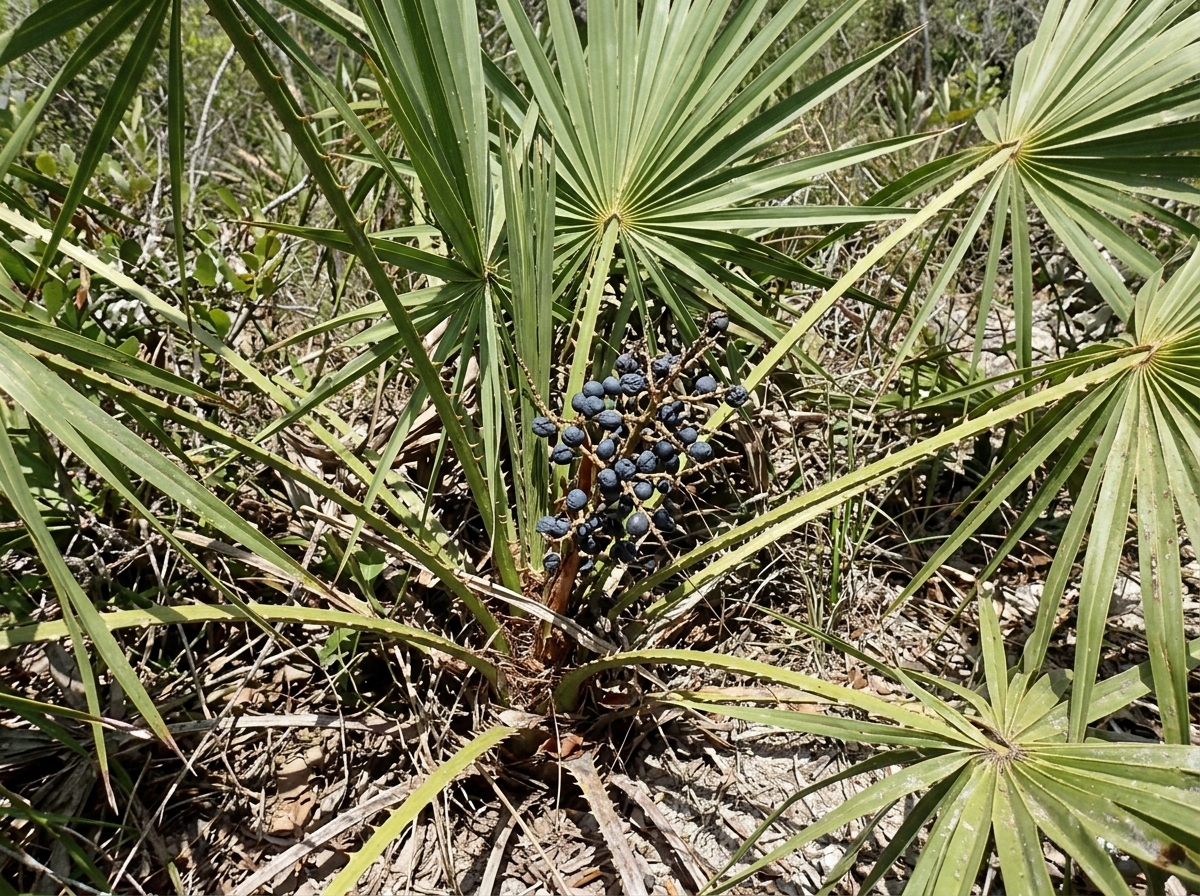
Start with the plant, because the plant is not what the word suggests. Saw palmetto is not a tree. It's a shrub, a creeping, mostly trunkless little palm that grows knee to shoulder high and forms thickets so dense you can't walk through them. The botanical name says it straight: repens is Latin for creeping. A palm that hugs the ground instead of climbing for the sky.
And the name carries the plant's stature, too. Palmetto is the Spanish diminutive of palm, little palm, the same suffix that turns burro into burrito. The name tells you the whole plant in two syllables: a palm, but small.
Now the saw, and this part is literal. The leaf stems carry rows of tiny saw teeth, sharp enough to cut the hand that reaches in. The plant is named after its weapon. This is a berry with a bodyguard, and the defenses tell you something about the material: this is wild plant, growing where it wants, protecting itself.
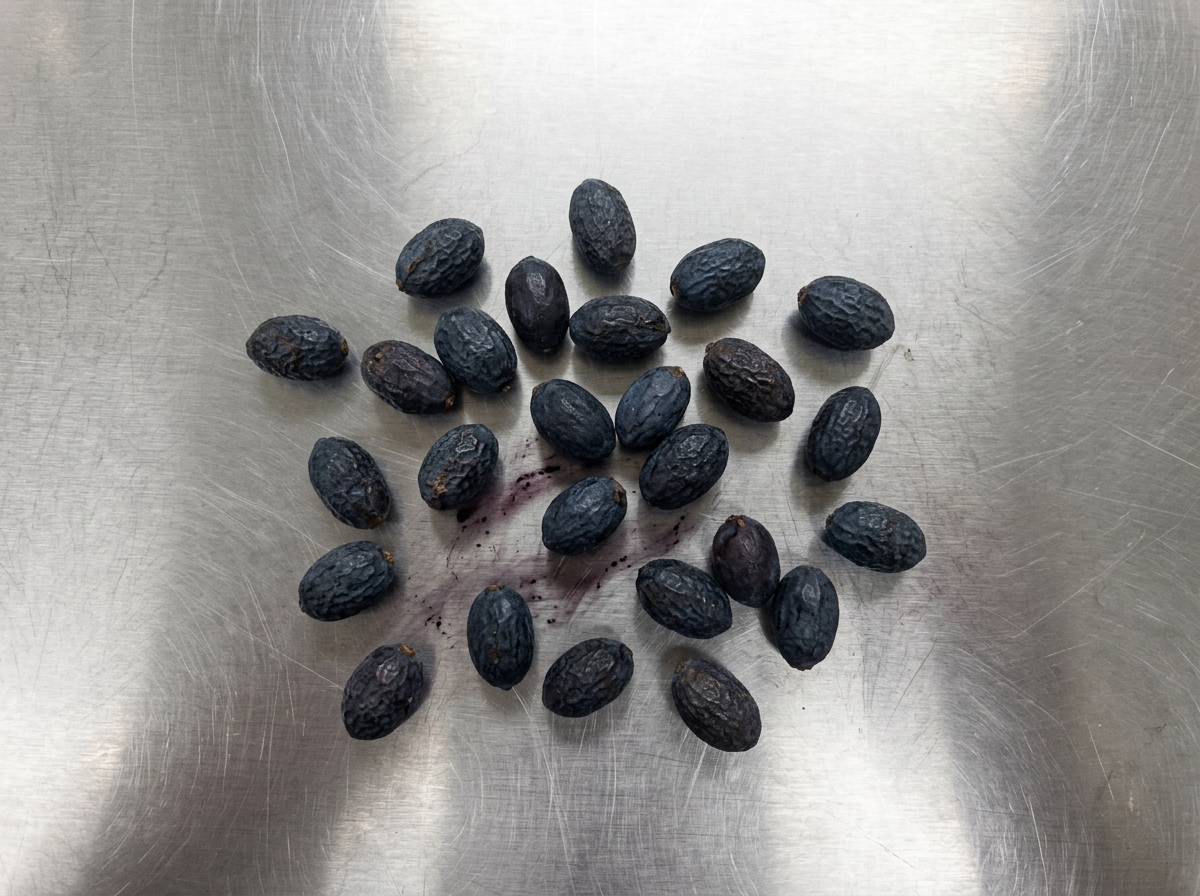
And the berry is the surprise inside the surprise. Saw palmetto is an oily fruit, unusually oily for a berry, and that's the entire point of it. The lipids are the cargo. The ripe blue-black berries carry a faint fatty, soapy smell that tells you exactly what's inside, the same honest tell your own dropper will give you later in this series.
Classification before benefits, always. Saw palmetto is a nutritive tonic and an alterative. Plain English: this is the feeding bottle, the settle-and-nourish half of the tonic shelf. The one that supplies raw materials for your glands and your tissues instead of firing anything up. Its partner herbs light the lamp. This one delivers the lumber.
Now the crew, named straight. The berry carries phytosterols, specifically beta-sitosterol, plus fatty acid lipids, bioflavonoids, and a broad spectrum of antioxidant constituents. The phytosterols and the lipids are the headliners here, and how they feed the hormone-making machinery is the whole thesis of this formulation. That story earns its own piece in this series, and it's the best one.
And the honest contrast, because classification comes with it. This is not a stimulant. It will not wake you up, and you don't want it to, because that's the other shelf's job. And the men's shelf framing sells this berry short. The organ everybody talks about is one room in a much bigger house: the glands, the tissues, the skin, the reproductive health of men and women both. That's the house this bottle works on.
Not a stimulant. Not a mystery botanical. The slow, nourishing builder, in a dropper.
The practice is what makes it work. Benefits accumulate over time.
2. Where Does It Come From?
Where does saw palmetto come from? Short answer: wild scrub in the American Southeast, sustainably wildcrafted. Real answer: a plant older than the nations around it, defended by its own teeth, feeding bears and people for centuries, and carrying a resume written by three separate traditions.
The facts first, straight. One hundred percent saw palmetto berry, Serenoa repens, sustainably wildcrafted in the USA. Structured distilled water and triple filtered USP grade organic alcohol at forty-five percent by volume. Nothing else in the bottle but the liquid. And the ratio is the heaviest we've covered in this series: two pounds of berry to one quart of liquid, about fifty-seven thousand milligrams extracted into every two-ounce bottle.
Now the wild, because wild is the whole story here. This is not a farmed crop. It's gathered from dense natural thickets, and the saw teeth explain why that work is honest work. The plant defends itself. You don't stroll into a palmetto scrub. You go in careful, and you come out with material that grew on its own terms, in its own time.
And its own time is the wilder fact. Saw palmetto is among the slowest-growing plants in North America, creeping outward stem by stem, and some colonies are estimated at centuries old, individual clumps believed to predate European arrival in Florida. The plant we call the foundational vitality tonic is itself ancient. And it's fire country out there: the scrub burns, and the palmetto shrugs it off, regrowing from its buried stems. Old, slow, and unkillable. There's a medicine in that example.
The forest knew the berry first. Florida black bears fatten on saw palmetto every fall, alongside raccoons, deer, and wild turkey. The berry builds flesh in the forest, the wild proof of its nutritive reputation. And the flowers feed the bees, and saw palmetto honey is one of Florida's prized regional honeys. A generous plant, guarded and generous at once.
Then the people, told as settled history. The peoples of Florida ate the berries fresh and dried them into cakes for winter food, survival material, and the Seminole worked the fronds into thatch and basketry. The plant fed, housed, and healed. Then the nineteenth-century Eclectic physicians took it up as one of their great nutritive tonics for the reproductive tract, in men and women both, and famously utilized it to build flesh in the thin and worn. They called it an agent that wastes no energy. It feeds. Then Europe followed: under the old pharmacy name sabal, France, Germany, and Italy built one of the longest-running herbal research programs in the world around this berry, starting in the nineteen sixties. Three traditions, two continents, one plant, the same assignment, century after century.
Now the extraction, built to respect the material. Custom crafted, multi-step, micro-batched, cold processed. And notice that forty-five percent: the highest solvent strength in this series, because the cargo is the densest. The fatty acid lipids need that alcohol to hold them in fluid suspension, unheated and intact, for maximum absorption. The percentage is the craft answering the material.
Two pounds of berry, wild and old, in every bottle.
Taken consistently over time.
3. What Does It Actually Do?
What does saw palmetto actually do in your body? Let me skip the list and give you one picture, because the picture is the mechanism.
A supply line, running to a factory. The berry is the delivery, the glands are the factory, and your meal is the freight. The berry brings the specialty materials, the sterols and the lipids, but the factory runs on freight, and that's the part most people miss. The rule underneath never moves: the berry supplies the raw materials. Your body does the building.
Start with the hormones, because that's the headliner. The phytosterols, specifically beta-sitosterol, supply raw materials for hormones, working to assimilate and maintain healthy sex hormones through natural regenerative processes. And here's the piece of chemistry that makes the whole thing click: plant sterols sit in the same structural family as cholesterol. Cholesterol is the animal sterol, and cholesterol is what your body builds its steroid hormones from. The plant carries the sterol skeleton. Your body runs its own hormone construction with the materials it's given. Delivery to factory, exactly as the picture says.
Next, the glands themselves. The phytosterols work synergistically to help the body adapt to various challenges, fortifying the endocrine system, the network of glands, and maintaining consistent glandular function. Not pushing the glands, not forcing them. Feeding them, so they hold their own output steady as the body matures.
Then the tissues. The fatty acid lipids and the bioflavonoids promote tissue growth, maintenance, and repair, providing vital nourishment to the skin's natural barrier function and the epidermal cells. What that looks like in real life: the skin's integrity, the hair's raw materials, the vibrant appearance the page promises. The reproductive tissues get the same nourishment, the structural building blocks for genital reproductive health and the harmonious flow of energy.
Then the guards. The various antioxidant constituents neutralize free radicals, maintaining cellular health and integrity, buffering the internal environment against everyday wear and tear. The cleanup crew rides along in the same dropper.
Now the doctrine, and for this bottle it's the engine, so it gets said loud. The sex organs and the glands are built, not switched on. Testosterone and estrogen are over ninety-five percent cholesterol by weight. Hormones are made from fat. Which means a lipid tonic taken without saturated fat and protein is materials without freight: the truck arrives at the factory gates, and the factory is empty. The body requires macronutrients, protein, complex carbohydrates, and healthy fats, to recover and rebuild. The berry with the complete meal is the program. The berry alone is half a program.
And the honest limit, stated straight: it does not create energy out of thin air. It assists your body in efficiently using the food you eat. The meals aren't optional furniture here. They're the entire point.
Deliver the materials, feed the factory, and let the body build.
Benefits accumulate over time.
4. Who Is It For?
Who is saw palmetto actually for? Let me tell you who buys it, because the page serves four of them, and the honest answer includes a crowd most people don't expect. The reading chair, the bathroom scale, the nightstand, and the apothecary shelf.
The sage, first, because aging well is the long game. Staying power over time requires the body to maintain its structural integrity, and the endocrine system, the network of glands, needs fortifying as the years stack up. The unique constituents fortify the glands and buffer the internal environment against everyday wear and tear, maintaining cellular health and longevity. And there's a fitting companion for this one: the plant itself is centuries old, fire-proof, slow, and unkillable. Old material for the long haul. The bottle sits on the bookshelf, next to the reading lamp.
The physique crowd. Staying lean, keeping up physical maintenance, and that runs on natural regenerative processes. The fatty acid lipids supply raw materials for hormones, working to maintain healthy sex hormones and promote tissue growth, maintenance, and repair. The bears have been running this study forever: they fatten on the fall berry in the wild scrub, the forest's proof that this material builds flesh. The bottle lives in the bathroom cabinet, next to the scale.
The lovers. Physical intimacy requires sustained energy and the biological capacity to connect. By providing essential fatty acid lipids, this botanical works to nourish genital reproductive health and support the systemic balance necessary for human intimacy. And remember the mechanism: the organs are built, not switched on, and they're built from fat and protein. The bottle waits in the nightstand drawer, right where the page puts it.
And the tonic herbalist. Brewing the daily teas, running the full supplement program. The consistent use of these broad spectrum phytonutrients and antioxidants works synergistically to neutralize free radicals and replenish nutrient reserves for long-term building benefits. This is the foundational bottle, the lipid base the rest of the program rides on, and it stands front row of the apothecary shelf.
Now the crowd nobody expects, and the page says it plain. Is this formulation exclusively for men? No. While it is highly regarded for nourishing genital reproductive health, women also utilize these unique constituents. The phytosterols work with the endocrine system, the network of glands, to maintain healthy sex hormones and promote tissue growth, maintenance, and repair, for a vibrant appearance, in both sexes. The glands don't check IDs. Same network, same materials, same program. Ladies, this is not just the men's shelf, and it never was.
Notice the common thread, because it's the whole thesis. Every one of these buyers is purchasing the fed foundation: the aging that holds its structure, the physique that regenerates, the intimacy that connects, the regimen that builds. One delivery system, four doorbells.
Now the honest redirect, because with a nutritive tonic it matters. This is not a stimulant and not a one-week herb. If you want the wake-it-up bottle, that's the other shelf, and this berry will never do that job. And the man buying this for the one famous room is missing the house: the glands, the tissues, the skin, the hormones of both sexes. Buy it for the room if you like, but take it for the house.
Taken consistently over time.
5. How Do You Take It?
Tonic Synergy & Timing: We remind you that with consistent use, benefits accumulate over time. With these botanicals, some effects are immediate within the first few days. Other effects and benefits are building and are noticeable within one to two weeks.
We recommend taking this formulation on an empty stomach (up to 30 mins before eating) for rapid mucosal assimilation, followed by a complete balanced meal to provide the heavy building blocks (proteins/fats) required for cellular repair and regeneration.
This is saw palmetto liquid extract, the nutritive tonic in a two-ounce bottle with sixty dropper servings.
One dropper is one press of the rubber bulb, which fills the dropper tube to just above half way. That's thirty drops, which is also one milliliter.
To find a functional dose, start with a minimum dose of ten drops to one dropper and work up. We suggest ten drops to one to three droppers, taken one to three times per day, which is three hundred thirty to four thousand milligrams daily.
Now the bottle has two jobs, and it's worth knowing both. For immediate impact, hold one to two droppers under the tongue, sublingually, for fifteen to thirty seconds. Longer isn't necessary. For tonic building, to continually saturate your system and build deep, long-term health, take one to two droppers with meals, or up to two to three droppers with your largest meal.
Shake gently. Secure the lid and turn the bottle over back and forth three to five times to evenly distribute the liquid extract. And with this one you'll see why: the extract is cloudy and thick, and that's exactly right. The gentle turn redistributes the dense lipids evenly. Vigorous shaking oxidizes the constituents, so don't do that.
By mouth: hold the liquid under the tongue for sixty to ninety seconds before swallowing, or mix the drops into two to four ounces of lukewarm drinking water. Never boiling water. Hot water damages the fragile constituents, and this berry carries a full set of them.
Timing, and this bottle is flexible in a way its cousins aren't. Best taken with meals to aid assimilation of the lipid constituents. For rapid mucosal assimilation, take it on an empty stomach, up to thirty minutes before eating, followed by a complete balanced meal to provide the heavy building blocks, the proteins and fats, required for cellular repair and regeneration. And may be consumed anytime throughout the day or evening. No stimulant cargo, so evening is fine. This is one of the rare bottles that won't cost you a minute of sleep.
Now the doctrine, and for this bottle it's the whole trick: take it with the complete meal, with plenty of protein and saturated fat. The lipids meet the meal's fats, and the glands get the full materials program. The sterols and the cholesterol doctrine are cousins; the meal is where they're introduced.
And the honest diagnosis, because it catches people constantly. If it's not working for you, you probably need to consume it with a meal, a complete meal with plenty of protein. That's the usual failure, and it's not the bottle's fault. Materials without freight. Feed the factory.
Storage is easy: an opened bottle holds about thirty to forty-five days. Unopened, about two years from the batch date. Keep it dark and cool.
Some effects are immediate within the first few days. Consistency at a functional dose is what builds the rest.
6. How Long Until You Notice Results?
How long until you notice something from saw palmetto? Most-asked question about any tonic, so here's the straight answer, in three windows.
Some effects are immediate within the first few days, one to three days. That's the felt layer: the tonic arriving, the system registering the delivery. You'll feel a functional dose.
Other effects and benefits are building, and become noticeable within one to two weeks. The steadier tissue work, the nourishment registering at the skin and the structure. The deeper work doesn't announce itself. It stacks up underneath, quietly, while you go about your life.
Then the long game, and this page states it plainer than most. The systemic shifts and deep hormonal benefits happen as you continuously saturate your body over a thirty to ninety day cycle. That's a good tonic cycle, thirty to ninety days, and the page says it straight: a six bottle protocol unlocks the deepest systemic shifts. That's not a sales line. That's just how nutritive tonics work. The old doctors called this an agent that wastes no energy. It feeds, and feeding takes a season. A tonic is a practice, not an event.
And you gotta take enough to make it work. The more you take, the better it works. Not enough doesn't work. Someone can only take so much of anything at any one time, so enough is the target, and consistency is the vehicle that gets you there. A dropper once a day is a whisper. Find your functional dose and hold it.
Nothing is a quick fix. Anyone selling a quick fix in a bottle is selling snake oil. Tonics reward time, not dosage.
And keep the foundation under all of it: complete balanced meals, every time, with your protein and your saturated fat. For this bottle that's not a footnote, it's the mechanism. Skipping meals and eating incomplete meals will lead to ineffective results. The berry rides on food. It doesn't replace it.
Benefits accumulate over time.
7. Safety and Quality
Is saw palmetto safe, and how do you know you're getting a quality bottle? With this berry, those are the same question, and the answer isn't a promise printed on a label. It's the honesty of the formulation, the sourcing, and the craft.
Start with the markers that matter, stated straight. Species named: one hundred percent saw palmetto berry, Serenoa repens, sustainably wildcrafted in the USA. Nothing else in the bottle but the liquid. Craft named: custom crafted, multi-step, micro-batched, extracted with structured distilled water and triple filtered USP grade organic alcohol at forty-five percent by volume, cold processed so the fatty acid lipids and fragile constituents hold their integrity in fluid suspension for maximum absorption. Rapid, high bioavailability. The ratio is honest and heavy: two pounds of berry to one quart of liquid, about fifty-seven thousand milligrams in every two-ounce bottle, the densest cargo in this series. The full extraction and lab methods are published on our standards page, if you want to see exactly how the work gets done.
Now, the marker that's unique to this bottle, and it's the best one in the series: your own eyes are the lab. The page carries the question itself. Why is the extract cloudy and thick? Because this formulation provides dense fatty acid lipids, and a proper extraction preserves those essential building blocks in fluid suspension. The cloudy thickness is the certificate. It indicates the rich presence of the naturally occurring substances, right there in the dropper, visible before you ever taste it. One of our own customers said he could see it working material in the glass. So here's the rule: a real saw palmetto extract is cloudy and thick. A clear, thin, watery saw palmetto tincture is the defect, and it tastes like exactly what it is: mostly nothing. Your tongue confirms it. Strong, fatty, persistent, a taste that stays with you. The more you taste the stronger it is.
Now, honest use, plain and simple. These botanicals are food added to the diet, suitable for daily use, and generally this formulation may be taken with other dietary supplements. In fact, for this bottle that's an understatement: it's the foundational lipid base, designed to work with the rest of a supplement program and with your complete balanced meals underneath. The pairing story earns its own piece in this series.
One piece of doctrine to keep the whole thing straight. Herbs are always more effective and more powerful in the long-term for supporting health, whereas drugs are always more effective and more powerful in the short-term for treating diseases, conditions, and any emergencies. Do not use an herb when one should use a drug, and do not use a drug when one should use an herb. Each has its own job, and this bottle's job is the long term.
And the price. You shouldn't pay mystique prices for saw palmetto, because this is a wildcrafted American crop with real markets behind it, a berry that bears eat by the bushel, not a rare treasure. Pay for the berry and the craft, not for the story.
Be the Best and Buy the Best.
It is important to do your own research. Health is the most valuable asset of one's life and the most valuable investment.
8. The Men's Question
Is saw palmetto the men's bottle? Honest answer: partly. The famous room is real, the history behind it is real, and the men's story is bigger than the one room. Let me walk it, because the walking is where the honesty lives.
Start with the history, told as settled history. The nineteenth-century Eclectic physicians prized this berry as one of their great nutritive tonics for the mature man, and they wrote it up at length for healthy urinary flow as men age and the reproductive system. A century later, Europe picked up the assignment: under the old pharmacy name sabal, the continental research programs built decades of work around this one berry. Two traditions, a hundred years apart, the same conclusion. This berry and the mature man go way back.
Now, what that looks like in real life, said the way we say it: maintaining prostate health. The mature man's program is about the glands, the tissues, and maintaining prostate health naturally. Some men taking this formulation report better urinary flow and comfort. That's the felt layer, and it's the reason the bottle earns its place on the men's shelf.
And here's a story from our own reviews, because it's the enough doctrine told by a real customer. A man started at one dropper, three times a day, and didn't feel it working. So he upped his dose to three droppers, three times a day, took it with his meals, and inside a week he reported great results, including much better overall urinary comfort. That's not a miracle story. That's the doctrine: enough is the target, consistency is the vehicle, and the meal is the foundation. The man found his functional dose, and the functional dose did what functional doses do.
Some men in the reviews report more staying power, at work and in the bed. Reported, not promised. Your constitution finds your dose.
Now the other half of the honest answer, because it matters. Is this formulation exclusively for men? No. The page says it plain, and the history agrees: the Eclectics recommended this berry to women too. The phytosterols work with the endocrine system, the network of glands, to maintain healthy sex hormones in both sexes, and the tissue growth and repair serves the skin and the hair of both. The glands don't check IDs. The men's shelf label is a habit of the industry, not a fact of the plant.
And the doctrine for the mature man, stated loud because it's the engine of the whole program. The glands are built, not switched on. Testosterone is over ninety-five percent cholesterol by weight. The program is this berry, plus complete meals, plus plenty of protein and saturated fat. Materials plus freight. That's the men's program in one sentence, and the berry is only half of it.
The mature man's bottle. And the women's. And the house is bigger than the room.
Taken consistently over time.
9. The Sex Tonic Stack
The sex tonic stack. Because there's a question the men's shelf never asks out loud, and it's the right one: if you're already taking sex tonics, what does this berry add? The answer is the foundation. Saw palmetto is the lipid base, the layer underneath, the one the other bottles ride on.
Here's the thesis, stated straight. Most of the famous bottles on the sex tonic shelf are signals and building materials of other kinds, but this berry is the fat delivery. Phytosterols and fatty acid lipids, the raw materials for hormones, the structural sterol family your body builds its steroid hormones from. Testosterone and estrogen are over ninety-five percent cholesterol by weight. Hormones are made from fat. The organs are built, not switched on. Which means the shelf's other bottles all want the same thing under them: a steady supply of lipid raw materials and a fed foundation. That's this bottle's job, and nobody else on the shelf does it.
So the stack, in practice. Take this formulation together with your sex tonic program, with meals, the way the page directs. Pine pollen and deer antler velvet travel with it well, the androgen shelf's classic companions, each doing its own job on top of the base. The berry doesn't compete with any of them. It delivers the materials they all assume you already have.
And the Lovers angle, because it's the point of the shelf. Physical intimacy requires sustained energy and the biological capacity to connect. This botanical nourishes genital reproductive health and supports the systemic balance necessary for human intimacy, and it supplies the lipid building blocks the reproductive tissues are actually made of. The capacity to connect is a built thing. Built from fat, protein, and time.
Now the honesty, because this section wouldn't be worth anything without it. The stack is not a shortcut, and no stack on earth replaces the foundation. The complete balanced meals, with plenty of protein and saturated fat, are the program. The tonics are additions to the meals, never replacements for them. Skipping meals and eating incomplete meals will lead to ineffective results, and that goes double when the whole point of the stack is hormonal materials. You can't build a house from deliveries alone. The freight has to show up.
And the diagnosis, the one that catches almost everyone whose stack isn't working. If the program isn't working for you, check the foundation before you blame the bottles. Take this berry with a complete meal, with plenty of protein, and let the lipids meet the meal's fats. Materials without freight is the usual failure, and it's the easiest one to fix.
The work is yours. The berry supplies the base.
Taken consistently over time.
10. The Women's Answer
The women's answer. Because there's a question on the page that the industry never bothers to ask out loud, and it's the one that widens the whole house: is this formulation exclusively for men? No. And the no deserves its own five minutes.
Start with the history, because the history already settled it. The nineteenth-century Eclectic physicians recommended saw palmetto to women, and wrote it up as a nutritive for the reproductive tract of both sexes. The men's-shelf parking job came later, from the supplement industry's shelving habit, not from the herbalists who actually worked with the plant. The plant never signed the lease.
Now the mechanism, and notice there's nothing gendered in it. The phytosterols work with the endocrine system, the network of glands, to maintain healthy sex hormones. Same network in both sexes. Same sterol materials. The glands don't check IDs. And the raw-materials logic runs the same way in a woman's body: estrogen, like testosterone, is over ninety-five percent cholesterol by weight. Hormones are made from fat, in everybody's body. Which means the lipid delivery in this berry serves the women's endocrine program exactly as it serves the men's. One delivery system, two doorbells.
Then the tissues, and here the women's story gets its own flavor. The fatty acid lipids and the bioflavonoids promote tissue growth, maintenance, and repair, providing vital nourishment to the skin's natural barrier function and the epidermal cells. The skin and the hair are hormone-responsive tissue, and the vibrant appearance the page promises is the visible end of the deep glandular work. That's why this bottle earns a place on the bathroom vanity, right next to the mirror, doing the slow structural work from the inside.
And the lovers angle, because it runs both ways. Physical intimacy requires sustained energy and the biological capacity to connect, and this botanical nourishes genital reproductive health and supports the systemic balance necessary for human intimacy. The capacity is a built thing, built from fat, protein, and time, and the building program doesn't change with the body wearing it.
Now the honest frame, so the expectations land right. This is not a stimulant and not a one-week herb. It's the settling, nourishing half of the tonic shelf, the foundation under the rest of a regimen, and it works on the same cycle it works on for the men: some effects in the first few days, the deeper shifts over thirty to ninety days of saturation. The foundation doesn't rush, for anybody.
So the answer to the shelf question, stated plain. The men's bottle? Also the women's. The glands, the tissues, the skin, the hormones: the whole house, both sexes, one dropper. The industry parked it wrong. The plant never did.
Taken consistently over time.
11. The Palmetto Scrub
The palmetto scrub. Because this berry's reputation was built in a place most people never see, and the place explains the plant. Come walk it with me.
First, the wall. Saw palmetto grows in thickets so dense you can't walk through them, knee to shoulder high, fronds overlapping fronds, the whole block woven together by creeping stems. The scrub is a fortress with no gate. You don't stroll into it, and neither does anything else.
And the fortress is armed. The leaf stems carry rows of tiny saw teeth, sharp enough to cut the hand that reaches in careless. The plant is named after its weapon, and the weapon guards the cargo: the berries hang inside the thicket, behind the teeth. Every wildcrafting crew that ever gathered this material earned it the hard way. The plant decides who comes in.
Now the patience, because this is the part that deserves respect. Saw palmetto is among the slowest-growing plants in North America. It creeps outward stem by stem, a few inches a season, and it can live that way for centuries. Some colonies are estimated at hundreds of years old, individual clumps believed to predate European arrival in Florida. When you take a dropper of this extract, you're taking material from a plant older than the towns around it. The foundational vitality tonic is itself foundational.
And the fire, because fire is the scrub's oldest visitor. Lightning strikes, the palmetto flatwoods burn, and the palmetto shrugs it off. The growing points ride safe on buried stems, and the plant regrows from below ground, again and again. Burned over, and back. That's not fragility surviving by luck. That's architecture. Old, slow, and unkillable, by design.
The forest runs an economy on it. Every fall the blue-black berries ripen, and the animals come to the fortress walls for the harvest: black bears fattening for winter, raccoons, deer, wild turkey. The berry builds flesh in the forest, season after season, the wild proof of its nutritive reputation. And in the spring the flowers feed the bees, and saw palmetto honey is one of Florida's prized regional honeys. A guarded plant, and generous with it, guarding and giving at once.
And the people were part of the economy all along. The peoples of Florida ate the berries fresh and dried them into cakes for winter food, survival material, and the Seminole worked the fronds into thatch for roofs and baskets for carrying. The plant fed, housed, and healed, one scrub, three jobs, for centuries before anyone printed a label.
Last piece, because it closes the loop. A slow plant, making slow medicine, for the long haul. The old doctors called it an agent that wastes no energy, and they were describing the plant's own nature: it doesn't force, it feeds, and it takes its time about it. The tonic doctrine was growing in the scrub the whole time.
The guarded, generous, ancient plant, in a dropper.
Taken consistently over time.
12. The Old Names
The old names. Because a plant that held the same job for centuries collects passports, and saw palmetto carries three. The names changed at every border. The job never did.
Passport one is the oldest, and it doesn't have a border. The peoples of Florida ate the berries fresh and dried them into winter cakes, and the Seminole worked the fronds into thatch and basketry. Food, shelter, and medicine off one plant, from the scrub, for centuries. The first passport isn't a name at all. It's a use.
Passport two is the Eclectic one, from the nineteenth century. The Eclectic physicians, the American herbal tradition that kept its own materia medica, classed saw palmetto among the nutritives, the feeding remedies. Ellingwood and Felter wrote it up as a tonic for the reproductive tract, in men and women both, and they recommended it famously to build flesh in the thin and worn. Their framing was the plant's framing: an agent that wastes no energy. It doesn't push. It delivers. The Eclectics didn't invent the job. They wrote down what the scrub already knew.
Passport three is European, and it's the one that still circulates. The old botanical name for the plant was Sabal serrulata, which reads as saw-toothed sabal, and European pharmacy to this day calls the berry by the single word sabal. Same berry, older botanical name. And from the nineteen sixties onward, France, Germany, and Italy built one of the longest-running herbal research programs in the world around it, making sabal one of the most-studied botanicals on the European continent. A century after the Eclectics wrote their chapters, Europe confirmed the assignment. Three traditions, two continents, same plant, same job.
And here's the naming joke, quiet enough to miss. The modern genus name, Serenoa, honors Sereno Watson, a nineteenth-century American botanist. So the Latin name literally reads Sereno's creeper. A plant named for a man whose name means serene, and the berry itself is the settling, nourishing one, the calm feeder of the tonic shelf. The name fits by accident. The best names usually do.
The point of the passports, stated plain. Names are labels, and labels get changed by whoever's doing the shelving. The material is the material. Whether the peoples of Florida were drying it into cakes, the Eclectics were building flesh with it, or the European labs were studying it under the name sabal, the cargo never changed: phytosterols, fatty acid lipids, the nutritive delivery the glands run on. The plant kept its job through every border crossing. That's what a real tonic looks like on paper. A resume.
The names changed. The job never did.
Taken consistently over time.
Commit to the Practice
Tonic herbalism rewards consistency. The deep, systemic building work happens quietly over a 30 to 90-day cycle of continuous saturation. Supply the raw materials your body needs with our premium 3-pack.
Shop the 3-Pack Formulation