
Discover the honest truth about Shatavari—the classical nourishing adaptogen prized for thousands of years. Whether you are looking to support healthy female hormones, cultivate intimacy, or maintain deep cellular hydration across your tissues, the secret lies in the maturity of the tuberous roots. This guide strips away the marketing hype to teach you exactly what Shatavari is, what it does, and how to properly use it for deep, systemic vitality.

I recorded these audios to directly answer the questions I've received most over the last 26 years. The text below contains the actual transcripts.
Jason J. DukeOwner / Artisan
Reference Directory

Commit to the Practice
Tonic herbalism rewards consistency. The deep, systemic building work happens quietly over a 30 to 90-day cycle of continuous saturation. Supply the raw materials your body needs with our premium formulation.
Shop Shatavari Extract1. What is Shatavari?
So, what is Shatavari, exactly? Most women meet this name for the first time on a supplement shelf, and the name stops them cold, because the name is unlike any other name in herbalism. Shatavari is Sanskrit, and the old translators render it as she who has a hundred husbands. Not a marketing line. Not a modern writer's flourish. That is what the ancient physicians named this root, thousands of years ago, and they named it that way for a reason we'll get to. When a tradition hands a plant a name that bold, you listen.
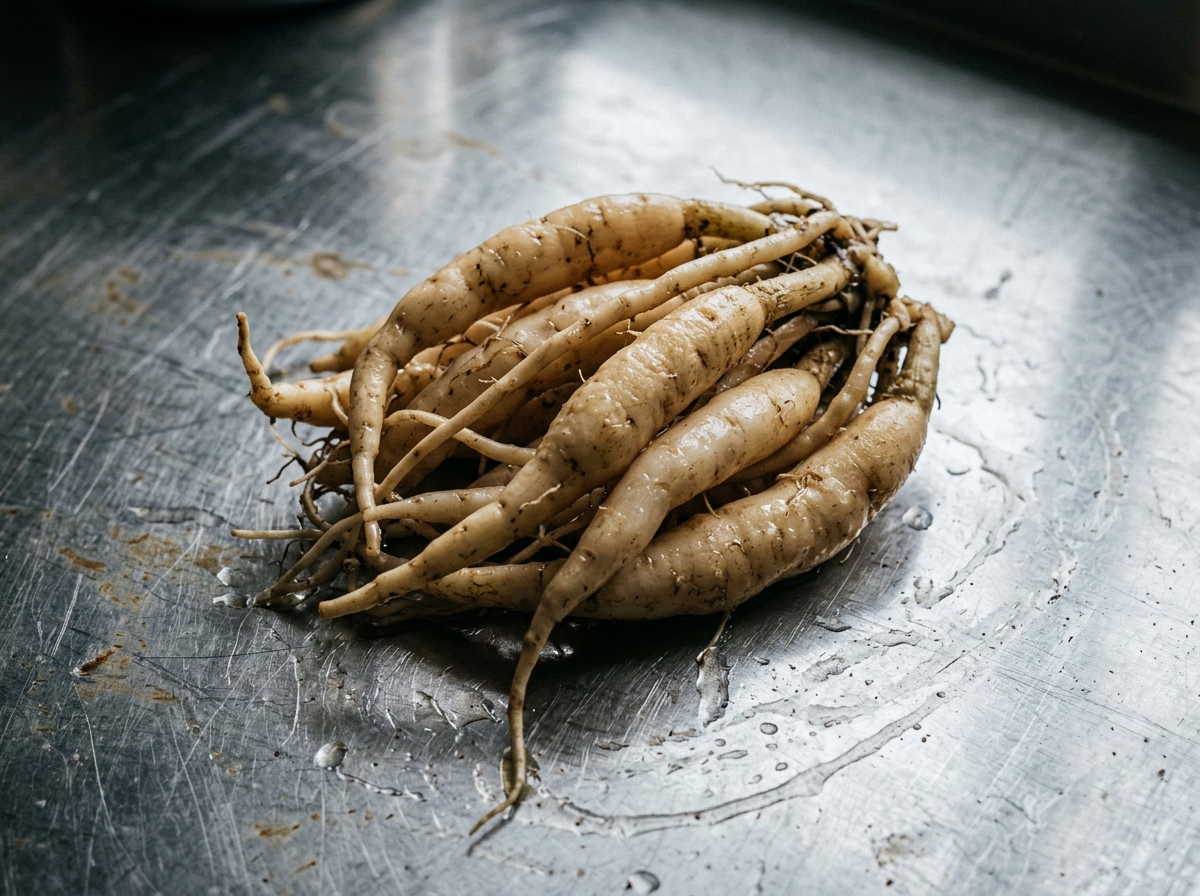
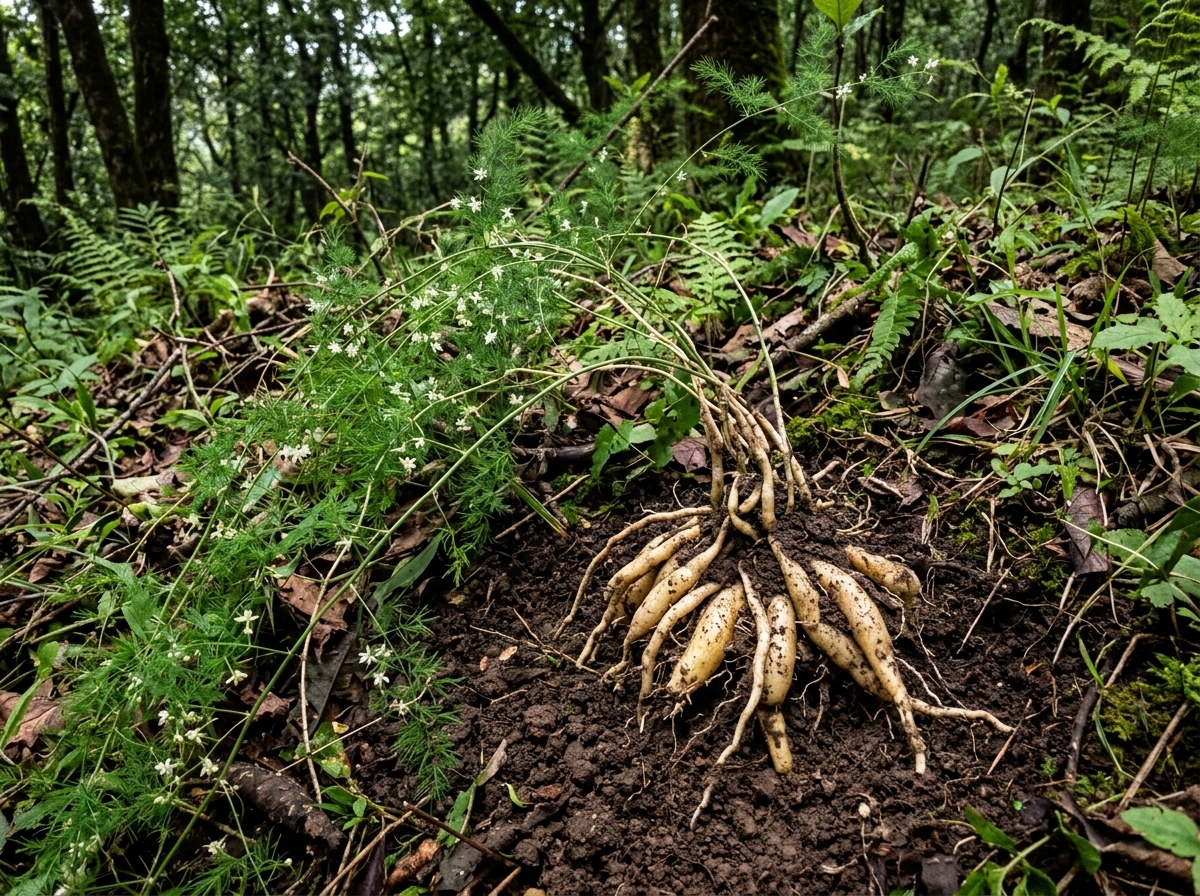
Start with the plant, because the plant is a surprise, and a sweet one. Shatavari is a wild asparagus. Literally. The botanical name is Asparagus racemosus, cousin to the green spear in your grocery bin. But here's the twist that makes all the difference: the grocery asparagus gives you its spear, while Shatavari keeps its treasure underground. The material is the root, dozens of pale tuberous roots hanging from one crown, like small white radishes strung beneath the soil. The plant puts its nourishment where you can't see it, down in the dark, in the quiet.
And the plant itself grows soft. Not a stiff upright spear, but a gentle climbing vine that rambles through the low shade of the Indian forest, feathery leaves, tiny white flowers, little red berries. A tender, generous plant, and it makes tender, generous extracts.
Classification before benefits, always. Shatavari is a nutritive tonic and an adaptogen. Plain English: this is the nourishing bottle. The one that supplies raw materials for your glands, your tissues, your skin, and your digestion, instead of pushing or firing anything up. The tradition's own word for its class is worth keeping: rasayana, the rejuvenative, the deep nourishment that builds the body back. Its partner roots warm and energize. This one feeds.
Now the crew inside the root, named straight. The headliners are the steroidal saponins, specifically the shatavarins, the root's own signature constituents, which work with your endocrine system, your network of glands, supplying raw materials for hormones. That story is the flagship of this formulation, and it earns its own piece in this series. Alongside them ride the dense mucilage and the complex polysaccharides, the thick, nourishing, water-loving materials that tend your digestive tract and your body's deep hydration. Saponins and mucilage, hormones and hydration, the feeding crews in one root.
And you'll know this extract the moment you pour it, because it pours thick. That's not an accident, and it's not a flaw. The thickness is the mucilage and the polysaccharides themselves, held in the liquid exactly as the craft preserved them. This is one of the richest, earthiest extracts on the shelf, and our own customers taste gingerbread in it. The root tastes like what it is: nourishment.
What this botanical flat out is not: it is not a stimulant, it will not wake you up, and it does not force anything. It is not exclusively a woman's bottle either, and we'll walk that honest answer in its own piece. But it has earned its reputation as the woman's tonic of a three-thousand-year tradition, and the reputation arrived long before the packaging did.
The nourishing queen of the tonic shelf, in a dropper. The practice is what makes it work.
Benefits accumulate over time.
2. Where Does It Come From?
Where does Shatavari come from? Short answer: organic roots, harvested at full botanical potency. Real answer: a climbing vine in the Indian forest shade, and a tradition that has kept this root on the woman's shelf for three thousand years.
The facts first, straight. One hundred percent Shatavari root, Asparagus racemosus, organic, harvested at times of full botanical potency. Structured distilled water and triple filtered USP grade organic alcohol at twenty-five percent by volume. Extraction ratio of one and a half pounds of root to one quart of liquid, about forty-five thousand milligrams extracted into every two-ounce bottle. Nothing else in the bottle but the liquid.
Now, the tradition, because the tradition is the story. Ayurveda, the ancient Indian tradition, holds two roots above nearly all others, and it calls them the royal pair. Ashwagandha, the king, the strength root for exertion and grit. And Shatavari, the queen, the nourishing root for rebuilding and rhythm. Kings and queens, different jobs, the same court. And the queen's class is worth naming: the rasayanas, Ayurveda's premier rejuvenatives. Rasa means essence, the deep nourishment that builds the body back, and Shatavari sits front row of that class, held for centuries as the supreme tonic for the female system. Not a folk remedy that faded. A living classic, still in Indian kitchens and new mothers' care today.
And the tradition calls her character plainly. The old texts class this root as sweet and cooling, the classic root for settling heat and nourishing the depleted. That is the temperament the whole tradition agrees on, and it matches what our own page describes: a tonic you can add to an evening routine for a sense of calm. Gentle, settling, feeding. The queen's temperament.
Then the craft, built to respect the material. Custom crafted, multi-step, micro-batched, and slow-batched with separate cold extraction and heat activation steps, so the fragile constituents hold their integrity in fluid suspension for maximum absorption. The cold step protects the delicate materials, the heat step pulls the deep nutritive cargo, and the slow batch lets both happen honestly. Rapid, high bioavailability.
The root of a thousand-year reputation, taken seriously. That's where it comes from.
Taken consistently over time.
3. What Does It Actually Do?
What does Shatavari actually do in your body? Let me give you one picture, because the picture is the mechanism.
A deep, quiet spring, feeding a garden. The root brings the water up from underground, the beds drink it in, and everything grows at its own pace. Nothing is forced, nothing is hurried, and nothing is skipped. Shatavari works that way. And the rule underneath never moves: the botanical supplies the raw materials. Your body does the building.
Start with the hormones, because that's the headliner. The steroidal saponins, specifically the shatavarins, work with your endocrine system, your network of glands, supplying raw materials for hormones. Supply, not command. Your glands still run their own rhythm, their own schedule, and the root keeps the materials coming so the rhythm has something to work with. Healthy hormonal balance, maintained glandular function, the deep quiet work of a fed system.
Next, the hydration, and this is the root's second gift. The dense mucilage and complex polysaccharides are water-loving materials, well-absorbed by the body, and they maintain hydration and elasticity within the digestive tract, supporting comfortable gut motility and regularity. The mucilage coats and nourishes, tending the tract like a balm. The meal gets assimilated instead of parked, and the food coma stops being a scheduled event.
And the hydration doesn't stop at the gut. By maintaining healthy cell membranes and cellular hydration, these same constituents nourish from within, promoting skin vitality and a vibrant appearance, and supporting your physical form's capacity for renewal and repair. Deep hydration shows. It shows on the outside because it's working on the inside.
Then the airways. The specific polysaccharides work synergistically to maintain clear and open airways within the respiratory system. The same water-loving crew, tending another surface of the body. Few tonics carry this beat, and it's a quiet gift.
And the guards. The broad spectrum of phytonutrients replenishes nutrient reserves, providing essential nourishment that helps the body manage everyday wear and tear, fortifying overall resilience and a balanced state.
And one thing this botanical flat out does not do. It does not create energy out of thin air, and it does not force your hormones anywhere. It assists your body in efficiently using the food you eat. So the complete balanced meals aren't optional furniture here. They're the entire point.
Supply, hydrate, and tend. The spring feeds the garden.
Benefits accumulate over time.
4. Who Is It For?
Who is Shatavari actually for? Let me tell you who buys it, because this bottle has a specific crowd, and the page serves eight of them. The vanity, the dining table, the nightstand drawer, and the glovebox. The women tending their own gardens.
The beauty crowd, first, because skin is the visible flagship. Skin upkeep, waking up looking fresh, keeping the glow. The complex polysaccharides maintain hydration and elasticity to support the skin's natural barrier function and skin vitality. Deep hydration shows, and the bottle lives on the bathroom vanity, right where the page puts it.
The eater. Digesting real meals, avoiding the food coma. The dense mucilage coats and nourishes the digestive tract, allowing the body to efficiently break down food and maintain gut motility and regularity. The bottle sits on the dining table, right where the work happens.
The lovers. Physical intimacy, the energy to connect. The specific shatavarins supply raw materials for hormones to support healthy hormones and reproductive health. The capacity to connect is a built thing, built from nourishment, and the bottle waits in the nightstand drawer, exactly where the page puts it.
The high-stress equilibrium crowd. Chaotic days, dealing with people, not getting rattled. The saponins work with the neuroendocrine system to promote a balanced stress response and cultivate overall resilience. The bottle rides in the glovebox, close at hand for the day that keeps coming.
The rejuvenation crowd. Catching up on sleep, taking the weekend off, letting the body do its quiet rebuild. This formulation provides essential nourishment to replenish nutrient reserves and support cellular repair and regeneration. The recovery gets its deliveries.
The convalescence crowd. Getting strength back, getting out of bed. This formulation provides the building blocks necessary to replenish energy stores and build up health. Deep nourishment for the deep rebuild, the root's oldest job.
The steward. Taking care of family, doing the chores, keeping the house running. This nutritive support maintains sustained energy and systemic balance to meet life's demands. The keeper needs keeping too.
And the sage. Reading, aging well. The unique constituents support glandular function to adapt to natural physiological changes and promote cellular health and longevity. The bottle sits on the bookshelf, next to the reading lamp, and the long game gets its materials.
Notice the common thread, because it's the whole thesis. Every one of these buyers is purchasing the same thing: the fed, watered garden. Skin that glows, meals that digest, hormones with materials on hand, a system that holds its balance, a body that rebuilds. One root, eight gardens.
The nourishing bottle, for the women tending themselves.
Taken consistently over time.
5. How Do You Take It?
Nutrient Timing & Tonic Synergy
We recommend taking this formulation on an empty stomach (up to 30 mins before eating) for rapid mucosal assimilation, followed by a complete balanced meal to provide the heavy building blocks (proteins/fats) required for cellular function. Consistent use of this superior tonic yields long-term building benefits.
This is Shatavari liquid extract, the nutritive adaptogenic tonic in a two-ounce bottle with sixty dropper servings.
One dropper is one press of the rubber bulb, which fills the dropper tube to just above half way. That's thirty drops, which is also one milliliter.
To find a functional dose, start with a minimum dose of fifteen drops to one dropper and work up. We suggest fifteen drops to one to three droppers, taken one to three times per day, which is three hundred seventy-five to two thousand two hundred fifty milligrams daily.
Now, the bottle has two jobs, and it's worth knowing both. For immediate impact, hold one to two droppers under the tongue, sublingually, for fifteen to thirty seconds. Longer isn't necessary. For tonic building, to continually saturate your system and build deep, long-term health, take one to two droppers with meals, or up to two to three droppers with your largest meal.
Shake gently. Secure the lid and turn the bottle over back and forth three to five times to evenly distribute the liquid extract. Vigorous shaking oxidizes the fragile constituents, so don't do that.
By mouth: hold the liquid under the tongue for sixty to ninety seconds before swallowing, or mix the drops into two to four ounces of lukewarm drinking water. Never boiling water. Hot water will catabolize the fragile volatile compounds, and this root carries a full set of them.
Timing, and this bottle is flexible, which suits her nature. For rapid mucosal assimilation, take it on an empty stomach, up to thirty minutes before eating, followed by a complete balanced meal to provide the heavy building blocks, the proteins and fats, required for cellular function. Best taken with meals to aid assimilation. And this is one of the gentle bottles: it may be consumed anytime throughout the day, or added to an evening routine to support a sense of calm. No stimulant cargo, so evening is welcome. The sunset bottle finally gets her shift.
And the pour itself is worth a word, because it surprises people. This extract pours thick and tastes rich, earthy, sweet-spiced. Our own customers taste gingerbread in it. That thickness is the mucilage and the polysaccharides, the cargo itself, held in suspension exactly as the craft preserved it. A thin, watery shatavari would be the defect. The taste tells on it.
Storage is easy: an opened bottle holds about thirty to forty-five days. Unopened, about two years from the batch date. Keep it dark and cool.
If it didn't sit right, try again at a lower dosage and with a complete meal. Finding your dose isn't failure, it's calibration.
Some effects are immediate within the first few days. Consistency at a functional dose builds the rest.
6. How Long Until You Notice Results?
How long until you notice something from Shatavari? Most-asked question about any tonic, so here's the straight answer, in three windows.
Some effects are immediate within the first few days, one to three days. That's the felt layer: the comfort after meals, the easing of tension, the first quiet sense of balance. Nourishing botanicals give gentle feedback, and one of our own customers reported she could literally hear her stomach going to work the first time she took it. The spring starts feeding on arrival.
Other effects and benefits are building, and become noticeable within one to two weeks. The steadier digestion, the hydration showing at the skin, the resilience holding through the chaotic days. The deeper work doesn't announce itself. It stacks up quietly, underneath, while you go about your life.
Then the long game. The systemic shifts and deep hormonal benefits happen as you continuously saturate your body over a thirty to ninety day cycle. That's a good tonic cycle, thirty to ninety days, and this page says it plain: a six bottle protocol unlocks the deepest systemic shifts. That's not a sales line. That's just how nourishing tonics work. The body doesn't take orders. It takes deliveries, and it builds on its own schedule. A tonic is a practice, not an event.
And you gotta take enough to make it work. The page says it straight out: the more you take, the better it works. Not enough doesn't work. Someone can only take so much of anything at any one time, so enough is the target, and consistency is the vehicle that gets you there.
Nothing is a quick fix. Anyone selling a quick fix in a bottle is selling snake oil. Tonics reward time, not dosage.
And keep the foundation under all of it: complete balanced meals, every time, with your protein and your fat. Skipping meals and eating incomplete meals will lead to ineffective results. The root rides on food. It doesn't replace it.
Benefits accumulate over time.
7. Safety and Quality
Is Shatavari safe, and how do you know you're getting a quality bottle? With this root, those are the same question, and the answer isn't a promise printed on a label. It's the honesty of the formulation, the sourcing, and the craft.
Start with the markers that matter, stated straight. Species named: Asparagus racemosus, one hundred percent Shatavari root, organic, harvested at times of full botanical potency. Nothing else in the bottle but the liquid. Craft named: custom crafted, multi-step, micro-batched, slow-batched with separate cold extraction and heat activation steps, extracted with structured distilled water and triple filtered USP grade organic alcohol at twenty-five percent by volume, so the fragile constituents hold their integrity in fluid suspension for maximum absorption. Rapid, high bioavailability. The ratio is honest and heavy: one and a half pounds of root to one quart of liquid, about forty-five thousand milligrams in every two-ounce bottle. The full extraction and lab methods are published on our standards page, if you want to see exactly how the work gets done.
Now, the marker that's unique to this bottle, and it's one of the best in the series: your own eyes are the lab. The page carries the question itself. Why does the extract have a thick consistency and a specific taste? Because the roots are naturally rich in mucilage and complex polysaccharides, and the slow-batched extraction preserves those unique constituents in fluid suspension. The thick, rich, earthy pour is the certificate. It indicates the nutritive cargo is right there in the dropper, visible before you ever taste it. So here's the rule: a real Shatavari extract pours thick and tastes rich and sweet-spiced, gingerbread, as our own customers describe it. A thin, watery shatavari tincture is the defect, and it tastes like exactly what it is: mostly nothing. The more you taste the stronger it is.
Now, honest use, plain and simple. These botanicals are food added to the diet, suitable for daily use, and generally this formulation may be taken with other dietary supplements. It works synergistically with the rest of your supplement program and with your complete balanced meals underneath. And it pairs honestly with the other end of the shelf: the king's root, Ashwagandha, travels beside the queen's root in this tradition, each doing its own job.
One piece of doctrine to keep the whole thing straight. Herbs are always more effective and more powerful in the long-term for supporting health, whereas drugs are always more effective and more powerful in the short-term for treating diseases, conditions, and any emergencies. Do not use an herb when one should use a drug, and do not use a drug when one should use an herb. Each has its own job, and this bottle's job is the long term.
And the price. You shouldn't pay mystique prices for Shatavari, because this is a farmed root with real markets behind it, the classic tonic of a living tradition, not some rare treasure. Pay for the root and the craft, not for the story.
Be the Best and Buy the Best.
It is important to do your own research. Health is the most valuable asset of one's life and the most valuable investment.
8. The Names
The names. Because this root carries the boldest name in all of herbalism, and the name deserves its own telling. The ancient physicians named this plant for what it does, and they did not name it shyly.
Start with the famous one, told straight. Shatavari is Sanskrit, and the old translators render it as she who has a hundred husbands. A hundred husbands. Now, what does a tradition mean when it names a woman's tonic that? Not vanity, and not scandal. The name is a resume. It says this root so nourishes the female system, so supports her vitality and her vigor and her capacity for love, that a woman taking it would have the strength of a hundred husbands' worth of desire directed at her, or the constitution to match a hundred of them. Either way you read it, the name is a compliment of the highest order, written by physicians who wanted the next thousand years to know exactly what this root does for her. When a tradition hands a plant a name that bold, you listen.
But get this: the scholars offer a second reading, and the second reading is just as true. Shatavari is also read as she of a hundred roots, and the plant earns that name in the dirt. One crown sends down dozens of pale tuberous roots, like small white radishes strung beneath the soil, and the medicine is all down there. The plant puts its nourishment underground, in the quiet, where nobody can see it. A hundred roots, a hundred tubers of nourishment, hanging in the dark. The name describes the body of the plant and the body of the work at once.
And the tradition gave her a title for that root system: Satamuli, the plant of a hundred roots, another name for the same vine. One plant, two names, both of them counting to a hundred, both of them promising abundance.
Then the scientists arrived, centuries late as usual, and wrapped the plant in Latin. Asparagus racemosus. Asparagus, because it is literally a wild asparagus, cousin of the grocery spear. And racemosus means bearing racemes, the clusters of tiny flowers and little red berries the vine hangs in the shade. A Greek dress on a Sanskrit queen. The new name describes the flowers. The old name describes the power. I know which one I'd put on the bottle.
And here's the quiet observation that closes the loop. The old names count roots and strength and love. The new name counts flower clusters. The tradition named the plant for what it does for a woman. The science named it for what it looks like on the outside. That's the whole story of this root in miniature: the treasure was never on the outside. It's underground, in the hundred pale roots, doing the quiet nourishing work.
The queen's name, in a dropper. The name is the resume.
Taken consistently over time.
9. Her Hormonal Rhythm
Her hormonal rhythm. Because this is the flagship, the reason the tradition crowned this root the queen, and it deserves a proper walk. Let's do it gently and thoroughly, the way the subject deserves.
The crew first, named straight. The steroidal saponins, specifically the shatavarins, are the root's signature constituents, and their job is supply. They work with your endocrine system, your network of glands, supplying raw materials for hormones. That's the mechanism, and it's worth saying twice: supply, not command. Your glands run their own rhythm. Your body decides what gets built and when. The root keeps the materials shelf stocked so the rhythm never has to build from an empty pantry. Healthy hormonal balance, maintained glandular function, supported through the natural regenerative processes of the body.
Now, the rhythm itself, and this is where the nourishing temperament matters. A woman's hormonal life is a rhythm, not a level. It moves through cycles, through seasons, through the natural transitions of a life. The monthly rhythm. The childbearing years. The great transitions that come with time. Every one of those seasons is the body doing its own shifting, its own rebuilding, and every one of them runs on materials. That's the window where a steady, gentle supply earns its keep, and that's the window this root has been holding for three thousand years. The tradition gave it to brides, to new mothers, to women in every transition, and the modern reading of the mechanism says exactly why: the glands were building, and the root kept the deliveries coming.
And here's the doctrine that has to ride underneath all of this, because it's the part the supplement industry skips. Hormones are built from raw materials, and the plant is only one of two suppliers. Did you know that estrogen, like testosterone, is over ninety-five percent cholesterol by weight? Hormones are made from fat. The shatavarins supply the plant materials. The complete balanced meal supplies the cholesterol. Two doors, one construction site, and your body does the building. Eggs with the yolks kept soft, protein and fat at every meal. Hand the crew blueprints and no lumber, and nothing gets built, no matter how good the blueprints are. The root can't build the rhythm. It keeps the materials coming.
And the calm rides the same track. The saponins work with the neuroendocrine system to promote a balanced stress response, and anyone who has lived a hormonal month knows the two are one story. The system that holds its balance under stress is the same system that holds its rhythm, fed from the same shelf. Nourish one, and you're feeding both.
Supply the materials, feed the rhythm, and let the body do its own building, on its own schedule, in its own season.
Benefits accumulate over time.
10. Intimacy and the Lovers
Intimacy, and the Lovers. Because this is the beat the name was written for, she who has a hundred husbands, and it deserves its own gentle, honest telling. Let's walk it the way we walk everything: mechanism first, warmth throughout, nothing forced.
Start with the honest frame, stated plainly. Intimacy requires sustained energy and the biological capacity to connect, and the capacity to connect is a built thing. Not switched on. Built. Built from nourishment, from rest, from materials, over time. Which is exactly why this root has been the woman's tonic for three thousand years: it doesn't push anything, it feeds the building.
The mechanism, then, named straight. The specific shatavarins supply raw materials for hormones, working with the endocrine system, your network of glands, to support healthy female hormones and reproductive health. Supply, not command, the same rule as always. Your body runs its own desire and its own rhythm. The root keeps the materials on the shelf so the system has something to build with. The Lovers card on our own page says it exactly this way: for those prioritizing physical intimacy and having the energy to connect, this root supplies the raw materials. The bottle waits in the nightstand drawer, right where the page puts it, and the drawer is a placement for a reason.
And the temperament matters here, so let's be honest about it. This is not the stimulating, warming shelf. This is the nourishing, settling, sweet root of the tonic court, the one that builds the foundation rather than lighting the fire. The warmth comes from being fed, from resting well, from a system that isn't running on empty. For a depleted, overworked, under-nourished system, this is the honest first bottle, because desire is a luxury of the fed body. Fill the pantry first. The fire follows the fuel.
Now the doctrine, because it's the engine of this beat and it gets said loud. Hormones are made from fat. Estrogen is over ninety-five percent cholesterol by weight. The intimacy program is this root, plus complete balanced meals, plus plenty of protein and saturated fat. The root is one supplier, the meal is the other, and the building site needs both. Skipping meals and eating incomplete meals will lead to ineffective results, and that goes double when the whole point is hormonal materials. You can't build the capacity to connect from deliveries alone. The freight has to show up.
And the tradition's witness, told as settled history. The physicians who named this root she who has a hundred husbands were the same physicians who gave it to women across every season of a life, and the name is their testimony about what nourished women feel. Three thousand years of testimony. The modern mechanism agrees with every word of it: materials, glands, rhythm, capacity.
The Lovers get fed, and the fed connect.
Taken consistently over time.
11. Calm and Her Evening
Calm, and her evening. Because there's a beat on this page that most energizer bottles can never offer, and it's worth its own piece: this is a tonic you can take at sunset. The evening routine, the sense of calm, the gentle end of the day. This root keeps that shift.
Start with the classification, because it explains the calm. Shatavari is an adaptogen, and adaptogens work with the body to promote a balanced stress response, a balanced mental state, the system that meets the day without getting rattled. Not sedation. Not being put under. Balance. The worn-out system gets steadier, and the steady system notices less noise. That's the register this root works in, and it's the register the tradition described when it classed her sweet and cooling, the settling root for heat and depletion.
Now, the day this calm belongs to. The high-stress equilibrium crowd on our page lives this exact life: chaotic days, dealing with people, the world arriving unannounced. The saponins work with the neuroendocrine system to promote that balanced stress response and cultivate overall resilience, so the day lands on a steadier system. The bottle rides in the glovebox for exactly this, close at hand when the day keeps coming.
And here's the piece that makes this root rare on the modern shelf: the calm is not the opposite of her energy. This is the nourishing adaptogen, the one that replenishes nutrient reserves and energy stores while it settles. The worn-out woman gets both at once, fed and steadied, because depletion and rattled nerves are the same shortage wearing two coats. Fill the pantry, and the shaking stops on its own.
So the evening protocol, and it's simple. The complete balanced dinner first, with the protein and the fat. Then, as the evening winds down, one to two droppers under the tongue for fifteen to thirty seconds, or stirred into a little lukewarm water, never boiling, because hot water catabolizes the fragile volatile compounds. The page says it plain: may be added to an evening routine to support a sense of calm. No stimulant cargo, so sleep keeps its crown.
And the morning after is the payoff, because that's the arithmetic nobody prices in. Rest and nourishment overnight, the natural regenerative processes doing their quiet work, and those processes run on the meals. The evening dose is really a morning investment, twelve hours early.
The sunset bottle, fed and steady.
Taken consistently over time.
12. The Men's Question
Can men take Shatavari? Honest answer, and our own page carries the question: yes. Let me walk it, because the walking is where the honesty lives.
The page says it plain. While this root is widely recognized for female reproductive well-being, men also benefit from this nutritive support. The constituents work with the neuroendocrine system to maintain systemic balance, support the digestive tract, and cultivate physical resilience and physical endurance, in both sexes. The glands don't check IDs. The mucilage doesn't ask who's eating. Digestion, hydration, resilience, stress balance: those jobs serve everybody.
And the tradition agrees, told as settled history. Ayurveda crowned this root the queen of the woman's shelf, but the court was never closed to men. The rasayana class, the deep rejuvenatives, serves any depleted system that needs feeding, and the physicians prescribed accordingly. The royal pair works both ways: the king's root nourishes women too, and the queen's root nourishes men. Different temperaments, same court, everybody fed.
But here's the honest redirect, because this voice tells you when a bottle isn't yours. If you're a man shopping for the hormonal flagship, the androgen shelf is the honest first stop, and this root is the gentle, settling, nourishing half of the court. Buy it for the digestion, the resilience, the deep nourishment, and it serves you well. Buy it expecting the king's job, and you've got the wrong bottle.
And the truth that stays standing after all the redirects: this is her bottle. The name was written for her. The three-thousand-year reputation was built on her. The men's answer is yes, and the queen's crown stays where it is.
Both sexes fed. The crown stays hers.
Taken consistently over time.
Commit to the Practice
Tonic herbalism rewards consistency. The deep, systemic building work happens quietly over a 30 to 90-day cycle of continuous saturation. Supply the raw materials your body needs with our premium formulation.
Shop Shatavari Extract